STILL APPLYING. STILL HEARING NOTHING?BUILD YOUR RESUME

STILL APPLYING. STILL HEARING NOTHING?BUILD YOUR RESUME
Choose from a wide range of NEWCV resume templates and customize your NEWCV design with a single click.
FAQ
A strong full stack developer resume for a career change does not try to hide your previous experience. It reframes it into technical value that hiring managers actually care about. The fastest way to get interviews is to lead with proof of technical ability through projects, GitHub activity, deployed applications, and modern development skills while translating your previous career into relevant engineering strengths.
Most career changers fail because their resume reads like a beginner learning to code. Recruiters and hiring managers want evidence that you can solve problems, build applications, collaborate with teams, and contribute in a production environment. Your previous career can become a competitive advantage when positioned correctly.
The goal is not to convince employers you were always a developer. The goal is to show that you already bring business value, communication skills, domain expertise, and execution ability while now having the technical skills to build modern web applications.
Most applicants assume hiring managers are focused mainly on years of software engineering experience. For entry-level and career transition candidates, that is not entirely true.
Hiring managers usually evaluate career changers in this order:
Can this person actually build working applications?
Do they understand modern development tools and workflows?
Can they learn quickly and work independently?
Do they communicate clearly and collaborate effectively?
Does their previous experience strengthen their ability to build products?
This is why technical proof matters more than generic statements.
A resume that says:
Weak Example
“Passionate aspiring full stack developer seeking an opportunity to grow.”
Most full stack developer career change resumes fail for predictable reasons.
If the first thing recruiters see is unrelated experience, they mentally categorize you outside tech before reaching your projects.
Your technical skills and projects must appear early.
Projects are often the strongest evidence you have.
They should not be buried underneath ten years of unrelated work history.
Words like:
Aspiring developer
Junior coder
Learning programming
The structure matters because recruiters spend seconds deciding whether to continue reading.
This layout works best for most career changers:
Short, technical, outcome-focused.
Include relevant technologies only.
This should appear before unrelated work experience in most cases.
Only if relevant and respected.
Translate previous work into engineering-adjacent value.
Keep concise unless highly relevant.
Your summary should establish technical credibility immediately.
Avoid generic motivation statements.
Technologies
Applications built
Problem-solving ability
Domain expertise
Business impact
Generic passion statements
Your skills section should support ATS optimization while remaining believable.
Do not overload it with every technology you have touched once.
React
JavaScript
TypeScript
HTML5
CSS3
Redux
Tailwind CSS
For career changers, projects are your proof of capability.
Projects reduce hiring risk.
Hiring managers want evidence that you can:
Build complete applications
Debug issues
Structure backend logic
Work with databases
Handle authentication
Deploy applications
Write maintainable code
Weak projects are tutorial clones with no business relevance.
Strong projects demonstrate engineering thinking.
Authentication and authorization
CRUD functionality
API integrations
Responsive UI
Database relationships
State management
Deployment
This is where most career changers either gain leverage or lose credibility.
The key is translating previous experience into engineering-relevant value.
Do not simply list soft skills.
Connect them to technical outcomes.
Strong transferable strengths:
Troubleshooting
Systems knowledge
Technical documentation
Customer issue resolution
Infrastructure familiarity
Major advantage because many developers lack testing discipline.
Relevant strengths:
Bug identification
You do not need to pretend your previous role was technical.
You need to translate impact into language relevant to engineering environments.
“Managed customer issues and handled reporting.”
“Improved operational workflows through process analysis, cross-functional collaboration, and data-driven reporting.”
“Collaborated across operations and technical teams to identify workflow inefficiencies, improve reporting accuracy, and streamline system-related processes.”
The third version sounds significantly more relevant to software teams.
Most career changers underestimate how important visible proof has become.
A GitHub profile can completely change recruiter perception.
Consistent activity
Real applications
Organized repositories
Clear README documentation
Deployment links
Modern frameworks
Clean project naming
Bootcamps and certifications help only when combined with real technical proof.
Hiring managers rarely hire someone because they completed a course.
They hire candidates who can demonstrate capability.
AWS Certified Cloud Practitioner
Meta Front-End Developer Certificate
Google Cloud certifications
Full stack bootcamp programs with strong project portfolios
Projects
Strong bullets follow this structure:
Action + Technical Context + Outcome
“Built a web app using React.”
“Developed a responsive task management application using React and Node.js with authentication and PostgreSQL integration.”
“Developed and deployed a full stack task management platform using React, Node.js, Express, and PostgreSQL, improving workflow organization through role-based access and real-time task tracking.”
The third version sounds far more professional because it connects technology to business value.
Most companies use applicant tracking systems before human review.
Your resume needs the right keyword alignment without sounding robotic.
Include relevant combinations naturally:
Full stack developer
Software engineer
React developer
JavaScript developer
Node.js
REST APIs
PostgreSQL
Career changers often assume they are automatically weaker candidates.
That is not always true.
Many employers prefer mature candidates with:
Communication skills
Business understanding
Stakeholder management
Professional accountability
Operational experience
Industry knowledge
Your advantage is combining technical capability with real-world business value.
A healthcare operations professional building healthcare SaaS products may be more attractive than a generic CS graduate with no domain knowledge.
A former recruiter transitioning into HR tech development may understand user pain points far better than traditional engineering candidates.
Understanding objections helps you counter them.
Can this person handle production-level complexity?
Are they committed long term?
Will they struggle with engineering collaboration?
Can they learn fast enough?
Do they understand software development workflows?
Your resume should answer these concerns indirectly.
Show:
Multiple projects
Usually yes, but strategically.
Do not remove years of professional experience entirely.
Instead:
Compress older roles
Focus on transferable value
Reduce irrelevant detail
Prioritize technical relevance
A 12-year detailed history of unrelated operational tasks hurts readability.
A concise, strategically translated version strengthens credibility.
The strongest strategy is:
Projects, GitHub, deployed apps, and skills should dominate the first half of the resume.
Do not frame previous work as irrelevant.
Frame it as business experience that strengthens engineering capability.
Hiring managers care more about shipped applications than certificates.
Confidence matters.
The resume should communicate:
“This person can contribute.”
Not:
“This person hopes someone trains them.”
The market is competitive, but career changers absolutely get hired into full stack development roles every year.
The candidates who succeed usually do three things exceptionally well:
They build strong real-world projects
They position transferable skills strategically
They present themselves as professionals with technical capability, not beginners asking for permission
Your previous career is not a weakness unless your resume frames it that way.
The best career change resumes combine technical proof, business understanding, communication ability, and practical problem-solving into one compelling narrative.
That combination is often more valuable than pure technical knowledge alone.

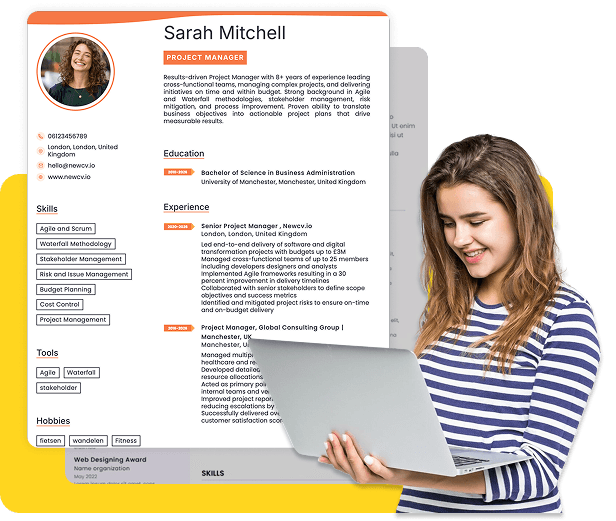
Use ATS-optimised Resume and resume templates that pass applicant tracking systems. Our Resume builder helps recruiters read, scan, and shortlist your Resume faster.

Use professional field-tested resume templates that follow the exact Resume rules employers look for.
Create Resume
Use professional field-tested resume templates that follow the exact Resume rules employers look for.
Create ResumeGets ignored because it sounds like every other entry-level application.
A resume that says:
Good Example
“Built and deployed three full stack applications using React, Node.js, PostgreSQL, and AWS, including a healthcare scheduling platform with authentication, API integrations, and responsive UI.”
Immediately changes the evaluation.
One sounds theoretical.
The other sounds employable.
New to tech
Lower confidence immediately.
Position yourself as a professional with technical capability, not a hobbyist hoping for a chance.
Anyone can list React, Node.js, or SQL.
Hiring managers want evidence of application.
Your resume should connect technologies to outcomes.
Career changers often assume previous experience no longer matters.
That is a major mistake.
Companies hire developers who can solve business problems, communicate with stakeholders, improve processes, and understand users.
Those skills are often stronger in career changers than in traditional entry-level candidates.
Long personal stories
Overexplaining the career transition
Apologizing for lack of experience
“Full stack developer with experience building responsive web applications using React, Node.js, Express, PostgreSQL, and AWS. Transitioned from healthcare operations with deep experience in workflow optimization, stakeholder communication, and process improvement. Built and deployed multiple full stack applications with authentication, REST APIs, and cloud hosting. Strong background in Agile collaboration and problem-solving.”
This works because it combines:
Technical stack
Real project proof
Previous domain expertise
Business skills
Engineering-relevant strengths
Next.js
Node.js
Express.js
REST APIs
GraphQL
PostgreSQL
MongoDB
MySQL
AWS
Docker
CI/CD
GitHub Actions
Jest
Cypress
Unit Testing
Git
GitHub
Agile
Jira
Postman
Many hiring managers look for depth over breadth in junior and transition candidates.
A candidate with strong React, Node.js, APIs, PostgreSQL, and deployment experience is often more attractive than someone listing twenty shallow technologies.
Solve real-world problems
Your projects section often determines whether you get interviews.
Error handling
User workflows
Testing
Inventory Management Platform
Built a full stack inventory management application using React, Node.js, Express, and PostgreSQL
Developed REST APIs supporting product tracking, reporting, and role-based authentication
Implemented responsive frontend dashboards with reusable React components
Reduced inventory tracking time through automated workflows and search filtering
Deployed application using AWS and Docker with CI/CD pipeline integration
This sounds production-oriented instead of academic.
Automation basics
Product quality mindset
Test case creation
Regression testing
One of the strongest transitions.
Relevant strengths:
SQL
Python
Data logic
Reporting
Analytics thinking
Business intelligence
Especially valuable in Agile teams.
Relevant strengths:
Stakeholder communication
Sprint planning
Delivery coordination
Requirements gathering
Cross-functional collaboration
Strong niche positioning opportunity.
Relevant strengths:
HIPAA awareness
Healthcare workflows
EMR systems understanding
Compliance mindset
Operational efficiency
Surprisingly valuable for HR tech companies.
Relevant strengths:
ATS workflows
Hiring systems knowledge
Process optimization
Communication
Stakeholder management
Highly attractive for frontend-heavy roles.
Relevant strengths:
UI/UX
Accessibility
Figma
User-centered thinking
Design collaboration
Empty repositories
Incomplete projects
Tutorial clones only
No deployment links
Messy documentation
Include:
GitHub URL
Portfolio URL
Live demo links where relevant
These should appear near the top of the resume.
GitHub quality
Technical interviews
Application architecture understanding
Ability to explain decisions
Cloud deployment
Frontend development
Backend development
Agile
Git
CI/CD
Keyword stuffing does not work well anymore.
Modern screening increasingly evaluates contextual relevance.
The technologies should appear connected to projects and outcomes.
Positioning matters.
Consistent technical learning
Real deployment experience
Team collaboration
Agile workflows
Version control usage
Problem-solving examples
Continuous improvement


 Upload Resume
 Import from Linkedin