STILL APPLYING. STILL HEARING NOTHING?BUILD YOUR RESUME

STILL APPLYING. STILL HEARING NOTHING?BUILD YOUR RESUME
Choose from a wide range of NEWCV resume templates and customize your NEWCV design with a single click.
FAQ

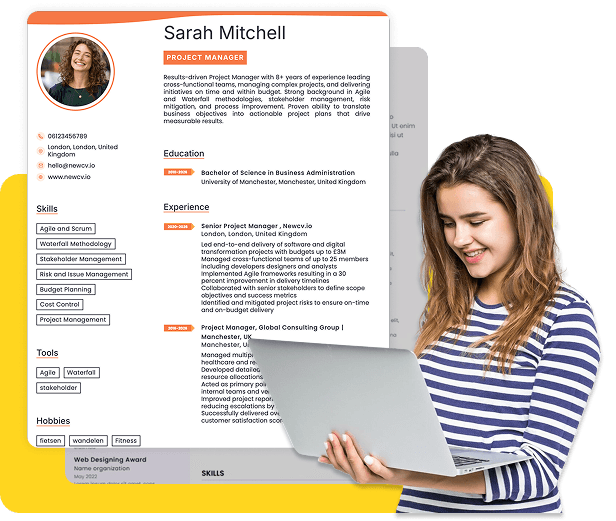
A mobile developer resume and a mobile developer CV are not the same document, and using the wrong one can hurt your chances in the hiring process. In the United States and Canada, employers almost always expect a resume: concise, achievement-driven, ATS-friendly, and typically one to two pages. In the UK and many international markets, employers often request a CV, which is more detailed and includes fuller technical history, projects, certifications, and education.
For mobile developers, this distinction matters because recruiters evaluate these documents differently depending on the market, hiring volume, and company type. A US startup hiring an iOS developer wants fast evidence of app impact, release history, and technical execution. A UK employer reviewing a mobile app developer CV may expect broader technical documentation, training history, architecture exposure, and detailed project context.
This guide explains the real differences, when to use each format, what recruiters actually look for, and how to structure both documents correctly for modern mobile development jobs.
The biggest difference is not length. It is hiring purpose.
A mobile developer resume is optimized for speed, screening efficiency, ATS parsing, and measurable business impact. A CV is optimized for completeness, technical depth, and full professional history.
Here is how recruiters typically evaluate each document.
A resume is:
Short and highly targeted
Built for fast recruiter review
Optimized for ATS systems
Focused on achievements and impact
Usually one to two pages
Standard in the US and Canada
A strong mobile developer resume emphasizes:
Mobile app performance improvements
App Store or Google Play releases
Revenue, downloads, engagement, or retention metrics
Mobile frameworks and programming languages
Cross-functional collaboration
Recent and relevant experience
Technical stack alignment with the job posting
US recruiters usually scan a resume in under 30 seconds initially. They are looking for immediate proof that the candidate can solve business problems through mobile development.
A CV is:
More detailed and history-focused
Structured around complete experience visibility
Often two or more pages
Common in the UK, Europe, and international hiring markets
Used when employers want fuller technical documentation
A strong mobile developer CV includes:
Full work history
Detailed technical stack per role
Certifications and training
Mobile projects and app releases
Education and technical coursework
Architecture exposure
Agile and testing methodologies
API integrations and deployment workflows
In many UK hiring environments, a CV is expected to provide deeper technical context rather than fast achievement summaries.
One of the biggest mistakes candidates make is sending the same document globally.
Recruiters immediately notice when a US-style resume is sent to a UK employer requesting a CV, or when an overly detailed CV is submitted to a US startup expecting a streamlined resume.
Applying for jobs in the US or Canada
The job posting says “resume”
Applying through ATS-heavy systems
Applying to startups or fast-scaling tech companies
Applying to high-volume mobile engineering roles
Speed and keyword alignment matter most
US hiring teams prioritize efficiency. Your resume must communicate technical value quickly.
Applying for jobs in the UK or Europe
The employer specifically requests a CV
Applying to government, research, or academic-linked organizations
The role requires extensive technical history
Certifications and project depth are important
The employer values detailed technical documentation
In international hiring markets, recruiters often expect broader technical storytelling and more historical context.
Many mobile developers think recruiters care primarily about coding languages. That is incomplete.
Recruiters and hiring managers evaluate mobile developers based on business outcomes, technical execution, release quality, and production-level experience.
The strongest resumes demonstrate four things immediately:
Recruiters want evidence of real production applications, not only coursework or tutorials.
Strong signals include:
Published apps
Enterprise mobile applications
Production deployment experience
App maintenance and release cycles
Performance optimization work
Crash reduction initiatives
App scalability improvements
Hiring managers screen for stack compatibility quickly.
Examples include:
Swift
Kotlin
Java
React Native
Flutter
Xamarin
Objective-C
Firebase
REST APIs
GraphQL
Candidates lose interviews when their resume buries critical technologies deep inside paragraphs.
Top resumes explain why the work mattered.
“Developed mobile applications for Android users.”
“Built and released Android retail application used by 500K+ users, improving checkout completion rates by 22% through performance optimization and streamlined UI redesign.”
The second example gives measurable business relevance.
Experienced hiring managers specifically look for:
App deployment
App Store submission
Google Play release management
Version control collaboration
QA coordination
Crash analytics
User feedback implementation
Mobile security practices
Developers who only mention coding tasks often appear junior, even when they are technically strong.
A CV is evaluated differently.
Recruiters reviewing a CV are often trying to understand the full scope of your technical background.
They want broader visibility into:
Technical progression
Platform exposure
Industry specialization
Architecture knowledge
Mobile lifecycle maturity
Certifications and training
Cross-functional technical depth
A strong mobile developer CV usually includes more detailed descriptions of:
Mobile frameworks used per role
App architecture patterns
Testing methodologies
API integrations
Cloud services
Security standards
Agile participation
Release workflows
Team collaboration structures
For senior mobile developers, CVs can also include:
Open-source contributions
Technical blog writing
Conference presentations
Mentorship
Technical leadership responsibilities
US resume expectations are extremely standardized in tech hiring.
Ignoring those expectations creates friction immediately.
Include:
Full name
Phone number
Professional email
GitHub
Portfolio website
App Store or Google Play links if relevant
Do not include:
Full mailing address
Date of birth
Marital status
Photo
Keep this short.
Three to four lines maximum.
Focus on:
Years of experience
Platforms
Core mobile stack
Major achievements
Industry specialization if relevant
Group technologies clearly.
Example categories:
Mobile Development
Frameworks
Programming Languages
Cloud Tools
Databases
CI/CD Tools
Testing Tools
This improves ATS readability significantly.
This section drives hiring decisions.
Each role should include:
Company name
Job title
Dates
Impact-focused bullet points
Mobile technologies used
App outcomes or metrics
Strong mobile developer resumes combine technical execution with business value.
Especially important for:
Junior developers
Career changers
Freelancers
React Native or Flutter developers
Candidates with strong independent apps
Projects should demonstrate:
Real functionality
Technical complexity
Production readiness
APIs
Authentication
Performance optimization
UI/UX thinking
Useful certifications include:
Google Associate Android Developer
AWS certifications
Firebase certifications
Scrum certifications
Apple development certifications
Keep this concise unless early-career.
A CV allows more technical detail, but structure still matters.
Poorly organized CVs become difficult to review quickly.
Typically includes:
Name
Phone number
Portfolio
Some UK employers may still expect city/location visibility.
This should summarize:
Mobile specialization
Platforms
Years of experience
Technical strengths
Industry exposure
List technologies clearly and logically.
Avoid giant keyword blocks without structure.
Unlike resumes, CVs often include fuller technical descriptions.
Strong CV entries explain:
App purpose
Technologies used
Team environment
Architecture involvement
Release responsibilities
Testing methodologies
Performance improvements
Projects carry more weight internationally than many US candidates realize.
Especially valuable:
Enterprise apps
Open-source projects
Published mobile apps
Fintech apps
Healthcare apps
E-commerce applications
This section is more commonly emphasized in CVs than resumes.
More detailed than US resumes.
May include:
Coursework
Research work
Technical dissertations
Academic projects
Depending on seniority:
Publications
Open-source contributions
Technical blogs
Conference presentations
In practice, these are usually interchangeable.
However, some employers use “mobile app developer” to emphasize implementation and delivery work rather than broader engineering responsibilities.
A mobile app developer CV may focus more heavily on:
Screen development
UI implementation
API integrations
Bug fixing
App delivery support
Feature implementation
Release coordination
Meanwhile, a broader mobile developer role may include:
Architecture
System design
SDK development
Scalability
Platform strategy
Technical leadership
The best approach is to mirror the employer’s language naturally.
If the posting says “mobile app developer,” align your title and terminology accordingly.
Most mobile developer resumes fail for predictable reasons.
Recruiters care less about what you were assigned and more about what you achieved.
“Responsible for maintaining iOS applications.”
“Reduced app crash rates by 38% through memory optimization and improved error handling across iOS payment workflows.”
Impact wins interviews.
A long skills section without proof creates skepticism.
Hiring managers want to see where and how technologies were used.
This:
“Experienced mobile developer with strong coding skills.”
Tells recruiters almost nothing.
Strong summaries immediately position specialization and value.
Metrics create credibility.
Useful mobile metrics include:
App downloads
User growth
Crash reduction
App rating improvements
Performance gains
Retention improvements
Revenue impact
Feature adoption rates
Many developers try to include every project ever completed.
Strong resumes prioritize relevance.
ATS optimization still matters heavily in mobile hiring.
Especially for:
Enterprise companies
Fortune 500 employers
High-volume recruiting pipelines
Depending on role alignment:
iOS Development
Android Development
Swift
Kotlin
Flutter
React Native
Mobile Application Development
REST APIs
Firebase
Agile
MVVM
MVC
CI/CD
Git
App Store Deployment
Google Play Console
Modern recruiting systems and recruiters both detect low-quality keyword stuffing quickly.
The goal is contextual alignment, not repetition.
Strong resumes naturally connect technologies to achievements.
This topic creates unnecessary confusion.
US standards:
Junior developers: usually one page
Mid-level and senior developers: often two pages
Trying to force 10 years of mobile engineering into one page usually weakens the resume.
UK and international standards are more flexible.
Two pages is common and acceptable when:
Technical history is extensive
Multiple frameworks are involved
Projects require context
Certifications matter
Architecture exposure is significant
Length itself is not the issue.
Relevance density matters more.
A strong resume or CV gets interviews.
It does not guarantee offers.
Hiring managers usually validate:
Code quality
Architecture understanding
Problem-solving ability
Communication skills
Product thinking
Mobile lifecycle knowledge
Collaboration ability
Debugging skills
Release management experience
The strongest candidates connect technical work to user and business outcomes.
That is what separates developers who merely code from developers who drive product value.
The best mobile developer resumes are positioned strategically, not just formatted correctly.
Examples:
Fintech mobile developer
Healthcare mobile developer
E-commerce app developer
Enterprise iOS engineer
Cross-platform mobile specialist
Specialization improves memorability.
Hiring managers trust candidates who demonstrate:
Release ownership
Real-user environments
Scalability thinking
App monitoring
Performance optimization
Security awareness
If the company emphasizes Flutter heavily, your Flutter experience should not be buried near the bottom.
Relevance prioritization matters.
Modern mobile development is deeply collaborative.
Strong resumes show work with:
Product teams
QA engineers
Backend developers
Designers
DevOps teams
Neither is inherently better.
The correct document depends entirely on:
Country
Employer expectations
Hiring environment
Industry norms
Application process
The real mistake is using the wrong format for the market.
For US-based mobile developer jobs, a resume is usually the correct choice.
For UK and many international roles, a CV may be expected and preferred.
The best candidates adapt strategically instead of using one universal document everywhere.
Use ATS-optimised Resume and resume templates that pass applicant tracking systems. Our Resume builder helps recruiters read, scan, and shortlist your Resume faster.

Use professional field-tested resume templates that follow the exact Resume rules employers look for.
Create Resume
Use professional field-tested resume templates that follow the exact Resume rules employers look for.
Create ResumeCI/CD pipelines


 Upload Resume
 Import from Linkedin