STILL APPLYING. STILL HEARING NOTHING?BUILD YOUR RESUME

STILL APPLYING. STILL HEARING NOTHING?BUILD YOUR RESUME
Choose from a wide range of NEWCV resume templates and customize your NEWCV design with a single click.
FAQ
Mobile developer resumes are evaluated fast. In most US tech hiring pipelines, recruiters spend less than 30 seconds deciding whether a candidate moves forward. That means your mobile developer resume skills section is not just a formality. It directly affects ATS ranking, recruiter confidence, technical screening decisions, and interview conversion rates.
The strongest mobile developer resumes do three things well:
They show technical depth aligned to the target stack
They prove production-level mobile app experience
They demonstrate operational maturity beyond coding alone
Most candidates fail because they either overload their resume with generic buzzwords or list technologies without showing relevance to real mobile development workflows.
Hiring managers are not simply searching for “Swift” or “Kotlin.” They are evaluating whether you can ship stable mobile applications, collaborate across teams, optimize app performance, manage releases, and maintain production-quality code.
This guide breaks down the exact hard skills, soft skills, operational abilities, and ATS keywords that improve interview odds for mobile developers in today’s US hiring market.
Not all skills carry equal weight in hiring decisions.
Recruiters and engineering managers prioritize skills differently depending on the role:
Native iOS roles prioritize Swift ecosystem depth
Native Android roles prioritize Kotlin and Android architecture
Cross-platform roles prioritize Flutter or React Native production experience
Senior roles prioritize architecture, scalability, mentoring, and release ownership
Startup roles prioritize versatility and shipping velocity
Enterprise roles prioritize testing, security, CI/CD, and collaboration
The best mobile developer resumes align skills directly to the role instead of listing every technology ever used.
Technical skills are the primary screening layer for mobile developer roles. These determine ATS visibility and initial recruiter qualification.
These remain foundational across most mobile development jobs.
Include only languages you can confidently discuss in technical interviews.
Common mobile developer programming languages include:
Swift
Kotlin
Java
Objective-C
Dart
JavaScript
Android hiring has shifted heavily toward Kotlin-first development.
Strong Android developer resume skills include:
Kotlin
Android SDK
Jetpack Compose
Room
Retrofit
Hilt
Coroutines
LiveData
Cross-platform roles are highly competitive because companies want faster development cycles and shared codebases.
The strongest cross-platform resume skills include:
React Native
Flutter
Expo
Dart
TypeScript
Native modules
Shared UI components
Cross-platform state management
API integration is one of the most underrated mobile resume skill categories.
Hiring managers care because most real-world mobile apps are API-driven.
Strong API-related resume skills include:
REST APIs
GraphQL
OAuth
JSON parsing
Authentication flows
Token management
Pagination
Modern mobile applications require local storage expertise.
Strong database-related skills include:
SQLite
Core Data
Room
Realm
Firebase Firestore
Secure local storage
Data persistence
Local caching strategies
One major difference between junior and senior mobile developers is release ownership.
Companies increasingly prioritize developers who can manage build pipelines and deployment workflows.
High-value mobile DevOps skills include:
Fastlane
Bitrise
Codemagic
GitHub Actions
GitLab CI/CD
Firebase App Distribution
Automated deployment pipelines
Testing experience is a major credibility signal.
Many developers claim testing knowledge, but recruiters specifically look for platform-aligned testing frameworks.
XCTest
XCUITest
Snapshot testing
Mocking frameworks
Unit testing
UI automation testing
Security has become increasingly important in mobile hiring.
Security-related mobile resume skills include:
OWASP Mobile Top 10
Secure storage
Encryption
Certificate pinning
Biometric authentication
Secure API communication
Token security
Keychain management
Performance optimization is one of the strongest senior-level differentiators.
High-impact performance skills include:
Startup time optimization
Memory usage reduction
Battery optimization
Network efficiency
Crash reduction
ANR reduction
Lazy loading
Rendering optimization
Most resumes treat soft skills incorrectly.
Listing “team player” or “hardworking” provides almost no hiring value.
Instead, mobile developer soft skills should reflect behaviors that improve engineering team performance.
The strongest soft skills include:
Problem-solving
Communication
Ownership
Collaboration
Adaptability
Product thinking
Attention to detail
Operational skills are often missing from mobile developer resumes, which creates a major opportunity.
These skills signal that you understand how software development works in real organizations.
High-value operational skills include:
Agile/Scrum delivery
Sprint planning
Code reviews
Pull request management
Release management
App store submission
Beta testing coordination
ATS optimization matters, especially at larger companies.
Strong mobile developer ATS keywords include:
iOS Developer
Android Developer
Mobile App Developer
React Native Developer
Flutter Developer
Swift
Kotlin
SwiftUI
Some resume skills create confidence.
Others look inflated or generic.
Production app deployment
Crash reduction
CI/CD implementation
Architecture ownership
Performance optimization
Automated testing
Release management
The structure matters almost as much as the skills themselves.
Strong organization improves scan speed for recruiters and ATS systems.
Swift
Kotlin
Flutter
React Native
SwiftUI
Jetpack Compose
REST APIs
Most mobile developer resumes lose interviews because of preventable positioning mistakes.
Long skill lists often reduce credibility.
Recruiters assume the candidate lacks depth.
Prioritize technologies relevant to the target role.
Listing “HTML” beside advanced mobile architecture skills can dilute perceived seniority.
Keep the resume aligned to your market positioning.
Older technologies should not dominate unless the target role specifically requires them.
Examples include:
Heavy Objective-C emphasis
Legacy Java Android development
Deprecated frameworks
Senior candidates do not just list tools.
They demonstrate engineering impact.
Senior positioning focuses on:
Scale
Ownership
Architecture
Reliability

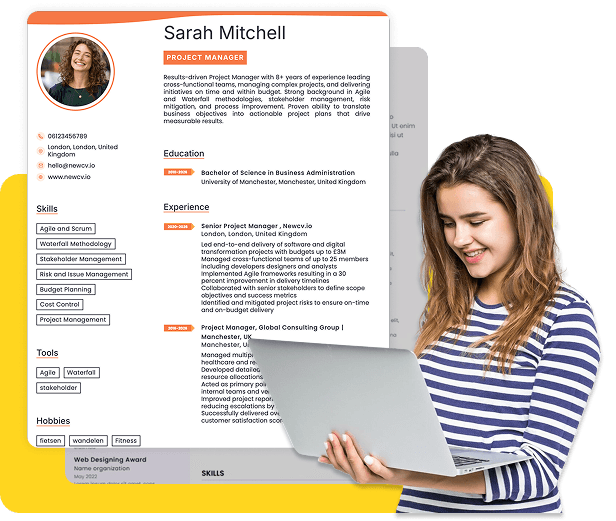
Use ATS-optimised Resume and resume templates that pass applicant tracking systems. Our Resume builder helps recruiters read, scan, and shortlist your Resume faster.

Use professional field-tested resume templates that follow the exact Resume rules employers look for.
Create Resume
Use professional field-tested resume templates that follow the exact Resume rules employers look for.
Create ResumeTypeScript
SQL
For iOS-focused positions, hiring managers want to see modern Apple ecosystem expertise, not outdated iOS-only terminology.
High-value iOS resume skills include:
SwiftUI
UIKit
Combine
Core Data
Xcode
TestFlight
App Store Connect
URLSession
MVVM architecture
Dependency injection
Push notifications
Apple Human Interface Guidelines
Auto Layout
Async/await
CocoaPods
Swift Package Manager
Recruiters increasingly look for modern iOS stack adoption.
Candidates relying heavily on Objective-C without modern Swift experience often struggle unless applying to legacy enterprise environments.
Hiring managers also pay attention to whether candidates mention:
Performance optimization
App Store deployment ownership
Crash reduction
Scalable architecture
Automated testing
Those signals indicate production-level engineering maturity.
Android Studio
Google Play Console
Dependency injection
Material Design
WorkManager
Navigation Component
Firebase integration
Senior Android candidates usually stand out through architecture and scalability skills.
Examples include:
Clean Architecture
Modularization
Offline-first architecture
ANR reduction
Memory optimization
Background processing optimization
Large-scale app maintenance
Recruiters frequently reject Android resumes that only mention “Java Android development” without demonstrating modern Android ecosystem knowledge.
Platform-specific optimization
Mobile animations
Firebase integration
For React Native roles, employers commonly look for:
React Native
Expo
Redux
TypeScript
React Hooks
Native bridge development
Async storage
Mobile navigation libraries
OTA updates
Jest testing
For Flutter-focused positions, employers prioritize:
Dart
Flutter SDK
Bloc
Riverpod
Provider
Flutter testing
Custom widgets
Platform channels
Firebase integration
Adaptive UI development
Error handling
Offline sync
Network layer architecture
WebSockets
Retry strategies
Many candidates simply list “REST API integration.”
That is too generic.
Recruiters respond better to operational depth.
Weak Example
Good Example
The second example demonstrates architecture awareness and production-level implementation experience.
Offline-first synchronization
Hiring managers particularly value candidates who understand synchronization complexity and performance implications.
Release automation
Build signing
Environment configuration management
Engineering leaders want developers who reduce operational friction.
Candidates who understand CI/CD are viewed as lower-maintenance hires because they can support scalable engineering workflows independently.
Espresso
JUnit
Robolectric
UI testing
Integration testing
Detox
Jest
Flutter tests
Appium
Firebase Test Lab
They want confidence that your code will not break production.
Testing skills communicate:
Engineering discipline
Scalability awareness
Long-term maintainability
Lower regression risk
This matters especially in healthcare, fintech, ecommerce, and enterprise mobile environments.
Android Keystore
These skills are especially valuable in:
Banking apps
Healthcare apps
Government applications
Enterprise SaaS products
Ecommerce platforms
Candidates with security knowledge often outperform technically similar competitors because security expertise is harder to find.
Image caching strategies
Many resumes say “improved app performance.”
That statement is weak unless measurable.
Weak Example
Good Example
Specific impact creates credibility.
Time management
Mentoring
User experience awareness
Documentation
They rarely trust standalone soft skill lists.
Instead, they infer soft skills through accomplishments.
Weak Example
Good Example
The second version proves collaboration through execution.
Crash triage
Production support
Backlog refinement
Cross-functional collaboration
Technical estimation
Technical debt management
Hiring managers are not just hiring coders.
They are hiring contributors who can operate effectively within engineering systems.
Candidates with operational maturity usually onboard faster and require less management overhead.
Jetpack Compose
REST APIs
Firebase
CI/CD
Mobile architecture
App Store deployment
Google Play release management
Mobile testing
Agile development
MVVM
Mobile security
Cross-platform development
Do not keyword-stuff your resume.
Modern ATS systems increasingly evaluate contextual relevance.
Instead:
Match keywords naturally to accomplishments
Align keywords to the job description
Use role-specific terminology
Prioritize technologies actually required by the target role
Security implementation
MS Office
Internet research
Team player
Fast learner
Hard worker
Leadership without proof
Recruiters trust demonstrated outcomes more than broad adjectives.
GraphQL
Firebase
Xcode
Android Studio
GitHub Actions
Bitrise
Fastlane
App Store Connect
Google Play Console
XCTest
Espresso
Jest
Detox
Firebase Test Lab
Agile/Scrum
Release management
Code reviews
Sprint planning
Cross-functional collaboration
This structure improves readability and keyword alignment simultaneously.
Skills without achievements lack persuasive power.
Whenever possible, tie skills to measurable outcomes.
Business impact
Team influence
That is how hiring managers distinguish senior engineers from implementation-only developers.


 Upload Resume
 Import from Linkedin