STILL APPLYING. STILL HEARING NOTHING?BUILD YOUR RESUME

STILL APPLYING. STILL HEARING NOTHING?BUILD YOUR RESUME
Choose from a wide range of NEWCV resume templates and customize your NEWCV design with a single click.
FAQ

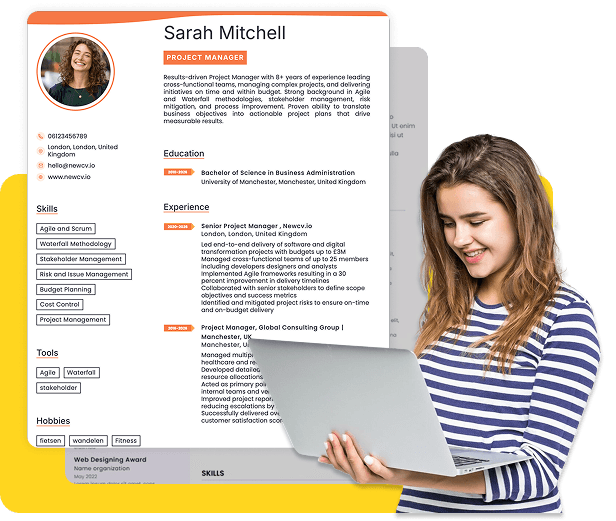
ASP.NET developers targeting FinTech, banking, payment processing, or financial SaaS roles are evaluated very differently from general enterprise developers. Recruiters and hiring managers are not just looking for C# and ASP.NET Core experience. They are looking for evidence that you can build secure, compliant, high-reliability financial systems where downtime, transaction failures, and security mistakes create direct business risk.
The strongest candidates demonstrate experience with transaction workflows, payment gateway integrations, banking APIs, ledger systems, financial reporting, audit logging, PCI DSS awareness, and secure API development. Most resumes fail because they describe generic CRUD development instead of showing measurable impact in financial software environments.
This guide breaks down the exact ASP.NET FinTech developer resume keywords, technical skills, recruiter signals, and project language that help candidates stand out for banking and financial software roles in today’s US hiring market.
Financial technology hiring focuses heavily on risk reduction, reliability, security, and compliance. Recruiters screen resumes differently for FinTech roles than for standard enterprise software jobs.
Hiring managers typically look for evidence of:
Secure transaction processing
Payment gateway integrations
Financial API development
High-volume transaction systems
PCI-aware application development
Banking system integrations
Financial reporting systems
Audit logging and traceability
Role-based access control
Encryption and data protection
Financial SaaS architecture
Transaction reconciliation workflows
SQL performance optimization for financial data
API reliability and uptime improvements
Fraud prevention workflows
Identity verification integrations
Most resumes underperform because candidates only mention technologies without explaining the financial business context behind their work.
A recruiter reviewing banking or payment platform resumes wants to quickly understand:
What financial systems you worked on
Whether you handled sensitive payment or banking data
Whether your applications supported compliance requirements
Whether you improved transaction reliability or scalability
Whether you understand secure software architecture
These keywords improve resume relevance for ATS systems, recruiter searches, and LinkedIn sourcing.
Use them naturally throughout your resume, especially in:
Resume headline
Professional summary
Technical skills section
Project descriptions
Experience bullet points
ASP.NET Core
C#
.NET Developer
FinTech Developer
Banking Software Developer
Financial Systems Developer
Financial SaaS
Payment Processing Systems
Secure Payment APIs
Banking APIs
Transaction Processing
Ledger Systems
Financial Reporting Systems
Enterprise Financial Applications
High-Volume Transaction Systems
Financial Data Processing
Payment Gateway Integration
Banking Portal Development
Financial Workflow Automation
These are critical because financial employers heavily prioritize risk mitigation.
PCI DSS
PCI-Compliant APIs
Secure Transaction Processing
Audit Logging
SOX Compliance
Role-Based Access Control
RBAC
Encryption
OAuth 2.0
OpenID Connect
Identity Verification
Multi-Factor Authentication
Secure API Development
Data Retention Policies
Access Control
Financial Data Security
Authentication and Authorization
API Security
Fraud Detection Workflows
These keywords help position candidates for banking, payment, and transaction-focused environments.
ACH Processing
Card Payment Workflows
Payment Reconciliation
Subscription Billing
Invoice Processing
Transaction Monitoring
Financial Transactions
Banking Integrations
Payment APIs
Webhook Validation
Retry Logic
Settlement Workflows
Payment Failover Handling
Transaction Logging
Account Management Systems
Transaction History Systems
Strong FinTech engineering resumes also demonstrate scalability and backend reliability.
SQL Server
Stored Procedures
Entity Framework Core
Microservices
REST APIs
Distributed Systems
Event-Driven Architecture
Azure
CI/CD Pipelines
Docker
Kubernetes
Redis Caching
Background Processing
Queue-Based Processing
API Performance Optimization
High Availability Systems
System Scalability
Most developers describe technical implementation but fail to communicate business-critical financial impact.
This sounds generic and low-impact.
The second version demonstrates:
Scale
Security awareness
Financial domain knowledge
System reliability
Business impact
That is what recruiters want to see.
These examples align closely with real recruiter search behavior for banking and payment platform roles.
Developed secure ASP.NET Core payment workflows integrating Stripe and ACH APIs with encrypted transaction handling and automated reconciliation processes
Improved payment processing reliability by implementing retry logic, webhook validation, and centralized exception logging, reducing failed transaction incidents by 38%
Built high-volume transaction APIs processing over 500K daily financial events with optimized SQL Server queries and asynchronous processing
Integrated third-party payment gateways into enterprise billing systems while supporting PCI-aware transaction workflows and role-based access control
Designed payment reconciliation services to automate invoice matching, settlement tracking, and transaction auditing
Developed banking APIs for account management, transaction history, and customer authentication using ASP.NET Core and OAuth 2.0
Built secure customer banking portal features supporting financial reporting, transaction filtering, and audit trail visibility
Implemented role-based authorization and secure access controls for internal financial operations dashboards
Supported modernization of legacy banking applications into ASP.NET Core microservices architecture
Improved API uptime and transaction throughput through SQL optimization, caching strategies, and resilient service design
Built financial SaaS modules for subscription billing, reporting automation, and payment lifecycle management
Developed financial reporting dashboards using ASP.NET Core, SQL Server, and stored procedures to reduce reporting generation time by 45%
Implemented audit logging workflows supporting SOX compliance and enterprise financial traceability requirements
Designed secure APIs for invoice systems and financial account management with encrypted data handling and access restrictions
Created backend services supporting automated billing workflows, reconciliation reporting, and customer financial analytics
Recruiters typically spend less than 10 seconds on the first resume scan.
For FinTech roles, they quickly look for these signals:
Recruiters prioritize candidates who clearly worked in:
Banking
Payments
Financial SaaS
Insurance finance
Billing platforms
Subscription systems
Transaction processing
Even strong ASP.NET developers can get rejected if the resume looks too generic.
FinTech employers are extremely risk-sensitive.
Hiring teams want developers who understand:
Secure API architecture
Encryption
Compliance requirements
Transaction security
Authentication systems
Data protection
Even mentioning PCI DSS awareness can improve recruiter confidence.
Recruiters look for evidence that your systems handled:
Large transaction volumes
High uptime requirements
Financial reliability
Real-time processing
Error recovery workflows
High-volume financial systems experience strongly increases interview rates.
The best FinTech resumes include measurable outcomes.
Strong metrics include:
Reduced failed transactions
Improved payment reliability
Faster reconciliation
Reduced reporting time
Increased API uptime
Improved transaction throughput
Reduced fraud incidents
Improved processing efficiency
Metrics make your experience believable and commercially valuable.
Your technical skills section should support both ATS matching and recruiter scanning.
Avoid giant keyword dumps with no structure.
Instead, group technologies strategically.
Languages & Frameworks: C#, ASP.NET Core, .NET 8, Entity Framework Core, REST APIs
Financial Systems: Payment Gateways, ACH Processing, Transaction Systems, Financial Reporting, Billing Platforms, Ledger Systems
Security & Compliance: PCI DSS, OAuth 2.0, RBAC, Encryption, Secure APIs, Audit Logging, Identity Verification
Databases: SQL Server, Stored Procedures, Query Optimization, Redis
Cloud & DevOps: Azure, Docker, Kubernetes, CI/CD Pipelines
Architecture: Microservices, Event-Driven Systems, Distributed Processing, High-Availability APIs
This structure immediately communicates specialization.
Hiring managers in financial software environments care about operational trust.
They ask questions like:
Can this developer safely handle sensitive financial data?
Can they build reliable transaction systems?
Do they understand financial workflows?
Can they work in regulated environments?
Will their code introduce operational risk?
That means your resume should emphasize:
Reliability
Security
Stability
Scalability
Auditability
Transaction accuracy
Generic software engineering language is usually not enough.
You do not need to be a financial expert, but understanding these concepts helps significantly.
Financial systems must maintain consistent, accurate records even during failures.
Strong resumes mention:
Retry handling
Transaction rollback
Idempotency
Reconciliation workflows
Error recovery
These terms signal production-grade financial engineering experience.
Financial software requires traceability.
Important concepts include:
Audit logging
Change tracking
Transaction history
Compliance reporting
User activity monitoring
These are major hiring signals for regulated industries.
Security is a core evaluation area.
Useful experience includes:
Encryption
Secure token handling
API authentication
Access control
MFA integration
Secure payment workflows
Security language dramatically improves FinTech resume quality.
Experienced ASP.NET Core developer specializing in secure financial systems, payment APIs, and transaction processing platforms. Built and maintained high-volume banking and financial SaaS applications using C#, ASP.NET Core, SQL Server, and Azure. Experienced in PCI-aware development, audit logging, payment reconciliation workflows, and secure API architecture. Proven success improving transaction reliability, financial reporting performance, and enterprise system scalability.
This works because it immediately positions the candidate within a specialized hiring market.
Strong financial software teams also evaluate operational maturity.
Hiring managers value developers who:
Think defensively about system failures
Understand business-critical uptime requirements
Write maintainable production code
Communicate clearly with compliance and product teams
Handle incident debugging calmly
Understand data sensitivity
Candidates who demonstrate these traits often outperform technically stronger developers who lack financial systems awareness.
This hurts positioning significantly.
This says almost nothing.
The second version creates specialization immediately.
Many candidates actually worked on PCI-aware systems but never mention it.
That is a major missed opportunity.
If you supported:
Payment security
Access control
Audit logging
Encryption
Compliance workflows
Include it clearly.
Technology-only resumes feel weak.
Employers care more about:
System purpose
Financial impact
Operational reliability
Security outcomes
Always connect technical work to business outcomes.
Terms like “microservices” or “cloud-native” do not help unless connected to actual business systems.
Context matters.
The second version demonstrates practical business relevance.
Many developers transition successfully from adjacent industries.
Transferable experience includes:
E-commerce payment systems
Billing platforms
Subscription systems
ERP finance modules
Insurance software
SaaS invoicing systems
Accounting integrations
The key is positioning your work using financial system terminology where accurate.
For example:
This creates stronger alignment with FinTech hiring expectations.
Use ATS-optimised Resume and resume templates that pass applicant tracking systems. Our Resume builder helps recruiters read, scan, and shortlist your Resume faster.

Use professional field-tested resume templates that follow the exact Resume rules employers look for.
Create Resume
Use professional field-tested resume templates that follow the exact Resume rules employers look for.
Create Resume


 Upload Resume
 Import from Linkedin