STILL APPLYING. STILL HEARING NOTHING?BUILD YOUR RESUME

STILL APPLYING. STILL HEARING NOTHING?BUILD YOUR RESUME
Choose from a wide range of NEWCV resume templates and customize your NEWCV design with a single click.
FAQ
A full stack developer resume should change significantly as your seniority increases. Entry-level candidates are evaluated on technical foundation, projects, GitHub activity, and execution potential. Mid-level engineers are assessed on ownership, delivery impact, and collaboration. Senior engineers are screened for architecture decisions, scalability, mentoring, and operational maturity. Staff and principal engineers are evaluated almost entirely on organizational impact, technical strategy, and cross-functional influence.
Most resumes fail because candidates present themselves at the wrong level. Junior engineers try to sound senior without proof. Senior engineers still write task-based bullets instead of leadership-driven outcomes. Staff-level candidates often focus too heavily on coding rather than business and platform impact.
This guide breaks down exactly how hiring managers evaluate full stack developer resumes by seniority, including what to emphasize, what to remove, and how to position yourself competitively in today’s US hiring market.
Recruiters and engineering managers do not use the same criteria for every full stack resume.
Your resume is judged against expectations for your experience band, not against a universal standard.
Here’s how evaluation changes by seniority:
| Seniority | Primary Evaluation Criteria |
|---|---|
| Entry-Level / Junior | Technical foundation, projects, learning ability, initiative |
| Mid-Level | Ownership, feature delivery, reliability, collaboration |
| Senior | Architecture, scalability, leadership, operational maturity |
| Staff / Principal | Organizational influence, technical strategy, system governance |
One of the biggest resume mistakes is presenting responsibilities that do not align with your level.
For example:
A junior developer claiming “architected enterprise-scale systems” raises credibility concerns
A senior engineer listing only coding tasks looks underqualified
A staff engineer focusing mostly on React component work appears mispositioned
Regardless of level, strong resumes consistently demonstrate five things:
Hiring teams want immediate visibility into your stack.
Do not bury core technologies inside paragraphs.
Include clearly categorized technologies such as:
Frontend frameworks
Backend languages
Databases
Cloud platforms
CI/CD tools
Testing frameworks
Entry-level hiring is fundamentally about risk reduction.
Companies know junior developers need mentoring. What they want to know is:
Can this person learn quickly?
Can they finish projects?
Can they debug problems independently?
Do they understand modern development workflows?
Can they contribute without excessive hand-holding?
Your resume should prove execution ability, not artificial seniority.
Junior candidates often struggle with metrics because they lack large-scale production systems.
That’s normal.
Use realistic metrics tied to execution.
Strong junior metrics include:
Features completed
Bugs resolved
APIs integrated
Deployment frequency
Performance improvements
User engagement in projects
Test coverage improvements
Mid-level hiring focuses heavily on ownership and reliability.
At this stage, companies expect you to independently deliver production-ready features.
Hiring managers expect evidence of:
End-to-end feature ownership
Cross-functional collaboration
API design experience
Product delivery
Database optimization
Cloud deployment familiarity
High-performing mid-level resumes often include:
API throughput
Performance improvements
Product adoption metrics
Deployment frequency
Infrastructure optimization
User engagement improvements
Revenue-related outcomes
Good Example
“Built and deployed scalable GraphQL APIs supporting 1.2M monthly transactions with 99.95% uptime.”
Senior-level resumes are evaluated very differently.
At this level, coding ability is assumed.
The real question becomes:
Can this engineer lead complex technical systems successfully?
Senior resumes should clearly show:
Architecture ownership
Scalability decisions
Technical leadership
Mentoring
Reliability improvements
CI/CD ownership
Many senior engineers still write resumes like individual contributors.
This is one of the fastest ways to lose interviews.
Weak senior bullets focus on implementation.
Strong senior bullets focus on system-level impact.
Weak Example
“Developed backend services using Node.js and PostgreSQL.”
Good Example
“Architected distributed Node.js services supporting 8M+ monthly users while reducing infrastructure costs by 24%.”
The difference is not wording.
It is scope.
Companies want engineers who can make scalable, maintainable decisions.
Strong resumes include:
System redesigns
Scalability initiatives
Migration projects
Performance optimization
Reliability engineering
You do not need direct reports to demonstrate leadership.
Strong signals include:
Senior metrics should reflect system-level influence.
Strong examples include:
Uptime improvements
Scalability gains
Deployment automation
Infrastructure savings
Reliability metrics
Performance optimization
Incident reduction
Good Example
“Led migration to Kubernetes-based infrastructure, reducing deployment time from 45 minutes to under 6 minutes.”
Staff and principal resumes are fundamentally different from standard engineering resumes.
At this level, hiring managers care far less about coding output and far more about organizational influence.
These roles are assessed based on:
Cross-team architecture
Platform standardization
Technical strategy
Engineering governance
Organizational scalability
Business alignment
Many staff candidates still over-focus on implementation details.
That creates down-leveling risk.
A staff engineer is expected to influence engineering systems across teams, not simply build features.
Strong staff resumes demonstrate influence across multiple teams or business units.
Examples include:
Standardizing platform architecture
Defining engineering best practices
Leading migration strategies
Driving platform adoption
Improving developer productivity
The metrics at this level should reflect organizational outcomes.
Strong examples include:
Engineering efficiency gains
Platform adoption
Infrastructure cost reduction
Developer productivity improvements
Organization-wide reliability metrics
System consolidation impact
Good Example
“Led organization-wide platform modernization initiative adopted across 14 engineering teams, reducing deployment inconsistencies by 68%.”
Good Example
“Defined cloud governance standards that reduced annual infrastructure spend by $2.1M while improving reliability.”
Many full stack developers unintentionally weaken their positioning by branding themselves too narrowly as “MERN developers.”
For junior roles, MERN specialization is acceptable.
For senior roles, it can become limiting.
Senior and staff-level engineers are expected to demonstrate adaptability across systems and architectures.
Instead of overly emphasizing MERN branding, position yourself as:
Full stack engineer
Platform engineer
Distributed systems engineer
Backend-focused full stack engineer
Product engineer
Your stack should support your positioning, not define it entirely.
Most engineering skills sections are poorly structured.
Avoid giant keyword dumps.
Group technologies by category.
Example:
Frontend: React, Next.js, TypeScript, Redux
Backend: Node.js, Express, Python, GraphQL
Databases: PostgreSQL, MongoDB, Redis
Cloud & DevOps: AWS, Docker, Kubernetes, Terraform, GitHub Actions
Testing: Jest, Cypress, Playwright
This improves recruiter scanning and ATS parsing simultaneously.
Recruiters scan engineering resumes extremely quickly.
Large text blocks reduce readability and interview conversion.
Hiring managers appreciate technical depth.
Recruiters often do not.
Your resume must remain understandable to non-engineering screeners.
Strong bullets typically follow this structure:
Action
Scope
Technical context
Business or engineering outcome
The market has become significantly more competitive.
Modern engineering resumes increasingly require evidence of:
AI-assisted development workflows
Cloud-native systems
CI/CD automation
Security awareness
Performance optimization
Observability practices
Infrastructure collaboration
Even strong developers lose interviews when resumes look outdated.
Hiring managers increasingly prioritize engineers who can operate effectively within modern software delivery environments.
The resumes that consistently convert into interviews usually share these traits:
Clear seniority positioning
Strong measurable outcomes
Modern engineering practices
Readable structure
Real ownership signals
Business-relevant impact
Technical depth without jargon overload
The resumes that fail typically:

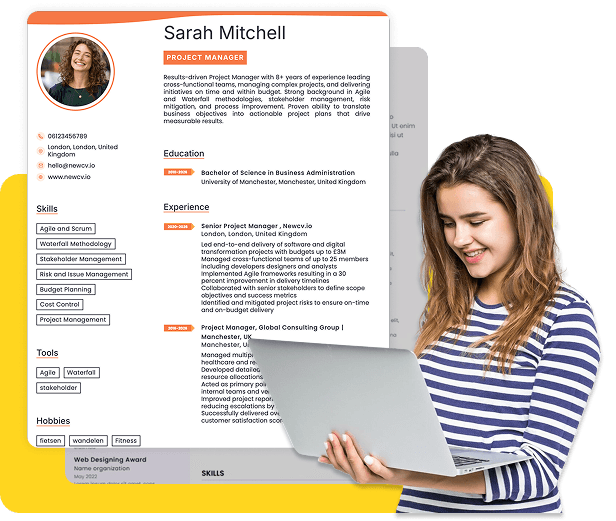
Use ATS-optimised Resume and resume templates that pass applicant tracking systems. Our Resume builder helps recruiters read, scan, and shortlist your Resume faster.

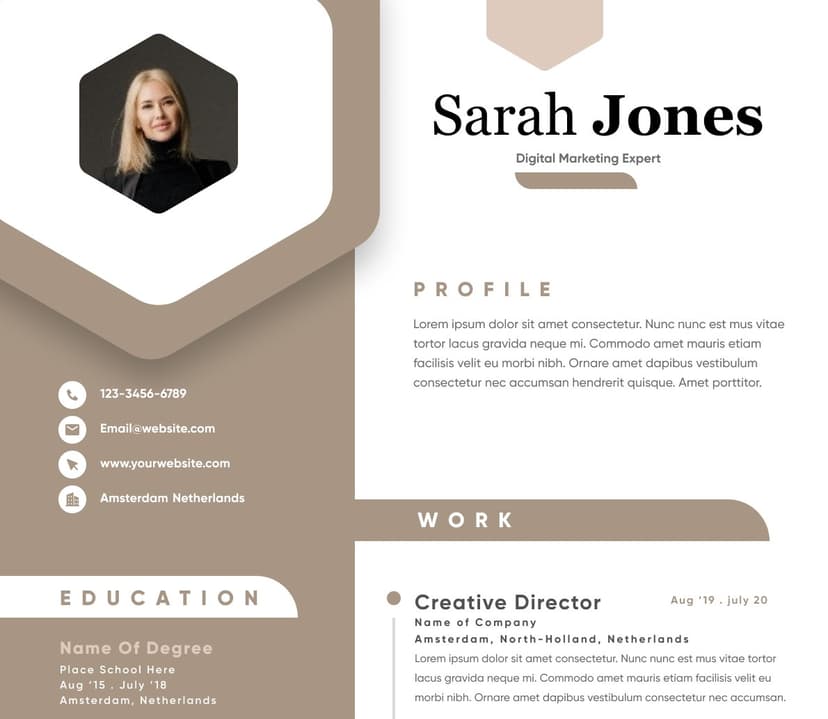
Use professional field-tested resume templates that follow the exact Resume rules employers look for.
Create Resume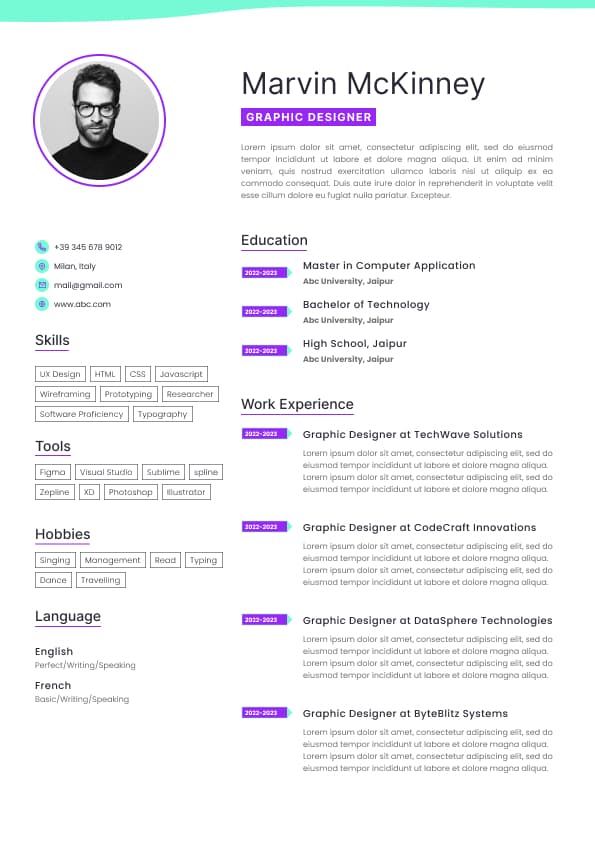
Use professional field-tested resume templates that follow the exact Resume rules employers look for.
Create ResumeYour resume must demonstrate the expected scope, complexity, and influence associated with your seniority.
Infrastructure tools
Engineering resumes that only describe tasks perform poorly.
Strong resumes connect technical work to outcomes.
Examples include:
Faster deployments
Reduced infrastructure costs
Improved application performance
Increased reliability
Better customer experience
Higher engineering efficiency
Hiring managers increasingly screen for operational maturity.
Strong resumes include experience with:
CI/CD pipelines
Cloud deployment
Monitoring and observability
Security practices
Testing automation
Containerization
Infrastructure as code
Metrics dramatically improve interview conversion rates.
Weak bullets describe activity.
Strong bullets describe measurable outcomes.
Weak Example
“Worked on APIs for the application.”
Good Example
“Built and optimized 12 REST APIs used by 80K+ monthly users, reducing average response time by 37%.”
The scope of your accomplishments matters as much as the accomplishment itself.
Recruiters evaluate:
Complexity
Ownership
Decision-making authority
Team influence
System scale
Cross-functional impact
Projects are often the single most important section for junior candidates.
Strong projects demonstrate:
Real functionality
Full-stack integration
Authentication
Database usage
API integration
Deployment
Responsive UI
Error handling
Weak projects include:
Tutorial clones
Incomplete apps
Pure frontend demos
Generic CRUD apps with no differentiation
Recruiters increasingly verify technical credibility through GitHub and live applications.
High-performing junior candidates often include:
Active GitHub repositories
Clean README documentation
Deployed applications
API integrations
Meaningful commit history
Even short-term experience matters.
Hiring managers care less about company prestige and more about whether you contributed to production-level work.
Coursework only matters if:
You lack practical experience
The coursework is directly relevant
The projects demonstrate strong execution
Otherwise, coursework should remain minimal.
Good Example
“Developed and deployed a MERN-stack task management app with JWT authentication and role-based access control used by 300+ student users.”
Good Example
“Reduced frontend load time by 28% by optimizing React rendering and lazy-loading assets.”
Agile execution
Production debugging
Mid-level resumes should feel operationally mature.
The strongest mid-level resumes demonstrate consistent business contribution.
Weak mid-level resumes still read like junior resumes:
“Assisted with development”
“Worked on frontend tasks”
“Helped build APIs”
Strong mid-level resumes emphasize ownership:
“Led implementation of payment integration used across 3 product lines”
“Designed and deployed scalable Node.js APIs serving 500K+ requests daily”
“Owned feature delivery from architecture planning through production deployment”
Technology lists alone do not prove capability.
Hiring managers care more about:
What you built
What problems you solved
What impact you created
Many developers describe engineering work without explaining why it mattered.
Strong candidates connect engineering decisions to customer or business outcomes.
Mid-level engineers are expected to operate effectively with:
Product managers
Designers
QA teams
DevOps engineers
Stakeholders
Resumes that imply isolated coding work can hurt advancement potential.
“Improved application performance by 42% through query optimization and frontend caching strategies.”
Security awareness
Cross-team collaboration
A senior resume should communicate engineering judgment, not just technical execution.
Mentoring developers
Leading technical initiatives
Setting engineering standards
Driving modernization efforts
Coordinating cross-team delivery
Modern senior engineering roles heavily emphasize production responsibility.
Strong resumes include:
CI/CD ownership
Incident reduction
Monitoring systems
Infrastructure automation
Security improvements
Reliability engineering
Good Example
“Improved platform reliability from 99.2% to 99.98% through observability enhancements and automated failover systems.”
Executive communication
Long-term technical vision
Your resume should demonstrate organizational leverage.
Hiring managers want evidence of long-term thinking.
Strong resumes show:
Platform modernization
Technical roadmap ownership
Infrastructure evolution
Governance initiatives
Security standardization
Staff engineers frequently operate between engineering and leadership.
Resumes should demonstrate:
Stakeholder influence
Strategic alignment
Multi-team coordination
Decision-making authority
Most engineering resumes should remain:
1 page for junior candidates
2 pages for experienced engineers
Longer resumes are acceptable only for highly senior technical leadership roles.
Lack measurable impact
Over-focus on technologies
Misrepresent seniority
Read like job descriptions
Show little ownership
Include vague accomplishments
Strong engineering resumes make the hiring manager confident you can already operate at the target level.
That confidence is what creates interviews.


 Upload Resume
 Import from Linkedin