STILL APPLYING. STILL HEARING NOTHING?BUILD YOUR RESUME

STILL APPLYING. STILL HEARING NOTHING?BUILD YOUR RESUME
Choose from a wide range of NEWCV resume templates and customize your NEWCV design with a single click.
FAQ

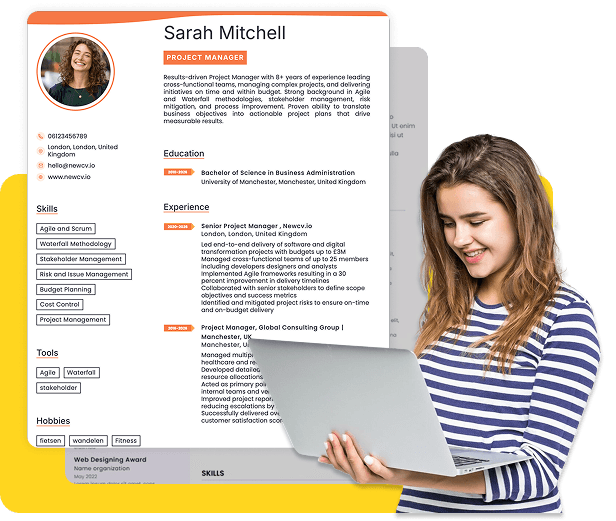
A full stack developer resume in simple English should clearly explain what you built, the technologies you used, and the results you achieved without sounding overly technical or complicated. Recruiters often spend less than 10 seconds scanning a resume during the first review. If your resume is filled with confusing jargon, long sentences, or unclear project descriptions, it becomes harder to understand your actual value.
The best full stack developer resumes use direct language, short bullet points, and practical examples. Instead of writing complicated descriptions, focus on explaining what you built, how you built it, and why it mattered. For example, “Built a web app using React and Node.js to help users track expenses” is much stronger and easier to understand than vague technical wording filled with buzzwords.
This guide shows exactly how to write a simple, professional, recruiter-friendly full stack developer resume that works in today’s US job market.
Recruiters are not looking for the most complicated resume. They are looking for clarity.
A strong resume immediately answers these questions:
What technologies can this person use?
Have they built real applications?
Can they explain technical work clearly?
Do they understand both front-end and back-end development?
Can they work with a team?
Are they job-ready?
Most weak developer resumes fail because they try to sound “advanced” instead of sounding clear.
Clear descriptions of projects
Simple explanations of technical tasks
Real technologies listed naturally
Short, readable bullet points
Results when possible
Easy-to-scan formatting
Practical project examples
Long paragraphs
Too much technical jargon
Generic buzzwords like “dynamic synergy”
Unclear project descriptions
Copy-paste resume templates
Listing technologies without context
Overexplaining simple tasks
Hiring managers care more about whether you can build useful applications than whether you can write complicated resume language.
For most candidates, especially beginners and junior developers, the reverse chronological resume format works best.
Use this structure:
Contact information
Professional summary
Technical skills
Work experience
Projects
Education
Certifications if relevant
This format works well because recruiters can quickly find the information they care about.
The goal is not to sound less skilled. The goal is to sound easier to understand.
Avoid large blocks of text.
Keep bullet points focused on one idea.
Weak Example
Built and maintained scalable enterprise-level applications while leveraging modern JavaScript frameworks and implementing robust API architecture for seamless user experiences.
Good Example
Built web applications using React and Node.js.
Created APIs to send and receive data between the website and database.
Improved website speed and fixed bugs.
The second version is easier to scan and understand immediately.
Simple action verbs perform better than overly complicated wording.
Use verbs like:
Built
Created
Fixed
Improved
Tested
Updated
Designed
Developed
Deployed
Managed
Added
Supported
These words sound natural and professional.
Do not create giant keyword lists without context.
Instead of this:
JavaScript, React, Node.js, Express, MongoDB, AWS, Docker, Git, SQL
Write this:
Built web apps using React, Node.js, and MongoDB.
Deployed applications using AWS and Docker.
This helps recruiters understand how you actually used the technology.
Your summary should quickly explain:
Your experience level
Main technologies
Type of applications you built
Your value as a developer
Keep it short.
Motivated full stack developer with experience building web applications using JavaScript, React, Node.js, and MongoDB. Created personal and academic projects that included front-end design, APIs, and databases. Strong problem-solving skills and eager to grow in a software development role.
Full stack developer with 2 years of experience building and maintaining web applications using React, Node.js, Express, and SQL. Improved application performance, fixed bugs, and worked with cross-functional teams to deliver new features.
Full stack developer with a background in customer service and experience building responsive web applications using React and Node.js. Strong communication skills with hands-on experience creating APIs, databases, and user-focused applications.
This is where most resumes succeed or fail.
Recruiters want to understand:
What you built
What technologies you used
What problems you solved
Whether your work had impact
Use this structure:
Action Verb + What You Built + Technology + Result
Example:
Built a customer dashboard using React and Node.js that reduced manual data entry time.
That structure works because it is simple, clear, and practical.
Built responsive web pages using HTML, CSS, and JavaScript
Created user interfaces using React
Improved website speed and loading performance
Fixed front-end bugs and user interface issues
Added mobile-friendly designs for better user experience
Connected front-end pages with APIs
Updated website layouts based on user feedback
Created APIs using Node.js and Express
Built server-side features for web applications
Managed user login and authentication
Wrote SQL queries to manage application data
Designed database tables using MySQL and MongoDB
Improved API performance and fixed server errors
Added security updates to protect user data
Built a task management web app using React, Node.js, and MongoDB
Created an e-commerce website with product search and payment features
Developed a blogging platform where users could create and edit posts
Built a chat application with real-time messaging
Created REST APIs for mobile and web applications
Deployed applications to AWS and Render
Used Git and GitHub to manage code changes
Worked with designers and developers to build new features
Joined code reviews and fixed issues found by team members
Helped test applications before deployment
Worked with product managers to improve application usability
Supported debugging and troubleshooting during releases
Michael Carter
Dallas, Texas
michaelcarter@email.com
(555) 555-5555
GitHub: github.com/michaelcarter
LinkedIn: linkedin.com/in/michaelcarter
Motivated full stack developer with hands-on experience building web applications using JavaScript, React, Node.js, and MongoDB. Created personal and academic projects focused on responsive design, APIs, and database management. Strong problem-solving skills with a passion for learning new technologies.
JavaScript
React
Node.js
Express
MongoDB
HTML
CSS
Git
GitHub
REST APIs
SQL
Task Manager Web App
Built a task management application using React and Node.js
Created APIs to manage tasks and user accounts
Connected MongoDB database to store application data
Added login and signup features for users
Improved mobile responsiveness using CSS
E-Commerce Website
Built an online store using React and Express
Added product search and shopping cart features
Created backend APIs for product management
Used GitHub for version control
Deployed the application online
Bachelor of Science in Computer Science
University of Texas
Many developers believe complicated wording makes them sound smarter.
In hiring, the opposite is usually true.
Clear communication is a major skill in software development.
Hiring managers often reject resumes when:
Project descriptions are confusing
Technical work is unclear
Bullet points sound generic
The candidate hides behind jargon
The resume feels copied from the internet
A simple resume shows confidence.
It tells recruiters:
“This person understands what they built and can explain it clearly.”
That matters during hiring.
Applicant Tracking Systems scan resumes for keywords and context.
Simple resumes often perform better because:
Skills are easier to identify
Technologies appear naturally
Job titles are clear
Formatting is cleaner
Bullet points are readable
Use standard section titles like “Skills” and “Experience”
Avoid graphics and complicated layouts
Use normal fonts
Include technologies naturally in bullet points
Match keywords from the job description honestly
Save your resume as PDF unless instructed otherwise
Bad resumes say:
“Worked on web applications.”
Strong resumes say:
“Built a React web app that allowed users to track expenses.”
Specific details create credibility.
Some developers list 30 to 50 tools.
That often hurts credibility.
Recruiters prefer candidates who clearly explain real experience with a smaller set of technologies.
Many resumes sound like documentation instead of communication.
Keep descriptions human and readable.
Even junior developers can show impact.
Examples:
Improved loading speed
Fixed bugs
Reduced errors
Added features
Improved user experience
Automated tasks
Results make your work feel real.
Include skills you can actually discuss during interviews.
HTML
CSS
JavaScript
React
Angular
Vue.js
Responsive Design
Node.js
Express
Python
Java
REST APIs
Authentication
Server Management
MongoDB
MySQL
PostgreSQL
SQL Queries
Database Design
Git
GitHub
Docker
AWS
Firebase
Vercel
Render
Problem-solving
Team collaboration
Communication
Debugging
Time management
If you do not have professional experience yet, focus on projects.
Recruiters hiring junior developers often care more about practical skills than job history.
Build 2 to 4 real projects
Use GitHub consistently
Deploy your applications online
Include practical features like authentication and APIs
Explain projects clearly
Show progression in complexity
Expense tracker
E-commerce website
Chat application
Blog platform
Task manager
Booking system
Portfolio website
The project matters less than how well you explain it.
Hiring managers usually scan resumes in this order:
Job title
Technical skills
Recent projects
Work experience
Technologies used
Evidence of practical development work
They are trying to answer one main question:
“Can this person contribute to our development team?”
Your resume should reduce uncertainty.
Real projects
Clear technologies
Practical descriptions
Consistent skill usage
Clean formatting
GitHub portfolio
Deployed applications
Buzzword-heavy writing
No project details
Huge technology lists
Generic summaries
Poor formatting
No practical examples
Yes.
For developers, links matter.
A recruiter may not always open them during the first screen, but hiring managers often do later.
Include:
GitHub
Portfolio website
Live project demos if available
Make sure:
Projects work properly
README files are clear
Code is organized
Applications are not broken
A strong portfolio can offset limited work experience.
For most candidates:
1 page for beginners and junior developers
1 to 2 pages for experienced developers
Do not add unnecessary content just to fill space.
A focused one-page resume is often stronger than a weak two-page resume.
Recruiters scan quickly.
Use:
Short bullet points
Clear headings
White space
Consistent formatting
Explain what you actually built.
Avoid vague claims like:
“Passionate developer with excellent synergy skills.”
Instead say:
“Built web applications using React and Node.js.”
Employers want developers who can contribute to real applications.
Show:
APIs
Databases
Front-end work
Deployment
Debugging
Team collaboration
The best technical resumes are surprisingly simple.
Clear communication is part of being a strong developer.
If recruiters cannot quickly understand your resume, interviews become less likely.
Use ATS-optimised Resume and resume templates that pass applicant tracking systems. Our Resume builder helps recruiters read, scan, and shortlist your Resume faster.

Use professional field-tested resume templates that follow the exact Resume rules employers look for.
Create Resume
Use professional field-tested resume templates that follow the exact Resume rules employers look for.
Create Resume


 Upload Resume
 Import from Linkedin