STILL APPLYING. STILL HEARING NOTHING?BUILD YOUR RESUME

STILL APPLYING. STILL HEARING NOTHING?BUILD YOUR RESUME
Choose from a wide range of NEWCV resume templates and customize your NEWCV design with a single click.
FAQ
Full stack development is one of the most saturated technical hiring markets right now. Hiring managers are reviewing hundreds of resumes for a single opening, especially for React, Node.js, Java Spring Boot, Python Django, and .NET full stack roles.
Most resumes get rejected for one of three reasons:
The candidate cannot clearly prove real-world engineering capability
The resume does not align with the employer’s stack
The resume lacks measurable product or business impact
Recruiters are not just looking for someone who “knows React” or “worked with APIs.” They want evidence that you can contribute in a production environment with minimal ramp-up.
That means your resume must prove:
You shipped features to production
You worked across frontend and backend systems
One of the fastest ways to get rejected is writing generic bullets like:
Weak Example
Worked on web applications
Helped develop frontend components
Assisted backend development
Participated in Agile ceremonies
These bullets communicate almost nothing.
Hiring managers need technical specificity.
Good Example
Built and deployed React and TypeScript dashboard features used by 45,000+ monthly users, reducing customer onboarding time by 28%
Many candidates assume ATS rejection is mostly formatting. That is only partially true.
Modern ATS filtering primarily revolves around keyword relevance, stack alignment, and contextual matching.
If a company uses:
React
TypeScript
Node.js
AWS
GraphQL
PostgreSQL
CI/CD
And your resume only says:
Your keywords should match the actual target role.
Common high-value keywords include:
React
Next.js
Angular
Vue.js
TypeScript
JavaScript
Node.js
Express.js
One major issue with weak full stack resumes is that they sound academic instead of operational.
Hiring managers want to know:
Did you build systems used by real users?
Did you improve performance?
Did you reduce outages or bugs?
Did you contribute to deployments?
Did you handle authentication, APIs, databases, or cloud infrastructure?
Did you collaborate with product managers, designers, QA, and DevOps teams?
A resume that only describes coding tasks feels junior, even if the candidate has years of experience.
The best resume bullets follow this structure:
Strong bullets combine:
What you built
Which technologies you used
The scale or complexity
The measurable outcome
Developed React and TypeScript customer portal features serving 120,000+ active users, improving user retention by 18%
Built Node.js microservices integrated with Stripe APIs, reducing payment processing failures by 42%
One of the biggest mistakes full stack developers make is using one generic resume for every role.
A MERN stack employer evaluates candidates differently than a Java Spring Boot company.
React
Node.js
Express
MongoDB
API integration
Frontend performance
JavaScript ecosystem depth
For many full stack roles, especially entry-level and mid-level positions, your GitHub and deployed projects help validate technical credibility.
This matters even more if:
Your experience is limited
You are self-taught
You completed a bootcamp
You are transitioning into software engineering
Your work history lacks recognizable tech brands
A strong project section can offset weaker professional experience.
Weak projects look like tutorials.
Strong projects demonstrate:
Real architecture decisions
Authentication systems
API integrations
Database design
Deployment workflows
Testing
Performance optimization
User-focused functionality
Most developers over-focus on tasks instead of outcomes.
Recruiters care about:
Revenue impact
Performance gains
Reliability improvements
User growth
Engineering efficiency
Scalability
Delivery acceleration
This is what separates interview-worthy resumes from ignored resumes.
A huge red flag:
React
AWS
Docker
Kubernetes
But none of those technologies appear inside the experience bullets.
Recruiters assume the skills are inflated.
Every major technology in your skills section should appear in project or work experience bullets.
Common ATS issues include:
Multi-column layouts
Graphics-heavy designs
Icons replacing text
Tables for core experience sections
Excessive colors
PDF export issues
Unclear section hierarchy
Best practice:
Simple single-column layout
The strongest resumes prioritize the sections recruiters evaluate first.
Your summary should position you strategically.
Avoid:
Weak Example
“Motivated full stack developer passionate about coding.”
Use:
Good Example
“Full stack developer with 5+ years of experience building scalable SaaS applications using React, TypeScript, Node.js, PostgreSQL, and AWS. Proven track record improving API performance, reducing deployment failures, and delivering customer-facing features used by 100K+ users.”
This immediately establishes relevance.
Organize by category.
Example structure:
Frontend: React, Next.js, TypeScript, Redux, Tailwind CSS
Backend: Node.js, Express.js, Spring Boot, Django
Hiring managers are evaluating risk.
They are asking:
Can this person contribute quickly?
Can they work in our stack?
Have they solved similar problems before?
Will they require heavy supervision?
Can they collaborate cross-functionally?
Do they understand production systems?
Your resume should reduce uncertainty.
The more clearly you communicate production-level capability, the stronger your interview conversion rate becomes.
Many candidates accidentally position themselves below their actual level.
Lists technologies without outcomes
Describes coursework heavily
Uses vague language
Focuses on learning instead of impact
Minimal ownership language
Demonstrates feature ownership
Tailoring does not mean rewriting from scratch.
It means re-prioritizing relevant experience.
Move higher:
React
TypeScript
Frontend optimization
UI performance
State management
Accessibility
Component architecture
Certifications alone will not get interviews.
But they can strengthen credibility when paired with real projects and technical experience.
Helpful certifications include:
AWS Certified Developer
AWS Solutions Architect
Azure Developer Associate
Google Cloud certifications
Kubernetes certifications
Meta Front-End or Back-End certificates
The key is relevance to the target role.
If your full stack developer resume has low response rates, these are usually the highest-impact fixes:
Rewrite vague bullets with measurable outcomes
Match the exact target stack from the job description
Add GitHub and deployed project links
Include production metrics wherever possible
Remove generic summaries
Add testing and deployment experience
Improve ATS keyword alignment
Tailor resumes by role category
The best resumes consistently communicate:
Technical depth
Production-level engineering
Business impact
Stack alignment
Ownership
Scalability awareness
Delivery capability
They sound like engineers who solve problems, not candidates listing tasks.
That distinction matters enormously in competitive hiring markets.

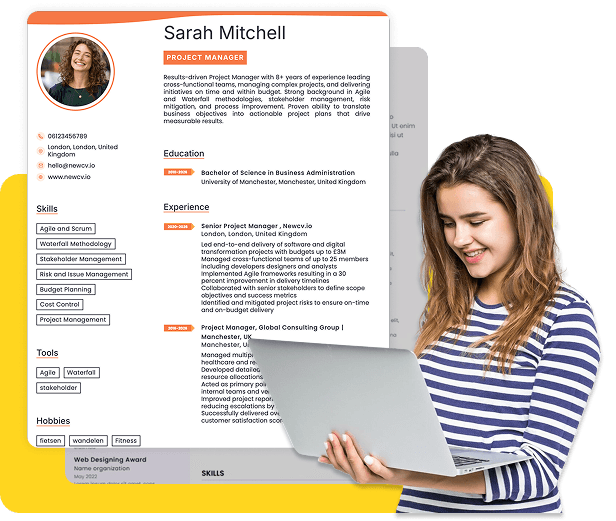
Use ATS-optimised Resume and resume templates that pass applicant tracking systems. Our Resume builder helps recruiters read, scan, and shortlist your Resume faster.

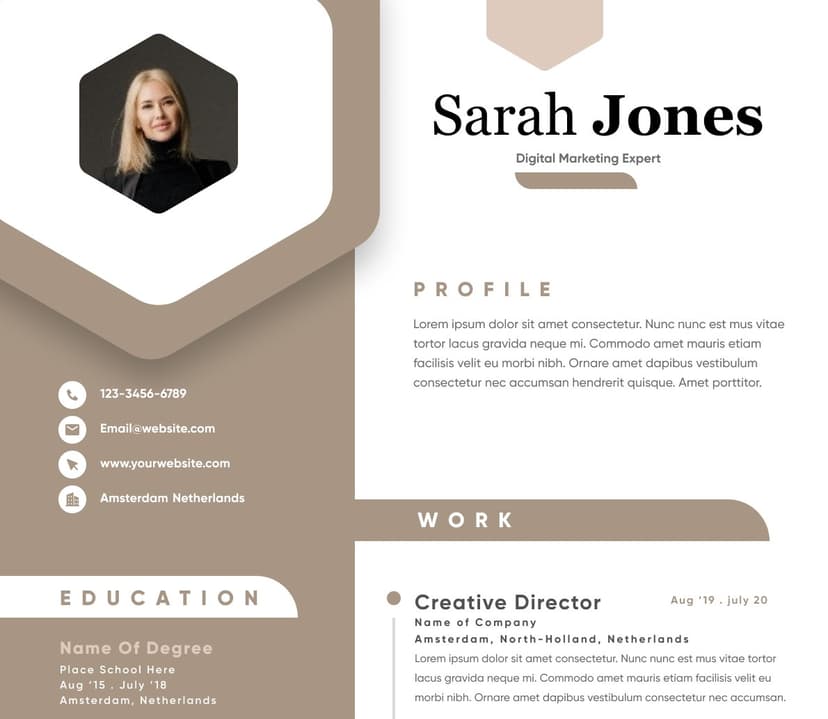
Use professional field-tested resume templates that follow the exact Resume rules employers look for.
Create Resume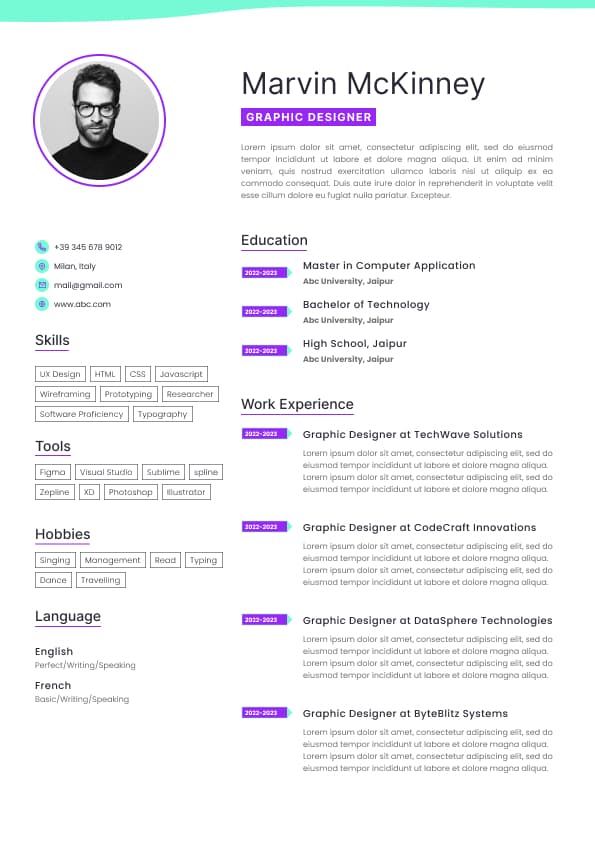
Use professional field-tested resume templates that follow the exact Resume rules employers look for.
Create ResumeYou understand databases, APIs, testing, deployment, and debugging
You contributed to performance, scalability, reliability, or delivery speed
You can work within Agile engineering teams
If your resume does not clearly communicate those outcomes within the first scan, it loses momentum immediately.
Developed Node.js and Express REST APIs handling 3M+ requests monthly with 99.95% uptime
Optimized PostgreSQL queries and caching logic, lowering API response time from 1.8 seconds to 420 milliseconds
Increased Jest and Cypress test coverage from 42% to 81%, reducing post-release production bugs by 35%
The difference is measurable engineering impact.
JavaScript
Web development
APIs
You are already at a disadvantage.
The ATS and recruiter both want stack specificity.
Java Spring Boot
.NET Core
Python Django
Flask
REST API
GraphQL
MongoDB
PostgreSQL
MySQL
Redis
Docker
Kubernetes
AWS
Azure
GCP
CI/CD
Jenkins
GitHub Actions
Agile
Microservices
Unit testing
Integration testing
Jest
Cypress
Selenium
Terraform
OAuth
Authentication
Authorization
WebSockets
SaaS
E-commerce
Performance optimization
But keyword stuffing alone does not work.
The keywords must appear naturally inside accomplishment-driven bullets.
Migrated legacy monolith services to Dockerized AWS infrastructure, cutting deployment time from 2 hours to 14 minutes
Implemented Redis caching and query optimization, reducing backend latency by 63%
Automated CI/CD pipelines using GitHub Actions and Jenkins, decreasing release rollback incidents by 31%
These bullets communicate engineering maturity.
Java
Spring Boot
Hibernate
REST services
Enterprise systems
SQL
Scalable backend architecture
C#
ASP.NET Core
Azure
SQL Server
Enterprise applications
API integrations
Django
Flask
FastAPI
Data-heavy applications
API services
Cloud deployment
If your resume is too generic, recruiters assume you are mass-applying.
Tailoring significantly improves interview conversion.
The second version sounds production-capable.
API response time reduction
Page speed improvement
Bug reduction
Increased uptime
Faster deployment cycles
Higher test coverage
User adoption growth
Infrastructure cost savings
Reduced production incidents
Improved checkout conversion rate
Reduced support tickets
Numbers create credibility.
Clear headings
Standard fonts
Consistent bullet formatting
Chronological structure
A clean resume performs better in both ATS systems and recruiter scans.
Databases: PostgreSQL, MongoDB, MySQL, Redis
Cloud & DevOps: AWS, Docker, Kubernetes, CI/CD, GitHub Actions
Testing: Jest, Cypress, Selenium
Tools: Git, Jira, Postman, Figma
This improves readability and ATS matching.
This is the most important section.
Each role should communicate:
Stack
Scope
Scale
Outcomes
Engineering contribution
Weak resumes hide technical depth inside generic wording.
Strong resumes surface technical ownership immediately.
Shows measurable outcomes
Includes production metrics
Mentions scalability and optimization
Explains collaboration and delivery impact
Architecture decisions
Cross-team leadership
System scalability
Platform reliability
Engineering process improvements
Mentorship
Business alignment
Your wording directly affects perceived seniority.
Prioritize:
APIs
Database scaling
Microservices
Authentication
Cloud infrastructure
Queue systems
Performance optimization
Highlight:
Multi-tenant architecture
Billing systems
User authentication
Subscription management
Analytics dashboards
B2B workflows
Emphasize:
Checkout flows
Payment integrations
Inventory systems
Performance optimization
SEO-related frontend work
Conversion optimization
Context matters heavily in engineering hiring.
Show frontend and backend balance clearly
Add cloud infrastructure and CI/CD exposure
Most developers understate their technical contribution.
That is often the real issue.


 Upload Resume
 Import from Linkedin