STILL APPLYING. STILL HEARING NOTHING?BUILD YOUR RESUME

STILL APPLYING. STILL HEARING NOTHING?BUILD YOUR RESUME
Choose from a wide range of NEWCV resume templates and customize your NEWCV design with a single click.
FAQ
An effective iOS developer resume today is not just a list of apps and frameworks. Hiring managers and recruiters evaluate whether your resume proves you can build, ship, maintain, and scale production-grade iOS applications using modern Apple ecosystem technologies.
The strongest iOS resumes are stack-specific. A SwiftUI-focused startup looks for different signals than an enterprise UIKit team maintaining legacy applications. Recruiters also scan for architecture depth, release ownership, performance optimization, testing maturity, and App Store deployment experience long before a technical interview happens.
If your resume only says “iOS Developer with Swift experience,” you are likely getting filtered out by ATS systems and ignored during recruiter screening. The resumes that consistently generate interviews clearly demonstrate:
Exact frameworks and tools used
Mobile architecture expertise
App release and deployment ownership
Performance and scalability improvements
Most iOS resumes fail because they read like technology inventories instead of engineering impact documents.
Recruiters initially screen for stack alignment. Engineering managers then evaluate execution depth.
Here is what strong hiring signals typically look like:
Hiring managers want immediate confirmation that your stack matches their environment.
For example:
SwiftUI-heavy companies prioritize declarative UI experience
Enterprise organizations may still require deep UIKit expertise
Product companies care heavily about Firebase, analytics, crash reporting, and experimentation
Mature engineering teams look for CI/CD and testing automation experience
Scaled mobile platforms often prioritize architecture patterns and modularization
A modern iOS developer resume should usually follow this structure:
Keep this concise and stack-focused.
Good summaries immediately communicate:
Years of experience
Core iOS stack
Product or domain expertise
Architecture depth
Deployment experience
Good Example
“iOS Developer with 6+ years of experience building and scaling native mobile applications using Swift, SwiftUI, UIKit, Combine, Firebase, and MVVM architecture. Experienced in App Store releases, CI/CD automation, REST API integration, and performance optimization for consumer-facing mobile products.”
Swift is no longer optional in modern iOS hiring. Most US employers now assume Swift proficiency by default.
The real differentiator is depth.
Recruiters look for:
Async/await usage
Protocol-oriented programming
Memory optimization
Dependency injection
Concurrency handling
Modular architecture
Weak Example
SwiftUI resumes should emphasize modern Apple ecosystem development.
Many candidates list SwiftUI without demonstrating real production usage.
Hiring managers specifically want evidence of:
Complex state management
Navigation architecture
Combine integration
Animation systems
Reusable component design
Cross-device compatibility
Naturally incorporate:
Many developers incorrectly assume UIKit is outdated.
Large US companies still maintain substantial UIKit codebases.
Enterprise mobile teams often prefer candidates who understand:
Auto Layout
View controller lifecycle
Hybrid UIKit + SwiftUI migration
Legacy app modernization
Custom animations
Navigation complexity
UIKit experience becomes especially valuable when candidates can demonstrate:
Firebase is one of the most searched iOS stack keywords because startups and product companies use it heavily.
But listing “Firebase” alone is weak.
Hiring managers want specificity.
Include relevant services:
Firebase Authentication
Firestore
Firebase Analytics
Crashlytics
Firebase Messaging
Remote Config
Architecture depth is one of the biggest differentiators between junior and senior iOS resumes.
Strong candidates demonstrate:
Scalability thinking
Maintainability
Separation of concerns
Testability
Team collaboration readiness
Depending on your experience:
MVVM
Many iOS resumes understate backend integration complexity.
In reality, API integration is a major evaluation area.
Hiring managers look for:
Networking architecture
Error handling
Authentication flows
Offline synchronization
Caching strategies
Performance optimization
One of the fastest ways to stand out is proving release ownership.
Many resumes mention app development without proving deployment responsibility.
Companies strongly value candidates who understand:
Release cycles
TestFlight
App Store Connect
CI/CD pipelines
Crash monitoring
Rollback strategies
Testing experience significantly impacts senior-level hiring decisions.
Many applicants skip this section entirely, which weakens credibility.
Modern iOS engineering teams often expect:
Unit testing
UI testing
Mocking
Snapshot testing
TDD workflows
XCTest
Performance optimization is heavily weighted in competitive hiring processes.
Most resumes fail because they describe tasks instead of measurable outcomes.
Strong mobile metrics include:
App startup improvements
Reduced crash rates
Lower memory usage
Faster API response handling
Improved App Store ratings
Reduced battery consumption
Good Example
Most iOS resumes fail ATS systems because they are too generic or poorly structured.
ATS systems heavily prioritize:
Exact keyword alignment
Stack relevance
Structured formatting
Contextual skill usage
Match keywords directly from job descriptions
Use exact framework names
Avoid graphics-heavy templates
Bad resumes look like technology checklists.
Example:
Swift
Firebase
UIKit
MVVM
This tells recruiters almost nothing.
Hiring managers want proof you worked on real applications.
Missing release experience weakens trust immediately.
Without measurable outcomes, recruiters cannot evaluate impact.
Senior resumes focus heavily on:
Architecture decisions
Scalability
Performance optimization
Cross-functional leadership
Release ownership
Engineering strategy
Junior resumes typically emphasize:
Feature development
Framework familiarity
Before applying, confirm your resume demonstrates:
Exact iOS stack alignment
Swift or SwiftUI depth
Production application experience
Architecture expertise
CI/CD ownership
Testing maturity
App Store release workflows
Performance optimization metrics

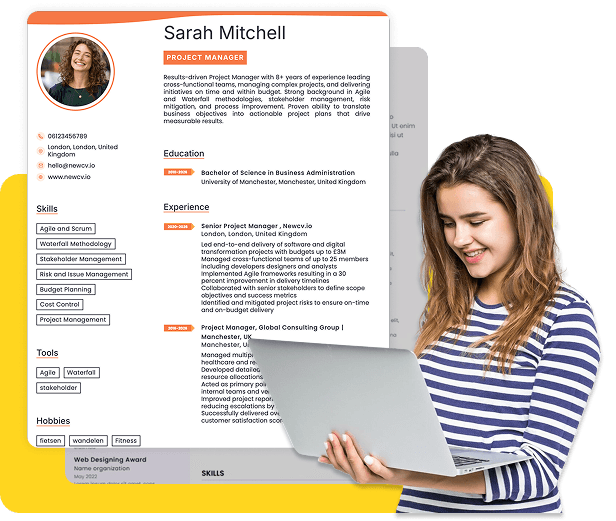
Use ATS-optimised Resume and resume templates that pass applicant tracking systems. Our Resume builder helps recruiters read, scan, and shortlist your Resume faster.

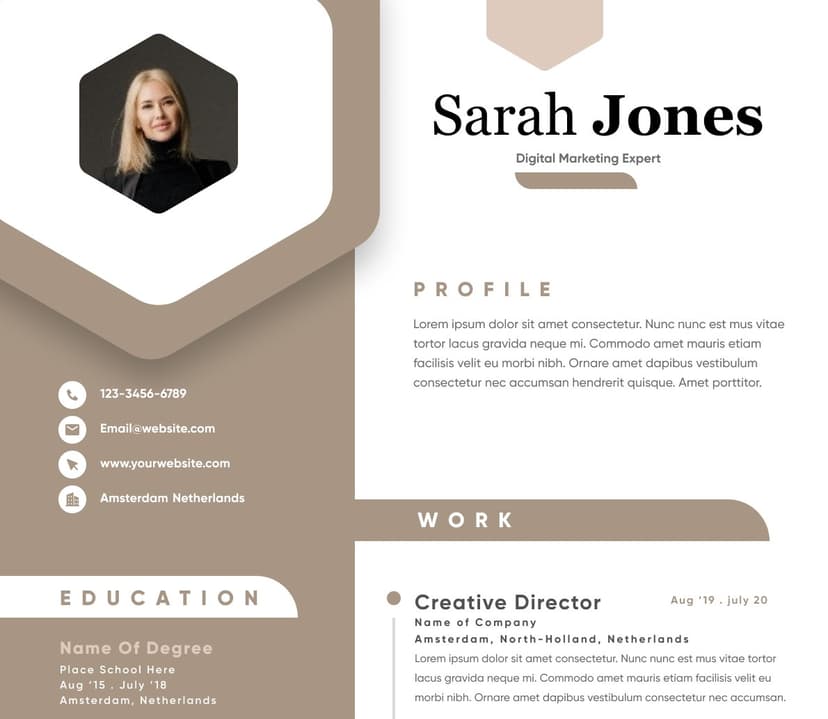
Use professional field-tested resume templates that follow the exact Resume rules employers look for.
Create Resume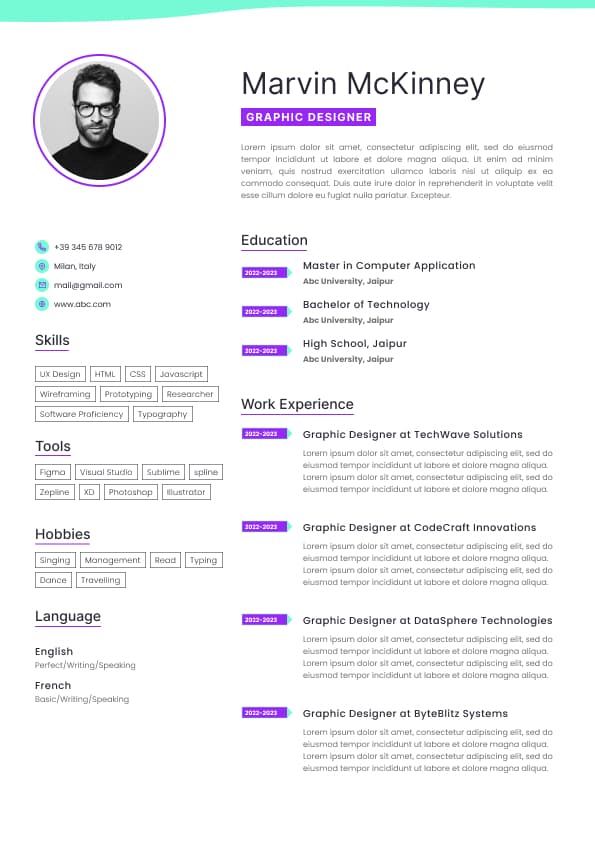
Use professional field-tested resume templates that follow the exact Resume rules employers look for.
Create ResumeAPI and backend integration depth
Measurable business or product impact
This guide breaks down how to optimize an iOS developer resume by tech stack so your resume aligns with how modern US companies actually hire mobile engineers.
A generic “mobile developer” resume weakens your positioning.
Companies prefer candidates who have:
Shipped apps to the App Store
Managed releases
Worked with TestFlight
Monitored crashes and performance
Handled App Store review cycles
Supported production users
This separates tutorial-level developers from real production engineers.
Strong resumes connect technical work to outcomes.
Hiring managers care about:
Faster app performance
Better crash-free sessions
Improved retention
Reduced load times
Increased App Store ratings
Faster release velocity
Technical skills alone rarely drive interview decisions.
Group skills logically instead of creating a giant keyword dump.
A strong layout:
Languages: Swift, Objective-C
UI Frameworks: SwiftUI, UIKit, Combine
Architecture: MVVM, VIPER, Clean Architecture, Coordinator Pattern
APIs & Backend: REST APIs, GraphQL, Firebase, AWS Amplify
Persistence: Core Data, SwiftData, Realm, SQLite
Testing: XCTest, XCUITest, TDD, Snapshot Testing
CI/CD: Fastlane, Bitrise, Xcode Cloud, GitHub Actions
Tools: Xcode, App Store Connect, TestFlight, Instruments
This improves ATS parsing and recruiter readability.
This is where most hiring decisions happen.
Every bullet should demonstrate:
Technical execution
Stack alignment
Product impact
Scale or complexity
Ownership
Weak bullets kill otherwise qualified candidates.
This says almost nothing.
Good Example
The second version proves:
Scale
Performance optimization
Business relevance
Technical depth
SwiftUI
Combine
ObservableObject
State management
Declarative UI
Dynamic layouts
WidgetKit
Live Activities
Accessibility optimization
Good Example
This demonstrates engineering maturity rather than simple framework exposure.
Migration projects
Refactoring legacy applications
Scalability improvements
UI performance optimization
Good Example
This shows modernization capability, not just maintenance work.
Cloud Functions
Good Example
This ties technical implementation directly to business outcomes.
MVC
VIPER
Clean Architecture
Coordinator Pattern
Dependency Injection
They are not simply checking if you know architecture buzzwords.
They want evidence that you:
Applied architecture patterns correctly
Improved maintainability
Reduced technical debt
Enabled testing scalability
Improved developer productivity
Good Example
This demonstrates measurable engineering impact.
REST APIs
GraphQL
JSON parsing
URLSession
Alamofire
OAuth
JWT authentication
API caching
Async networking
Good Example
This demonstrates real engineering thinking.
TestFlight
App Store Connect
Fastlane
Bitrise
Xcode Cloud
GitHub Actions
CI/CD automation
Good Example
This shows operational engineering maturity.
XCUITest
Snapshot testing
Mocking
TDD
Dependency injection
Good Example
This demonstrates quality ownership.
Good Example
These metrics immediately elevate technical credibility.
Use standard section titles
Include technologies inside experience bullets
Mention architecture patterns naturally
Keyword stuffing hurts credibility.
Hiring managers immediately notice resumes that mechanically repeat:
Swift
SwiftUI
iOS
Firebase
Instead, integrate technologies contextually through accomplishments.
Senior iOS developers are expected to understand scalability and maintainability.
Missing architecture depth limits advancement opportunities.
Positioning yourself as a general mobile developer often weakens competitiveness for dedicated iOS roles.
Specialization usually performs better in recruiter searches.
App projects
Learning velocity
Senior-level hiring managers expect:
System thinking
Tradeoff analysis
Mentorship
Technical ownership
Mobile platform strategy
Simply adding more years of experience is not enough.
API integration depth
Measurable business outcomes
Your resume should immediately answer this question for recruiters:
“Can this candidate successfully contribute to our existing iOS engineering environment?”
If the answer is not obvious within 15 seconds, your resume likely needs stronger positioning.


 Upload Resume
 Import from Linkedin