STILL APPLYING. STILL HEARING NOTHING?BUILD YOUR RESUME

STILL APPLYING. STILL HEARING NOTHING?BUILD YOUR RESUME
Choose from a wide range of NEWCV resume templates and customize your NEWCV design with a single click.
FAQ
An ASP.NET developer portfolio is no longer optional in today’s hiring market, especially for remote jobs, enterprise .NET roles, internships, and competitive full stack positions. Recruiters and hiring managers increasingly use portfolios to validate whether candidates can build production-ready applications beyond tutorial-level CRUD projects.
The best ASP.NET developer portfolios do three things exceptionally well:
Demonstrate real-world business problem solving
Showcase modern Microsoft stack expertise clearly
Reduce hiring risk through proof, not claims
A strong portfolio is not just a gallery of projects. It is a recruiter-facing technical evaluation tool. Hiring managers use it to assess architecture decisions, code quality, deployment ability, API design, database thinking, UI execution, security awareness, and communication skills.
If your portfolio looks generic, unfinished, slow, or disconnected from actual business use cases, it can quietly eliminate you from consideration before an interview even starts.
Most developers think portfolios are judged primarily on visual design. That is not how experienced engineering teams evaluate candidates.
Recruiters and hiring managers usually scan portfolios in this order:
Technical specialization clarity
Project quality and relevance
Business context understanding
Deployment maturity
GitHub professionalism
Communication and documentation quality
UI polish and responsiveness
The highest-performing ASP.NET developer portfolios follow a predictable structure because recruiters scan quickly.
Your hero section should instantly clarify your specialization.
Good examples:
ASP.NET Core Developer
Full Stack .NET Developer
Backend ASP.NET Developer
Azure .NET Developer
C# and ASP.NET Core Engineer
Blazor Developer
Avoid vague headlines like:
Software Enthusiast
Your About section should not read like a motivational biography.
Recruiters care about:
What you build
Which technologies you specialize in
Which environments you can work in
Which problems you solve
Keep it concise and practical.
A strong ASP.NET About section usually includes:
Years of experience or learning focus
ASP.NET specialization
Enterprise or SaaS focus
Projects determine whether your portfolio succeeds or fails.
Most ASP.NET portfolios lose credibility because they contain:
Basic CRUD apps
Tutorial clones
Incomplete projects
No business context
No deployment
No authentication
No architecture explanation
Hiring managers can recognize copied tutorials immediately.
Your projects must demonstrate independent engineering thinking.
Strong projects typically include:
Real business use cases
Authentication and authorization
Database relationships
API architecture
Error handling
Validation
Cloud deployment
Performance considerations
Strong stack:
ASP.NET Core Web API
SQL Server
Entity Framework Core
JWT authentication
Role-based authorization
Azure App Service
React or Blazor frontend
Why recruiters like it:
Most candidates ruin good projects with poor presentation.
Each project should include:
Problem solved
Business use case
Technologies used
Architecture decisions
Security implementation
Deployment method
Screenshots
Live demo
Recruiters may not deeply inspect your code.
Senior engineers absolutely will.
Your GitHub repositories should demonstrate:
Clean folder structure
Meaningful commit history
Clear README files
Environment setup instructions
Architecture organization
Proper naming conventions
Dependency management
Every major ASP.NET project should contain:
Project overview
Tech stack
Setup instructions
Screenshots
Deployment link
API documentation
Architecture summary
Authentication flow
Many developers stop at local development.
Hiring managers strongly prefer candidates who can deploy applications successfully.
Live deployment proves:
Hosting knowledge
Environment configuration ability
Production debugging awareness
Cloud deployment capability
CI/CD familiarity
For ASP.NET developers, Azure deployment carries major weight.
Strongest signal for Microsoft ecosystem hiring.
Excellent for frontend integration projects.
Shows cloud database familiarity.
Signals DevOps maturity.
Demonstrates automation awareness.
Even junior developers gain credibility by showing deployment competence.
Technical quality matters more than flashy animation.
Hiring managers prefer portfolios that are:
Fast
Clean
Easy to scan
Mobile responsive
Professionally structured
Your portfolio should feel like a modern SaaS product, not a creative design experiment.
Recruiters should reach projects within one click.
Slow portfolios create negative assumptions about engineering quality.
Optional but appreciated in developer audiences.
Improves readability significantly.
Should clearly show:
Tech stack
Project type
Live demo
GitHub link
A portfolio that could belong to any developer creates weak positioning.
Your ASP.NET specialization must be obvious immediately.
Recruiters recognize tutorial clones quickly.
Three high-quality original projects outperform ten copied tutorials.
Developers often explain features instead of business value.
Hiring managers care about operational usefulness.
Enterprise .NET applications rely heavily on:
Authentication
Authorization
Role management
Secure APIs
Missing these makes projects look junior-level.
This creates major credibility damage.
Always test:
Live URLs
API endpoints
Mobile responsiveness
Contact forms
GitHub repositories
Many recruiters initially review portfolios on phones.
Mobile responsiveness directly impacts perception.
Strong .NET developers understand data modeling.
Explain:
Relationships
Query optimization
Indexing considerations
Entity design choices
Swagger/OpenAPI integration strongly improves credibility for backend-focused developers.
Strong for Microsoft-centric environments.
Highly attractive for full stack hiring.
Still heavily used in enterprise .NET ecosystems.
Excellent for modern UI speed and consistency.
Still common in enterprise projects.
Essential.
One of the most valuable backend skills in current hiring.
Widely expected.
Strong performance-oriented signal.
Excellent for real-time applications.
Increasingly important in modern .NET development.
Highly relevant for enterprise hiring.
Strong serverless capability signal.
Excellent for CI/CD credibility.
Strong infrastructure maturity signal.
Shows workflow automation capability.
Many developers ignore portfolio SEO entirely.
This is a mistake because recruiters often search directly for:
ASP.NET Core developer
C# developer portfolio
.NET developer GitHub
Azure .NET developer
Blazor developer portfolio
A properly optimized portfolio improves discoverability.
Use natural variations like:
ASP.NET Core Developer
C# Backend Developer
Full Stack .NET Engineer
Azure ASP.NET Developer
Each project should have its own URL.
This improves:
Indexing
Keyword relevance
Lack of professional experience is not the main issue.
Lack of proof is.
Junior developers should focus on:
Fewer but stronger projects
Complete deployment
Clean documentation
Realistic business workflows
Authentication implementation
API integration
Database relationships
Entry-level candidates often underestimate how much project quality matters.
Senior portfolios are evaluated differently.
Hiring managers expect:
Architecture complexity
Scalability thinking
Cloud infrastructure understanding
System design maturity
Performance optimization awareness
Team collaboration indicators
Senior developers should showcase:
Distributed systems
Yes, especially if you are targeting Microsoft-stack roles.
Building your own portfolio with ASP.NET demonstrates:
Framework confidence
End-to-end capability
Deployment understanding
Architecture ownership
Strong options include:
ASP.NET Core MVC
Razor Pages
Blazor Server
The highest-performing portfolios are focused, not broad.
A strong portfolio communicates:
“This developer already works like a professional engineer.”
Your goal is not to impress everyone.
Your goal is to reduce hiring uncertainty for the right employer.
That means your portfolio should consistently reinforce:
ASP.NET specialization
Production readiness
Business problem solving
Cloud deployment ability
Clean engineering execution
The developers who get interviews fastest are usually not the ones with the fanciest portfolios.
They are the ones whose portfolios make hiring managers feel confident.

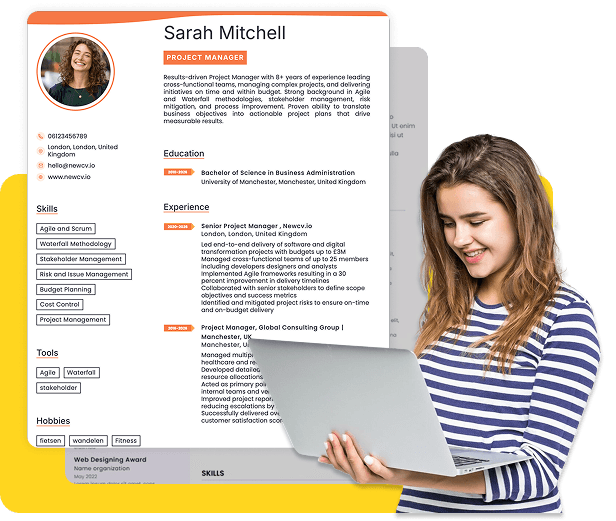
Use ATS-optimised Resume and resume templates that pass applicant tracking systems. Our Resume builder helps recruiters read, scan, and shortlist your Resume faster.

Use professional field-tested resume templates that follow the exact Resume rules employers look for.
Create Resume
Use professional field-tested resume templates that follow the exact Resume rules employers look for.
Create ResumeThis guide breaks down exactly how to build an ASP.NET developer portfolio that stands out in the US job market and helps you compete for real-world .NET opportunities.
Resume and LinkedIn consistency
The first question recruiters ask is not “Does this look impressive?”
It is:
“Can this person contribute to our existing .NET environment without excessive ramp-up time?”
That means your portfolio must clearly communicate:
ASP.NET Core experience
C# competency
API development ability
Database experience
Authentication and authorization understanding
Cloud deployment capability
Frontend integration skills
Production readiness
A portfolio that immediately signals “enterprise-ready .NET developer” performs dramatically better than one filled with disconnected tutorial apps.
Passionate Programmer
Tech Explorer
Full Stack Ninja
These communicate nothing about your hiring value.
Your hero section should also include:
Short specialization summary
Primary tech stack
Resume download CTA
GitHub link
LinkedIn link
Contact CTA
“Developer passionate about coding and technology.”
“ASP.NET Core developer specializing in scalable Web APIs, Azure deployments, SQL Server architecture, and enterprise business applications.”
The second version immediately positions the candidate for real hiring pipelines.
Cloud experience
Database experience
Frontend stack
Deployment experience
“I build ASP.NET Core applications focused on scalable APIs, secure authentication systems, Azure deployment pipelines, and SQL Server-backed business platforms. My projects emphasize clean architecture, maintainability, and production-ready implementation.”
This sounds like someone ready for an actual engineering team.
Role management
Responsive UI
Production-like workflows
The strongest ASP.NET portfolio projects solve operational or business problems.
Demonstrates architecture thinking
Shows enterprise workflow understanding
Includes authentication complexity
Reflects real business software
Strong features:
Stripe integration
User management
Subscription logic
API integrations
Admin dashboard
Background jobs
Email workflows
This shows modern SaaS engineering capability.
Strong areas demonstrated:
Database design
Reporting
Search functionality
Pagination
User permissions
API architecture
Business logic handling
Excellent for enterprise hiring.
This demonstrates:
Complex workflows
Validation rules
Security awareness
Data integrity thinking
Advanced relational database logic
These industries are heavily represented in the US .NET ecosystem.
GitHub repository
Key challenges solved
Use this structure:
Explain the business problem.
Clearly list technologies.
Highlight production-ready functionality.
Explain engineering decisions.
Show practical value.
This structure mirrors how engineering teams evaluate internal projects.
Secure configuration handling
Poor GitHub quality creates immediate hiring risk.
Environment variables explanation
A polished README signals professionalism.
Business problem solved
Use ATS-friendly filenames like:
firstname-lastname-aspnet-developer-resume.pdf
firstname-lastname-dotnet-developer-resume.pdf
Avoid vague filenames like:
Search visibility
Every page should include:
Unique title tag
Meta description
Relevant keywords naturally
Clear project naming
Link:
Skills → projects
Projects → GitHub
Blog posts → projects
Resume → portfolio
A technical blog significantly improves authority.
Strong topics include:
ASP.NET Core authentication
Entity Framework optimization
Azure deployment tutorials
Minimal API architecture
Blazor performance optimization
This demonstrates communication ability and technical depth simultaneously.
A junior developer with:
Two production-quality projects
Azure deployment
Strong GitHub
Clean documentation
can outperform candidates with weak professional experience descriptions.
Microservices
Event-driven architecture
Azure infrastructure
Performance tuning
CI/CD pipelines
Monitoring strategies
At senior levels, engineering judgment matters more than UI polish.
Blazor WebAssembly
However, many strong candidates combine:
ASP.NET Core backend
React frontend
because this reflects common enterprise hiring demand.


 Upload Resume
 Import from Linkedin