STILL APPLYING. STILL HEARING NOTHING?BUILD YOUR RESUME

STILL APPLYING. STILL HEARING NOTHING?BUILD YOUR RESUME
FAQ
PHP system design interviews evaluate whether you can build backend systems that survive real production scale, not whether you can memorize architecture buzzwords. Hiring managers want to see how you think through scalability, reliability, tradeoffs, failure handling, and maintainability in modern PHP ecosystems like Laravel and Symfony.
For senior PHP roles, especially in SaaS, fintech, e-commerce, and platform engineering, system design interviews often determine whether you are viewed as a mid-level developer or a technical leader. Most candidates fail because they either stay too theoretical or jump into framework-specific implementation details too early.
Strong candidates explain:
How traffic flows through the system
Where bottlenecks appear
How data consistency is handled
Why certain infrastructure choices are made
How scaling changes architecture decisions
Most PHP developers underestimate how strategic these interviews are. Companies are not simply checking whether you know Redis or RabbitMQ.
They are evaluating whether you can think like an engineering owner.
Hiring managers usually assess five things simultaneously:
Can you design systems beyond CRUD applications?
They want to hear:
Service boundaries
Data ownership
Async processing
Scalability patterns
Fault tolerance
These are the scenarios most frequently used for senior Laravel, Symfony, and backend PHP interviews.
Common in B2B software companies.
Interviewers want to evaluate:
Multi-tenant architecture
Authentication
Billing integration
Team permissions
Subscription handling
Queue processing
Background jobs
The structure matters almost as much as the technical content.
A chaotic answer creates the impression of weak engineering leadership.
Use this framework consistently.
Start by defining:
Functional requirements
Non-functional requirements
Expected scale
Read/write ratios
Latency expectations
Consistency requirements
For example:
“Is this system optimized for availability or strict consistency?”
That single question immediately signals senior-level thinking.
Most candidates skip this.
That is a mistake.
You should estimate:
Requests per second
Database size
Traffic growth
Concurrent users
Queue throughput
Storage requirements
These estimates justify architectural decisions.
Without scale assumptions, architecture choices sound arbitrary.
Start simple.
Strong candidates usually begin with:
Load balancer
PHP application servers
Database
Cache layer
Queue system
Object storage
Then expand gradually.
Avoid immediately jumping into microservices.
Senior interviewers often distrust candidates who over-engineer early-stage systems.
This is where many candidates fail.
Walk through:
User request lifecycle
Authentication flow
Database writes
Queue processing
Async events
Cache reads
Failure scenarios
A clean data flow explanation demonstrates real production experience.
Strong candidates proactively identify failure points.
For example:
Database contention
Queue backlog
Cache stampedes
Slow third-party APIs
PHP-FPM worker exhaustion
Session storage bottlenecks
Interviewers care less about perfection and more about engineering awareness.
This is what separates senior engineers from framework developers.
Every architecture choice has tradeoffs.
Examples:
MySQL consistency vs NoSQL flexibility
Redis speed vs cache invalidation complexity
Kafka scalability vs operational overhead
Monolith simplicity vs microservice flexibility
Candidates who acknowledge tradeoffs appear significantly more credible.
Senior backend interviews expect practical scalability knowledge, not textbook theory.
PHP applications scale horizontally extremely well because they are stateless by design.
A scalable setup usually includes:
Nginx or Apache
PHP-FPM workers
Multiple app servers
Shared cache layer
Shared session storage
Load balancer
The key challenge becomes shared state management.
Avoid local file sessions in distributed environments.
Strong solutions include:
Database bottlenecks are one of the biggest discussion areas in system design interviews.
Strong candidates explain:
Read/write separation
Replica lag
Eventual consistency
Query routing
You should understand:
Horizontal partitioning
Tenant-based sharding
Caching is central to modern PHP scalability.
Interviewers expect familiarity with:
Redis
Memcached
CDN caching
Query caching
Application caching
Cache invalidation
Redis is frequently used for:
Session storage
Modern PHP systems rely heavily on queues.
Especially in:
E-commerce
Notifications
Billing
Reporting
Analytics
File processing
Interviewers often expect familiarity with:
RabbitMQ
Laravel system design interviews are increasingly common for senior backend roles.
Companies want engineers who understand both framework productivity and architectural scalability.
You should understand:
Service container
Dependency injection
Event-driven workflows
Queue architecture
Eloquent performance optimization
API versioning
Domain boundaries
Service layer patterns
Interviewers often test practical optimization knowledge.
Important topics:
N+1 query prevention
Eager loading
Query optimization
Redis caching
Horizon monitoring
Octane
Queue offloading
Strong candidates understand where Laravel abstractions become expensive at scale.
Symfony interviews are often more architecture-heavy than Laravel interviews.
Especially in enterprise environments.
Common evaluation areas:
Dependency injection container
Event dispatcher
Service-oriented architecture
Hexagonal architecture
DDD basics
CQRS awareness
API Platform
Messenger component
Symfony employers often prioritize:
This topic appears constantly in senior backend interviews.
The correct answer is almost never:
“Microservices are better.”
Strong candidates explain tradeoffs.
Monoliths are often better for:
Smaller engineering teams
Early-stage SaaS
Faster deployment cycles
Shared business logic
Simpler operations
This is often the strongest architectural compromise.
Benefits include:
Clear domain separation
Lower operational complexity
Usually justified by:
Independent scaling requirements
Team autonomy
Different data ownership domains
High deployment frequency
Extreme system complexity
Strong candidates also discuss:
Service discovery
Distributed tracing
Network failures
Modern backend interviews heavily evaluate API design quality.
Expected concepts:
Resource naming
Pagination
Filtering
Sorting
API versioning
Idempotency
HTTP status codes
Strong candidates explain:
Why certain endpoints exist
You should understand:
OAuth2
JWT
Session authentication
API tokens
RBAC
Permission boundaries
Interviewers often test:
“How would you secure a multi-tenant API?”
Weak answers focus only on login logic.
Strong answers discuss:
Tenant isolation
This is one of the biggest gaps in most candidate answers.
Senior engineers are expected to think operationally.
Common tooling:
New Relic
Datadog
Sentry
Prometheus
Grafana
Strong candidates naturally discuss:
Error tracking
Distributed tracing
Log aggregation
Production systems fail constantly.
Interviewers want engineers who expect failure.
Important concepts:
Retries
Circuit breakers
Timeouts
Graceful degradation
Fallback mechanisms
Bulkheads
Retry backoff
Strong candidates explain:
This is one of the biggest senior-level interview mistakes.
Candidates often recommend:
Kafka
Kubernetes
Dozens of services
Even for systems with minimal scale.
Interviewers interpret this as weak engineering judgment.
Architecture without scale context feels unrealistic.
Always estimate:
Traffic
Throughput
Data growth
Concurrency
System design interviews are not Laravel tutorials.
Avoid spending too much time discussing:
Controllers
Middleware
Routes
Focus on architecture and systems thinking.
Weak candidates assume everything works perfectly.
Strong candidates proactively discuss:
Database outages
Queue failures
Cache failures
Third-party downtime
Senior engineers justify decisions.
Mid-level engineers describe tools.
That distinction matters enormously during interviews.
These topics are not always required, but they significantly strengthen senior-level performance.
Strong candidates understand:
Domain events
Event sourcing basics
Async communication
Message brokers
Eventual consistency
Useful for:
Payment processing
Most candidates have similar technical stacks.
The difference is usually architectural maturity.
Strong candidates:
Think in systems
Explain tradeoffs clearly
Prioritize reliability
Understand operational complexity
Communicate structurally
Avoid over-engineering
Discuss failure realistically
Weak candidates:
Choose from a wide range of NEWCV resume templates and customize your NEWCV design with a single click.


Use ATS-optimised Resume and resume templates that pass applicant tracking systems. Our Resume builder helps recruiters read, scan, and shortlist your Resume faster.

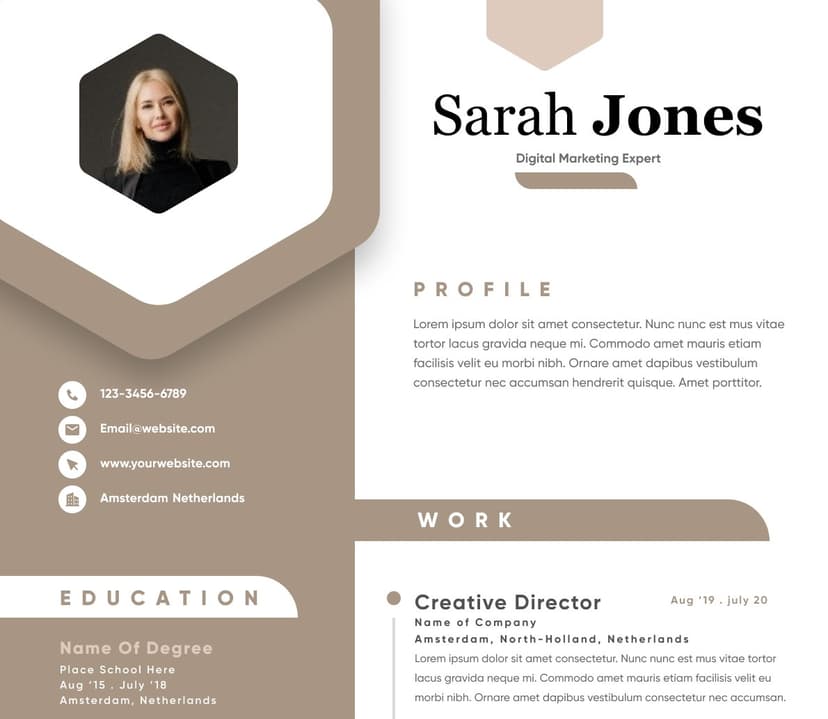
Use professional field-tested resume templates that follow the exact Resume rules employers look for.
Create Resume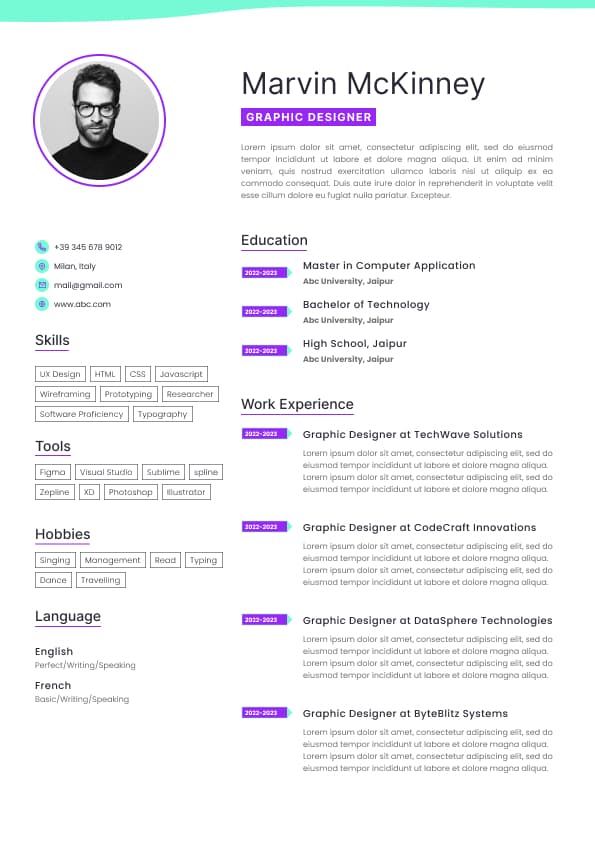
Use professional field-tested resume templates that follow the exact Resume rules employers look for.
Create ResumeWhat breaks under production load
Which tradeoffs are acceptable for the business case
The best answers balance high-level architecture, backend scalability, database strategy, operational reliability, and practical PHP engineering decisions.
Infrastructure awareness
Weak candidates describe framework features.
Strong candidates explain architectural reasoning.
Senior backend engineers must understand how systems behave under load.
Interviewers expect familiarity with:
Horizontal scaling
Read replicas
Queue systems
Cache invalidation
Database bottlenecks
API throughput
Connection pooling
Traffic spikes
Distributed coordination
A strong answer is not about choosing the “best” technology.
It is about defending tradeoffs.
For example:
Why Redis instead of database queries?
Why RabbitMQ instead of Kafka?
Why monolith first before microservices?
Why eventual consistency is acceptable?
Why PostgreSQL instead of MySQL for a specific workload?
Recruiters notice when candidates blindly recommend trendy architecture patterns without considering operational complexity.
Most system design failures happen because candidates ignore operational reality.
Senior candidates should naturally discuss:
Monitoring
Logging
Alerting
Retries
Dead-letter queues
Rate limiting
Circuit breakers
Deployment strategy
Rollback plans
Failure isolation
The strongest candidates organize answers clearly.
A good structure typically includes:
Requirements clarification
Scale estimation
High-level architecture
Database design
API design
Scalability strategy
Reliability and failure handling
Security considerations
Tradeoffs and future improvements
Candidates who ramble often appear less senior, even if they know the technology.
Data isolation
Strong candidates discuss:
Tenant-aware database design
Per-tenant rate limiting
Stripe webhook handling
Event-driven billing workflows
Queue retries
Idempotency
Weak candidates focus only on controllers and database tables.
This tests transactional thinking and reliability.
Interviewers evaluate:
Payment consistency
Inventory locking
Retry handling
Fraud prevention
Order state management
Queue reliability
A strong answer includes:
Payment orchestration
Event-driven workflows
Outbox pattern
Inventory reservation
Idempotency keys
Failure recovery
One major recruiter red flag:
Candidates who assume payment systems are fully synchronous.
Real systems rarely are.
Usually tests event-driven architecture knowledge.
Expected concepts:
Queues
Retry logic
Fan-out processing
Delivery guarantees
Rate limiting
Channel abstraction
Webhooks
Batch processing
Strong PHP candidates explain:
Queue workers
Redis vs RabbitMQ tradeoffs
Notification priority handling
Delayed jobs
Failure queues
Common in e-commerce and marketplace companies.
Key evaluation areas:
Search scalability
Database indexing
Filtering performance
Caching strategy
Elasticsearch/OpenSearch integration
Eventual consistency
Strong answers discuss:
Read-heavy optimization
Search indexing pipelines
Denormalization strategies
Redis caching
CDN usage
This question tests architectural fundamentals.
Interviewers look for:
Hash generation
Database partitioning
Read scalability
Cache usage
Analytics tracking
High availability
This is less about PHP itself and more about backend engineering maturity.
Redis sessions
Database-backed sessions
JWT authentication
Centralized authentication services
Interviewers often intentionally ask:
“What happens when one PHP server goes down?”
They want to see whether you understand stateless architecture.
Geographic sharding
Hot partition problems
Senior candidates discuss:
Composite indexes
Query optimization
Covering indexes
Slow query analysis
Weak candidates simply say:
“I would add indexes.”
Strong candidates explain why specific indexes solve specific query patterns.
Queue management
Rate limiting
Leaderboards
Distributed locks
API response caching
Strong candidates also discuss:
TTL strategy
Cache warming
Cache stampede prevention
Memory pressure handling
Kafka
AWS SQS
Redis queues
Laravel-specific interviews may include:
Horizon
Failed jobs
Delayed jobs
Queue prioritization
Worker scaling
Retry policies
Strong answers include operational awareness:
Dead-letter queues
Idempotent jobs
Poison message handling
Queue monitoring
Strong candidates discuss:
Thin controllers
Service classes
Repository patterns
Event listeners
Domain events
Job dispatching
API resources
Weak candidates build everything directly inside controllers.
That is a major maturity signal for interviewers.
Maintainability
Long-term architecture
Modularity
Enterprise integration
Easier scaling path
Shared deployment
Many senior interviewers strongly prefer modular monolith discussions over premature microservices.
Event consistency
Operational overhead
How APIs evolve safely
Backward compatibility strategy
Scope validation
Role inheritance
Audit logging
Metrics dashboards
Alert thresholds
Which failures should retry
Which failures should fail immediately
How duplicate processing is prevented
Inventory systems
Scheduled jobs
Redis locking patterns are commonly discussed.
Critical for:
Billing systems
Payment retries
Webhooks
Queue consumers
This is one of the clearest indicators of real production experience.
Many companies still operate older PHP systems.
Strong candidates discuss:
Strangler pattern
Incremental migration
Service extraction
Dependency isolation
Database decoupling
This is extremely valuable in enterprise interviews.
Memorize buzzwords
Jump into implementation details
Ignore production constraints
Recommend trendy architecture without justification
The strongest interview performances feel like conversations between engineers who have operated real systems under pressure.
That is the level companies are trying to identify.


 Upload Resume
 Import from Linkedin