STILL APPLYING. STILL HEARING NOTHING?BUILD YOUR RESUME

STILL APPLYING. STILL HEARING NOTHING?BUILD YOUR RESUME
Choose from a wide range of NEWCV resume templates and customize your NEWCV design with a single click.
FAQ


Python certifications can help you get interviews, validate specialization, and strengthen your positioning in competitive hiring markets, but only when they align with the exact type of Python role you want. Most recruiters do not hire candidates simply because they have a certification. They hire candidates whose certifications reinforce real-world technical capability, production experience, and role alignment.
For example, an AWS certification can significantly improve a backend Python developer’s credibility because modern Python engineering heavily overlaps with cloud infrastructure. A Kubernetes certification matters for FastAPI or DevOps-focused Python roles because companies increasingly expect developers to understand deployment, scaling, and containerized systems. Meanwhile, generic “Python masterclass” certificates from random course platforms rarely influence hiring decisions at all.
The key is choosing certifications that match hiring demand, production environments, and the niche you want to compete in.
The biggest mistake candidates make is assuming recruiters evaluate certifications equally. They do not.
Hiring managers usually divide certifications into three categories:
Industry-recognized technical certifications tied to production systems
Vendor ecosystem certifications tied to enterprise infrastructure
Low-value completion certificates with little hiring impact
The first two categories can materially improve interview opportunities. The third rarely matters.
These certifications consistently appear in strong Python engineering candidate profiles:
AWS Certified Developer – Associate
AWS Certified Solutions Architect – Associate
Google Professional Cloud Developer
Microsoft Azure Developer Associate
Certified Kubernetes Application Developer (CKAD)
Docker Certified Associate
HashiCorp Terraform Associate
TensorFlow Developer Certificate
Databricks Data Engineer certifications
MongoDB Developer Certification
GitHub Actions Certification
GitHub Foundations Certification
CompTIA Security+
Linux Foundation Kubernetes certifications
These certifications signal exposure to production-grade engineering environments rather than isolated coding knowledge.
Most recruiters place very little value on:
Generic Udemy certificates
“Python expert” certificates from unknown vendors
Intro-level coding bootcamp completion badges
Extremely outdated certifications
Certificates without practical deployment relevance
A certificate only becomes valuable when employers recognize the underlying skill set as commercially useful.
Different Python specializations require completely different technical ecosystems. A backend engineer and an AI engineer may both use Python daily while operating in entirely different hiring markets.
Backend Python hiring increasingly revolves around cloud-native systems, APIs, databases, scalability, and deployment automation.
The strongest certifications for backend Python engineers include:
AWS Certified Developer – Associate
PostgreSQL certifications
CKAD
Docker Certified Associate
GitHub Actions Certification
Terraform Associate
MongoDB Developer Certification
Modern backend Python development is no longer just writing Flask or Django endpoints.
Hiring managers expect backend engineers to understand:
API deployment
Containerization
CI/CD pipelines
Cloud infrastructure
Database optimization
Observability and scaling
Infrastructure automation
A candidate with Django experience plus Kubernetes and AWS certification appears significantly more production-ready than a candidate with Django alone.
Recruiters screening backend Python resumes usually look for signals like:
Built scalable REST APIs
Worked with Docker and Kubernetes
Deployed services on AWS, Azure, or GCP
Experience with PostgreSQL or MongoDB
CI/CD familiarity
Async processing or distributed systems exposure
Certifications support these claims when paired with real project experience.
Django hiring remains strong across SaaS companies, startups, healthcare tech, fintech, and internal business platforms.
However, Django developers are increasingly expected to understand deployment and infrastructure alongside framework development.
The best certifications for Django developers include:
AWS Certified Developer – Associate
Docker Certified Associate
PostgreSQL certifications
GitHub Actions Certification
CKAD
Terraform Associate
Many candidates believe Django hiring revolves around templates and CRUD applications. That is outdated.
Modern Django hiring focuses on:
API-driven architecture
Django REST Framework
Cloud deployment
Containerized applications
CI/CD pipelines
Authentication systems
Performance optimization
Database scalability
A Django developer who understands deployment architecture immediately stands out.
Weak Example
“Built websites using Django.”
This tells recruiters almost nothing.
Good Example
“Built and deployed containerized Django REST APIs on AWS using Docker, PostgreSQL, GitHub Actions, and Terraform.”
This reflects modern engineering maturity.
FastAPI hiring has grown rapidly because companies increasingly prioritize performance, async architecture, and microservices.
FastAPI developers are commonly evaluated on production engineering capability rather than framework syntax alone.
The strongest certifications for FastAPI engineers include:
CKAD
Docker Certified Associate
AWS Certified Developer – Associate
GitHub Actions Certification
Terraform Associate
Linux Foundation Kubernetes certifications
FastAPI roles often exist inside modern platform engineering environments where teams prioritize:
Async programming
High-performance APIs
Event-driven systems
Kubernetes deployments
CI/CD automation
Microservices architecture
Cloud-native infrastructure
FastAPI developers are often expected to function closer to platform engineers than traditional web developers.
Many FastAPI candidates know the framework itself but lack infrastructure understanding.
That creates a major hiring gap.
Companies deploying FastAPI in production usually expect familiarity with:
Docker
Kubernetes
API gateways
Service orchestration
Async concurrency
Monitoring systems
CI/CD pipelines
Candidates without deployment knowledge often struggle during technical interviews.
Cloud engineering is one of the strongest salary multipliers for Python developers.
Python is deeply integrated into cloud automation, infrastructure tooling, orchestration, and backend systems.
The highest-value cloud certifications include:
AWS Certified Solutions Architect – Associate
AWS Certified Developer – Associate
Google Professional Cloud Developer
Microsoft Azure Developer Associate
Terraform Associate
CKAD
Linux Foundation Kubernetes certifications
The answer depends on target employers.
AWS dominates startup, SaaS, and enterprise hiring in the US market.
Best for:
Backend engineers
Platform engineers
SaaS companies
DevOps-oriented Python roles
Azure appears more frequently in enterprise and Microsoft ecosystem environments.
Best for:
Enterprise companies
Corporate IT environments
Internal tooling platforms
GCP is heavily used in AI, machine learning, and data-intensive organizations.
Best for:
AI companies
ML infrastructure
Analytics-heavy platforms
Data engineering environments
AI hiring has changed dramatically.
Companies increasingly prioritize production AI engineering rather than simple model experimentation.
The best certifications for AI-focused Python developers include:
TensorFlow Developer Certificate
Google Professional Machine Learning Engineer
Databricks Data Engineer certifications
Kubernetes certifications
OpenAI API and LangChain training
Vector database training
Cloud certifications
Most AI hiring managers care far more about:
Model deployment
Inference optimization
Data pipelines
LLM integration
Vector search architecture
AI infrastructure
MLOps capability
than purely academic machine learning knowledge.
Many candidates build notebook projects but cannot explain production deployment.
That is one of the biggest hiring blockers in today’s AI market.
Strong AI Python engineers can discuss:
API-based inference systems
Retrieval-augmented generation
GPU infrastructure
Embedding pipelines
AI latency optimization
Prompt orchestration
Monitoring and observability
This is why Kubernetes and cloud certifications now complement AI certifications so effectively.
Python plays a major role in infrastructure automation, CI/CD systems, orchestration tooling, and deployment engineering.
The strongest certifications include:
CKAD
Terraform Associate
GitHub Actions Certification
AWS certifications
Docker Certified Associate
Linux Foundation Kubernetes certifications
Certified DevOps Engineer certifications
Python is commonly used for:
Infrastructure automation
Deployment tooling
CI/CD scripting
Cloud orchestration
Monitoring systems
Internal platform tooling
A DevOps engineer with strong Python automation skills often has significantly higher market value.
Cybersecurity-focused Python development is growing rapidly across fintech, healthcare, defense, and enterprise SaaS.
The most valuable certifications include:
CompTIA Security+
OWASP secure coding training
Cloud security certifications
Kubernetes security training
Secure API architecture training
Security knowledge dramatically improves backend engineering credibility because modern APIs handle:
Authentication
Authorization
Sensitive user data
Financial transactions
Healthcare information
Enterprise systems
Security-aware developers are often viewed as lower-risk hires.
The Python Institute certifications are among the few Python-specific certifications with reasonable industry recognition.
The two main certifications are:
PCEP
PCAP
PCEP is entry-level and best suited for:
Beginners
Career changers
Students
Junior developer candidates
It demonstrates baseline Python understanding but rarely influences mid-level hiring decisions.
PCAP carries more weight because it validates deeper Python fundamentals.
It can help candidates who:
Lack professional experience
Need structured validation
Are transitioning into software engineering
However, cloud, infrastructure, and production engineering certifications generally carry stronger hiring impact for experienced developers.
Yes, but only under specific conditions.
Certifications help most when they:
Align with real hiring demand
Match the target role specialization
Reinforce production engineering capability
Complement actual project experience
Improve recruiter confidence during screening
Certifications help far less when:
They are unrelated to the target role
The candidate lacks projects or experience
They come from unknown providers
They only validate theory
They are overly generic
Recruiters usually use certifications as:
Resume filtering signals
Credibility enhancers
Risk reduction indicators
Specialization proof points
Certifications rarely override weak experience.
But they absolutely can strengthen interview conversion rates.
Placement matters.
Poor placement reduces visibility and weakens impact.
For most experienced candidates:
Certifications section near the bottom
Technical skills section references
Project descriptions tied to certification technologies
For junior candidates:
Certifications higher on the resume
Directly beneath education or skills
Good Example
Certifications
AWS Certified Developer – Associate
Certified Kubernetes Application Developer (CKAD)
GitHub Actions Certification
TensorFlow Developer Certificate
Weak Example
“Completed multiple online certifications.”
This sounds vague and low credibility.
Specificity matters.
The strongest certification strategy is specialization-based.
Do not randomly collect credentials.
Build a certification stack aligned with your target niche.
AWS Developer
PostgreSQL certification
Docker
Kubernetes
TensorFlow
Google ML Engineer
Kubernetes
OpenAI API training
AWS or Azure
Terraform
Kubernetes
GitHub Actions
CKAD
Terraform
Docker
GitHub Actions
Strategic alignment matters far more than volume.
Too many beginner certifications can actually weaken senior positioning.
Recruiters may assume the candidate lacks real production experience.
One of the biggest modern hiring gaps is infrastructure ignorance.
Python developers who only know application code are increasingly disadvantaged.
Certifications without practical implementation create weak interviews.
Candidates must demonstrate:
Real deployment scenarios
Architecture understanding
Debugging experience
Production tradeoffs
Vendor-recognized certifications consistently outperform generic learning-platform certificates.
Brand recognition matters in hiring.
Even strong certifications cannot compensate for weak engineering fundamentals.
Hiring managers still prioritize:
Production experience
Problem-solving ability
System design capability
Deployment understanding
Architecture decisions
Debugging skill
Communication
Ownership mindset
The best certifications amplify strong candidates. They rarely rescue weak ones.
Python hiring is moving toward platform-aware engineering.
That means employers increasingly value developers who understand:
Cloud infrastructure
AI integration
Kubernetes
DevOps automation
Security
Distributed systems
Observability
CI/CD
The era of “just Python coding” is fading in competitive hiring markets.
Developers who combine Python expertise with infrastructure and deployment capability will continue gaining the strongest salary leverage and hiring advantage.
Use ATS-optimised Resume and resume templates that pass applicant tracking systems. Our Resume builder helps recruiters read, scan, and shortlist your Resume faster.


Use professional field-tested resume templates that follow the exact Resume rules employers look for.
Create Resume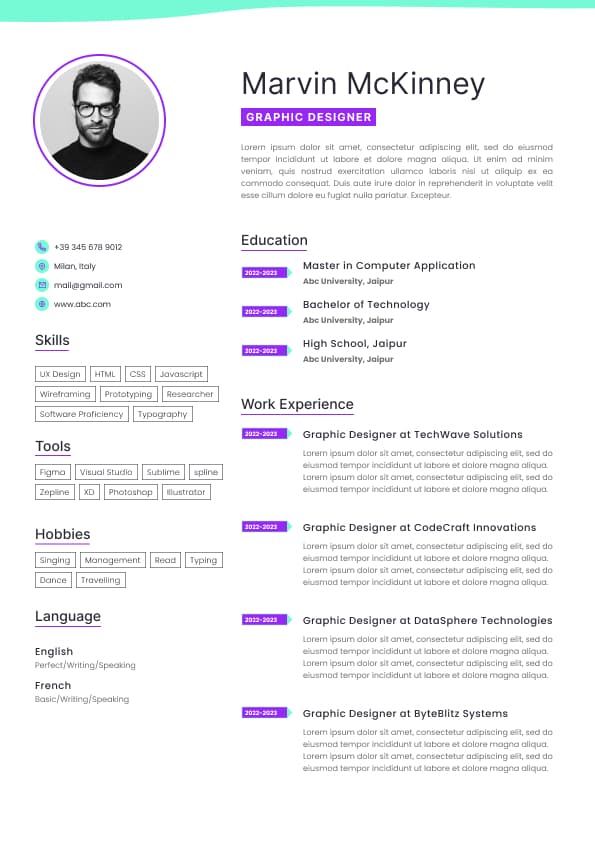
Use professional field-tested resume templates that follow the exact Resume rules employers look for.
Create Resume


 Upload Resume
 Import from Linkedin