STILL APPLYING. STILL HEARING NOTHING?BUILD YOUR RESUME

STILL APPLYING. STILL HEARING NOTHING?BUILD YOUR RESUME
Choose from a wide range of NEWCV resume templates and customize your NEWCV design with a single click.
FAQ


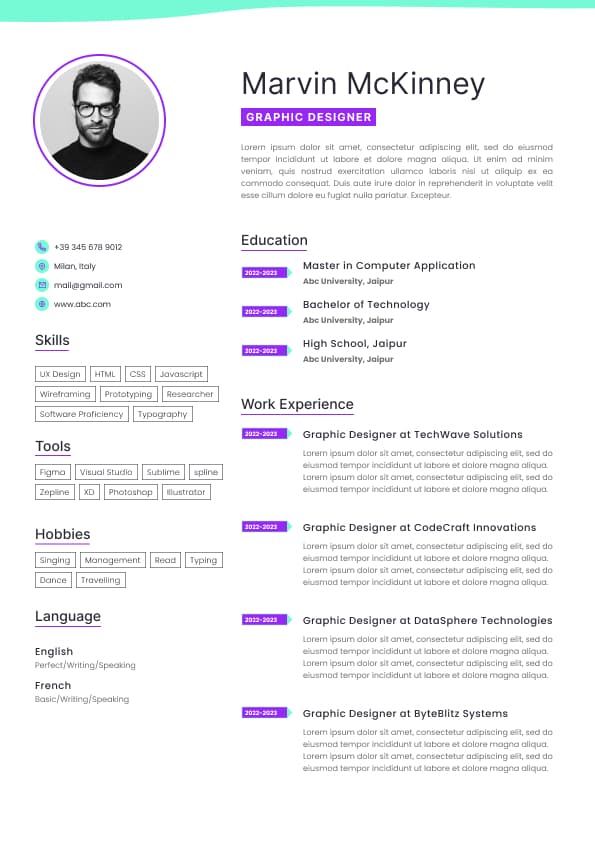
Use professional field-tested resume templates that follow the exact Resume rules employers look for.
Create ResumeA PHP DevOps Engineer sits at the intersection of backend development, infrastructure, deployment automation, cloud operations, and production reliability. In real-world hiring environments, this role is far more than “a PHP developer who knows Docker.” Companies hire PHP DevOps engineers to keep production systems stable, deploy code safely, reduce downtime, improve deployment speed, and scale PHP applications under real traffic conditions.
In most modern teams, especially SaaS companies running Laravel or Symfony applications, the PHP DevOps engineer owns the operational side of the software lifecycle. That includes CI/CD pipelines, containerization, infrastructure automation, observability, scaling strategy, queue reliability, rollback safety, and production troubleshooting.
The strongest candidates understand both application behavior and infrastructure behavior. They know why PHP-FPM bottlenecks happen, how queue workers fail under load, how to implement zero-downtime deployments, and how to reduce MTTR during incidents. That combination is what separates infrastructure-focused engineers from traditional backend developers.
PHP still powers a massive portion of the web, including enterprise Laravel systems, ecommerce platforms, SaaS products, APIs, CRMs, and internal business applications. The problem is that many PHP applications were originally built without modern deployment and infrastructure practices.
As organizations modernize their stacks, they need engineers who can:
Containerize legacy PHP applications
Move deployments into CI/CD pipelines
Improve uptime and observability
Reduce deployment risk
Scale horizontally using Kubernetes or ECS
Automate infrastructure provisioning
Optimize cloud costs
Improve release frequency without breaking production
This is why searches for terms like:
PHP DevOps Engineer
Laravel DevOps
PHP CI/CD Developer
Docker PHP Developer
Kubernetes PHP Developer
PHP Infrastructure Engineer
continue growing in competitive hiring markets.
The demand is especially high in:
SaaS companies
Ecommerce platforms
Fintech environments
High-traffic content platforms
Agencies managing multi-tenant Laravel systems
Companies migrating from shared hosting to cloud-native infrastructure
The actual responsibilities vary by company maturity, but strong PHP DevOps engineers usually own some combination of these areas.
Modern PHP companies expect automated deployment pipelines.
Typical responsibilities include:
Building GitHub Actions workflows
Managing GitLab CI/CD pipelines
Creating Jenkins deployment jobs
Automating testing before deployment
Managing environment-specific deployments
Handling secrets management
Automating rollback procedures
Running deployment health checks
A weak deployment process slows engineering velocity and increases production risk. Hiring managers look for engineers who reduce manual deployment dependency.
Most PHP applications still rely heavily on traditional web infrastructure patterns.
That includes:
Nginx configuration
Apache optimization
PHP-FPM tuning
Load balancing
SSL management
Reverse proxy configuration
Cache optimization
Session handling
Redis infrastructure
Queue worker management
A major differentiator in interviews is whether the candidate understands how application performance connects to infrastructure behavior.
For example:
PHP-FPM worker exhaustion
Slow database connection pooling
Redis memory fragmentation
Queue congestion
Nginx timeout issues
CPU saturation during deployment
These are operational realities hiring managers care about.
The exact tooling differs between organizations, but modern PHP infrastructure commonly includes the following stack.
PHP 8+
Laravel
Symfony
Composer
Redis
MySQL or PostgreSQL
Nginx
Apache
HAProxy
GitHub Actions
GitLab CI/CD
Jenkins
Forge
Ploi
Vapor
Docker
Docker Compose
Kubernetes
ECS
Helm
AWS
DigitalOcean
Azure
GCP
Linode
Vultr
Datadog
Grafana
Prometheus
New Relic
Sentry
ELK Stack
CloudWatch
Recruiters often screen candidates based on stack alignment. A Laravel-heavy startup using Forge and Vapor will prioritize different experience than a Kubernetes-first enterprise environment.
Many candidates think infrastructure hiring is tool-based. It is not.
Companies rarely hire someone simply because they used Kubernetes once.
Hiring managers evaluate operational judgment.
They want to know:
Can this engineer deploy safely?
Can they troubleshoot incidents under pressure?
Can they reduce downtime risk?
Can they scale infrastructure efficiently?
Can they improve deployment speed without compromising stability?
Can they own production systems responsibly?
This is why interview conversations often focus on scenarios rather than definitions.
Examples include:
How would you implement zero-downtime deployments for Laravel?
What happens if queue workers fail during deployment?
How do you roll back a failed migration?
How would you diagnose high CPU usage in PHP-FPM?
When would you choose ECS over Kubernetes?
How do you prevent deployment race conditions?
How do you monitor failed jobs in production?
What metrics matter most after deployment?
Weak candidates answer theoretically.
Strong candidates explain operational tradeoffs and real production incidents.
This is one of the most valuable skills in PHP infrastructure roles.
A zero-downtime deployment means users continue accessing the application while new code is released safely.
Two environments exist simultaneously:
Blue = current production
Green = new release
Traffic switches after validation.
Advantages:
Fast rollback
Safer releases
Reduced deployment risk
Disadvantages:
Higher infrastructure cost
More operational complexity
Containers or servers update gradually.
Advantages:
Lower infrastructure overhead
Easier scaling
Disadvantages:
More complicated rollback handling
Potential version inconsistency during deployment
Common in Laravel Forge and Capistrano-style deployments.
Typical flow:
Upload release
Install dependencies
Run migrations
Switch symlink atomically
Restart workers gracefully
This remains extremely common in Laravel environments.
Containerization has become a major hiring requirement.
Companies increasingly expect PHP applications to run consistently across:
Development
CI pipelines
Staging
Production
Not just Docker basics.
Strong candidates understand:
Multi-stage builds
Image optimization
PHP extension management
Volume management
Container networking
Health checks
Stateless architecture
Queue isolation
Container startup timing
Environment variable injection
Many developers claim Docker experience because they used Docker Compose locally.
Infrastructure teams care about production-grade containerization.
That means:
Efficient image layering
Secure container configuration
Minimal image sizes
Proper orchestration behavior
Observability integration
Deployment safety
Not every PHP company uses Kubernetes, but larger organizations increasingly do.
Kubernetes matters most when organizations need:
Horizontal scaling
Multi-service orchestration
High availability
Multi-region deployments
Advanced autoscaling
Infrastructure standardization
Deployments
Services
Ingress controllers
ConfigMaps
Secrets
Horizontal Pod Autoscalers
CronJobs
StatefulSets
Persistent volumes
Hiring managers prioritize operational understanding over memorization.
Strong candidates know:
How PHP-FPM behaves inside containers
Why readiness probes matter
How autoscaling impacts queues
How to manage session persistence
Why stateless architecture matters
How to reduce deployment cold starts
One of the biggest operational weaknesses in PHP systems is unreliable queue infrastructure.
Modern Laravel systems rely heavily on:
Redis queues
Horizon
Supervisor
Scheduled jobs
Background workers
Stuck workers
Duplicate jobs
Memory leaks
Queue starvation
Failed retry storms
Long-running jobs blocking workers
Failed deployments leaving orphaned processes
This is why queue monitoring experience matters heavily in interviews.
High-level PHP DevOps engineers implement:
Queue dashboards
Automatic worker restarts
Dead-letter handling
Retry visibility
Worker isolation
Memory limit enforcement
Deployment-safe queue restarts
Most junior candidates underestimate observability.
Senior infrastructure hiring managers do not.
Monitoring is not just “checking uptime.”
It is about reducing incident duration and improving production visibility.
Deployment frequency
Error rates
Response time
Queue latency
Infrastructure cost
MTTR
Rollback frequency
CPU and memory utilization
Failed deployment rate
Database performance
Strong PHP DevOps engineers implement:
Centralized logging
Application tracing
Error aggregation
Infrastructure dashboards
Alerting systems
SLA monitoring
Deployment visibility
Popular in mid-size and enterprise SaaS companies.
Used for:
Infrastructure monitoring
APM tracing
Log aggregation
Deployment visibility
Common in Kubernetes-heavy environments.
Strong for:
Custom metrics
Autoscaling visibility
Infrastructure dashboards
Widely used for:
Laravel exception tracking
Release monitoring
Stack trace analysis
AWS dominates enterprise PHP infrastructure hiring.
Most PHP DevOps engineers eventually work with services like:
EC2
ECS
EKS
RDS
ElastiCache
S3
CloudWatch
ALB
Route 53
This is a common interview topic.
Simpler operational overhead
Faster onboarding
Easier AWS integration
Lower Kubernetes complexity
Multi-cloud portability
Greater orchestration flexibility
Advanced autoscaling
Strong ecosystem tooling
Many startups choose ECS first, then move toward Kubernetes at scale.
The best DevOps engineers are valuable because they prevent expensive failures.
PHP-FPM saturation
Queue worker crashes
Redis exhaustion
Failed migrations
Improper cache invalidation
Long-running database queries
Cron overlap problems
Broken deployments due to environment mismatch
Memory leaks in workers
Nginx timeout bottlenecks
Restart servers blindly
Ignore root causes
Deploy without rollback plans
Skip monitoring
Treat infrastructure reactively
Implement failure isolation
Automate recovery patterns
Build rollback safety
Improve deployment observability
Create incident playbooks
Reduce blast radius during failures
This operational maturity is what drives compensation upward.
Modern engineering leadership tracks measurable operational performance.
Strong candidates understand these metrics because they directly affect business reliability.
How often teams ship code safely.
High-performing organizations deploy frequently without increasing instability.
How quickly incidents are resolved.
Companies aggressively optimize this because downtime costs money.
Production reliability remains a core operational metric.
Frequent rollbacks indicate deployment instability.
Senior engineers balance reliability with cloud spending efficiency.
This becomes especially important in AWS-heavy environments.
Laravel dominates PHP hiring today, but Laravel infrastructure has its own operational patterns.
Horizon queue scaling
Octane deployment considerations
Vapor serverless deployment behavior
Scheduler reliability
Redis queue optimization
Config caching
Route caching
Cache invalidation strategies
Horizon balancing modes
These platforms simplify infrastructure management, but companies still need engineers who understand underlying operational behavior.
Weak engineers rely entirely on platform abstractions.
Strong engineers understand:
What the abstraction is actually doing
Where bottlenecks happen
When defaults fail at scale
The fastest path is not collecting certifications.
It is building operational depth.
Linux administration
Nginx optimization
Docker containerization
CI/CD automation
Cloud infrastructure
Queue systems
Observability tooling
Incident debugging
Infrastructure-as-code concepts
Deployment strategy
Learn:
Linux
Nginx
PHP-FPM
MySQL tuning
Redis basics
Learn:
GitHub Actions
CI/CD pipelines
Docker
Rollback handling
Learn:
AWS fundamentals
ECS or Kubernetes
Monitoring systems
Scaling strategies
Learn:
Incident response
Root cause analysis
Cost optimization
High availability design
Compensation varies heavily by infrastructure maturity and cloud expertise.
In the US market, PHP DevOps engineers with strong AWS and Kubernetes experience often earn significantly more than traditional PHP backend developers.
Typical compensation drivers include:
Kubernetes expertise
AWS architecture depth
Incident management ownership
CI/CD leadership
Infrastructure automation experience
Production scale handled
Reliability engineering experience
The highest-paying roles usually combine:
PHP expertise
Cloud infrastructure
Platform engineering
Production reliability ownership
Companies do not hire based on buzzwords alone.
Operational judgment matters more.
Strong infrastructure engineers understand the operating system deeply.
Interviewers quickly detect theoretical-only experience.
Many candidates know setup tutorials but cannot debug failures.
Infrastructure exists to improve reliability, deployment speed, and operational efficiency.
Strong candidates connect technical decisions to business outcomes.
PHP DevOps engineering is no longer a niche specialization. As Laravel and modern PHP applications continue scaling into cloud-native environments, companies increasingly need engineers who can bridge backend development and production operations.
The most valuable engineers are not the ones who memorize every Kubernetes command or Docker flag. They are the engineers who understand deployment safety, infrastructure reliability, observability, incident response, and scaling strategy under real production pressure.
If you want to stand out in this market, focus less on collecting tools and more on operational ownership. Learn how production systems fail, how deployments break, how incidents escalate, and how reliability improves over time.
That is the skill set companies actually pay for.
Use ATS-optimised Resume and resume templates that pass applicant tracking systems. Our Resume builder helps recruiters read, scan, and shortlist your Resume faster.


Use professional field-tested resume templates that follow the exact Resume rules employers look for.
Create Resume


 Upload Resume
 Import from Linkedin