STILL APPLYING. STILL HEARING NOTHING?BUILD YOUR RESUME

STILL APPLYING. STILL HEARING NOTHING?BUILD YOUR RESUME
Choose from a wide range of NEWCV resume templates and customize your NEWCV design with a single click.
FAQ
A startup Python developer resume is not evaluated the same way as a resume for enterprise engineering roles.
Early-stage startups care less about rigid specialization and more about whether you can ship backend systems fast, solve ambiguous problems, and take ownership without heavy process layers. Most startup hiring managers are trying to answer one core question during resume screening:
“Can this engineer help us build and scale product infrastructure quickly with minimal hand-holding?”
That changes everything about how your resume should be written.
A strong startup Python developer resume demonstrates:
End-to-end backend ownership
API development and scalability
Fast iteration cycles
Product engineering mindset
Cloud deployment experience
Most candidates accidentally optimize their resumes for enterprise hiring systems instead of startup hiring managers.
That creates a major positioning problem.
Startups typically screen resumes differently:
Founders often review resumes directly
Small engineering teams prioritize practical execution
Hiring managers care about shipping history
Product velocity matters more than process sophistication
Adaptability often outweighs specialization
A generic backend resume filled with vague technical terms usually fails because it does not answer startup-specific concerns.
Many resumes sound optimized for large corporations:
Startup resume reviews are usually fast.
In many early-stage environments, recruiters or founders spend less than 30 seconds on initial screening.
These are the areas they evaluate first.
Your title matters more in startup hiring because companies often hire broadly.
Instead of:
Weak Example
Python Developer
Use:
Good Example
Startup Backend Engineer | Python, FastAPI, AWS, SaaS APIs
Or:
Good Example
Python Backend Developer Specializing in MVP & API Development
This immediately communicates startup alignment.
Your summary should establish:
Startup environment experience
Backend ownership
Product engineering mindset
Technical stack relevance
Shipping capability
Example
Backend-focused Python developer with 5+ years of experience building SaaS products, scalable APIs, and cloud-native backend systems in startup environments. Specialized in FastAPI, PostgreSQL, AWS, and rapid MVP development. Proven track record of owning backend architecture from concept to deployment while collaborating directly with founders, product teams, and frontend engineers to accelerate product delivery.
This works because it combines:
Startup recruiters spend most of their attention here.
This section determines whether you appear like:
A product engineer
A backend owner
A startup builder
Or just another Python developer
Strong startup engineering bullets usually contain:
What you built
Why it mattered
Technologies used
Scale or business outcome
Ownership level
This says almost nothing.
Modern ATS systems still matter in startup hiring, especially for venture-backed companies scaling quickly.
But keyword stuffing does not work anymore.
The goal is contextual keyword integration.
Startup environment
Fast-paced engineering
Rapid prototyping
Product engineering
MVP backend development
Agile product delivery
API-first development
Cross-functional collaboration
FastAPI has become a major hiring signal for modern startup backend teams.
Many startups specifically want:
Lightweight API development
Async performance
Rapid backend iteration
AI and automation integrations
Python-first product stacks
If you have FastAPI experience, it should appear in:
Headline
Skills section
Startup hiring is heavily outcome-driven.
Recruiters care less about whether you know 25 technologies and more about:
Whether you can build quickly
Whether you can troubleshoot independently
Whether you can scale systems pragmatically
Whether you can support product growth
That means your technical skills section should stay focused.
Python
FastAPI
Django
Flask
REST APIs
GraphQL
AWS
Docker
Projects matter more in startup hiring than in many enterprise environments.
Especially for:
Self-taught developers
Early-career engineers
Career switchers
Candidates from non-startup companies
But only strong projects help.
Hiring managers look for:
Real users
Deployment experience
Product thinking
API integration
Cloud infrastructure
Scalability awareness
SaaS applications
Startup resumes should feel:
Lean
Results-focused
Technically credible
Easy to scan
Include:
Name
GitHub
Portfolio
Location
Keep this concise and outcome-driven.
Only include relevant technologies.
This should dominate the resume.
1 page is ideal.
1 to 2 pages is acceptable.
2 pages maximum.
Startup hiring teams dislike bloated resumes.
Founders often review engineering resumes differently than recruiters.
They look for:
Builders
Problem solvers
Self-starters
Product-minded engineers
Speed of execution
They are often trying to reduce hiring risk.
This indicates initiative and ownership.
This signals startup compatibility.
This suggests collaboration maturity.
This shows product thinking.
Many strong engineers accidentally undersell themselves because they describe tasks instead of outcomes.
Startup hiring managers care about leverage.
They want to know:
Did your work accelerate product delivery?
Improve retention?
Increase scalability?
Reduce downtime?
Enable growth?
Save engineering time?
The second version creates hiring confidence.
Many developers over-optimize for ATS systems and damage readability.
Modern startup hiring still involves humans early in the process.
The best resumes:
Use natural keyword integration
Include technical depth
Stay readable
Avoid excessive jargon
Focus on outcomes
Do this:
Not this:
Mirror:
Role terminology
Infrastructure language
Framework usage
Deployment tools
But only when truthful.
The strongest startup resumes usually follow this structure:
Clearly communicate startup backend alignment.
Show end-to-end engineering responsibility.
Connect technical work to business outcomes.
Demonstrate rapid iteration capability.
Show backend growth awareness.
Highlight founder/product interaction.
Prove modern backend stack proficiency.
When all seven elements appear together, startup recruiters see a high-probability hire.
Example
Startup-focused Python backend engineer with 6+ years of experience building scalable SaaS infrastructure, APIs, and automation systems for early-stage and growth-stage startups. Experienced in FastAPI, AWS, PostgreSQL, Docker, and cloud-native backend development. Strong product engineering mindset with a proven ability to ship MVP features rapidly, improve system scalability, and collaborate directly with founders and product teams.
Senior Python Backend Engineer
GrowthLoop AI – Austin, TX
Built and scaled FastAPI microservices handling 8M+ monthly API requests across customer analytics and automation workflows
Led backend architecture for SaaS onboarding infrastructure, reducing customer setup time from 3 days to under 2 hours
Designed AWS cloud deployment workflows using ECS, Lambda, and RDS, improving deployment reliability by 41%
Collaborated directly with product leadership to launch MVP features within aggressive 2-week sprint cycles
Startup resumes succeed when they demonstrate one thing clearly:
You can help a company move faster without creating technical chaos.
That means your resume should consistently communicate:
Ownership
Product awareness
Scalability
Execution speed
Technical judgment
Business impact
The strongest candidates are not necessarily the most academically impressive engineers.
They are the engineers who can:

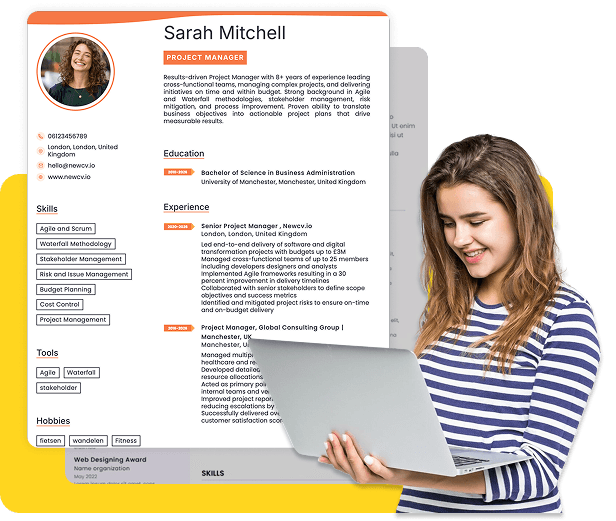
Use ATS-optimised Resume and resume templates that pass applicant tracking systems. Our Resume builder helps recruiters read, scan, and shortlist your Resume faster.

Use professional field-tested resume templates that follow the exact Resume rules employers look for.
Create Resume
Use professional field-tested resume templates that follow the exact Resume rules employers look for.
Create ResumeMVP backend development
Ability to work in ambiguity
Startup SaaS experience
Cross-functional collaboration with product and founders
Speed without sacrificing reliability
Weak startup resumes read like generic backend engineering resumes. Strong startup resumes show measurable business impact, shipping velocity, and engineering ownership in fast-paced environments.
“Worked within Agile frameworks”
“Participated in sprint ceremonies”
“Assisted backend development initiatives”
This language feels passive and process-heavy.
Startups want engineers who build, own, ship, troubleshoot, and iterate quickly.
Startup engineering is deeply tied to product outcomes.
Hiring managers want to see:
What the product did
Who used it
What business problem it solved
What impact the backend system created
A long “skills section” without proof creates weak positioning.
Listing:
Python
FastAPI
Docker
AWS
PostgreSQL
means very little unless your bullet points prove real usage at scale.
Startup recruiters actively scan for ownership indicators:
Built from scratch
Designed architecture
Led backend implementation
Owned API infrastructure
Reduced deployment time
Improved system reliability
Without these signals, candidates look execution-only instead of product-capable.
Technical depth
Startup language
Product alignment
Ownership signals
Execution capability
This works because it demonstrates:
Ownership
Scale
Technology
Performance improvement
Product relevance
Too vague.
This demonstrates startup velocity and infrastructure ownership.
Iterative product development
Backend architecture
Full backend ownership
API scalability
Distributed systems
Authentication systems
Database optimization
Event-driven architecture
Microservices infrastructure
SaaS platform
Multi-tenant architecture
Subscription systems
Usage analytics
API integrations
Customer-facing infrastructure
AWS deployment
Docker containerization
CI/CD pipelines
Kubernetes
Terraform
Cloud-native infrastructure
Experience bullets
Project descriptions
But the key is demonstrating business usage, not just framework familiarity.
Example
Example
Example
These examples position the candidate as a startup engineer, not just a framework user.
Kubernetes
Terraform
CI/CD
GitHub Actions
PostgreSQL
MySQL
Redis
MongoDB
MVP development
API scalability
Automation workflows
SaaS infrastructure
Event-driven systems
Avoid bloated skill sections with every technology you have ever touched.
AI automation tools
Backend APIs
Workflow automation systems
Analytics platforms
Stripe integrations
Internal tools
Multi-user systems
This sounds tutorial-based.
That sounds like startup engineering.
Include only startup-relevant projects.
Keep this compact unless you are entry-level.
This signals business awareness.
Implemented async processing pipelines reducing API latency by 33% during peak traffic periods
Built internal automation systems saving engineering teams 25+ hours weekly
Python Backend Developer
NovaStack Labs – Remote
Developed backend APIs supporting multi-tenant SaaS applications used by 15K+ active business users
Created FastAPI integrations with Stripe, Slack, and HubSpot APIs to automate subscription and onboarding workflows
Built CI/CD deployment pipelines reducing release cycles from biweekly to same-day deployments
Optimized PostgreSQL database queries improving dashboard load performance by 48%
Supported rapid product experimentation initiatives in a fast-paced startup environment
Python
FastAPI
Django
AWS
Docker
PostgreSQL
Redis
Kubernetes
Terraform
REST APIs
CI/CD
SaaS Infrastructure
MVP Backend Development
Build quickly
Solve practical problems
Operate independently
Improve products under uncertainty
Support startup growth with reliable backend systems
That is exactly what your resume should prove.


 Upload Resume
 Import from Linkedin