STILL APPLYING. STILL HEARING NOTHING?BUILD YOUR RESUME

STILL APPLYING. STILL HEARING NOTHING?BUILD YOUR RESUME
Choose from a wide range of NEWCV resume templates and customize your NEWCV design with a single click.
FAQ
Python developers do not get hired simply because they “know Python.” In today’s US hiring market, recruiters and engineering managers are filtering for developers who can build, ship, scale, and collaborate in production environments. The candidates consistently getting interviews are the ones who demonstrate real backend engineering capability, cloud deployment experience, strong GitHub visibility, API architecture skills, and measurable business impact.
Hiring teams are no longer impressed by tutorial-level projects or keyword-heavy resumes. They want proof of execution. That means production-ready applications, scalable system thinking, async architecture familiarity, CI/CD workflows, Docker and Kubernetes exposure, and the ability to contribute quickly inside Agile teams.
The strongest Python candidates position themselves as engineers who solve business problems, not programmers who only write code. That distinction is what separates applicants who get ignored from developers who consistently move through technical screening and receive offers.
One of the most damaging assumptions candidates make is believing technical knowledge alone gets them hired.
It does not.
Most Python developer hiring decisions are based on a combination of:
Technical capability
Engineering maturity
Communication ability
Business impact
Collaboration readiness
Speed of onboarding
Production experience
A candidate with average algorithm skills but strong production engineering experience often beats candidates with stronger theoretical knowledge but weak implementation evidence.
The fastest way to lose recruiter interest is presenting beginner-level portfolio projects that look copied from tutorials.
Hiring managers have seen thousands of:
To-do apps
Basic CRUD apps
Weather API clones
Calculator projects
Simple Flask demos
These projects rarely prove engineering ability.
What actually gets attention are backend projects that demonstrate:
Real architecture decisions
Modern backend teams are API-driven.
Recruiters increasingly prioritize Python developers who understand:
REST architecture
API versioning
Rate limiting
Authentication patterns
Webhooks
Async request handling
API performance optimization
Microservices communication
Many recruiters now review GitHub before scheduling technical interviews.
Not because they expect massive open-source contributions, but because GitHub reveals engineering habits.
Strong GitHub profiles demonstrate:
Consistency
Project ownership
Documentation quality
Clean architecture
Commit discipline
Real coding activity
Recruiters become skeptical when they see:
One of the clearest differences between entry-level and stronger Python developers is deployment experience.
Many candidates can write local applications.
Far fewer understand how applications operate in production.
Engineering teams care about developers who understand:
Infrastructure realities
Deployment workflows
Reliability concerns
Scalability limitations
Environment configuration
Monitoring and logging
Containerization is no longer considered “advanced.”
For backend-focused Python roles, Docker familiarity is becoming baseline expectation.
Kubernetes knowledge is especially valuable for:
Mid-level backend roles
Platform engineering
SaaS companies
Scalable infrastructure environments
DevOps-heavy teams
They are not asking whether you watched tutorials.
They want evidence that you have:
As systems become more distributed and performance-sensitive, async backend knowledge is becoming more valuable.
Python developers who understand asynchronous programming often stand out immediately.
Companies increasingly need developers who can:
Handle concurrency efficiently
Improve API throughput
Reduce latency
Manage real-time systems
Optimize backend performance
One of the strongest hidden signals recruiters look for is automation awareness.
Developers who understand CI/CD processes are viewed as easier to integrate into modern engineering environments.
It demonstrates understanding of:
Team workflows
Deployment reliability
Testing discipline
Automation culture
Engineering scalability
Strong candidates discuss:
Many technically strong Python developers underestimate how heavily communication affects hiring outcomes.
Engineering managers consistently reject candidates who:
Cannot explain technical decisions
Overcomplicate answers
Struggle with collaboration
Show poor ownership
Communicate defensively
The best candidates:
Explain tradeoffs clearly
Many candidates over-invest in memorization-based interview prep while neglecting real engineering problem-solving.
Strong hiring teams care more about:
Debugging approach
Decision-making logic
Tradeoff analysis
Scalability thinking
Architecture reasoning
During technical interviews, they watch for:
How you think under uncertainty
System design used to be reserved for senior engineers.
That is changing rapidly.
Even mid-level Python developers are increasingly expected to understand:
Scalability basics
Database tradeoffs
Caching strategies
API architecture
Queue systems
Reliability patterns
It signals engineering maturity beyond coding syntax.
Hiring managers trust candidates more when they can discuss:
Recruiters consistently prioritize candidates who demonstrate ownership behavior.
This includes developers who:
Solve problems proactively
Improve systems independently
Take accountability
Think beyond assigned tickets
Care about business outcomes
Strong candidates say things like:
“I identified a bottleneck and proposed improvements.”
Many hiring managers prioritize candidates who can integrate quickly into existing engineering processes.
This means understanding:
Sprint workflows
Jira or ticket systems
Code reviews
Standups
Cross-functional collaboration
Iterative development
Hiring is expensive.
Managers prefer developers who:
One of the biggest hiring shifts in modern backend engineering is the increasing importance of business impact.
The strongest Python developers combine:
Technical execution
Product awareness
Operational thinking
User impact understanding
They want engineers who understand:
Why features matter
How systems affect customers
Certain patterns repeatedly hurt otherwise qualified candidates.
Tutorial-only portfolios
Weak GitHub presence
No deployment experience
Poor communication
Resume keyword stuffing
Inability to explain projects deeply
Lack of ownership examples
Top candidates usually share several patterns.
They create projects that simulate real production environments.
They can justify architecture, tooling, and scalability choices.
They understand how engineering work impacts users and company goals.
They understand deployment, monitoring, debugging, and reliability.
This mindset shift dramatically changes how recruiters evaluate them.
The most effective positioning strategy is to present yourself as a backend engineer capable of contributing in production environments immediately.
That means emphasizing:
Backend architecture
API systems
Cloud deployment
Scalability awareness
Engineering collaboration
CI/CD familiarity
Business impact

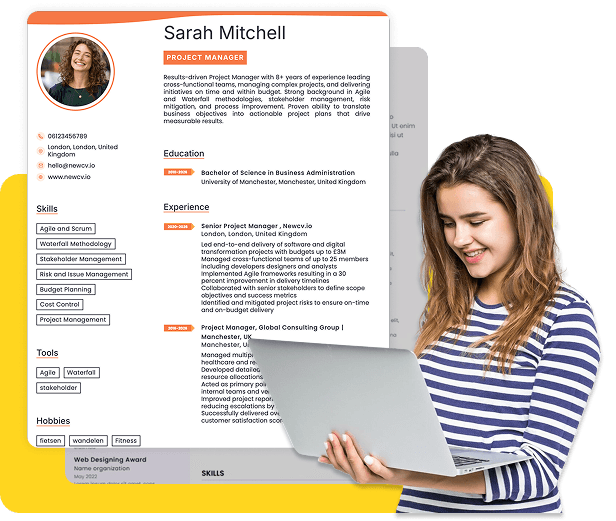
Use ATS-optimised Resume and resume templates that pass applicant tracking systems. Our Resume builder helps recruiters read, scan, and shortlist your Resume faster.

Use professional field-tested resume templates that follow the exact Resume rules employers look for.
Create Resume
Use professional field-tested resume templates that follow the exact Resume rules employers look for.
Create ResumeRecruiters and hiring managers ask themselves:
“Can this person contribute to our engineering team without requiring months of hand-holding?”
That question drives far more hiring decisions than candidates realize.
Authentication systems
API security
Database optimization
Async processing
Queue systems
Scalability considerations
Logging and monitoring
Error handling
Cloud deployment
Strong projects usually include:
FastAPI, Django, or Flask used in realistic production scenarios
PostgreSQL or MongoDB integration
Redis caching
Docker containerization
CI/CD pipelines
Cloud deployment on AWS, Azure, or GCP
API documentation using Swagger/OpenAPI
Background task handling
Webhook integrations
Authentication and authorization flows
Weak Example
“Built a movie app using Flask and SQLite.”
This tells recruiters almost nothing.
Good Example
“Built and deployed a containerized FastAPI backend handling 50K+ monthly requests with JWT authentication, PostgreSQL optimization, Redis caching, and GitHub Actions CI/CD deployment to AWS.”
The second example signals engineering maturity immediately.
Error management
Companies want developers who understand how systems communicate in production environments.
API engineering directly affects:
Product reliability
Customer experience
Scalability
Cross-team integrations
Mobile applications
SaaS functionality
Because of that, backend API experience often becomes a deciding factor during screening.
They want evidence that you can:
Design endpoints logically
Handle edge cases
Manage authentication securely
Optimize performance bottlenecks
Build maintainable services
Work with frontend and DevOps teams
Candidates who can explain API tradeoffs clearly during interviews usually outperform developers who only discuss coding syntax.
Empty repositories
No README files
Tutorial-only projects
No recent activity
Messy commit history
Incomplete applications
This creates concern about actual hands-on experience.
Strong candidates typically have:
Well-documented repositories
Clear setup instructions
Production-style project structure
Real deployment links
Technical explanations
Evidence of ongoing learning
The goal is not quantity.
The goal is credibility.
Cloud knowledge demonstrates operational awareness.
Recruiters consistently prioritize experience with:
AWS
Docker
Kubernetes
Terraform
CI/CD pipelines
Linux environments
NGINX
ECS or EKS
Serverless architecture
Cloud databases
Even moderate cloud familiarity can dramatically improve interview conversion rates.
Containerized applications
Managed dependencies properly
Built reproducible environments
Used Docker Compose
Worked with multi-container systems
You do not need to be a Kubernetes architect.
But understanding:
Pods
Deployments
Services
Scaling basics
Container orchestration concepts
can significantly improve backend engineering credibility.
FastAPI
asyncio
Celery
RabbitMQ
Kafka
WebSockets
Async database handling
Candidates who understand async architecture often appear more senior during technical evaluations.
GitHub Actions
Jenkins
GitLab CI/CD
Automated testing pipelines
Deployment automation
Rollback strategies
Build validation
Even small-scale CI/CD implementation in personal projects can strengthen candidate positioning substantially.
Ask thoughtful questions
Simplify complex topics
Show business awareness
Collaborate naturally
Discuss failures honestly
Communication affects:
Agile collaboration
Cross-functional teamwork
Client interaction
Mentorship potential
Leadership readiness
It is often the difference between “technically capable” and “hireable.”
Whether you clarify assumptions
How you structure solutions
Whether you identify edge cases
Your ability to communicate reasoning
Candidates who calmly reason through problems often outperform candidates trying to “speedrun” perfect answers.
Why architectural decisions matter
Performance bottlenecks
Data consistency tradeoffs
Failure handling
Scalability implications
You do not need architect-level expertise.
But lacking all system design awareness increasingly hurts candidates in competitive backend hiring markets.
“I improved deployment reliability by automating testing.”
“I reduced API latency by optimizing caching strategy.”
Weak candidates focus only on assigned tasks.
Ownership-oriented candidates focus on outcomes and improvements.
That difference matters enormously.
Require less ramp-up time
Understand engineering workflows
Collaborate effectively immediately
Adapt quickly to existing systems
Candidates with prior Agile exposure often move faster through hiring pipelines.
Performance implications
Reliability impact
Business priorities
Developers who connect engineering work to business outcomes consistently perform better during hiring evaluations.
No measurable impact in experience descriptions
Overly theoretical interview answers
Weak system design understanding
Many candidates sound like they participated in projects rather than drove results.
Strong candidates clearly explain:
Their contribution
Technical decisions
Challenges solved
Business outcomes achieved
Specificity creates credibility.
Ownership examples
The market increasingly rewards developers who combine technical execution with operational and business awareness.
Pure coding ability is no longer enough to stand out.
Production readiness is.


 Upload Resume
 Import from Linkedin