STILL APPLYING. STILL HEARING NOTHING?BUILD YOUR RESUME

STILL APPLYING. STILL HEARING NOTHING?BUILD YOUR RESUME
Choose from a wide range of NEWCV resume templates and customize your NEWCV design with a single click.
FAQ
A Python developer resume should change dramatically based on seniority. Hiring managers do not evaluate a junior Python developer the same way they evaluate a senior backend engineer or principal-level architect. At the entry level, recruiters look for proof of technical fundamentals, projects, GitHub activity, and growth potential. Mid-level resumes are evaluated on ownership, API delivery, backend reliability, and collaboration. Senior candidates are screened for architecture decisions, scalability, mentoring, and technical leadership. Staff and principal engineers are judged on organization-wide impact, distributed systems strategy, and business-critical engineering outcomes.
The biggest mistake most Python developer resumes make is using the same structure, language, and achievement style regardless of experience level. That instantly weakens positioning. A strong resume aligns directly with how hiring teams evaluate engineers at that exact level.
This guide breaks down what recruiters and engineering leaders actually expect from Python developer resumes at every seniority stage, including complete resume examples, optimization strategies, ATS guidance, and real-world hiring insights.
Before diving into seniority-specific resume examples, it’s important to understand how technical resumes are actually screened.
Most backend engineering resumes go through three layers of evaluation:
ATS keyword filtering
Recruiter qualification review
Engineering manager technical evaluation
Each layer looks for different signals.
Applicant tracking systems primarily scan for:
Python
Django
Flask
One of the biggest resume mistakes in backend engineering is applying senior-level language to junior experience or using entry-level resume structure at advanced levels.
Here is how expectations evolve.
| Seniority | What Hiring Teams Evaluate |
|---|---|
| Entry-Level | Technical foundation, learning ability, projects |
| Mid-Level | Feature ownership, backend delivery, teamwork |
| Senior | Architecture, scalability, mentoring, reliability |
| Staff | Cross-team influence, platform systems, technical strategy |
| Principal | Organization-wide engineering leadership, business impact |
Your resume must reflect the decision-making scope expected at your level.
Entry-level Python developer resumes are evaluated primarily on proof of capability.
Hiring managers know junior engineers lack production-scale experience. What matters is whether the candidate can build real projects, understand backend fundamentals, and contribute quickly.
Recruiters prioritize:
GitHub projects
APIs and backend applications
Python frameworks
SQL knowledge
Internship experience
Automation scripts
Michael Carter
Austin, TX
michaelcarter.dev@gmail.com
GitHub: github.com/michaelcarterdev
LinkedIn: linkedin.com/in/michaelcarterdev
Entry-level Python developer with hands-on experience building REST APIs, backend automation tools, and database-driven applications using Python, Flask, PostgreSQL, and Docker. Strong foundation in backend development, API integration, and debugging with demonstrated project work and internship experience.
Python
Flask
FastAPI
PostgreSQL
This resume succeeds because it demonstrates capability instead of just education.
The candidate shows:
Real backend projects
APIs and databases
Practical Python usage
Deployment awareness
Collaboration exposure
Version control familiarity
That is exactly what recruiters want from junior backend engineers.
Mid-level Python developers are expected to own backend functionality independently.
At this level, recruiters and hiring managers want evidence of:
Production delivery
API ownership
Reliability improvements
CI/CD participation
Cross-functional teamwork
Feature scalability
Your resume should shift from “learning and contributing” to “owning and delivering.”
Strong mid-level resumes show:
Sarah Mitchell
Denver, CO
sarahmitchell.backend@gmail.com
LinkedIn: linkedin.com/in/sarahmitchellbackend
Python backend developer with 5+ years of experience building scalable APIs, backend services, and cloud-based applications using Python, Django, FastAPI, AWS, and PostgreSQL. Proven success delivering backend features, improving system reliability, and collaborating across agile engineering teams.
Python
Django
FastAPI
PostgreSQL
Redis
Many mid-level engineers unintentionally write resumes that still sound junior.
“Worked on backend APIs using Python.”
“Designed and deployed FastAPI services supporting 1M+ monthly transactions with automated CI/CD deployment workflows.”
The difference is ownership, scale, and business impact.
Hiring managers want evidence that you can independently drive backend delivery.
Senior Python engineers are evaluated very differently.
At this level, technical execution alone is not enough.
Hiring teams evaluate:
System architecture
Scalability leadership
Reliability engineering
Mentoring
Cross-team collaboration
Technical decision-making
Strong senior resumes show:
Daniel Rivera
Seattle, WA
danielrivera.engineering@gmail.com
LinkedIn: linkedin.com/in/danielriveraengineering
Senior Python engineer with 9+ years of experience architecting distributed backend systems, scalable APIs, and cloud-native platforms. Expertise in Python, Kubernetes, AWS, microservices architecture, and backend reliability engineering. Proven track record leading technical initiatives and mentoring engineering teams.
Python
FastAPI
Django
Kubernetes
AWS
Senior-level resumes show engineering judgment.
That includes:
Tradeoff decisions
Architecture ownership
Scalability improvements
Technical influence
Reliability strategy
Mid-level engineers typically deliver features.
Senior engineers shape systems.
That distinction must be obvious on the resume.
Staff engineers operate at organizational scale.
This is where resumes become significantly more strategic.
Hiring committees evaluate:
Cross-team technical leadership
Platform architecture
Engineering influence
Organizational scalability
Long-term systems thinking
A common mistake is sounding like a senior IC with more years of experience.
That is not enough.
Staff engineers influence engineering direction across teams.
Emily Zhang
San Francisco, CA
emilyzhang.platform@gmail.com
LinkedIn: linkedin.com/in/emilyzhangplatform
Staff backend engineer with 12+ years of experience leading large-scale backend architecture initiatives, platform engineering strategy, and distributed systems scalability across enterprise cloud environments. Specialized in cross-functional technical leadership, backend reliability, and high-volume platform optimization.
Python
Kubernetes
AWS
Distributed Systems
Platform Engineering
Principal engineers are evaluated primarily on strategic engineering influence and business-critical system leadership.
At this level, resumes should communicate:
Technical vision
Enterprise architecture leadership
Organizational impact
Large-scale systems expertise
Executive-level technical communication
Principal engineers are not just stronger coders.
They influence:
Engineering direction
Jonathan Hayes
New York, NY
jonathanhayes.architecture@gmail.com
LinkedIn: linkedin.com/in/jonathanhayesarchitecture
Principal Python engineer with 15+ years of experience leading enterprise backend architecture, large-scale distributed systems strategy, and platform modernization initiatives for high-growth technology organizations. Expertise in cloud-native infrastructure, backend scalability, and cross-organizational engineering leadership.
Python
Distributed Systems
Cloud Architecture
Kubernetes
AWS
Technical resumes become significantly stronger when they include measurable engineering outcomes.
Strong metrics include:
API request volume
Latency reduction
Deployment improvements
Infrastructure cost savings
Reliability improvements
Incident reduction
Scalability growth
Performance optimization
ATS optimization matters heavily in backend engineering hiring.
Include relevant technologies naturally throughout the resume:
Python
Django
FastAPI
Flask
APIs
PostgreSQL
Redis
Recruiters often focus on formatting and keywords.
Engineering leaders focus on:
Complexity
Ownership
Scale
Architecture
Reliability
Technical maturity
Within seconds, they look for evidence that the candidate has solved meaningful backend problems.
That is why shallow bullet points fail.
Strong backend engineering resumes typically follow this structure:
Professional summary
Technical skills
Professional experience
Projects
Education
Certifications if relevant
For experienced engineers, projects become less important unless they demonstrate advanced architecture or open-source contributions.
For junior developers, projects are often one of the most important sections.
Simply listing tools does not demonstrate capability.
Hiring managers want evidence of implementation and outcomes.
Generic descriptions weaken perceived experience level immediately.
Strong resumes prioritize relevant backend technologies instead of listing every framework ever used.
Weak verbs include:
Helped
Assisted
Participated
Stronger alternatives include:
One of the most effective resume strategies is writing partially toward the next level.
Show initiative and technical curiosity.
Demonstrate ownership and backend reliability impact.
Highlight architectural influence and mentoring.
Show organizational influence and cross-team leadership.
Hiring decisions are often based on perceived trajectory, not just current title.

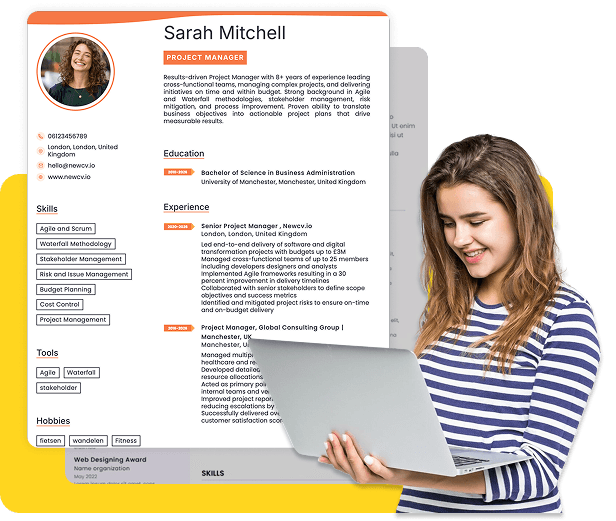
Use ATS-optimised Resume and resume templates that pass applicant tracking systems. Our Resume builder helps recruiters read, scan, and shortlist your Resume faster.

Use professional field-tested resume templates that follow the exact Resume rules employers look for.
Create Resume
Use professional field-tested resume templates that follow the exact Resume rules employers look for.
Create ResumeFastAPI
APIs
AWS
Docker
Kubernetes
PostgreSQL
CI/CD
Microservices
Distributed systems
Backend engineering
If your resume lacks role-relevant backend keywords, it may never reach a hiring manager.
Recruiters usually are not deeply technical, but they are trained to identify:
Seniority alignment
Technology relevance
Career progression
Ownership level
Impact metrics
Team collaboration
Resume clarity
A recruiter can usually determine within 15 to 30 seconds whether a Python developer resume matches the role level.
Engineering leaders look beyond tools.
They evaluate:
System complexity
Architectural thinking
Scalability awareness
Problem-solving depth
Technical tradeoff decisions
Reliability mindset
Leadership influence
This is where many resumes fail. Candidates often list technologies without demonstrating engineering impact.
Problem-solving ability
Technical curiosity
Common mistakes include:
Listing only coursework
Using generic objective statements
Having no GitHub links
Describing projects vaguely
Failing to quantify outcomes
Overloading resumes with irrelevant tools
A junior Python resume should feel practical, not academic.
MySQL
Docker
Git
REST APIs
Linux
AWS Basics
CI/CD Fundamentals
Pytest
Inventory Management API
Personal Project
Built RESTful inventory management API using Flask and PostgreSQL
Implemented JWT authentication and role-based access control
Reduced API response latency by optimizing SQL queries and indexing
Dockerized application for local development and deployment testing
GitHub Analytics Dashboard
Personal Project
Developed Python automation tool using GitHub APIs to track repository activity
Processed contributor and commit analytics using Pandas
Created automated reporting workflow reducing manual tracking effort
Software Engineering Intern
NovaTech Solutions – Austin, TX
Assisted backend engineering team in developing internal Python automation scripts
Supported API testing and debugging using Postman and Pytest
Contributed to CI/CD pipeline improvements for staging deployments
Wrote SQL queries for backend reporting features
Bachelor of Science in Computer Science
University of Texas at Austin
Business impact
Engineering outcomes
Deployment responsibility
Production support
Backend optimization
AWS
Docker
Kubernetes
Terraform
CI/CD
GitHub Actions
Celery
Python Backend Developer
CloudCore Technologies – Denver, CO
Led backend development for customer billing platform serving 1.2M+ monthly users
Built scalable FastAPI services reducing average API response time by 37%
Improved PostgreSQL query performance through indexing and caching strategies
Implemented CI/CD workflows reducing deployment failures by 42%
Collaborated with frontend, DevOps, and product teams in agile delivery cycles
Developed asynchronous background processing workflows using Celery and Redis
Software Engineer
BrightScale Labs – Denver, CO
Developed Django-based APIs for internal analytics platform
Contributed to migration from monolithic architecture to microservices
Automated backend monitoring workflows improving incident response visibility
Supported cloud infrastructure deployments on AWS
Bachelor of Science in Software Engineering
Colorado State University
Distributed systems knowledge
Production scalability
Architectural ownership
Performance optimization
Engineering leadership
Incident reduction
Mentorship impact
Kafka
PostgreSQL
Redis
Terraform
Docker
Distributed Systems
CI/CD
Senior Python Engineer
NorthPeak Systems – Seattle, WA
Architected distributed backend platform supporting 15M+ daily API requests
Led migration from monolithic services to Kubernetes-based microservices architecture
Reduced infrastructure costs by 28% through backend optimization initiatives
Designed fault-tolerant event-driven workflows using Kafka and Redis
Mentored junior and mid-level backend engineers through code reviews and architecture guidance
Partnered with platform engineering and DevOps teams to improve deployment reliability
Backend Software Engineer
VectorScale Technologies – Portland, OR
Built scalable Django APIs supporting enterprise SaaS applications
Improved API latency by redesigning backend caching architecture
Led backend reliability initiatives reducing production incidents by 34%
Contributed to technical roadmap planning for platform scalability
Event-Driven Architecture
Terraform
Kafka
PostgreSQL
CI/CD
Observability
Microservices
Staff Backend Engineer
Altura Cloud Platforms – San Francisco, CA
Led organization-wide backend architecture modernization across 14 engineering teams
Defined platform engineering standards improving deployment consistency company-wide
Designed scalable multi-region backend systems supporting 80M+ daily transactions
Partnered with executive leadership on infrastructure scalability roadmap planning
Reduced platform reliability incidents by implementing standardized observability practices
Guided senior engineering teams through distributed systems migration initiatives
Senior Software Engineer
CloudVertex Systems – San Jose, CA
Led backend scalability projects for enterprise SaaS infrastructure
Developed internal developer platform improving engineering deployment velocity
Mentored engineering leads on backend performance optimization strategies
Infrastructure strategy
Scalability planning
Technical governance
Organizational architecture decisions
Platform Engineering
Event Streaming
Kafka
Terraform
Backend Reliability
System Design
Infrastructure Scalability
Principal Python Engineer
TitanScale Technologies – New York, NY
Directed enterprise backend modernization initiative impacting 40+ engineering teams
Designed organization-wide distributed systems architecture supporting global platform scalability
Partnered with executive leadership to align backend infrastructure investments with business growth strategy
Led platform reliability transformation reducing large-scale service disruptions by 47%
Established engineering standards for backend scalability, observability, and infrastructure resilience
Influenced long-term cloud architecture strategy across multi-region environments
Staff Backend Engineer
CoreAxis Platforms – Boston, MA
Led backend platform consolidation initiatives improving operational efficiency
Architected event-driven backend systems supporting high-volume transactional workloads
Mentored senior engineering leaders on distributed systems architecture practices
“Improved backend performance.”
“Reduced API response latency by 41% through PostgreSQL query optimization and Redis caching implementation.”
Specific engineering impact builds credibility immediately.
Docker
Kubernetes
AWS
CI/CD
Terraform
Distributed systems
Microservices
Common problems include:
Keyword stuffing
Missing role-specific frameworks
Fancy resume formatting
Graphics-heavy templates
Generic summaries
Missing GitHub links for junior candidates
Modern ATS systems parse clean formatting best.
Architected
Designed
Implemented
Led
Optimized
Scaled


 Upload Resume
 Import from Linkedin