STILL APPLYING. STILL HEARING NOTHING?BUILD YOUR RESUME

STILL APPLYING. STILL HEARING NOTHING?BUILD YOUR RESUME
Choose from a wide range of NEWCV resume templates and customize your NEWCV design with a single click.
FAQ

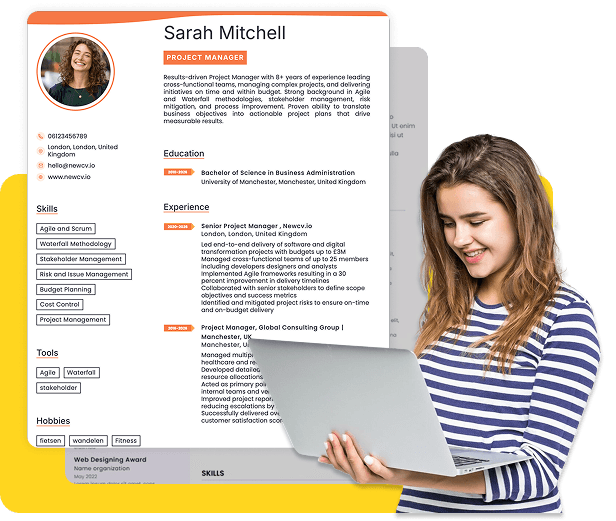
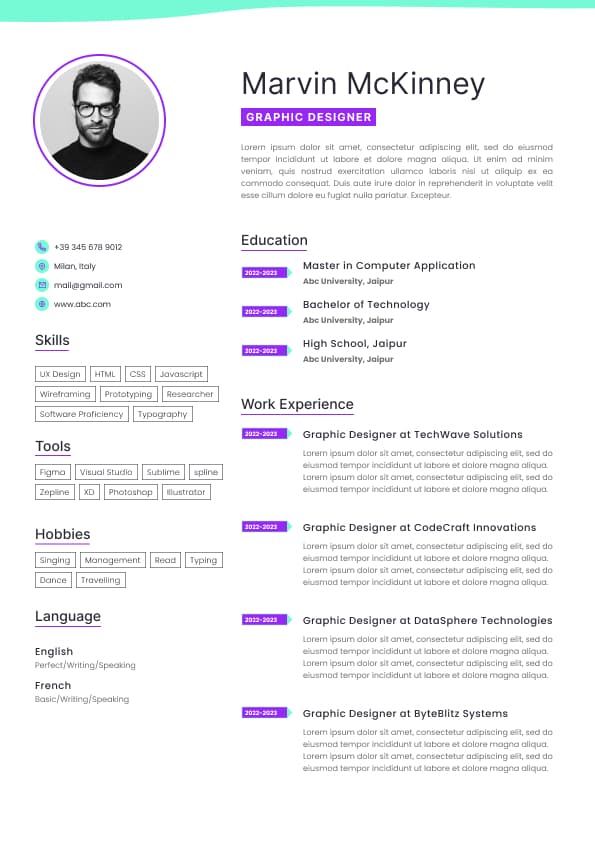
Use professional field-tested resume templates that follow the exact Resume rules employers look for.
Create ResumeA strong .NET developer resume template is not just about design. It is about how quickly recruiters, hiring managers, and ATS systems can understand your technical value. Most .NET resumes fail because they hide critical technologies, overload the layout with unnecessary formatting, or read like generic job descriptions instead of measurable engineering contributions.
The best .NET developer resume templates use a clean ATS-friendly structure, place technical skills near the top, highlight business-impact achievements, and align with modern US hiring practices for software engineering roles. Whether you are applying for a junior C# developer position, an ASP.NET backend role, or a senior .NET architect track, your resume format directly affects interview conversion rates.
This guide covers the best ATS-friendly .NET developer resume formats, when to use each layout, what recruiters actually scan first, and how to structure your resume to compete in today’s US tech hiring market.
Most recruiters spend less than 10 seconds on the initial resume scan. For .NET developer resumes, the evaluation process is extremely pattern-based.
Recruiters typically scan in this order:
Current or most recent job title
Years of .NET experience
Core technologies
Backend vs full-stack positioning
Cloud and DevOps exposure
Enterprise application experience
Measurable impact
Resume readability
Career stability
For technical hiring managers, the evaluation becomes deeper:
Architecture complexity
API and microservices experience
Scalability exposure
Database optimization work
CI/CD implementation
Azure or AWS integration
Team collaboration
Production ownership
If your template buries these signals, your resume loses interviews before your experience is even reviewed properly.
The best format depends on your experience level and career positioning.
This is the strongest format for most .NET developers in the US job market.
It works best for:
Mid-level developers
Senior developers
Lead engineers
Enterprise .NET professionals
Candidates with stable work history
Why recruiters prefer it:
Easy to scan quickly
Shows career progression clearly
ATS systems parse it accurately
Highlights recent technologies first
Aligns with standard US hiring practices
This should be the default choice for experienced .NET professionals.
This format focuses more on skills than work history.
Best for:
Career changers
Bootcamp graduates
Entry-level candidates
Candidates returning to work
Self-taught developers with project-heavy backgrounds
However, recruiters are often skeptical of functional resumes because they can hide employment gaps or lack of real-world experience.
Use this format carefully.
This is ideal for technical candidates with strong project portfolios.
Best for:
Full-stack .NET developers
API-heavy backend engineers
Freelancers or consultants
Developers with major GitHub projects
Candidates with diverse technical stacks
This format allows you to emphasize:
Technical depth
Complex projects
Cloud deployments
Architecture work
Cross-functional skills
For many modern .NET engineers, this is the strongest option when done correctly.
ATS systems prioritize structure over aesthetics.
The safest ATS-friendly layout includes:
Single-column structure
Standard section headings
Clear font hierarchy
Minimal styling
Consistent spacing
Standard bullet formatting
No graphics or visual skill bars
Your resume should typically include:
Header
Professional Summary
Technical Skills
Professional Experience
Projects
Certifications
Education
Optional sections:
Open Source Contributions
Publications
Technical Blog
Awards
Speaking Engagements
The safest resume fonts for ATS compatibility are:
Arial
Calibri
Aptos
Helvetica
Avoid:
Decorative fonts
Script fonts
Narrow fonts
Over-designed typography
Recommended sizing:
Name: 18 to 24 pt
Headings: 11 to 13 pt
Body text: 10 to 11 pt
Here is the structure recruiters prefer because it improves scanning speed and ATS parsing accuracy.
Include:
Full name
Phone number
Professional email
LinkedIn URL
GitHub URL
Portfolio URL if relevant
Location (City and State only)
John Smith
123 Main Street Apartment 4B Chicago Illinois 60606
Objective: Looking for a challenging opportunity
Problems:
Full mailing address is outdated
No technical branding
Missing LinkedIn and GitHub
Generic objective statement
John Smith
Senior .NET Developer
Chicago, IL
johnsmith@email.com
linkedin.com/in/johnsmith
github.com/johnsmithdev
Why this works:
Clean and modern
ATS-friendly
Technical identity is clear immediately
Recruiters can verify technical presence quickly
Most .NET resume summaries are weak because they contain generic claims.
Experienced .NET developer with excellent communication skills seeking growth opportunities.
Why recruiters ignore this:
Generic
No technical specificity
No measurable credibility
Could apply to anyone
Senior .NET Developer with 8+ years of experience building enterprise-scale ASP.NET Core applications, REST APIs, and Azure cloud solutions. Led modernization initiatives that reduced API response times by 42% and improved deployment efficiency through CI/CD automation using Azure DevOps and Docker.
Why this works:
Specific technologies
Clear seniority
Business outcomes
Modern engineering stack
Leadership signals
For .NET developers, this section is one of the most important ATS components.
Place it near the top.
C#
SQL
JavaScript
TypeScript
PowerShell
.NET Core
ASP.NET MVC
ASP.NET Core
Entity Framework
Blazor
Web API
LINQ
Angular
React
HTML5
CSS3
Bootstrap
SQL Server
PostgreSQL
MySQL
MongoDB
Azure
AWS
Docker
Kubernetes
Azure DevOps
GitHub Actions
xUnit
NUnit
Selenium
Postman
Git
Jira
Visual Studio
Swagger
Redis
This is where most resumes fail.
Recruiters do not want task descriptions.
They want impact, complexity, ownership, and scale.
Use this structure:
Action + Technology + Scope + Result
Responsible for developing APIs using ASP.NET Core.
Problems:
Passive wording
No impact
No scale
No metrics
Developed and optimized 25+ ASP.NET Core REST APIs supporting 1.2M monthly transactions, reducing average response times by 38% through Redis caching and SQL query optimization.
Why this works:
Technical depth
Scale
Performance improvements
Quantified outcome
Hiring managers evaluate differently than recruiters.
Recruiters screen for eligibility.
Hiring managers screen for engineering capability.
Strong hiring-manager signals include:
API scalability
Cloud architecture exposure
Microservices experience
CI/CD implementation
Security practices
Database optimization
Production troubleshooting
Team collaboration
System modernization work
The most competitive resumes show engineering ownership, not just coding tasks.
Resume length should match experience level.
Best for:
Entry-level developers
Internships
Junior developers
Candidates with under 3 years of experience
Best for:
Mid-level developers
Senior engineers
Lead developers
Architects
Enterprise software engineers
A two-page resume is completely acceptable in the US tech market if the content is valuable and relevant.
Many ATS systems still struggle with columns.
This causes:
Broken parsing
Missing skills
Incorrect section extraction
Use a clean single-column layout instead.
Skill bars and icons are visually appealing but dangerous for ATS parsing.
Avoid:
Progress bars
Charts
Infographics
Logo-based skill sections
Large keyword dumps reduce credibility.
C#, Java, Python, React, Angular, Vue, Kubernetes, AWS, Azure, Terraform, Blockchain, AI, Machine Learning
Problem:
Looks inflated and unfocused.
Focused technology stack aligned with target role requirements and recent hands-on experience.
Recruiters trust focused expertise more than unrealistic skill overloads.
Objective statements are outdated unless highly targeted.
Replace objectives with a concise professional summary.
Technical resumes still need business value.
Hiring managers care about:
Speed improvements
Cost savings
Scalability
Reliability
Automation
Revenue support
User impact
Best emphasis areas:
Object-oriented programming
Backend development
API development
SOLID principles
Multithreading
Performance optimization
Focus heavily on:
ASP.NET Core
MVC architecture
REST APIs
Authentication
Entity Framework
SQL optimization
Highlight both frontend and backend strengths:
Angular or React
ASP.NET Core
API integrations
Cloud deployments
Authentication flows
CI/CD pipelines
Focus on leadership and architecture:
System design
Scalability
Cloud modernization
Mentorship
Cross-team collaboration
Technical leadership
Yes, if the GitHub profile strengthens your candidacy.
Strong GitHub signals include:
Active repositories
Real applications
API projects
Documentation quality
Deployment examples
Clean commit history
Weak GitHub signals:
Empty repositories
Tutorial clones
Incomplete projects
Unmaintained codebases
Recruiters increasingly review GitHub for technical validation.
Best for:
Preserving formatting
Professional presentation
Consistent readability
However, some ATS systems still prefer Word documents.
Best for:
ATS compatibility
Recruiter editing
Enterprise application systems
For most US tech applications:
Submit PDF unless instructed otherwise
Keep a Word version ready
Current hiring trends favor:
Minimalist layouts
Strong readability
Technical specificity
Measurable outcomes
Fast scanning
ATS compatibility
Outdated trends to avoid:
Objective statements
Dense paragraphs
Fancy graphics
Multiple columns
Over-designed templates
Generic buzzwords
ATS systems rank resumes based on keyword alignment.
If the role emphasizes:
ASP.NET Core
Azure
Microservices
REST APIs
CI/CD
Those exact phrases should naturally appear throughout your resume when relevant to your actual experience.
Recruiters care more about recent experience than outdated legacy stacks.
Older technologies should not dominate the resume unless directly relevant.
Strong metrics include:
Performance improvements
Uptime improvements
Deployment speed
Cost reductions
User scale
Query optimization
Automation efficiency
Metrics dramatically improve interview conversion rates.
A resume title should align with the target role.
Software Engineer
Senior ASP.NET Core Developer
Specific positioning improves recruiter matching speed.
Use ATS-optimised Resume and resume templates that pass applicant tracking systems. Our Resume builder helps recruiters read, scan, and shortlist your Resume faster.

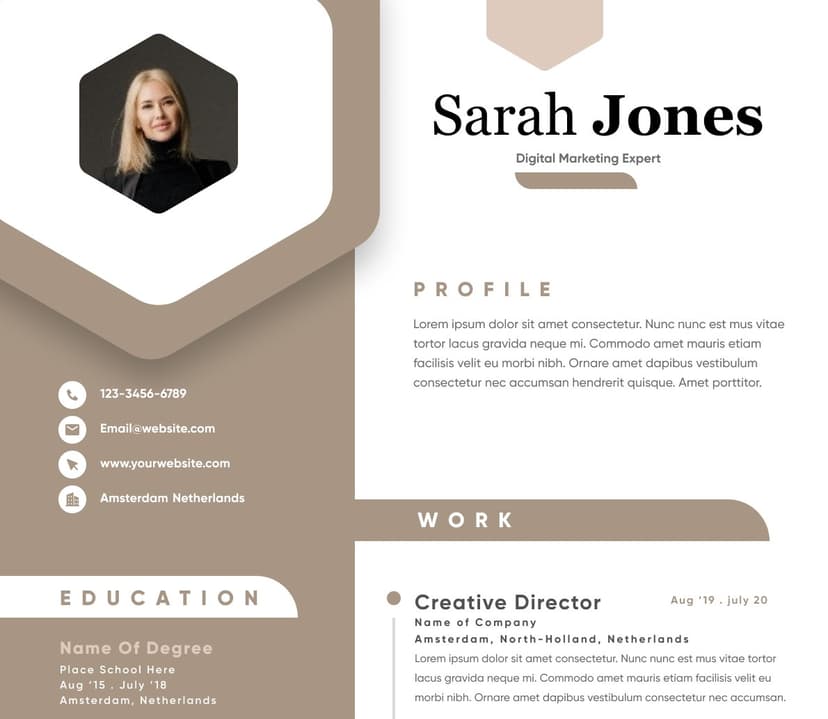
Use professional field-tested resume templates that follow the exact Resume rules employers look for.
Create Resume


 Upload Resume
 Import from Linkedin