STILL APPLYING. STILL HEARING NOTHING?BUILD YOUR RESUME

STILL APPLYING. STILL HEARING NOTHING?BUILD YOUR RESUME
Choose from a wide range of NEWCV resume templates and customize your NEWCV design with a single click.
FAQ
Most PHP developer resumes fail because they describe tasks instead of outcomes.
Recruiters already assume a PHP developer can:
Build APIs
Write Laravel code
Fix bugs
Work with MySQL
Integrate third-party services
Use Git
Those are baseline expectations.
What separates interview-worthy candidates is proof of impact.
A strong PHP developer resume achievement answers at least one of these questions:
The highest-performing PHP resume bullets usually follow this structure:
Action + Technical Solution + Measurable Result + Business Impact
“Worked on Laravel backend development and API integrations.”
This says almost nothing about capability, complexity, or results.
“Improved Laravel API response time by 42% through Redis caching, Eloquent query optimization, and backend refactoring, reducing customer-facing latency across high-traffic SaaS endpoints.”
The second version works because it includes:
A measurable result
Specific PHP technologies
Engineering strategy
Business relevance
Engineering managers trust quantified achievements more than generic claims.
Anyone can say:
“Improved performance”
“Optimized applications”
“Worked on scalable systems”
Very few candidates prove it with actual numbers.
Metrics immediately signal:
Ownership
Seniority
Technical depth
Business awareness
“Improved Laravel API response time by 42% through Redis caching, Eloquent query optimization, backend refactoring, and database indexing improvements.”
“Reduced MySQL query execution time by 62% by implementing eager loading, schema optimization, indexing strategies, and SQL refactoring across customer-facing applications.”
“Optimized Laravel queue processing workflows, reducing asynchronous job execution delays by 38% during peak transaction periods.”
“Improved PHP-FPM performance tuning and caching configuration, increasing backend request throughput by 27% under high concurrent traffic.”
“Reduced WordPress page load speed by 47% through plugin cleanup, CDN implementation, image optimization, and asset minification.”
These bullets work because they demonstrate:
Backend engineering depth
Real production optimization
“Supported high-scale PHP systems processing 1M+ API requests, transactions, and customer events per day across SaaS infrastructure.”
“Built PHP application features used by 350,000+ monthly users across e-commerce, CMS, and subscription platforms.”
“Designed scalable Laravel microservices architecture supporting 4x traffic growth without infrastructure downtime.”
“Implemented Redis caching and queue optimization strategies that improved concurrent request handling during seasonal traffic spikes.”
“Maintained 99.9% uptime for customer-facing PHP applications, APIs, and e-commerce platforms serving global users.”
Scale metrics matter heavily because they show:
Production maturity
Real-world complexity
Modern PHP hiring increasingly values deployment automation and engineering efficiency.
“Automated CI/CD workflows for PHP deployments, reducing release time from 50 minutes to 14 minutes using GitHub Actions and Docker.”
“Increased release frequency from monthly to weekly through automated testing, deployment pipelines, and containerized Laravel environments.”
“Reduced manual QA regression time by 36% through PHPUnit, Pest, API testing, and deployment validation automation.”
“Implemented Docker-based local development environments that reduced onboarding time by 32% for backend engineering teams.”
“Standardized deployment workflows across 8 Laravel applications, improving release consistency and rollback reliability.”
These achievements signal senior-level engineering thinking because they improve:
Team velocity
Engineering leaders strongly value candidates who improve reliability.
“Reduced customer-reported bugs by 24% after improving validation logic, exception handling, Laravel form request rules, and application logging.”
“Resolved 250+ PHP bugs, Laravel defects, and production incidents while improving platform stability across customer-facing systems.”
“Reduced production defects by 31% by expanding PHPUnit, Pest, feature test, and integration test coverage.”
“Improved backend error monitoring and debugging workflows, decreasing mean incident resolution time by 41%.”
“Refactored legacy authentication workflows to eliminate recurring session timeout and token validation failures.”
These bullets stand out because they demonstrate:
Ownership
Accountability
Legacy modernization is one of the strongest resume differentiators for PHP developers.
“Migrated legacy PHP 5/7 codebase to PHP 8 and Laravel, improving maintainability, security, and deployment reliability.”
“Refactored 25,000+ lines of legacy PHP code to improve framework compatibility, code quality, and long-term maintainability.”
“Modernized monolithic PHP architecture into modular Laravel services, reducing technical debt and accelerating feature development.”
“Replaced deprecated PHP libraries and unsupported dependencies, improving application security posture and upgrade stability.”
“Introduced PSR standards, dependency injection, and service layer architecture to improve scalability and maintainability.”
These achievements position candidates as engineers who can handle complex environments, not just greenfield development.
API integration experience is highly valuable in modern PHP roles.
“Integrated 15+ third-party APIs including Stripe, PayPal, Twilio, SendGrid, Salesforce, and HubSpot across SaaS and e-commerce platforms.”
“Built secure payment processing integrations supporting high-volume subscription billing and transaction workflows.”
“Implemented OAuth authentication and webhook processing systems for external CRM and analytics platforms.”
“Developed fault-tolerant API retry and logging mechanisms that improved third-party integration reliability during peak traffic periods.”
“Reduced external API failure handling time through centralized exception management and monitoring improvements.”
Strong API bullets signal:
Systems integration experience
Backend architecture knowledge
Companies still hire developers to ship products, not just optimize infrastructure.
“Delivered 18+ PHP product features across 7 Agile release cycles while maintaining production stability and sprint deadlines.”
“Developed customer-facing Laravel features that increased subscription engagement across SaaS onboarding workflows.”
“Built reusable Blade components, API resources, and Laravel service classes adopted across multiple internal projects.”
“Collaborated with product and frontend teams to deliver responsive backend functionality for high-priority customer initiatives.”
“Accelerated feature delivery timelines by standardizing reusable backend modules and development workflows.”
Feature delivery bullets should show:
Speed
Collaboration
Strong PHP resumes naturally include modern backend engineering terminology.
Important PHP resume keywords include:
PHP 8
Laravel
Symfony
WordPress
REST APIs
GraphQL
MySQL
PostgreSQL
This is the most common mistake.
“Responsible for backend development using Laravel.”
This sounds passive and low-impact.
“Built scalable Laravel backend services supporting 500,000+ monthly transactions across subscription billing workflows.”
The second version demonstrates ownership and scale.
Bad metrics feel meaningless.
“Improved performance by 40%.”
Performance of what?
“Improved Laravel API response time by 40% through Redis caching and Eloquent query optimization.”
Specificity creates trust.
Many developers overload resumes with tech stacks.
Hiring managers care more about:
What you solved
What improved
What scaled
What changed
Technology alone is not an achievement.
Experienced engineering managers spot unrealistic claims immediately.
Claims like:
“Improved productivity by 500%”
“Reduced all bugs completely”
“Built world-class architecture”
damage credibility.
Use realistic, defensible metrics.
Approximate numbers are acceptable if they reflect reality.
Senior developers focus more on:
Architecture
Scalability
System reliability
Team productivity
Deployment efficiency
Technical leadership
Infrastructure modernization
Junior developers focus more on:
Features shipped
The strongest place for measurable impact is the professional experience section.
However, achievements can also strengthen:
Include:
Years of experience
Core specialization
Scale or business impact
“PHP Developer with 6+ years of experience building scalable Laravel applications, optimizing high-traffic APIs, and improving backend performance across SaaS and e-commerce platforms.”
Especially useful for:
Freelancers
Recruiters often spend less than 10 seconds on the first scan.
These elements consistently attract attention quickly:
Measurable backend improvements
Laravel performance optimization
Scale metrics
CI/CD automation
PHP modernization work
AWS or cloud infrastructure experience
API integrations
Ideally:
60% to 80% of experience bullets should contain measurable impact
Every major role should include at least 2 to 4 quantified achievements
Metrics should vary across performance, scalability, reliability, delivery, and efficiency
Do not repeat the same metric style repeatedly.
A resume with:
Speed improvements
Cost savings
User scale
Deployment efficiency
This is where strong PHP resumes outperform average ones.
Hiring managers ultimately care about business impact.
“Optimized Laravel queues.”
“Optimized Laravel queue processing, reducing customer notification delays by 44% during high-volume order processing periods.”
The second version connects engineering work to user experience.
That distinction matters.


Use ATS-optimised Resume and resume templates that pass applicant tracking systems. Our Resume builder helps recruiters read, scan, and shortlist your Resume faster.

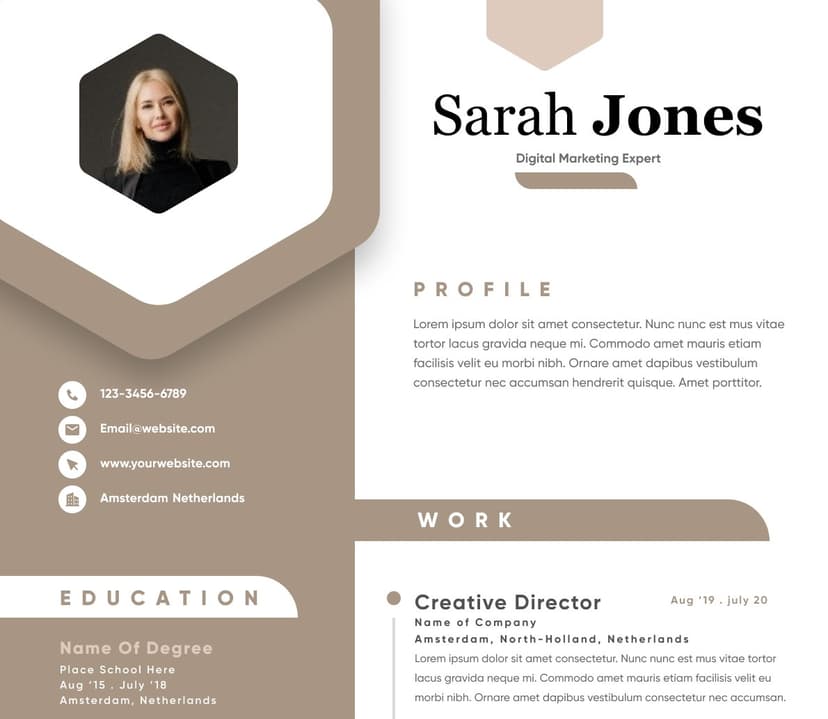
Use professional field-tested resume templates that follow the exact Resume rules employers look for.
Create Resume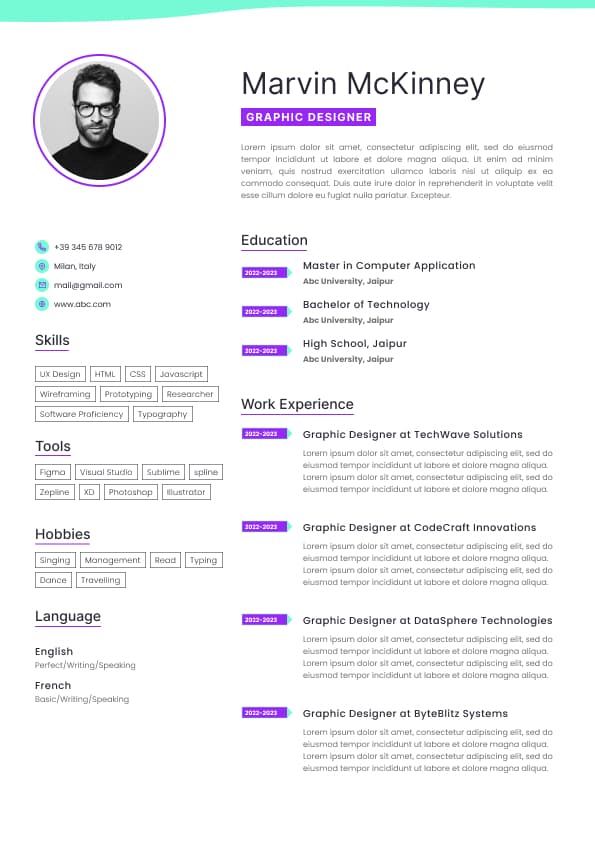
Use professional field-tested resume templates that follow the exact Resume rules employers look for.
Create ResumeDid the candidate improve performance?
Did they reduce costs?
Did they scale systems successfully?
Did they improve developer productivity?
Did they reduce downtime or defects?
Did they accelerate releases?
Did they support large user bases or traffic volumes?
Did they modernize outdated systems?
Did they improve maintainability or security?
This is how hiring managers evaluate engineering value during resume screening.
Performance impact
That combination dramatically increases resume credibility.
Production experience
Scale exposure
Even approximate metrics are significantly better than none.
Effective PHP resume metrics include:
API response time improvements
Uptime percentages
Deployment speed reductions
Cost savings
Traffic scale
Database query improvements
Defect reduction rates
Test coverage increases
Feature delivery velocity
Bug resolution volume
User adoption metrics
Revenue-related improvements
CI/CD acceleration
Infrastructure optimization results
These are measurable engineering outcomes recruiters actively look for.
Understanding of scale and performance bottlenecks
Quantified impact
Reliability experience
Infrastructure awareness
Hiring managers trust candidates who have operated systems under pressure.
Reliability
Deployment confidence
Developer productivity
Production support experience
Engineering quality mindset
Production reliability awareness
Security familiarity
Product impact
Execution consistency
Redis
PHPUnit
Pest
Docker
Kubernetes
GitHub Actions
CI/CD
AWS
PHP-FPM
Composer
Nginx
Apache
MVC
OAuth
Microservices
Eloquent ORM
Queue systems
API integrations
Backend optimization
SaaS applications
The goal is not keyword stuffing.
The goal is contextual credibility.
Recruiters and ATS systems both favor resumes where technologies are tied to measurable outcomes.
Bugs resolved
Application support
Testing contributions
Collaboration
Implementation work
This distinction matters during screening.
A senior candidate writing junior-level bullets often gets downgraded.
Junior developers
Open-source contributors
Contract engineers
Keep this concise and structured.
Do not turn it into a keyword dump.
Test automation
Reliability improvements
Production system ownership
The fastest way to lose attention is generic wording.
The fastest way to gain attention is quantified technical impact.
Bug reduction
Uptime metrics
feels much more credible and senior-level.


 Upload Resume
 Import from Linkedin