STILL APPLYING. STILL HEARING NOTHING?BUILD YOUR RESUME

STILL APPLYING. STILL HEARING NOTHING?BUILD YOUR RESUME
Choose from a wide range of NEWCV resume templates and customize your NEWCV design with a single click.
FAQ

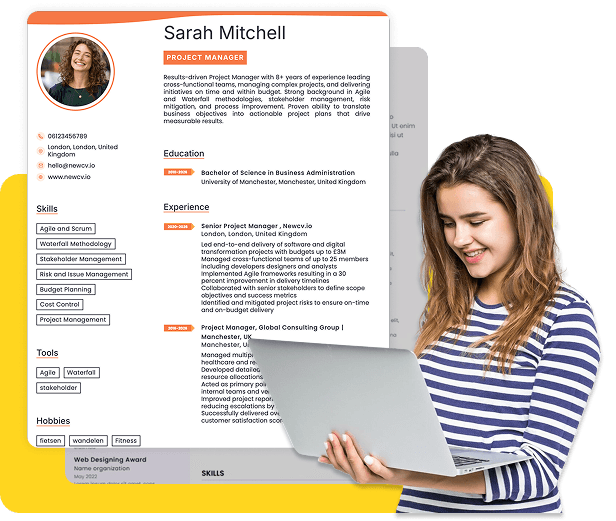
Changing careers into PHP development is absolutely possible, but most career-change resumes fail for one reason: they look like beginner resumes instead of employable developer resumes. Hiring managers are not expecting senior-level experience from career changers. They are looking for evidence that you can solve real problems, work in development environments, and contribute to production workflows.
The strongest PHP developer career-change resumes lead with technical proof, not unrelated job history. That means showcasing PHP projects, Laravel or WordPress work, GitHub repositories, MySQL experience, APIs, debugging skills, and practical development knowledge before older non-technical roles. Your previous career still matters, but only when translated into business value that supports software development work.
A recruiter reviewing a PHP career-change resume is asking one question immediately:
“Can this person realistically contribute to a development team within the next few months?”
Your resume must answer that question fast.
Most junior and career-transition candidates misunderstand how developers are evaluated.
Hiring managers are not expecting:
Ten years of PHP experience
Perfect architecture knowledge
Enterprise-scale backend systems
Computer science credentials from top universities
They are looking for:
Evidence of hands-on coding ability
Real PHP projects and technical execution
Understanding of databases and APIs
Ability to debug and solve problems
Familiarity with development workflows
Communication and collaboration skills
Proof of learning initiative
Some understanding of business needs
This is why many self-taught developers get interviews while candidates with “strong resumes” do not.
Technical proof beats generic claims every time.
Most rejected resumes fail because they position the candidate incorrectly.
If your resume starts with ten years of unrelated experience and only briefly mentions PHP at the bottom, recruiters will immediately categorize you as “not a developer.”
Your PHP skills, projects, GitHub, and technical stack should appear near the top.
Many candidates accidentally position themselves as learners instead of contributors.
Weak Example
“Currently learning PHP and hoping to transition into web development.”
This signals risk and inexperience.
Good Example
“Built and deployed PHP and Laravel applications with MySQL integration, REST API functionality, authentication systems, and responsive frontend components.”
This sounds employable.
A PHP resume without project proof is extremely difficult to trust for career changers.
Recruiters need:
GitHub repositories
Live applications
Laravel projects
WordPress customizations
API integrations
Database-driven applications
Real-world problem solving
Even small but complete projects outperform vague claims.
“Hardworking,” “team player,” and “motivated learner” mean nothing without technical execution.
Your projects are your credibility.
Career-change resumes should not follow the same structure as experienced developer resumes.
This structure works best:
Focus on:
PHP development capabilities
Technical stack
Projects and specialization
Relevant domain expertise from previous career
Include:
PHP
Laravel
WordPress
MySQL
REST APIs
Git
JavaScript
HTML/CSS
Linux
Docker
Testing tools
Agile workflows
This is critical.
Place projects before unrelated work history if you lack direct developer experience.
Only include if relevant and credible.
Translate previous experience into PHP-relevant value.
Keep this short unless highly relevant.
Your summary must reposition you professionally.
Avoid announcing that you are inexperienced.
The summary should frame you as a developer with transferable business value.
Example
“PHP developer transitioning from project management with hands-on experience building Laravel and WordPress applications, MySQL databases, REST APIs, and custom workflow tools. Developed multiple portfolio projects focused on process automation, client management, and reporting systems. Combines technical development skills with stakeholder communication, Agile collaboration, and business process improvement experience.”
Why this works:
Leads with PHP identity first
Includes technical stack immediately
Shows project-based credibility
Connects previous experience strategically
Sounds employable instead of beginner-level
Projects are the single most important factor for most career changers.
Hiring managers often care more about strong projects than unrelated work history.
The best projects:
Solve real problems
Use databases
Include authentication
Use APIs
Demonstrate CRUD functionality
Show deployment experience
Include GitHub documentation
Reflect realistic business scenarios
Excellent for demonstrating:
Authentication
Role permissions
Database relationships
Reporting functionality
CRUD operations
MVC architecture
Strong for:
CMS knowledge
Hooks and filters
PHP customization
SEO understanding
Client-oriented development
Shows:
REST API integration
JSON handling
Backend logic
Error handling
External services integration
Excellent for candidates from operations, recruiting, healthcare, finance, or project management backgrounds.
Demonstrates:
Business understanding
Systems thinking
Real-world workflows
Process optimization
This is where most career changers either become highly competitive or completely irrelevant.
Transferable skills only matter when connected directly to development work.
Strong transferable assets:
Troubleshooting
Linux basics
Hosting environments
Technical documentation
User issue resolution
Networking fundamentals
How recruiters view this:
IT support candidates often transition well because they already understand technical systems and debugging logic.
Highly relevant transition.
Strong transferable assets:
Bug reporting
Regression testing
Product quality mindset
Automation basics
Edge-case thinking
SDLC familiarity
This background often produces stronger junior developers because QA professionals already understand software behavior deeply.
Strong assets:
SQL
Reporting systems
Database logic
Data structures
Analytics workflows
Business intelligence thinking
Candidates with strong SQL backgrounds often learn backend development faster.
Useful transferable strengths:
Agile methodology
Sprint planning
Requirements gathering
Stakeholder communication
Cross-functional collaboration
However, PM candidates must prove technical execution aggressively because recruiters may assume they are non-technical.
Very valuable for WordPress and agency roles.
Strong transferable skills:
SEO
Analytics
Landing page optimization
CMS workflows
Conversion optimization
Content systems
This combination is highly attractive for marketing agencies and small businesses.
Excellent for fintech applications.
Relevant strengths:
Payment systems knowledge
Compliance awareness
Data accuracy
Reporting logic
Financial workflows
Domain expertise can become a major differentiator.
Strong for healthcare SaaS and portal systems.
Relevant strengths:
HIPAA awareness
Healthcare workflows
Patient systems understanding
Data privacy sensitivity
Healthcare technology companies value industry familiarity heavily.
This transition is more valuable than many candidates realize.
Strong transferable strengths:
ATS workflows
HR systems understanding
Process automation awareness
Stakeholder communication
Workflow optimization
HR tech companies often prefer developers who understand recruiting operations.
Career changers face one major challenge:
Trust.
Recruiters need confidence that your skills are real.
The fastest way to build credibility:
GitHub repositories
Live demos
Technical documentation
Real deployment experience
Consistent project depth
Clean code structure
Portfolio explanations
Most candidates misunderstand GitHub evaluation.
Recruiters are not reviewing your code like senior engineers.
They are checking:
Is the project real?
Is there consistency?
Does the candidate understand workflows?
Is documentation present?
Are commits active?
Does the project solve something useful?
Even recruiters without coding experience can identify weak portfolios quickly.
If every project looks copied from YouTube tutorials, recruiters notice immediately.
A GitHub link without a working application reduces trust.
Projects without explanations feel incomplete.
Backend developers without database work look unprepared.
Simple calculators and basic to-do apps are no longer competitive in most markets.
ATS optimization matters, but relevance matters more.
Use keywords naturally throughout:
PHP
Laravel
WordPress
MySQL
REST API
MVC
Git
Composer
PHPUnit
JavaScript
HTML
CSS
Docker
Linux
Authentication
CRUD
API integration
Database optimization
Agile
CI/CD
AWS
Web applications
Do not keyword stuff.
Modern ATS systems evaluate contextual relevance, not just repetition.
This is one of the most important strategic decisions.
Do not pretend you are a senior developer.
But also do not market yourself as “just learning.”
The best positioning approach is:
“I already build working PHP applications and can contribute in junior-to-mid-level environments with onboarding.”
That is believable and attractive.
Your previous experience should support your developer narrative, not dominate it.
Focus on:
Technical overlap
Systems thinking
Process improvement
Automation
Stakeholder management
Documentation
Cross-functional work
Data handling
Product collaboration
Weak Example
“Managed daily operations and team workflows.”
Too generic.
Good Example
“Improved operational workflows through automation initiatives, system optimization, reporting analysis, and cross-functional collaboration with technical stakeholders.”
This creates alignment with development environments.
Yes, but strategically.
Bootcamps alone do not get interviews anymore.
What matters:
Technical execution afterward
Portfolio quality
GitHub consistency
Applied projects
Real-world implementation
Good certifications can help support credibility, especially:
AWS Cloud Practitioner
PHP-specific certifications
MySQL certifications
Laravel-focused training
API development courses
But projects still matter more.
Most hiring managers divide career changers into three categories.
These candidates:
Have strong projects
Show consistent technical learning
Understand development workflows
Present professionally
Demonstrate practical execution
These candidates get interviews.
These resumes:
Mix unrelated experience poorly
Lack technical depth
Feel generic
Overemphasize soft skills
These candidates rarely move forward.
These candidates:
Have no real projects
Only list courses
Use vague technical claims
Show no practical coding proof
These resumes are usually rejected immediately.
Emphasize:
MVC architecture
Authentication
API development
Database relationships
Eloquent ORM
Testing
Highlight:
Custom themes
Plugins
SEO optimization
WooCommerce
Performance optimization
Client-facing website work
Leverage:
Finance background
Payment systems
Compliance understanding
Data accuracy
Emphasize:
HIPAA awareness
Security
Data privacy
Workflow understanding
Highlight:
Client communication
Fast-paced work
CMS systems
Multiple project management
The strongest resumes create a believable hiring story.
That means your:
Resume
GitHub
Portfolio
Projects
Technical stack
Previous career
Should all reinforce the same narrative.
If your resume says PHP developer but your GitHub barely exists, trust breaks immediately.
Consistency matters more than perfection.
The combination that works most consistently is:
Strong PHP and Laravel projects
GitHub activity
Clear technical stack
Real database work
Practical business-oriented applications
Smart transferable skills positioning
Clean resume structure
Domain expertise alignment
Most importantly, recruiters need evidence that you can contribute beyond tutorials.
That is the difference between “aspiring developer” and “hireable developer.”
Use ATS-optimised Resume and resume templates that pass applicant tracking systems. Our Resume builder helps recruiters read, scan, and shortlist your Resume faster.
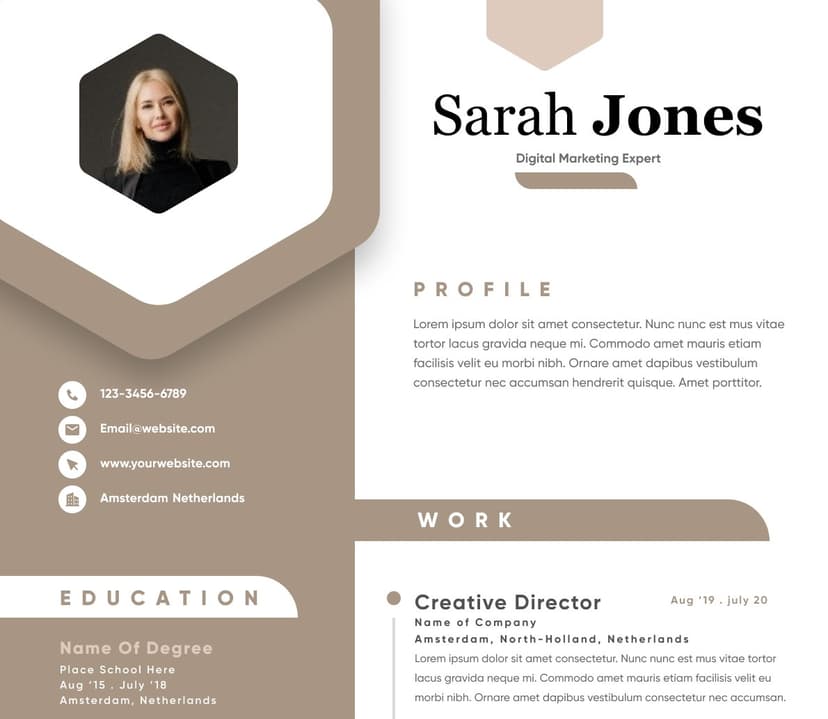
Use professional field-tested resume templates that follow the exact Resume rules employers look for.
Create Resume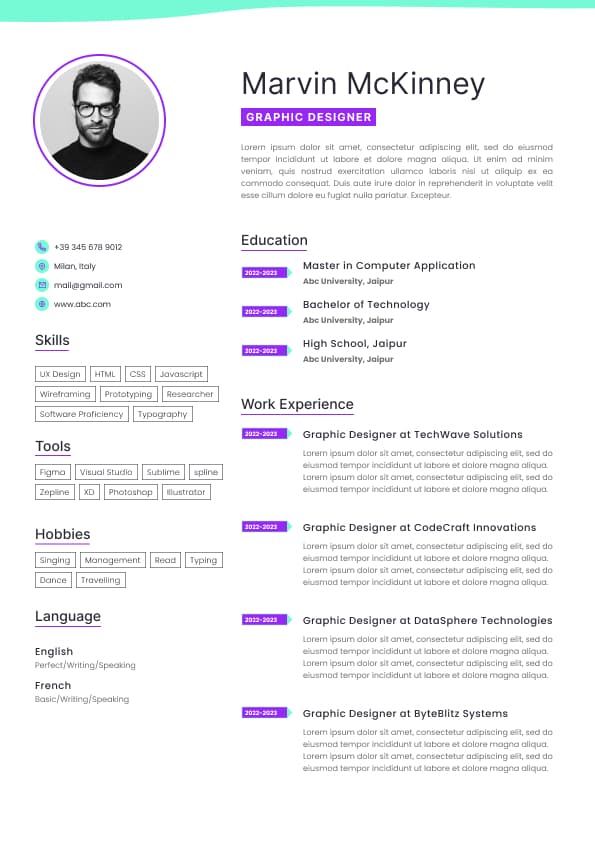
Use professional field-tested resume templates that follow the exact Resume rules employers look for.
Create Resume


 Upload Resume
 Import from Linkedin