STILL APPLYING. STILL HEARING NOTHING?BUILD YOUR RESUME

STILL APPLYING. STILL HEARING NOTHING?BUILD YOUR RESUME
Choose from a wide range of NEWCV resume templates and customize your NEWCV design with a single click.
FAQ

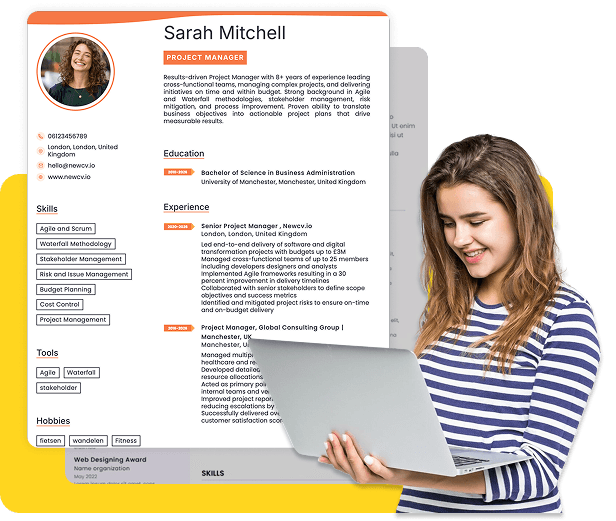
A strong Python developer resume is not just a list of programming languages and frameworks. Hiring managers want proof that you can build, scale, automate, optimize, and maintain production systems. The resumes that consistently get interviews in today’s US tech market demonstrate three things clearly: technical depth, measurable business impact, and real-world engineering ownership.
Most Python developer resumes fail because they read like generic technology inventories. Recruiters see vague phrases like “worked on APIs” or “used Django” without context, scale, architecture details, or outcomes. A resume that wins interviews shows exactly what systems you built, what technologies you used, how those systems performed, and why your work mattered to the business.
This guide breaks down exactly how to write a Python developer resume that aligns with modern ATS systems, recruiter screening behavior, and backend engineering hiring standards in 2026.
Hiring managers evaluate Python developer resumes differently than general software engineering resumes. Python is heavily associated with backend systems, automation, AI tooling, APIs, cloud infrastructure, and data workflows. That means recruiters expect practical engineering outcomes, not just coding knowledge.
Strong resumes immediately communicate:
Backend architecture experience
API development expertise
Cloud deployment exposure
Database proficiency
Production engineering impact
Automation or system optimization
CI/CD and DevOps familiarity
Measurable scalability improvements
Weak resumes focus too heavily on:
Generic skill lists
Coursework without projects
Unquantified responsibilities
Buzzwords without context
Frontend-heavy descriptions for backend roles
Repeating technologies without showing outcomes
Recruiters spend seconds scanning a resume initially. Your document must make technical value obvious immediately.
An ATS-friendly Python developer resume should follow a clean, modern structure with clearly labeled sections.
Recommended order:
Contact information
Professional summary
Technical skills
Work experience
Projects
Education
Certifications
Do not use:
Graphics
Icons
Complex columns
Text boxes
Skill bars
Fancy templates
Headers or footers with critical information
Many ATS systems still parse complex formatting poorly. Simplicity performs better.
Your summary should position you as a production-level engineer, not someone who merely knows Python syntax.
This section should quickly establish:
Python specialization
Backend expertise
Frameworks used
Infrastructure exposure
Business impact
Seniority level
A recruiter should immediately understand what type of Python engineer you are.
Use this structure:
Years of experience + specialization + core technologies + infrastructure + measurable business impact
“Python Developer with 6+ years of experience building scalable backend systems using Django, FastAPI, PostgreSQL, Docker, and AWS. Specialized in API development, cloud-native applications, and automation workflows supporting SaaS platforms with over 2 million monthly users. Reduced API response latency by 42% and improved deployment frequency through CI/CD optimization.”
“Python developer with experience in software development and backend technologies. Worked on APIs and databases.”
The weak version fails because it contains no specialization, no scale, no outcomes, and no technical depth.
Your skills section should be categorized strategically. Random keyword dumping weakens readability and credibility.
Hiring managers scan this section to verify technical alignment with the role quickly.
Django
FastAPI
Flask
Tornado
Celery
PostgreSQL
MySQL
MongoDB
Redis
DynamoDB
AWS
Azure
Google Cloud Platform
Docker
Kubernetes
Terraform
Jenkins
GitHub Actions
REST APIs
GraphQL
Microservices
WebSockets
OAuth
PyTest
Selenium
Unit Testing
Integration Testing
CI/CD
Kafka
RabbitMQ
Airflow
Pandas
NumPy
Avoid rating systems like “Python: 5/5” because they provide no meaningful hiring value.
This section determines whether you get interviews.
Most candidates describe tasks. Strong candidates demonstrate engineering outcomes.
Hiring managers want to understand:
What systems you built
What technologies powered them
What scale they handled
What problems you solved
What measurable impact occurred
Use this structure:
Action verb + system built + technologies used + measurable result
The weak example tells recruiters almost nothing.
Python engineering resumes become dramatically stronger when measurable impact is included.
Top metrics recruiters notice:
API latency reduction
Uptime improvements
Deployment frequency
Cost savings
Infrastructure optimization
Automation time savings
Bug reduction
System scalability
Transaction volume
Concurrent user growth
Query optimization
Processing speed improvements
Improved uptime from 97.1% to 99.95%
Reduced AWS costs by $120K annually
Lowered API response time by 45%
Reduced database query execution time by 62%
Automated reporting workflows saving 25+ hours weekly
Eliminated 80% of manual deployment tasks
Designed microservices supporting 10M+ monthly requests
Migrated monolithic architecture to scalable containerized infrastructure
These metrics immediately separate experienced engineers from junior-level applicants.
One major issue with Python resumes is that many candidates sound interchangeable.
You need to demonstrate system-level thinking.
Instead of writing:
Write:
This version demonstrates:
Architecture understanding
Scalability awareness
Production infrastructure
Industry context
Engineering maturity
Python resumes become stronger when they align with the target industry.
Recruiters evaluate backend systems differently depending on the environment.
Focus on:
Multi-tenant systems
Scalability
API integrations
Subscription architecture
CI/CD pipelines
Cloud-native deployments
Built scalable subscription billing APIs
Optimized tenant-level database performance
Improved deployment velocity through containerized CI/CD workflows
Focus on:
Security
Transaction processing
Compliance
High availability
Low-latency systems
Developed secure payment processing APIs handling PCI-compliant financial transactions
Reduced transaction settlement latency by 31% across distributed services architecture
Focus on:
HIPAA compliance
Data integrity
Reliability
Security
Interoperability
Built HIPAA-compliant patient data processing systems using Django and AWS
Developed secure healthcare API integrations supporting HL7 interoperability standards
Focus on:
Automation workflows
ML pipeline support
Data orchestration
Python scripting
AI infrastructure
Automated ML model deployment pipelines using Python, Docker, and Kubernetes
Built AI workflow orchestration systems reducing model deployment time by 60%
Entry-level candidates often struggle because they lack formal engineering experience.
The solution is not filler. It is project positioning.
Recruiters hiring junior developers still want evidence of:
Problem-solving
Technical capability
System understanding
Practical development skills
REST APIs
Authentication systems
Automation tools
Web scraping platforms
Dashboard applications
Cloud-deployed applications
AI integrations
Database-driven applications
Projects become strong when they include:
Real deployment
GitHub repositories
Documentation
APIs
Databases
Authentication
Docker
Cloud hosting
The difference is engineering maturity and deployment realism.
ATS optimization is not about keyword stuffing.
Modern ATS systems identify contextual relevance.
Your resume should naturally include terms like:
Python developer
Backend development
Django
FastAPI
REST APIs
Microservices
Docker
Kubernetes
CI/CD
AWS
PostgreSQL
Cloud infrastructure
Automation
Distributed systems
However, keywords only work when integrated naturally into meaningful experience descriptions.
Recruiters reject resumes that obviously manipulate keywords without demonstrating real expertise.
These mistakes consistently hurt interview rates.
Weak:
Strong:
Weak:
Strong:
Avoid empty phrases like:
Team player
Hard worker
Self-motivated
Results-driven
Hiring managers care about engineering outcomes, not personality clichés.
Modern backend engineering hiring strongly values operational understanding.
Resumes that mention only coding but ignore deployment, scalability, cloud systems, monitoring, or automation often appear junior-level.
Engineering work exists to improve business outcomes.
Strong resumes connect technical decisions to measurable business results.
Use action verbs associated with engineering ownership and technical execution.
Strong options:
Built
Engineered
Architected
Optimized
Automated
Designed
Implemented
Scaled
Refactored
Migrated
Integrated
Deployed
Containerized
Streamlined
Avoid weak verbs like:
Helped
Assisted
Worked on
Participated in
These reduce perceived ownership.
Certifications should support your technical positioning, not replace experience.
The most respected certifications for backend Python developers include:
AWS Certified Developer
AWS Solutions Architect
Kubernetes Certifications
Docker Certifications
Microsoft Azure Certifications
Linux Certifications
Google Cloud Certifications
TensorFlow Certifications for AI-focused roles
Certifications matter most when they reinforce practical engineering experience already demonstrated in your resume.
Initial recruiter scans are brutally fast.
The first things recruiters typically evaluate:
Job title alignment
Python specialization clarity
Backend technology stack
Cloud infrastructure exposure
Resume readability
Measurable engineering impact
Career progression
Technical credibility
If your resume immediately communicates “production backend engineer,” your interview odds increase dramatically.
If your resume looks generic, overloaded with buzzwords, or technically shallow, recruiters move on quickly.
Senior-level resumes must demonstrate ownership beyond coding.
Hiring managers expect evidence of:
System architecture decisions
Scalability leadership
Cross-functional collaboration
Infrastructure modernization
Mentorship
Reliability engineering
Performance optimization
Led migration from monolithic architecture to containerized microservices infrastructure reducing deployment failures by 52%
Architected distributed backend systems supporting 15M+ monthly API requests across global SaaS environments
Designed CI/CD automation pipelines reducing production deployment time from 90 minutes to 12 minutes
Senior candidates should sound like technical decision-makers, not task executors.
The best Python developer resumes do three things exceptionally well:
Demonstrate real backend engineering depth
Quantify measurable business impact
Position the candidate as production-ready
Your resume should prove that you can build and maintain scalable systems in real business environments.
Hiring managers are not simply looking for someone who knows Python syntax. They are evaluating whether you can solve infrastructure problems, support production systems, improve engineering efficiency, and contribute to scalable software architecture.
A technically detailed, metrics-driven, ATS-friendly resume consistently outperforms generic keyword-heavy resumes in the modern US tech hiring market.
Use ATS-optimised Resume and resume templates that pass applicant tracking systems. Our Resume builder helps recruiters read, scan, and shortlist your Resume faster.

Use professional field-tested resume templates that follow the exact Resume rules employers look for.
Create Resume
Use professional field-tested resume templates that follow the exact Resume rules employers look for.
Create Resume


 Upload Resume
 Import from Linkedin