STILL APPLYING. STILL HEARING NOTHING?BUILD YOUR RESUME

STILL APPLYING. STILL HEARING NOTHING?BUILD YOUR RESUME
Choose from a wide range of NEWCV resume templates and customize your NEWCV design with a single click.
FAQ
TypeScript security is no longer optional for modern web developers. In fintech, healthcare, SaaS, government, and enterprise environments, hiring managers increasingly evaluate whether TypeScript developers understand secure coding, authentication, authorization, OWASP risks, API security, and compliance-aware engineering practices.
Most applications today expose sensitive user data through APIs, frontend state management, authentication flows, or third-party integrations. A developer who writes clean TypeScript but ignores security risks can introduce vulnerabilities that lead to breaches, compliance failures, or production incidents.
The strongest TypeScript developers understand how to prevent XSS, secure authentication, validate inputs, manage secrets safely, harden APIs, implement role-based access control, and reduce dependency vulnerabilities. They also know how to communicate those skills in a way that signals trust to recruiters and engineering leaders.
Secure TypeScript development is the practice of building frontend and backend applications that minimize vulnerabilities, protect sensitive data, and reduce attack surfaces throughout the software development lifecycle.
This goes far beyond simply using TypeScript instead of JavaScript.
Strong TypeScript security involves:
Secure authentication and authorization
Safe API handling
Input validation and sanitization
Dependency vulnerability management
Secure session management
Proper secrets handling
Secure HTTP headers
Many developers assume security is owned only by cybersecurity teams. In reality, many vulnerabilities originate during development.
Engineering leaders know this.
That is why modern hiring teams increasingly screen TypeScript developers for secure development awareness during interviews and resume reviews.
Security-sensitive industries especially prioritize these skills:
FinTech
Healthcare
Banking
Insurance
Government contractors
Enterprise SaaS
Many developers mention OWASP Top 10 without understanding how those risks appear in real applications.
Hiring managers can usually tell immediately.
The developers who stand out understand how vulnerabilities actually emerge in React, Next.js, Node.js, API layers, authentication systems, and third-party integrations.
Cross-site scripting remains one of the most common frontend security issues.
It occurs when untrusted input is rendered into the browser without proper validation, sanitization, or output handling.
Common TypeScript mistakes include:
Rendering user-generated content without sanitization
Trusting markdown or rich text content too easily
Injecting URL parameters into page content
Allowing unsafe HTML rendering
Authentication systems are one of the biggest evaluation areas during security-focused interviews.
Most companies care less about theoretical definitions and more about implementation judgment.
JWT usage is extremely common, but many implementations are insecure.
Strong practices include:
Short token expiration
Refresh token rotation
Secure cookie storage
Signature validation
Audience validation
Proper logout invalidation
Most enterprise applications depend heavily on APIs.
Secure TypeScript backend development therefore matters heavily in hiring evaluations.
TypeScript types do not validate runtime input.
This is a critical concept many junior and mid-level developers misunderstand.
Even if TypeScript compiles successfully, attackers can still send malicious or malformed requests to an API.
Strong developers use runtime validation tools and validation patterns to check incoming data before it reaches business logic.
Common validation tools include:
Zod
Joi
Yup
Valibot
Weak Example
A backend endpoint accepts request data and passes it directly into user creation, payment processing, search filters, or database logic without validation.
One of the biggest modern security risks is dependency compromise.
TypeScript ecosystems rely heavily on npm packages, creating major supply chain exposure.
Strong developers proactively manage dependency risk.
Commonly used tools include:
Snyk
Dependabot
npm audit
GitHub Advanced Security
SonarQube
ESLint security plugins
Frontend security is commonly underestimated by developers.
But enterprise hiring teams increasingly evaluate frontend attack awareness.
Sensitive data should never remain exposed unnecessarily in frontend state.
High-risk mistakes include:
Storing secrets in frontend state
Exposing API keys client-side
Persisting tokens insecurely
Logging sensitive user data
Keeping sensitive data longer than needed
Exposing admin-only data in frontend responses
Developers should minimize exposure windows for sensitive information.
Compliance knowledge increasingly differentiates senior candidates from mid-level developers.
Most developers misunderstand this entirely.
Companies do not expect engineers to become lawyers.
But they do expect developers to understand how architecture decisions affect compliance obligations.
Healthcare applications must protect PHI carefully.
Important considerations include:
Access logging
Encryption
Audit trails
Minimum necessary access
Secure session management
These mistakes frequently damage both applications and hiring outcomes.
TypeScript improves developer safety.
It does not replace application security.
Many candidates incorrectly assume static typing prevents attacks.
It does not.
TypeScript can reduce certain coding mistakes, but it cannot stop broken authentication, weak authorization, injection attacks, insecure dependencies, or poor session handling.
This remains one of the most common frontend security concerns.
Especially for authentication tokens.
Many hiring managers specifically ask about this during interviews because it reveals whether a developer understands browser-based attack surfaces.
Some candidates proudly list many npm packages without discussing maintenance, scanning, patching, or package risk.
That can weaken credibility.
Hiring teams want to know whether a developer can move fast without creating unmanaged supply chain risk.
Enterprise systems increasingly require auditability.
Security-related resume positioning is often weak because candidates write vague claims.
Recruiters want evidence.
Not buzzwords.
High-value security keywords include:
Secure coding
OWASP Top 10
Authentication
Authorization
API security
RBAC
Security-oriented interviews increasingly focus on practical engineering judgment.
Not memorization.
Common evaluation areas include:
How JWT authentication works
Secure cookie handling
RBAC implementation
API protection strategies
XSS prevention
Input validation
Secret management
Many developers wrongly assume they need formal cybersecurity experience.
They do not.
Most companies simply want developers who build responsibly.
The fastest way to strengthen TypeScript security credibility includes:
Learning OWASP Top 10 deeply
Building authentication systems
Implementing RBAC
Using runtime validation
Practicing API hardening
Running dependency scans regularly
Studying secure architecture patterns
Security expectations for TypeScript developers are rising quickly.
Especially with:
AI-generated code
Expanding API ecosystems
Increased regulatory pressure
Third-party integrations
Remote-first SaaS platforms
Identity-heavy applications
More enterprise security reviews
Companies increasingly want developers who think about security proactively during development.
Not after incidents happen.


Use ATS-optimised Resume and resume templates that pass applicant tracking systems. Our Resume builder helps recruiters read, scan, and shortlist your Resume faster.


Use professional field-tested resume templates that follow the exact Resume rules employers look for.
Create Resume
Use professional field-tested resume templates that follow the exact Resume rules employers look for.
Create ResumeAccess control enforcement
Encryption and PII protection
OWASP-aware coding practices
Secure logging and audit readiness
Compliance-aware architecture decisions
In hiring environments, secure coding capability is increasingly viewed as a business risk reduction skill, not just an engineering skill.
A TypeScript developer who understands security can directly impact SOC 2 audit readiness, HIPAA compliance efforts, PCI DSS expectations, GDPR data protection, enterprise procurement approvals, incident reduction, and customer trust.
Legal tech
HR tech
Cybersecurity platforms
In these environments, developers regularly work with financial records, protected health information, personally identifiable information, authentication systems, internal admin tools, access management systems, and audit logging systems.
A single insecure implementation can create major operational, financial, legal, and reputational consequences.
Failing to sanitize content from third-party sources
Weak Example
A developer allows user comments, profile bios, or rich text content to display directly in the interface without sanitization.
Why This Fails
Untrusted content can contain malicious scripts or unsafe markup that exposes users to session theft, account takeover, or data leakage.
Good Example
A developer sanitizes user-generated content, limits allowed formatting, validates input at the API layer, and applies browser protections such as Content Security Policy.
Why This Works
It reduces the risk that malicious content can execute in the user’s browser, especially in applications that support comments, profiles, dashboards, or uploaded content.
Authentication failures are extremely common in Node.js and React ecosystems.
Common mistakes include:
Storing tokens insecurely
Weak session expiration
Missing token rotation
No multi-factor authentication support
Exposing sensitive tokens in logs
Poor refresh token handling
One of the biggest red flags is storing sensitive authentication tokens in localStorage unnecessarily.
Because localStorage is exposed to JavaScript, an XSS vulnerability can make token theft much easier.
Many security-conscious companies prefer:
HttpOnly cookies
Secure cookies
SameSite protections
Short-lived access tokens
Refresh token rotation
Strong logout and session invalidation
Developers who understand these tradeoffs are viewed as more production-ready.
Access control failures are among the most damaging enterprise vulnerabilities.
This often happens when developers rely only on frontend role checks.
Frontend checks are never sufficient.
Authorization must always be enforced server-side.
Common mistakes include:
Hiding admin screens without backend validation
Trusting client-side role claims
Missing RBAC validation on APIs
Exposing internal endpoints
Allowing users to access another tenant’s data
Failing to verify resource ownership
Strong TypeScript developers implement:
Role-based access control
Permission middleware
Tenant-aware authorization
Resource ownership validation
Fine-grained access policies
Audit trails for sensitive actions
Avoiding sensitive payloads inside tokens
Weak practices include:
Long-lived tokens
Storing secrets client-side
No expiration handling
Trusting decoded token content without verification
Exposing JWTs through logs
Putting sensitive personal data inside token payloads
A strong TypeScript developer understands that JWTs are not automatically secure. Security depends on storage, expiration, validation, rotation, transport, and authorization design.
Many enterprise systems use OAuth or OpenID Connect providers such as Auth0, Okta, Microsoft Entra ID, Google Identity, Clerk, Firebase Auth, and NextAuth/Auth.js.
Developers who understand authentication flows gain a major advantage in hiring.
Especially important concepts include:
Authorization code flow
PKCE
Identity provider integrations
Session management
Secure callback handling
Scope management
Token validation
Permission mapping
Many candidates fail interviews because they know authentication libraries but cannot explain the underlying flow.
Hiring managers notice this immediately.
Why This Fails
Attackers can send unexpected values, oversized payloads, malicious strings, missing fields, or manipulated parameters.
Good Example
A backend endpoint validates incoming fields, rejects malformed requests, limits payload size, checks data types at runtime, and separates validation from business logic.
Why This Works
It reduces injection risks, improves reliability, and creates cleaner audit trails when applications process sensitive data.
Modern ORMs reduce SQL injection risk, but developers can still create vulnerabilities through unsafe query construction.
Safer approaches include:
Parameterized queries
ORM query builders
Runtime input validation
Escaping strategies
Least privilege database access
Controlled filtering and sorting logic
Dangerous practices include:
Dynamic SQL concatenation
Unvalidated filters
Raw query injection
Allowing users to control database field names directly
A strong backend developer understands that ORM usage alone does not guarantee secure database access.
Many APIs fail because developers never considered abuse scenarios.
Security-conscious systems typically implement:
IP-based rate limiting
API throttling
Bot protection
Request quotas
Login attempt limits
Account lockout rules
Abuse monitoring
This is especially important in fintech, healthcare, account-based SaaS, and authentication-heavy applications.
OWASP Dependency-Check
Developers who understand dependency scanning are increasingly viewed as more mature engineers.
Especially in enterprise hiring.
Strong interview signals include:
“We reduced critical dependency vulnerabilities through automated scanning.”
“I helped add security checks into the CI/CD pipeline.”
“We reviewed high-risk package updates before deployment.”
“I worked with security teams to prioritize vulnerability remediation.”
“I improved dependency visibility across frontend and backend services.”
These signals demonstrate operational security awareness.
Not just coding ability.
A secure frontend does not just look polished. It limits what the browser can access in the first place.
Secure frontend and full-stack applications commonly use:
Content Security Policy
X-Frame-Options
Strict-Transport-Security
X-Content-Type-Options
Referrer-Policy
Permissions-Policy
Helmet.js is commonly used in Node.js applications to configure security headers.
These protections help reduce risks related to clickjacking, content injection, insecure transport, browser behavior, and unsafe resource loading.
CSRF risks still matter in cookie-based authentication systems.
Strong mitigation strategies include:
CSRF tokens
SameSite cookies
Origin validation
Double-submit cookie patterns
Careful handling of state-changing requests
Many candidates incorrectly assume JWT automatically prevents CSRF.
That is not always true.
Especially when cookies are involved.
Role-based access control
Data retention awareness
Payment-related systems require strict controls around cardholder data.
Strong practices include:
Avoiding direct card storage
Using compliant payment providers
Encryption in transit
Access restrictions
Secure logging
Segmentation of payment-related systems
Developers increasingly need awareness of:
Data minimization
Consent management
Data deletion workflows
User access requests
PII handling
Data portability
Privacy-by-design decisions
Security-aware TypeScript developers often collaborate closely with legal, compliance, product, and infrastructure teams in enterprise environments.
Developers who understand audit logging, access tracking, and traceability stand out in regulated industries.
Strong audit logging answers questions like:
Who accessed the data?
What action did they take?
When did it happen?
Which system or user triggered the change?
Was the event suspicious or expected?
Detailed backend errors can expose:
Stack traces
Database structure
Internal services
Authentication logic
Environment details
Production systems should use sanitized error responses while preserving detailed internal logs for troubleshooting.
Dependency scanning
Secure SDLC
Vulnerability remediation
Input validation
Audit logging
Encryption
Data protection
Session security
Secrets management
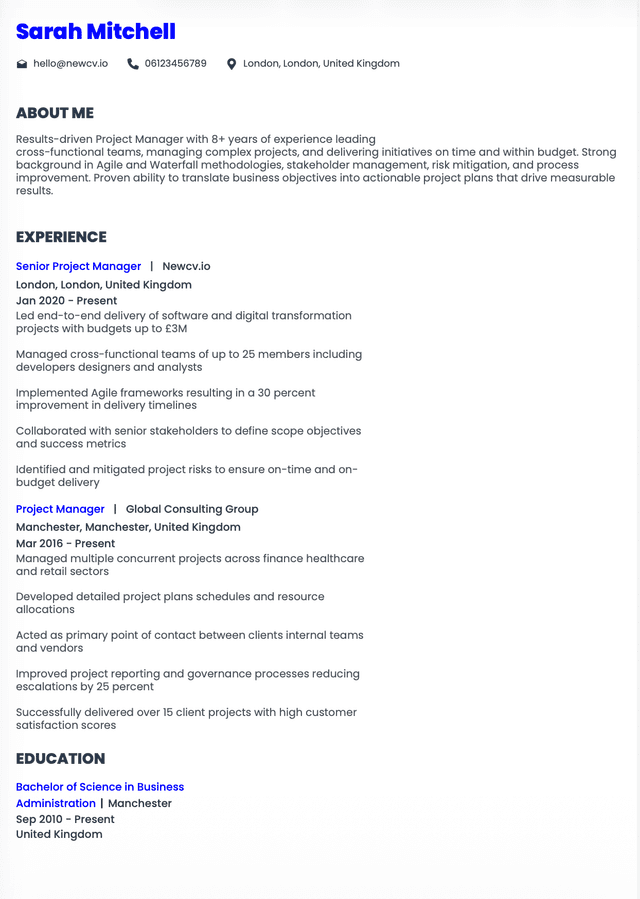
Good security bullets quantify outcomes.
Weak Example
Why This Fails
It is too vague. It does not explain the security problem, the action taken, the tools used, or the result.
Good Example
Good Example
Good Example
Recruiters hiring secure TypeScript developers typically scan for:
Real implementation work
Enterprise systems exposure
Authentication systems
Security tooling
Compliance-aware environments
Vulnerability reduction metrics
API security knowledge
Cross-functional work with security or platform teams
Most resumes fail because they remain too generic.
Security credibility comes from specifics.
Dependency scanning workflows
Threat modeling awareness
Logging and observability
Candidates who explain tradeoffs clearly usually outperform candidates who simply memorize definitions.
For example, a strong answer explains why localStorage creates XSS exposure risk.
A weak answer simply says cookies are safer.
The difference is depth of reasoning.
Learning secure cloud deployment basics
Understanding audit logging concepts
Documenting secure design decisions
Developers who consistently apply these practices become significantly more competitive in enterprise hiring markets.
That shift is changing hiring expectations across frontend and backend engineering roles.
Developers who combine TypeScript expertise with practical security awareness are becoming significantly more valuable in the US market.



































 Upload Resume
 Import from Linkedin