STILL APPLYING. STILL HEARING NOTHING?BUILD YOUR RESUME

STILL APPLYING. STILL HEARING NOTHING?BUILD YOUR RESUME
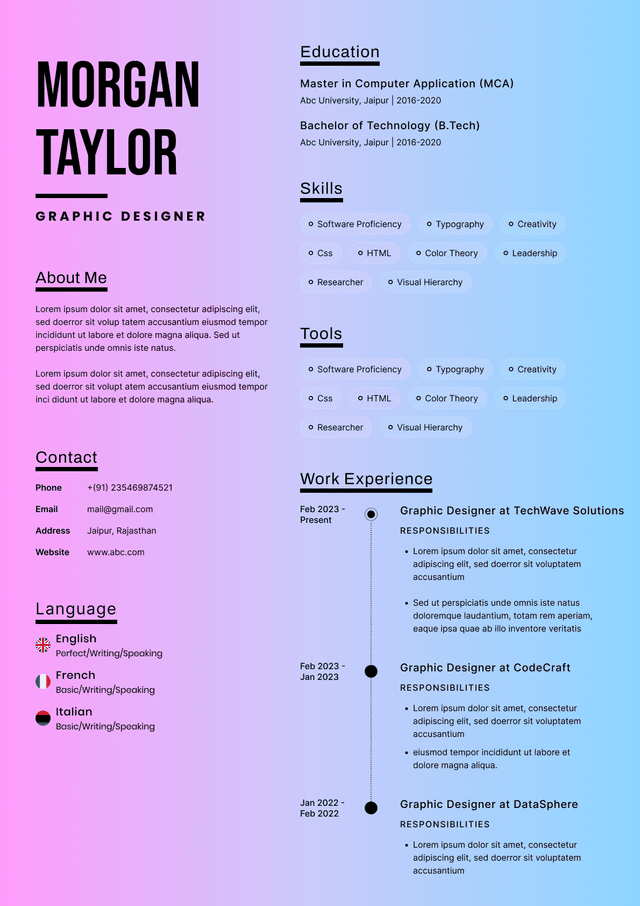
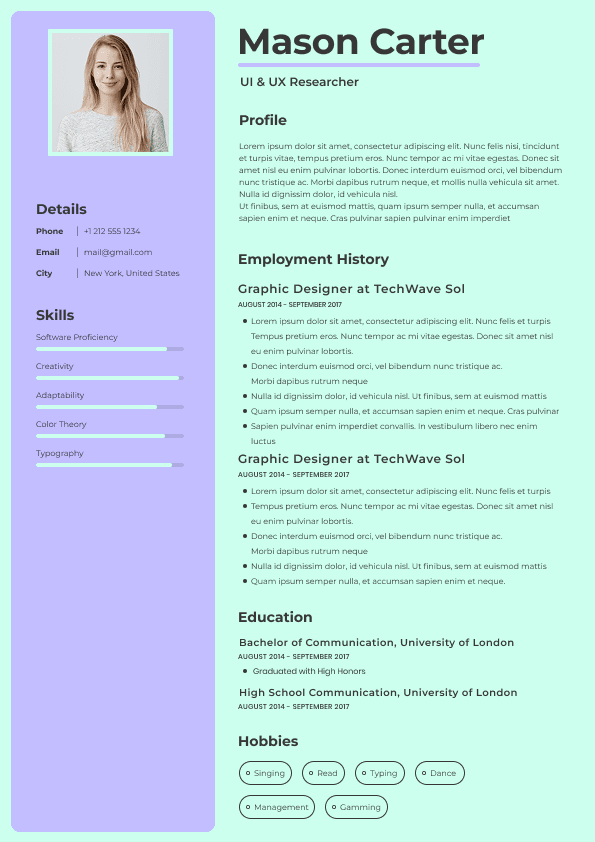
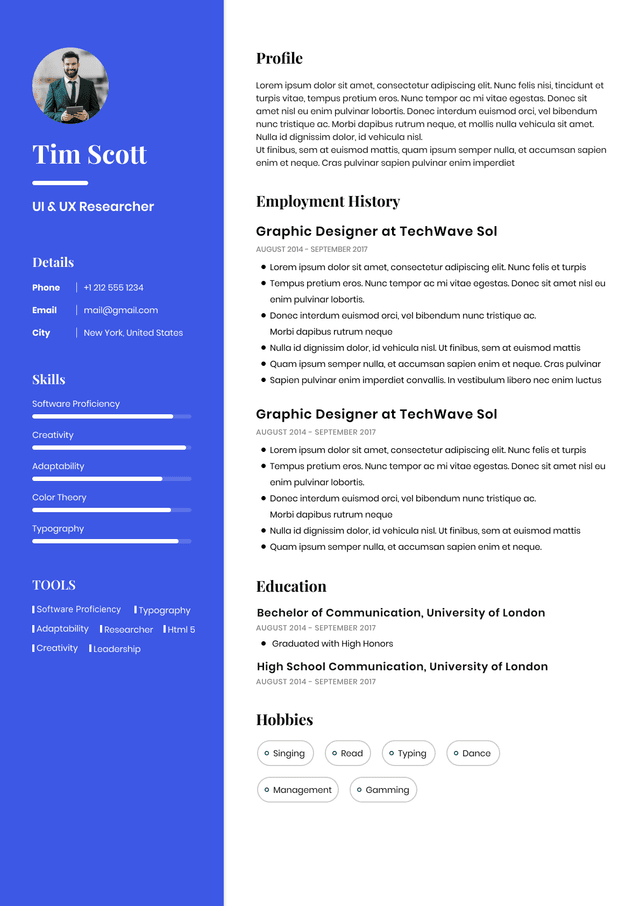
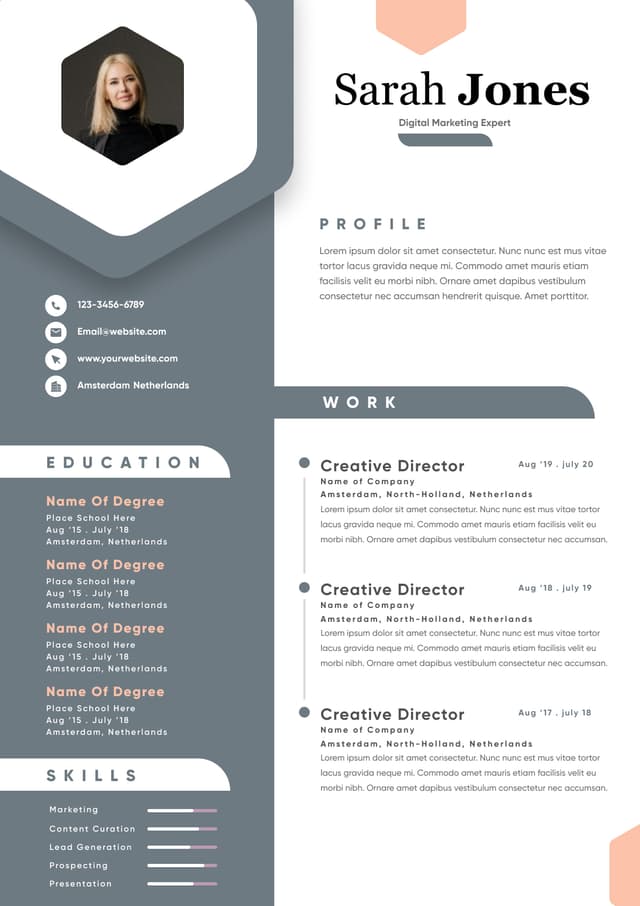
Choose from a wide range of NEWCV resume templates and customize your NEWCV design with a single click.
FAQ
TypeScript developer online assessments are now one of the biggest hiring filters in frontend, full stack, and backend engineering recruitment. Most companies use platforms like HackerRank, CodeSignal, Codility, CoderPad, DevSkiller, or Karat before a recruiter ever schedules a final interview. If you cannot perform under timed technical screening conditions, you often never reach a hiring manager.
The challenge is not just knowing TypeScript. Recruiters evaluate how you solve problems under pressure, how clean your code is, whether you understand strict typing, how you debug issues, and whether your solutions resemble production-quality engineering. Strong candidates usually fail these assessments because they prepare incorrectly. They practice random algorithms but ignore platform behavior, TypeScript edge cases, debugging speed, communication during live coding, and real-world React or Node.js implementation patterns.
This guide breaks down exactly how TypeScript developer online assessments work, what companies actually evaluate, the most common failure patterns, and how to prepare strategically for HackerRank, CodeSignal, Codility, CoderPad, and modern engineering screening platforms.
Most candidates think these tests only measure coding ability. That is not how recruiters or engineering managers evaluate them.
A TypeScript online assessment is usually designed to predict whether you can contribute to a production engineering team with minimal ramp-up time.
Companies typically evaluate five things simultaneously:
TypeScript fluency under pressure
Problem-solving structure and reasoning
Debugging and error-resolution ability
Code readability and maintainability
Practical engineering judgment
A candidate who writes an optimal algorithm but produces unreadable code may fail.
A candidate who communicates clearly, writes clean TypeScript, handles edge cases, and demonstrates strong engineering thinking often advances even with a less optimized solution.
This is especially true for:
Different platforms test different engineering skills. One major mistake candidates make is preparing generically instead of platform-specifically.
:contentReference[oaicite:0] is heavily used for recruiter screening rounds and automated engineering pipelines.
Common assessment patterns include:
Timed algorithm problems
Array and string manipulation
TypeScript debugging tasks
Async programming questions
React component exercises
API integration challenges
JavaScript fundamentals with TypeScript syntax
Recruiters often use HackerRank because it automates filtering at scale. That means speed matters.
:contentReference[oaicite:1] assessments are more scoring-oriented than HackerRank.
The platform is designed to rank candidates comparatively, not just pass or fail them.
This changes strategy significantly.
CodeSignal often evaluates:
Speed plus accuracy
Multi-question completion
Performance optimization
Full stack reasoning
Real-world coding implementation
Debugging efficiency
Many Big Tech companies use CodeSignal General Coding Assessment scores as a reusable screening benchmark.
:contentReference[oaicite:2] assessments are typically more algorithm-heavy.
These tests frequently emphasize:
Time complexity
Data structures
Optimization logic
Backend reasoning
Large input performance
Memory efficiency
Codility is especially common for backend TypeScript, Node.js, and platform engineering roles.
Engineering teams often use Codility to identify whether candidates understand scalable thinking.
A brute-force solution that technically works may still fail because of runtime limitations.
:contentReference[oaicite:3] assessments are fundamentally different from automated tests.
These are usually live technical interviews.
The interviewer evaluates not only your code but also your communication, collaboration, debugging workflow, and engineering reasoning.
Common tasks include:
Building React components live
Debugging broken TypeScript applications
API integration
Pair programming
Refactoring code
Explaining trade-offs
Solving frontend state issues
:contentReference[oaicite:4] focuses more heavily on practical engineering tasks.
These assessments often simulate actual development environments.
You may encounter:
Full stack feature implementation
REST API development
React application tasks
Authentication flows
Database integration
Production debugging
Refactoring legacy code
This format is increasingly common among SaaS companies and startups because it predicts real job performance more accurately than pure algorithms.
You cannot fake TypeScript fluency in modern engineering interviews.
The most common TypeScript evaluation areas include:
Interfaces
Generics
Utility types
Union and intersection types
Type narrowing
Function typing
Optional chaining
Strict null checking
Even TypeScript-heavy interviews still fundamentally evaluate JavaScript reasoning.
Common areas include:
Arrays and objects
Closures
Async/await
Promises
Event loop behavior
Recursion
Sorting
Hash maps
Frontend TypeScript assessments are increasingly React-focused.
Common React TypeScript evaluation areas include:
Props typing
State typing
Hooks with TypeScript
API fetching
Form handling
Validation logic
Conditional rendering
Component architecture
Backend TypeScript interviews commonly evaluate:
REST APIs
Express.js
NestJS
Authentication
Middleware
Error handling
Async backend logic
Validation
Full stack coding assessments combine frontend and backend implementation under time pressure.
Common areas include:
CRUD workflows
Frontend/backend integration
Authentication flows
Protected routes
Form validation
Database integration
State synchronization
Error handling
anyThis is one of the fastest ways to weaken your evaluation.
Interviewers interpret excessive any usage as:
Weak TypeScript understanding
Poor engineering discipline
Unsafe coding habits
Use proper typing wherever realistically possible.
Many candidates build “happy path only” solutions.
Production engineers do not think that way.
Strong candidates consistently handle:
Failed API requests
Missing values
Invalid input
Async failures
Empty states
This destroys otherwise strong candidates.
Common problems include:
Spending 40 minutes debugging tiny issues
Overengineering immediately
Optimizing too early
Getting stuck silently
Timed coding assessments reward momentum.
Recruiters can often detect memorized LeetCode-style answers quickly.
Signs include:
Unnatural variable naming
Overly optimized code for simple problems
Inability to explain reasoning
Weak adaptation when requirements change
Real engineering fluency matters more than memorization.
Untimed practice creates false confidence.
Most candidates collapse when a countdown timer starts.
You should regularly practice:
Timed coding sessions
Debugging under constraints
React component implementation
Backend API workflows
Algorithm fundamentals
Practice should mirror real interview environments.
That means:
No autocomplete dependence
No AI assistance
Minimal external searching
Time limits enforced
Verbal reasoning practice
The closer your preparation matches reality, the better your performance becomes.
Fast debugging is one of the most underrated engineering interview skills.
Strong candidates:
Read stack traces efficiently
Isolate issues quickly
Validate assumptions methodically
Avoid random guessing
Many interviewers value debugging skill more than raw algorithm ability.
Each platform has behavioral patterns.
For example:
Heavy hidden test cases
Compiler strictness matters
Fast implementation favored
Score optimization matters
Strategic question prioritization matters
Most candidates misunderstand technical screening outcomes.
Recruiters rarely ask:
“Was this person perfect?”
Instead, they ask:
“Would this person realistically succeed on our engineering team?”
Strong hiring signals include:
Calm reasoning under pressure
Clean code structure
Readable naming conventions
Good debugging habits
Strong TypeScript fundamentals
Clear communication
The biggest improvement usually comes from combining three things:
Consistent timed practice
Real TypeScript project work
Post-assessment review analysis
After every failed assessment, review:
Where time was lost
Which concepts caused hesitation
Which bugs slowed you down
Whether communication was weak
If you are targeting modern TypeScript roles, prioritize practical proficiency in:
TypeScript
JavaScript
React
Next.js
Node.js
Express.js
NestJS
PostgreSQL
Most companies are not looking for the smartest theoretical engineer.
They are looking for developers who can:
Write reliable code
Solve problems under pressure
Communicate clearly
Work independently
Handle production realities
That is why candidates with practical TypeScript experience often outperform candidates who only grind algorithms.
The best preparation strategy combines:
Strong TypeScript fundamentals


Use ATS-optimised Resume and resume templates that pass applicant tracking systems. Our Resume builder helps recruiters read, scan, and shortlist your Resume faster.


Use professional field-tested resume templates that follow the exact Resume rules employers look for.
Create Resume
Use professional field-tested resume templates that follow the exact Resume rules employers look for.
Create ResumeReact TypeScript interviews
Full stack engineering assessments
SaaS startup hiring
Remote engineering roles
Mid-level and senior frontend positions
Modern technical screening is increasingly focused on production realism rather than textbook algorithms alone.
In many hiring pipelines, your HackerRank score determines whether a recruiter even reads your resume.
Recruiters and engineering teams usually prioritize:
Passing test cases consistently
Clean TypeScript syntax
Proper type usage
Time management
Avoiding compiler errors
Correct edge-case handling
One hidden evaluation factor is whether your solution appears copied or memorized. Extremely unnatural code patterns or overengineered solutions can raise concerns during review.
Spending too long optimizing prematurely
Using any excessively
Ignoring TypeScript strict mode issues
Weak async handling
Panic after failed hidden test cases
Not reading instructions carefully
Strong candidates usually solve the simplest correct solution first, then improve it if time allows.
HackerRank often rewards completion.
CodeSignal rewards efficient prioritization.
Candidates frequently fail because they spend too much time on one difficult question while leaving easier scoring opportunities unfinished.
High-performing candidates usually:
Solve easier problems quickly first
Avoid perfectionism early
Maximize cumulative scoring
Skip temporarily when blocked
Return later for optimization
This mirrors real engineering prioritization under deadlines.
Common evaluation areas include:
Big O understanding
Efficient loops and iteration
Hash map usage
Recursive optimization
Data transformation efficiency
Nested loops causing timeouts
Ignoring memory complexity
Overcomplicated abstractions
Weak edge-case coverage
Failure to optimize after achieving correctness
Candidates who practice only frontend UI coding often struggle here.
Many candidates incorrectly believe silence is professionalism.
In reality, silence often hurts candidates.
Interviewers want visibility into your reasoning process.
Strong candidates narrate:
Why they chose an approach
What assumptions they are making
What edge cases they anticipate
What they would improve with more time
This simulates real engineering collaboration.
Weak Example
“I think this should work.”
Good Example
“I’m starting with the simplest working implementation first so we can validate behavior before optimizing. I’ll handle edge cases after confirming the core logic.”
That sounds like a production engineer instead of a student solving a puzzle.
Senior candidates usually outperform junior developers on simulation platforms because practical engineering experience matters more than memorized algorithm patterns.
Recruiters evaluate:
Architecture decisions
Readability
Scalability awareness
Error handling
Validation logic
Maintainability
Readonly patterns
Type inference
Compiler error resolution
One major recruiter red flag is candidates who constantly bypass type safety with any.
That signals weak engineering discipline.
Strong candidates use TypeScript intentionally to improve reliability and maintainability.
Error handling
Functional array methods
Many candidates focus too heavily on syntax and ignore JavaScript fundamentals.
That usually becomes obvious quickly during debugging exercises.
Accessibility
Performance optimization
Hiring managers rarely expect perfect UI polish during timed assessments.
They care more about:
Component structure
State management decisions
Readable logic
Maintainability
Type safety
Handling loading and error states
Candidates who over-focus on styling often waste valuable time.
Database queries
Logging
Environment configuration
Recruiters often evaluate whether candidates think like backend engineers.
That means:
Defensive coding
Proper validation
Structured responses
Error resilience
Separation of concerns
A backend assessment is not just about making endpoints work.
It is about building stable systems.
Testing basics
These assessments are often intentionally overwhelming.
Recruiters want to see prioritization and engineering judgment.
Strong candidates usually:
Build the critical path first
Avoid premature optimization
Keep architecture simple
Focus on working functionality
Handle major edge cases
Maintain clean code organization
Weak candidates try to build everything perfectly and run out of time.
Platform familiarity reduces stress dramatically.
Practical engineering decisions
One overlooked factor is confidence without arrogance.
Candidates who stay composed during setbacks perform significantly better in live technical interviews.
Which TypeScript concepts felt unstable
That feedback loop improves performance faster than random practice volume.
REST APIs
GraphQL
Jest
Vitest
Cypress
You do not need mastery of every tool.
But you do need enough familiarity to avoid freezing during technical implementation tasks.
Real-world engineering practice
Timed coding repetition
Debugging speed
Platform familiarity
Calm communication
If you consistently practice those areas, your technical assessment performance improves dramatically across HackerRank, CodeSignal, Codility, CoderPad, and modern engineering screening platforms.





 Upload Resume
 Import from Linkedin