
Choose from a wide range of NEWCV resume templates and customize your NEWCV design with a single click.

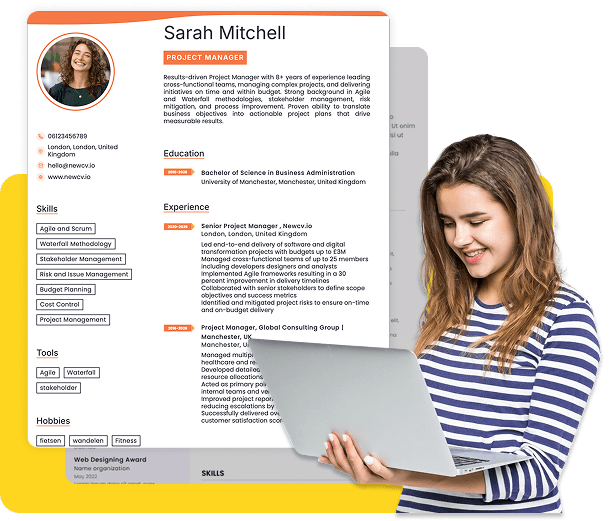
Use ATS-optimised Resume and resume templates that pass applicant tracking systems. Our Resume builder helps recruiters read, scan, and shortlist your Resume faster.

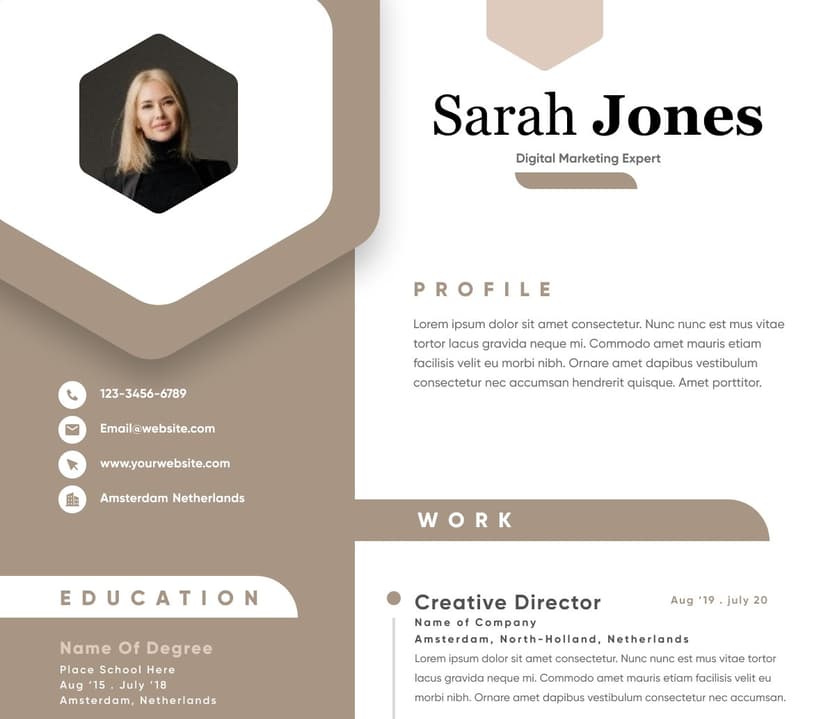
Use professional field-tested resume templates that follow the exact Resume rules employers look for.
Create Resume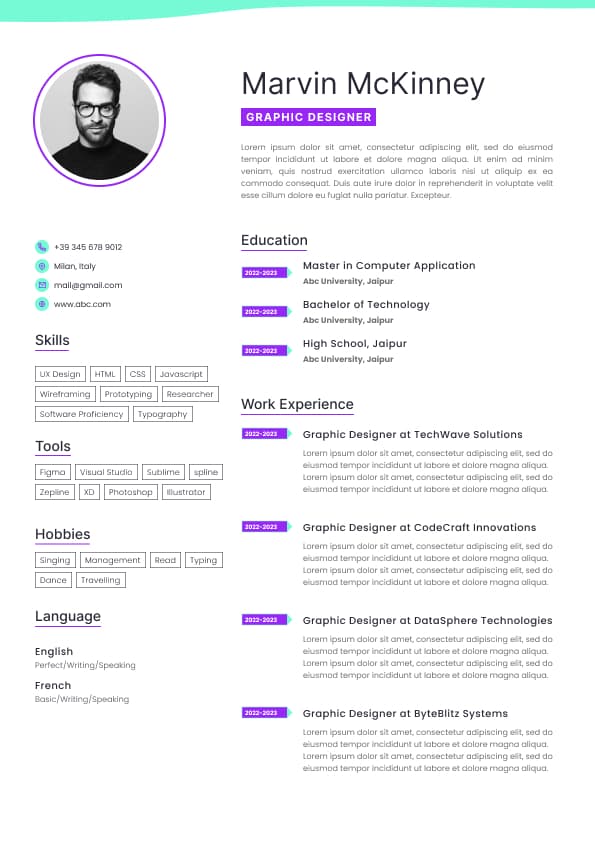
Use professional field-tested resume templates that follow the exact Resume rules employers look for.
Create ResumeCompetency based interview questions remain one of the most common interview methods used by UK employers across the public sector, NHS, civil service, graduate schemes, financial services, professional services, retail, engineering, and corporate organisations.
If you're preparing for a competency based interview, the most important thing to understand is that employers are not primarily interested in what you know. They want evidence of how you have behaved in real situations.
A strong competency interview answer demonstrates specific behaviours, decision-making ability, workplace judgement, and measurable outcomes. A weak answer stays theoretical, speaks in generalities, or fails to prove personal contribution.
The candidates who consistently perform best are those who prepare detailed examples in advance and structure their answers clearly.
Competency based interview questions are designed to assess whether you possess the behaviours, skills, and attributes required for a role.
Rather than asking what you would do, interviewers often ask what you have already done.
Typical competencies assessed include:
Teamwork
Communication
Leadership
Problem solving
Customer service
Time management
Adaptability
Decision making
Stakeholder management
Conflict resolution
Attention to detail
Resilience
The principle behind competency interviewing is simple: past behaviour is often the strongest predictor of future performance.
From a hiring perspective, competency interviews create a more objective assessment process.
Instead of making decisions based on personality, confidence, or first impressions, recruiters compare candidates against predetermined competencies.
This helps employers:
Reduce hiring bias
Improve consistency
Compare candidates fairly
Predict future performance
Support evidence-based hiring decisions
Many organisations score each answer individually. Every competency may be awarded points based on the quality of evidence provided.
This means a candidate who gives structured examples often outperforms someone with stronger experience but weaker interview technique.
The STAR framework remains the most effective structure for competency interview answers.
STAR stands for:
Situation
Task
Action
Result
Interviewers want most of your answer focused on the Action section because this reveals your decision-making process and personal contribution.
A useful guideline is:
Situation: 15%
Task: 15%
Action: 50%
Result: 20%
One of the biggest mistakes candidates make is spending too much time explaining the background and not enough time explaining what they personally did.
This question assesses collaboration, communication, and relationship-building skills.
Interviewers look for evidence that you can contribute positively to group objectives rather than simply complete your own tasks.
Good Example
"During a major system migration project, our team was facing tight deadlines and communication issues between departments. I organised weekly progress meetings, created a shared tracker, and worked closely with colleagues to identify blockers early. This improved visibility across the project and helped us complete the migration two weeks ahead of schedule."
This evaluates analytical thinking and decision-making.
Interviewers want to understand how you approach challenges under pressure.
Good Example
"Customer complaints increased following a process change. I reviewed complaint data, identified recurring themes, and mapped the customer journey. The analysis revealed a bottleneck in the approval stage. After proposing a revised workflow, complaints reduced by 35% within three months."
Communication is assessed in nearly every interview, even when not directly asked.
Common questions include:
Describe a time you had to explain something complex.
Tell me about a difficult conversation you handled.
Give an example of influencing someone who disagreed with you.
Strong answers demonstrate:
Clarity
Audience awareness
Listening skills
Persuasion
Professional judgement
Hiring managers want evidence that you can adapt communication styles to different stakeholders.
Leadership questions are not limited to management roles.
Employers often assess leadership potential even for junior positions.
Common questions include:
Tell me about a time you led a project.
Describe a situation where you motivated others.
Give an example of taking initiative.
Recruiters are looking for:
Ownership
Accountability
Influence
Decision making
Initiative
Leadership answers should focus on actions rather than authority.
Many candidates mistakenly describe having responsibility rather than demonstrating leadership behaviour.
Every organisation values employees who can manage workplace disagreements professionally.
Typical questions include:
Tell me about a disagreement with a colleague.
Describe a conflict you resolved.
Give an example of handling competing priorities.
Strong answers show:
Emotional intelligence
Professionalism
Listening skills
Objectivity
Solution-focused thinking
Avoid examples involving personal arguments or highly emotional situations where possible.
Employers want reassurance that you can prioritise effectively.
Common questions include:
Tell me about a time you managed multiple deadlines.
Describe a period of heavy workload.
How have you prioritised competing tasks?
Strong answers demonstrate:
Planning
Organisation
Prioritisation
Risk management
Delivery
The strongest candidates explain not only what they prioritised but why they prioritised it.
Customer service competencies appear in both customer-facing and non-customer-facing roles.
Examples include:
Tell me about a difficult customer.
Describe excellent customer service you provided.
Give an example of exceeding expectations.
Employers look for:
Empathy
Problem solving
Accountability
Communication
Commercial awareness
The best answers show a balance between customer satisfaction and organisational objectives.
Modern organisations operate in environments where change is constant.
Typical questions include:
Tell me about a major change at work.
Describe adapting to a new process.
Give an example of learning something quickly.
Strong answers demonstrate:
Flexibility
Positive attitude
Learning agility
Resilience
Continuous improvement
Interviewers often use these questions to identify candidates who remain productive during uncertainty.
Most candidates focus solely on the example itself.
Recruiters often focus on different factors.
They evaluate:
Relevance of the example
Level of responsibility
Complexity of the situation
Personal contribution
Quality of decision making
Impact achieved
Communication skills
Evidence of competency
A candidate who repeatedly says "we" risks receiving lower scores because interviewers cannot identify their specific contribution.
Use "I" when describing your actions and decisions.
Several recurring mistakes cause otherwise strong candidates to underperform.
Weak answers describe broad responsibilities rather than specific situations.
Weak Example
"I always work well with teams and communicate effectively."
Good Example
"During a six-month transformation project, I coordinated weekly meetings across three departments, identified delivery risks, and implemented a reporting process that improved project visibility."
Interviewers already understand job responsibilities.
They want to know what you actually did.
Examples should demonstrate challenge, complexity, and measurable outcomes.
Routine tasks rarely create memorable answers.
Many candidates describe actions but never explain the outcome.
Without results, interviewers cannot assess effectiveness.
A highly effective approach is creating a competency bank.
Prepare examples covering:
Leadership
Teamwork
Problem solving
Communication
Conflict resolution
Adaptability
Customer service
Achievement
Stakeholder management
Resilience
Aim to prepare eight to ten strong examples that can be adapted to multiple questions.
Most successful candidates reuse the same examples strategically across different competencies.
When listening to competency answers, hiring managers often ask themselves four questions:
Was the situation genuinely challenging?
Did the candidate take meaningful action?
Can I clearly identify their contribution?
Did their actions create a positive outcome?
If the answer to all four questions is yes, the candidate is likely to score well.
This framework explains why concise, evidence-based answers consistently outperform long, unfocused responses.
Competency based interviews are less about delivering perfect answers and more about providing credible evidence of workplace behaviour.
The strongest candidates prepare examples in advance, use the STAR framework effectively, focus heavily on their personal actions, and quantify results wherever possible.
From a recruiter's perspective, candidates who provide clear evidence of how they solve problems, work with others, communicate, adapt, and deliver results are significantly more likely to progress through the hiring process.
Preparation is not about memorising scripts. It is about building a bank of strong examples that demonstrate the competencies employers are actively assessing.


 Upload Resume
 Import from Linkedin