
Choose from a wide range of NEWCV resume templates and customize your NEWCV design with a single click.

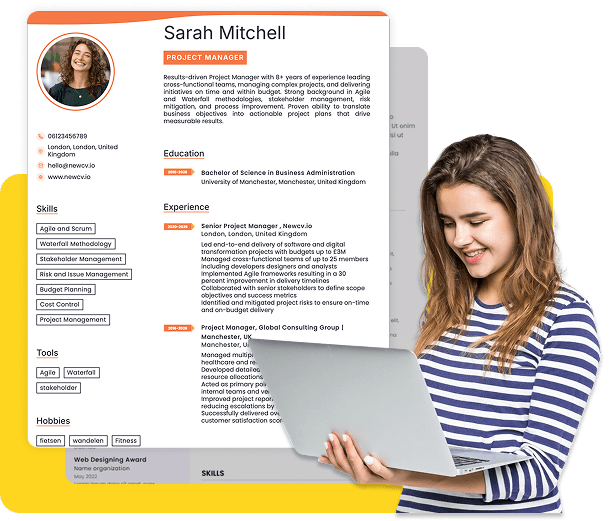
Use ATS-optimised Resume and resume templates that pass applicant tracking systems. Our Resume builder helps recruiters read, scan, and shortlist your Resume faster.

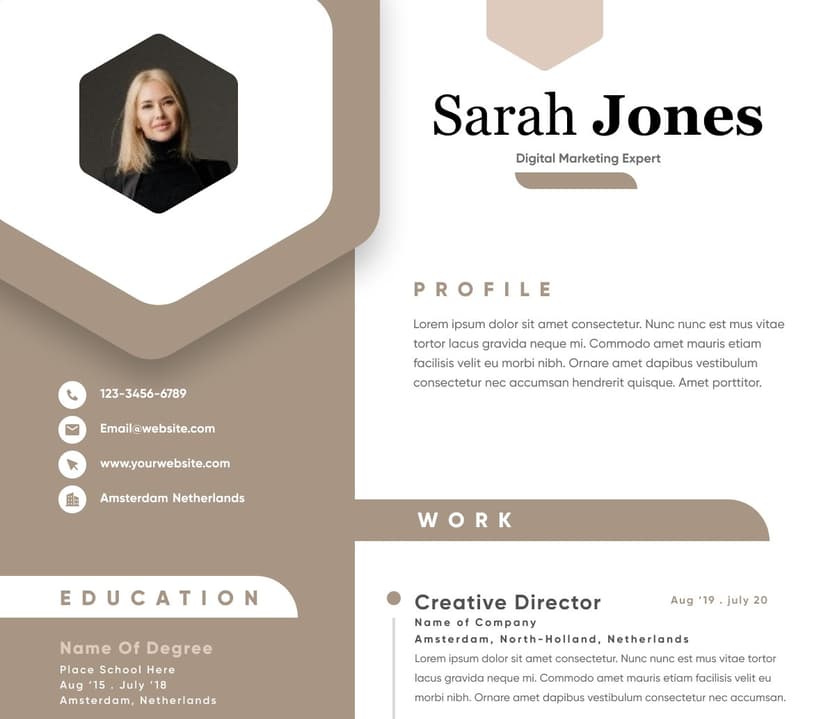
Use professional field-tested resume templates that follow the exact Resume rules employers look for.
Create Resume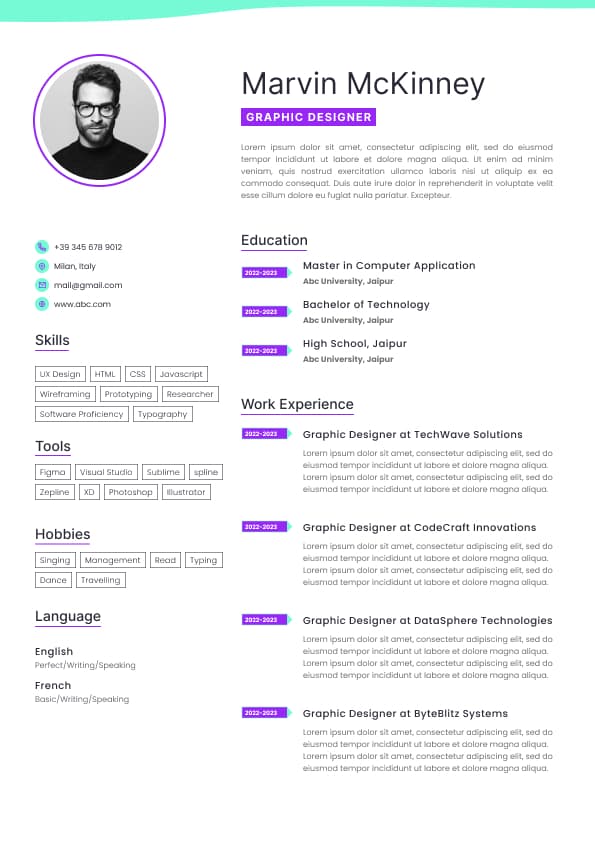
Use professional field-tested resume templates that follow the exact Resume rules employers look for.
Create ResumeA cover letter builder helps job seekers create a professional, tailored cover letter faster and more effectively than starting from a blank page. In the UK job market, a strong cover letter can strengthen an application, explain career changes, demonstrate motivation, and provide context that a CV alone cannot communicate.
The biggest advantage of a cover letter builder is structure. Most candidates struggle because they either write too much, repeat their CV, or fail to explain why they are suitable for the role. A quality cover letter builder guides applicants through the sections recruiters actually expect to see.
When used properly, a cover letter builder can help you:
Save time when applying for multiple roles
Create a professional format
Tailor applications to specific vacancies
Improve clarity and relevance
Avoid common cover letter mistakes
Yes, but not in every hiring process.
Many recruiters and hiring managers prioritise the CV during initial screening. However, cover letters still play an important role in several situations.
A cover letter is particularly valuable when:
Applying for graduate jobs
Applying for professional services roles
Moving into a new industry
Returning to work after a break
Explaining relocation
Applying for public sector positions
Applying for charity and non-profit roles
Increase interview potential
However, the builder itself is not what gets interviews. The quality of the information entered into it is what determines results.
Competing for highly sought-after vacancies
Where two candidates have similar CVs, a strong cover letter can often influence who progresses to interview.
Not all cover letter builders are equally useful.
The best cover letter builders help candidates produce letters that align with how UK recruiters evaluate applications.
Look for a builder that includes:
Generic cover letters rarely perform well.
A good builder should encourage users to customise content around:
The specific job title
Employer requirements
Industry expectations
Relevant achievements
A UK cover letter should be:
One page long
Professionally formatted
Easy to scan
Written in clear business English
Focused on relevance rather than personal history
Strong cover letters explain impact.
Instead of describing responsibilities, candidates should highlight outcomes.
Weak Example
"I was responsible for customer service and administration."
Good Example
"Managed customer enquiries and administrative processes while helping improve response times and maintain consistently high customer satisfaction levels."
Recruiters are interested in contribution, not simply activity.
Although cover letters are usually reviewed by people, many applications pass through Applicant Tracking Systems.
Builders should support:
Clear headings
Standard formatting
Relevant keywords
Readable layouts
Simple document structures
The highest-performing cover letters generally follow a straightforward structure.
State:
The position being applied for
Where you found the vacancy
Why you are interested
The objective is to create immediate relevance.
Explain:
Why you are qualified
Which skills match the role
Evidence of achievement
This is usually the most important section.
Demonstrate:
Knowledge of the organisation
Interest in its work
Cultural fit
Motivation for joining
Many applicants skip this section entirely.
Recruiters notice.
Finish by:
Reaffirming interest
Thanking the employer
Expressing willingness to discuss the application further
Keep it concise and professional.
Most job seekers misunderstand how cover letters are reviewed.
Recruiters are not searching for perfect writing.
They are looking for evidence.
Specifically:
Can this person do the job?
Do they understand the role?
Have they tailored the application?
Are they genuinely interested?
Is there anything requiring clarification?
A cover letter builder is effective when it helps answer these questions clearly.
The most successful candidates make it easy for recruiters to connect their experience directly to the vacancy requirements.
One of the biggest mistakes is copying CV content into paragraph form.
Recruiters have already seen the CV.
The cover letter should provide context, not duplication.
Employers can spot generic cover letters immediately.
Signs include:
No company references
No role-specific language
Vague statements
Generic introductions
Tailoring remains one of the strongest predictors of application success.
Many candidates spend too much time discussing their own goals.
Hiring managers care primarily about what value you can deliver.
Instead of saying:
"I want an opportunity to develop my career."
Focus on:
"Your requirements closely align with my experience delivering customer-focused solutions in fast-paced environments."
Most recruiters spend less time reading cover letters than candidates expect.
Aim for approximately 250 to 400 words.
A builder should encourage concise communication.
Some applications benefit more from a cover letter than others.
A cover letter can significantly improve outcomes when:
Changing careers
Applying without direct experience
Returning after a career break
Relocating within the UK
Explaining redundancy
Applying for graduate opportunities
Applying to smaller employers
Applying for mission-driven organisations
In these situations, context matters.
A CV alone may not tell the full story.
The builder is only as effective as the information provided.
Before generating content, gather:
The job description
Key responsibilities
Essential criteria
Relevant achievements
Measurable outcomes
Reasons for applying
The strongest applications connect employer needs with candidate evidence.
A useful framework is:
Requirement → Evidence → Result
For example:
The employer requires stakeholder management experience.
You provide evidence of managing internal and external stakeholders.
You demonstrate a measurable business outcome.
This approach immediately strengthens credibility.
After reviewing thousands of applications, the difference is usually not writing ability.
It is relevance.
Strong cover letters:
Focus on the employer's needs
Use evidence rather than claims
Demonstrate understanding of the role
Highlight measurable achievements
Remain concise
Feel personalised
Average cover letters:
Are generic
Repeat CV content
Lack evidence
Focus heavily on the candidate's wants
Contain unnecessary detail
The most effective cover letter builders guide users towards relevance and specificity rather than generic templates.
AI can accelerate the writing process, but it should not replace personalisation.
Many recruiters are already seeing large volumes of AI-generated applications.
The problem is not the use of AI itself.
The problem is generic output.
If using AI alongside a cover letter builder:
Add specific achievements
Include role-relevant examples
Reference the employer
Remove generic phrases
Check tone and accuracy
The final version should sound like a genuine candidate rather than a template.
The best cover letter builder is not necessarily the one with the most templates.
It is the one that helps create relevant, personalised, evidence-based applications.
Prioritise builders that:
Support role-specific tailoring
Use recruiter-approved structures
Encourage achievement-focused writing
Produce ATS-friendly documents
Allow easy editing and customisation
A cover letter builder should make applications stronger, not simply faster.


 Upload Resume
 Import from Linkedin