
Choose from a wide range of NEWCV resume templates and customize your NEWCV design with a single click.

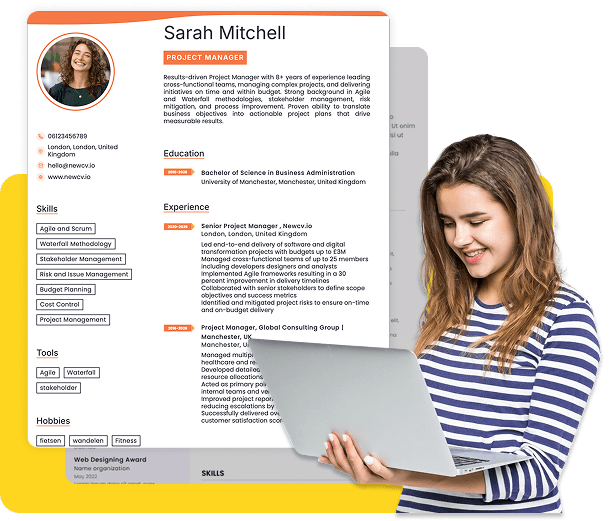
Use ATS-optimised Resume and resume templates that pass applicant tracking systems. Our Resume builder helps recruiters read, scan, and shortlist your Resume faster.

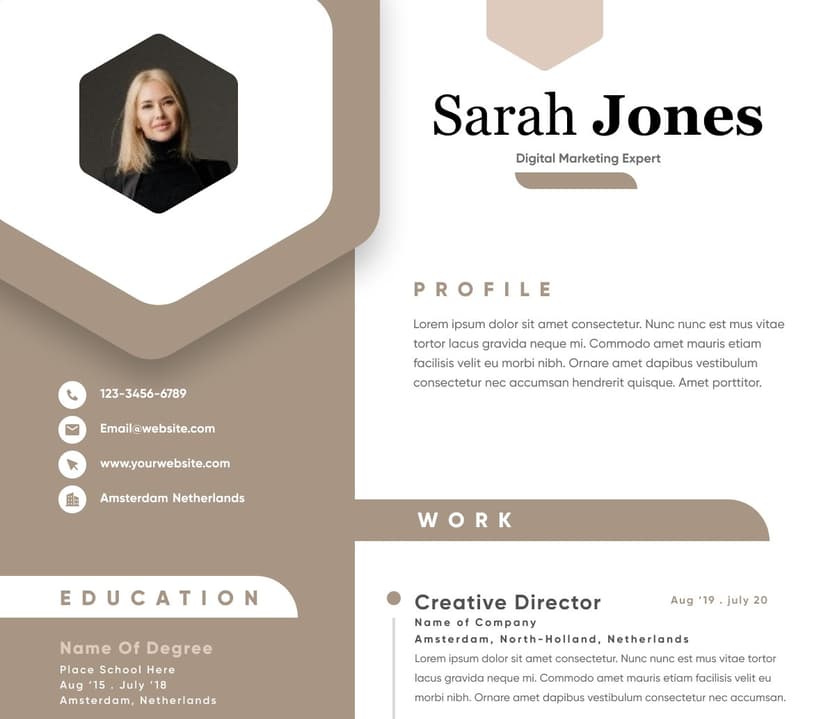
Use professional field-tested resume templates that follow the exact Resume rules employers look for.
Create Resume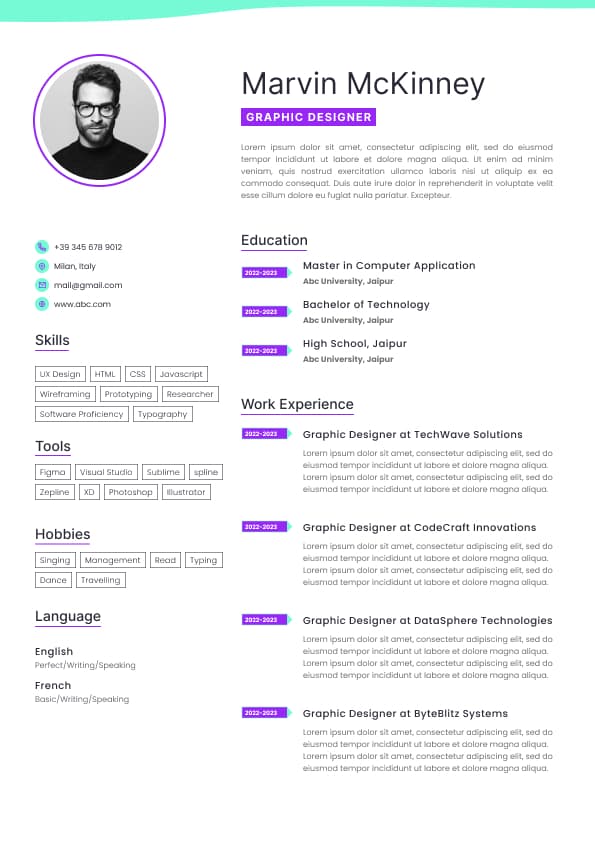
Use professional field-tested resume templates that follow the exact Resume rules employers look for.
Create ResumeA strong UK cover letter should be concise, tailored to the role, and focused on demonstrating why you are a strong fit for the employer's specific requirements. Most hiring managers spend less than a minute reviewing a cover letter before deciding whether to move forward to the CV. The purpose of your cover letter is not to repeat your CV. It is to connect your experience, achievements, and motivation directly to the vacancy.
The best cover letter template in the UK follows a simple structure:
Professional introduction
Clear explanation of why you are applying
Evidence that you can perform the role
Demonstration of company interest and cultural fit
Strong closing statement and call to action
This guide provides a recruiter-approved UK cover letter template, explains how employers evaluate cover letters, highlights common mistakes, and shows exactly how to customise your application for better interview results.
A cover letter is a one-page document submitted alongside your CV that explains why you are applying for a role and why you are a suitable candidate.
In the UK job market, cover letters remain particularly important for:
Graduate roles
Professional and office-based positions
Public sector jobs
Charity and non-profit roles
Management positions
Career change applications
Competitive vacancies with high applicant volumes
While some recruiters focus heavily on CVs, a strong cover letter can often be the deciding factor between two similarly qualified candidates.
The following template follows modern UK hiring standards and can be adapted for most professional roles.
[Your Name]
[Your Address]
[Your Email Address]
[Your Phone Number]
[Date]
Hiring Manager
[Company Name]
[Company Address]
Dear Hiring Manager,
I am writing to apply for the [Job Title] position at [Company Name]. With [X years] of experience in [industry or field], I have developed strong expertise in [relevant skills], and I am excited about the opportunity to contribute to your team.
In my current role at [Current Company], I have successfully [key achievement or responsibility]. This experience has enabled me to develop strengths in [relevant competency], resulting in [measurable outcome or business impact].
What particularly attracts me to this opportunity is [specific reason related to the company, role, mission, culture, products, or growth plans]. I am particularly impressed by [company-specific detail], and I believe my experience in [relevant area] would allow me to make a valuable contribution.
In addition to my technical and professional skills, I am known for my ability to [soft skill or strength relevant to the role]. Throughout my career, I have consistently demonstrated the ability to [relevant achievement or behaviour valued by employers].
I would welcome the opportunity to discuss how my background, skills, and experience align with your requirements. Thank you for taking the time to consider my application.
Yours sincerely,
[Your Name]
Most candidates assume recruiters read cover letters from beginning to end.
In reality, screening often follows a different process.
Recruiters typically look for four things:
Why you are applying
Whether your experience matches the role
Evidence of results and achievements
Whether you understand the company and position
The strongest cover letters answer these questions quickly and clearly.
A hiring manager is usually asking:
"Can this person solve the problems I am hiring for?"
Your cover letter should therefore focus on evidence rather than enthusiasm alone.
Weak Example
"I am hardworking, motivated, and passionate about this opportunity."
Good Example
"In my current role, I reduced customer response times by 32% while maintaining a 98% satisfaction rating, skills directly relevant to your customer success team."
Specific evidence always carries more weight than generic statements.
One of the biggest reasons applications fail is because candidates use identical cover letters for every vacancy.
Employers can spot a generic cover letter immediately.
Before writing, identify:
Required skills
Core responsibilities
Keywords used repeatedly
Industry-specific requirements
Cultural values highlighted by the employer
Then align your examples with those requirements.
Instead of listing everything you have done, focus on the achievements most relevant to the vacancy.
For example:
If applying for a project management role, emphasise:
Delivery deadlines
Budget management
Stakeholder communication
Team leadership
If applying for a sales role, emphasise:
Revenue growth
Client acquisition
Account retention
Commercial performance
Relevance consistently outperforms volume.
Most effective UK cover letters are between 250 and 400 words.
Hiring managers generally prefer:
Three to five short paragraphs
One A4 page maximum
Clear, concise language
Limited repetition from the CV
Long cover letters often dilute strong points rather than strengthen them.
Even highly qualified candidates make avoidable mistakes.
The cover letter should provide context, not duplicate information already shown in the CV.
Employers care primarily about how you can help them.
Instead of focusing only on what you want, explain how your skills address their needs.
Phrases such as:
Hardworking
Team player
Go-getter
Results-driven
Have little value without evidence.
A cover letter that could be sent to any employer rarely performs well.
Candidates who reference specific company initiatives, products, values, or growth plans typically create a stronger impression.
Where possible:
Use the hiring manager's name
Verify spelling
Check LinkedIn or the company website
If unavailable, "Dear Hiring Manager" remains acceptable.
The strongest cover letters are not necessarily the longest or most creative.
They are the most relevant.
High-performing cover letters typically contain:
Tailored examples
Quantified achievements
Clear motivation
Strong alignment with role requirements
Evidence of research
Professional structure
A recruiter should be able to identify your suitability within the first few paragraphs.
Many successful candidates follow a simple framework:
Explain why the opportunity interests you.
Demonstrate relevant experience and achievements.
Show evidence of genuine interest and research.
Express interest in discussing the opportunity further.
This structure mirrors how hiring managers naturally evaluate applications.
Not every vacancy receives equal attention to cover letters.
However, they can significantly influence outcomes when:
The role is highly competitive
You are changing careers
You have employment gaps
You are relocating
You lack direct experience
You are applying for graduate schemes
The employer explicitly requests a cover letter
In these situations, a well-written cover letter often provides context that a CV alone cannot communicate effectively.
Many candidates believe cover letters exist solely to explain qualifications.
In practice, employers frequently use them to assess:
Written communication skills
Professionalism
Attention to detail
Motivation
Ability to follow instructions
For example, if a job advert requests a cover letter and the candidate submits a generic version with the wrong company name, that application may be rejected regardless of qualifications.
The cover letter itself becomes part of the assessment.
Before submitting, ensure your cover letter:
Is tailored to the role
Is no longer than one page
Includes measurable achievements
References the employer specifically
Contains no spelling or grammar errors
Uses professional formatting
Complements rather than repeats the CV
Clearly explains your value to the organisation
A cover letter should make it easier for a hiring manager to justify inviting you to interview.


 Upload Resume
 Import from Linkedin