
Choose from a wide range of NEWCV resume templates and customize your NEWCV design with a single click.

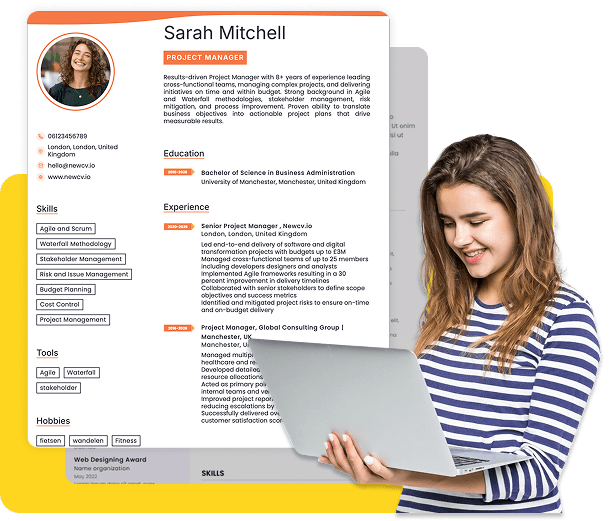
Use ATS-optimised Resume and resume templates that pass applicant tracking systems. Our Resume builder helps recruiters read, scan, and shortlist your Resume faster.

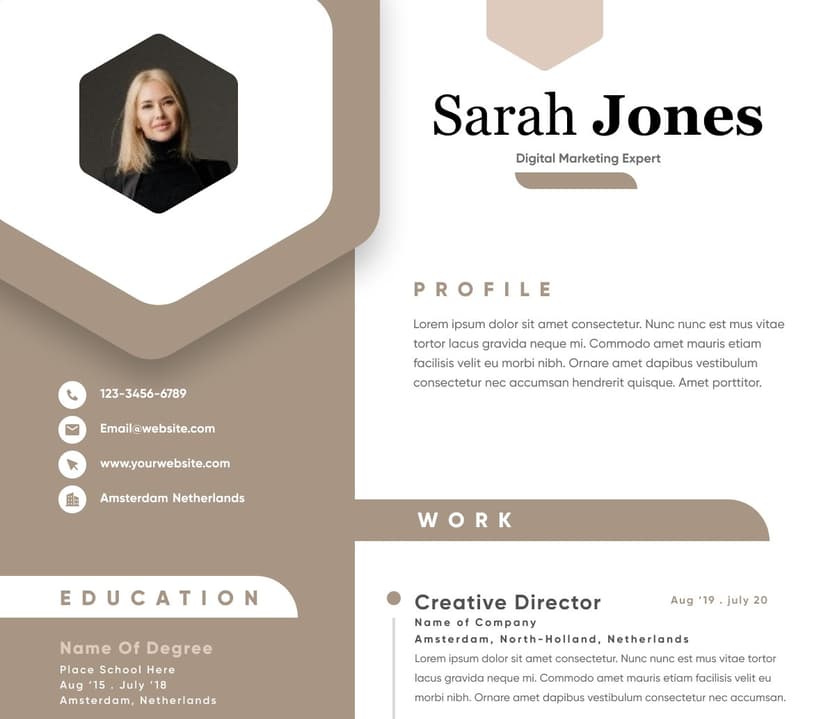
Use professional field-tested resume templates that follow the exact Resume rules employers look for.
Create Resume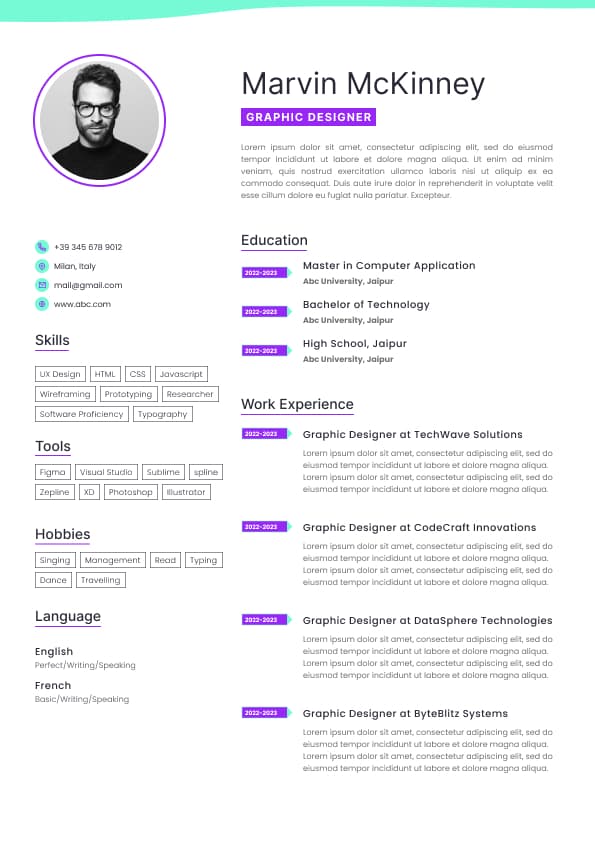
Use professional field-tested resume templates that follow the exact Resume rules employers look for.
Create ResumeA strong UK CV layout is clean, easy to scan, ATS-friendly, and structured around what recruiters need to see first. Most hiring managers spend only a few seconds on an initial CV review, so layout directly affects whether your experience gets noticed or ignored.
The best UK CV layout follows a clear order: contact details, professional profile, key skills, work experience, education, and additional relevant sections. It should use consistent formatting, clear headings, plenty of white space, and a logical flow that allows recruiters to find evidence quickly.
Many candidates focus heavily on wording while overlooking layout. In reality, poor structure can prevent even strong experience from making an impact. A well-organised CV improves readability, strengthens your professional presentation, and increases your chances of progressing to interview.
For most professionals, the ideal UK CV layout follows this structure:
Contact Details
Professional Profile
Key Skills
Work Experience
Education
Certifications and Training
Additional Information (if relevant)
References Available on Request (optional and usually unnecessary)
This format aligns with how UK recruiters review applications and how Applicant Tracking Systems (ATS) process CV content.
Place your contact information at the top of the first page.
Include:
Full name
Mobile number
Professional email address
LinkedIn profile (if updated)
Location (town or city only)
You do not need:
Full address
Date of birth
The goal is simple: make it effortless for a recruiter to identify your suitability for the role.
Marital status
National Insurance number
Passport photograph
These details are either irrelevant or potentially problematic from an equality and recruitment compliance perspective.
The professional profile sits directly beneath your contact details.
This section acts as your personal positioning statement and should immediately communicate who you are, what you specialise in, and the value you bring.
A recruiter should understand your suitability within seconds.
Weak Example
"Hard-working individual seeking a challenging opportunity where I can develop my skills."
Good Example
"Commercially focused Project Manager with eight years' experience delivering complex technology and infrastructure projects across financial services and public sector organisations. Proven track record managing budgets exceeding £2 million, leading cross-functional teams, and delivering projects on time and within budget."
The second example provides evidence, credibility, and relevance.
Recruiters rarely read CVs from top to bottom on the first review.
Instead, they scan for:
Job titles
Relevant employers
Dates of employment
Key achievements
Industry experience
Required skills
The layout determines how quickly they can locate this information.
A poorly structured CV forces the recruiter to work harder.
A well-structured CV reduces cognitive effort and creates a stronger first impression.
When reviewing hundreds of applications, recruiters naturally favour documents that are easy to understand.
Following the profile, include a dedicated skills section.
This serves two important purposes:
Helps recruiters assess suitability quickly
Improves ATS keyword matching
Focus only on skills relevant to the target role.
For example, a Marketing Manager CV may include:
Digital Marketing Strategy
SEO
PPC Campaign Management
Google Analytics
Content Strategy
Stakeholder Management
Budget Management
Avoid generic skills such as:
Hard working
Team player
Good communication
Fast learner
These claims carry little weight without supporting evidence.
For most candidates, work experience should occupy the largest portion of the CV.
Use reverse chronological order.
Start with:
Job Title
Company Name
Location
Employment Dates
Follow with a short overview before listing achievements.
A recruiter should instantly identify:
Your level of responsibility
Relevant experience
Career progression
Business impact
Senior Operations Manager
ABC Logistics Ltd
Manchester
March 2021 – Present
Responsible for leading operational performance across multiple distribution sites serving national retail clients.
Achievements:
Reduced operational costs by 18% through process optimisation initiatives
Managed a team of 85 employees across three locations
Increased delivery performance from 92% to 98%
Implemented workforce planning strategy reducing agency spend by £250,000 annually
This structure makes achievements easy to find and evaluate.
Layout and formatting work together.
The strongest CVs typically follow these principles:
One page for recent graduates
Two pages for most professionals
Three pages only for highly experienced senior professionals when justified
Use professional fonts such as:
Calibri
Arial
Aptos
Helvetica
Name: 16 to 20
Headings: 11 to 14
Main text: 10 to 12
Adequate spacing improves readability and scanning.
Avoid large blocks of text.
Ensure:
Dates follow the same format
Headings are consistent
Bullet points align correctly
Font usage remains uniform
Consistency signals professionalism and attention to detail.
Most medium and large UK employers use Applicant Tracking Systems.
An ATS-friendly CV layout improves both machine readability and recruiter usability.
Preferred headings include:
Professional Profile
Key Skills
Work Experience
Education
Certifications
Avoid creative alternatives that ATS software may not interpret correctly.
Many ATS systems still struggle with complex formatting.
Avoid:
Tables
Columns
Graphics
Icons
Text boxes
Decorative elements
Simple formatting generally performs best.
Unless instructed otherwise:
PDF is usually safest
Word documents may be preferred by some recruiters
Always follow the application instructions provided by the employer.
Many candidates unintentionally weaken their applications through poor layout decisions.
A CV is not a graphic design project.
Excessive colours, graphics, and visual elements often distract from content.
Dense blocks of text discourage reading.
Break information into concise, achievement-focused bullet points.
Recruiters care about outcomes.
Compare:
Weak Example
"Responsible for managing customer service operations."
Good Example
"Led a customer service team of 25 employees, increasing customer satisfaction scores from 82% to 94% within 12 months."
Important information should appear early.
If a recruiter must search for key qualifications, your layout is working against you.
Changing date formats creates confusion and can raise questions about employment history.
Use one format throughout.
Prioritise:
Education
Relevant projects
Placements
Internships
Transferable skills
Professional experience may appear after education if limited.
Prioritise:
Professional profile
Skills
Work experience
Education
Experience becomes the primary decision factor.
Prioritise:
Executive profile
Leadership achievements
Strategic impact
Commercial outcomes
Board-level experience
Senior CVs should focus heavily on business results rather than operational duties.
One of the biggest misconceptions candidates have is that recruiters carefully read every line.
Most do not.
The first review often focuses on five questions:
Does this person have relevant experience?
Have they worked at an appropriate level?
Do they have the required skills?
Is their career history credible?
Should I continue reading?
Your CV layout should help answer these questions immediately.
The best CVs reduce friction.
The worst CVs hide valuable information behind poor structure.
A strong candidate with a weak layout can lose interviews.
A strong candidate with a strong layout makes their value obvious.
The most effective UK CV layout follows this order:
Full Name and Contact Details
Professional Profile
Key Skills
Work Experience
Education
Certifications and Professional Development
Additional Information (if relevant)
This structure works across most industries, remains ATS-friendly, and aligns with modern UK recruitment expectations.
The strongest CV layouts do not stand out because they are creative.
They stand out because they are exceptionally clear.
Recruiters remember CVs that:
Communicate value quickly
Highlight achievements effectively
Present information logically
Demonstrate professionalism
Make decision-making easier
Clarity consistently outperforms creativity in UK recruitment.


 Upload Resume
 Import from Linkedin