
Choose from a wide range of NEWCV resume templates and customize your NEWCV design with a single click.

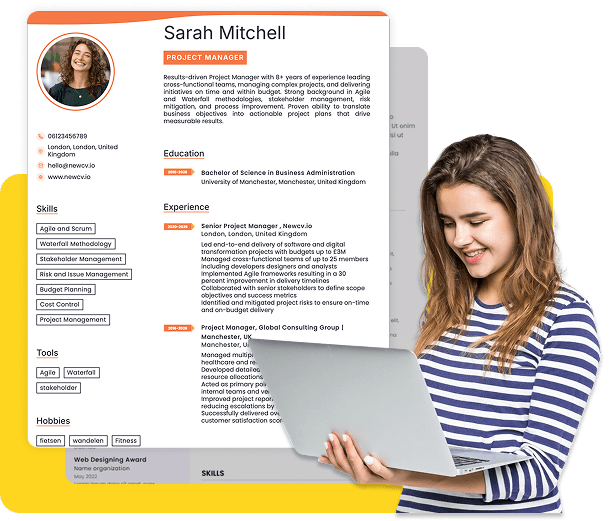
Use ATS-optimised Resume and resume templates that pass applicant tracking systems. Our Resume builder helps recruiters read, scan, and shortlist your Resume faster.

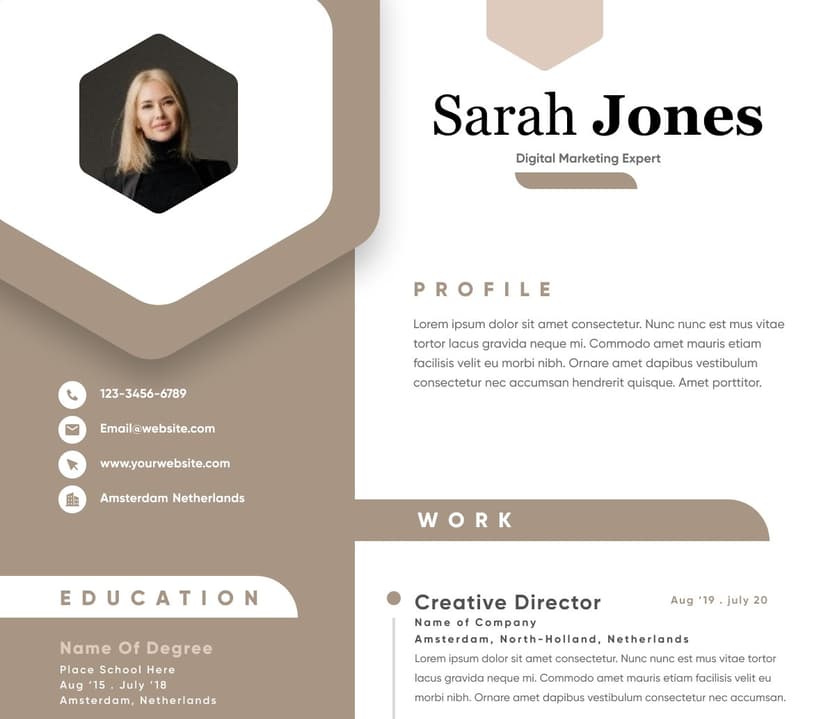
Use professional field-tested resume templates that follow the exact Resume rules employers look for.
Create Resume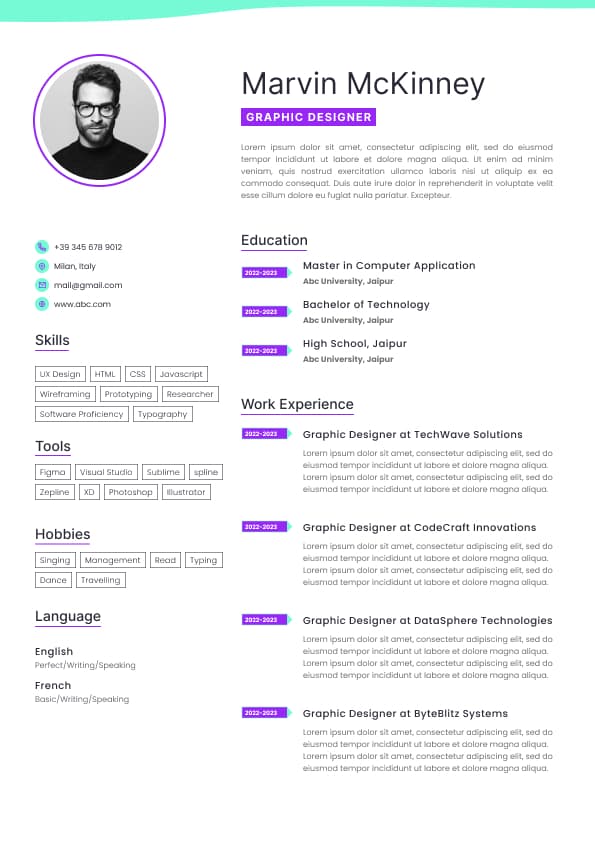
Use professional field-tested resume templates that follow the exact Resume rules employers look for.
Create ResumeA resume for a 190 visa Australia application is not the same as a standard job application resume. It must do three things at once:
Support your skills assessment
Align with Australian hiring standards
Strengthen the credibility of your state nomination application
Most applicants fail because they treat the document like a generic CV. Skills assessors, state authorities, and Australian employers all look for different signals. If your resume lacks clarity, measurable experience, occupation alignment, or evidence consistency, it can weaken your application even if you technically meet the visa requirements.
For a 190 visa, your resume should clearly prove:
Your occupation matches the nominated ANZSCO role
Your work history is genuine and logically progressive
A 190 visa resume is a professional resume used to support:
Skilled Nominated Visa (Subclass 190) applications
Skills assessments
State nomination applications
Australian job applications after invitation or migration
Unlike a normal resume, this document is often reviewed indirectly across multiple stages:
Skills assessing authorities
Migration agents
State nomination officers
The most common problem is copying a generic overseas CV format.
This creates issues such as:
Overly long career summaries
Task-heavy job descriptions without outcomes
Inflated job titles
Generic soft skills
Poor ATS formatting
No measurable commercial impact
Duties that do not align with ANZSCO expectations
Another major issue is mismatch between the resume and skills assessment evidence.
If your resume says you managed a team of 20 people but your reference letter describes junior responsibilities, it creates credibility concerns.
Your duties align with the assessing authority expectations
Your experience is recent, skilled, and verifiable
Your background supports employability in Australia
The strongest 190 visa resumes are factual, highly targeted, achievement-driven, and consistent with supporting documents like employment references, LinkedIn, payslips, tax records, and skills assessment submissions.
Recruiters and hiring managers
Employers during post-arrival job applications
That means inconsistencies become a major risk.
For example:
Your employment dates must align everywhere
Your job titles must still reflect the actual occupation
Your duties must support the nominated ANZSCO code
Your achievements must sound commercially realistic
Australian employers and assessors are highly sensitive to inflated claims and vague wording.
Australian recruiters and assessors look for alignment and authenticity more than exaggerated positioning.
Your resume should follow modern Australian hiring expectations.
2 to 4 pages for most skilled migrants
Up to 5 pages for highly technical or senior roles
Never submit a 1 page resume for skilled migration purposes
A concise overview focused on:
Occupation alignment
Years of experience
Industry specialisation
Key technical strengths
Commercial value
Use occupation-relevant technical skills only.
Avoid generic filler such as:
Hardworking
Team player
Motivated professional
This is the most important section.
Each role should include:
Employer name
Location
Job title
Employment dates
Short company context if needed
Achievement-focused bullet points
Include:
Degree
Institution
Graduation year
Only include relevant certifications that support the nominated occupation.
Especially important for:
IT
Engineering
Finance
Project management
Healthcare technology roles
Most applicants misunderstand this completely.
Assessing authorities do not simply look for job titles.
They assess whether your actual work reflects the nominated occupation.
For example, an ICT Business Analyst applying through ACS may fail if the resume mostly describes:
Technical support
Helpdesk work
Administrative tasks
Similarly, an Engineering Technologist may struggle if the resume lacks:
Technical design involvement
Engineering calculations
Compliance work
Project delivery responsibilities
Your resume must support occupational relevance.
Exact month and year consistency matters.
Mismatch between:
Resume
Reference letters
Visa forms
can create complications.
Duties should naturally reflect ANZSCO expectations without copying them word-for-word.
Copying ANZSCO descriptions directly is a major red flag.
Assessors want to see logical progression.
A strong resume demonstrates:
Increasing responsibility
More complex work
Leadership growth
Technical depth
Strong resumes explain:
Business scale
Project complexity
Stakeholder environment
Systems used
Revenue or operational impact
This makes experience more credible.
Recruiters in Australia often review migrant resumes differently from local resumes.
They are looking for:
Transferable experience
Local market relevance
Communication clarity
Technical credibility
Stability and consistency
What they do not want:
Extremely dense text
Overly academic wording
Long personal statements
Generic duties
Buzzword-heavy summaries
Australian recruiters typically scan resumes very quickly.
The first review often takes less than 30 seconds.
That means your resume must communicate value immediately.
The best resumes for Australian migration share several characteristics.
The resume immediately reflects the nominated role.
For example:
Civil Engineer
Software Engineer
Accountant
Registered Nurse
Marketing Specialist
The positioning is obvious from the first page.
Strong resumes include measurable outcomes.
Weak Example
Good Example
Australian hiring managers strongly prefer measurable commercial impact.
Australian resumes are commercially focused.
Strong wording includes:
Improved
Reduced
Delivered
Increased
Led
Streamlined
Implemented
Optimised
Avoid passive language.
Overinflated resumes often fail credibility checks.
If your background reflects mid-level experience, presenting yourself as an executive-level strategist can create concerns during:
Skills assessment
Interviews
Reference checks
Many 190 visa applicants eventually use the same resume for job applications.
ATS compatibility matters.
Use standard headings
Avoid graphics and tables
Use readable fonts
Keep formatting clean
Use occupation-specific keywords naturally
Avoid excessive design elements
Use terminology aligned with Australian job ads.
For example:
Resume instead of biodata
Stakeholders instead of interested parties
Deliverables instead of outputs
Compliance instead of adherence systems
Local terminology improves ATS matching and recruiter familiarity.
This is one of the most important strategic steps.
Your resume should support your nominated occupation without sounding manipulated.
Most ANZSCO occupations revolve around:
Technical delivery
Decision-making
Commercial contribution
Operational responsibility
Your resume should naturally reflect these.
Not every task belongs in the resume.
Focus on work that supports the occupation.
For example, an applicant nominating as a Marketing Specialist should prioritise:
Campaign strategy
Market analysis
Digital performance
Brand positioning
Lead generation
not administrative scheduling tasks.
Including too many unrelated tasks can dilute occupation alignment.
This is especially important for:
ICT roles
Engineering roles
Finance occupations
Management occupations
Focus on:
Systems
Platforms
Architecture
Security
Delivery outcomes
Agile environments
Technical stack
Australian IT recruiters prefer highly specific technical context.
Focus on:
Compliance
Standards
Technical design
Site/project involvement
Risk management
Delivery metrics
Focus on:
Reporting
Compliance
Forecasting
Audit
Financial analysis
ERP systems
Focus on:
Clinical scope
Patient outcomes
Compliance
Accreditation standards
Systems knowledge
Focus on:
Licences
Machinery
Technical capability
Safety standards
Productivity improvements
This is one of the biggest red flags.
Assessors can immediately identify copied wording.
Australian resume expectations are different from:
Indian CV formats
Middle Eastern CV formats
European academic CV formats
Australian employers value commercial impact.
Claims like:
Dynamic leader
Strategic thinker
Results-oriented professional
mean very little without proof.
Do not include:
Marital status
Religion
Passport number
National ID numbers
Full residential address
Modern Australian resumes are concise and professional.
One hidden challenge for skilled migrants is perceived relevance.
Australian employers often worry about:
Local market familiarity
Communication style
Workplace adaptation
Regulatory differences
You can reduce this concern by highlighting:
International standards
Global systems
Cross-functional collaboration
Multinational environments
Compliance frameworks
Client-facing work
This makes your experience more transferable.
Only if you genuinely have one.
Do not create misleading location signals.
However, you can strengthen your positioning by including:
Australian mobile number if available
Australian LinkedIn profile location
Visa status once applicable
For example:
Permanent Residency Pending
Subclass 190 Invited
Full Working Rights Upon Arrival
This helps recruiters assess hiring feasibility faster.
These documents must support each other without being identical.
Tell the broader career story
Show progression
Highlight achievements
Demonstrate commercial value
Verify duties
Confirm employment
Validate technical responsibilities
If both documents feel disconnected, assessors may scrutinise the application more closely.
It depends on your situation.
Professional support is often worthwhile if:
Your occupation is highly competitive
Your work history is complex
You changed industries
Your current resume lacks Australian alignment
Your skills assessment previously failed
Your experience is difficult to position
However, many migration-focused resume services produce generic documents.
A strong writer should understand:
Australian recruitment
Skills assessment logic
ATS optimisation
ANZSCO alignment
State nomination competitiveness
Not just formatting.
Before submitting your resume, confirm:
Dates match all supporting documents
Duties align with the nominated occupation
Achievements are measurable
Formatting is ATS-friendly
Australian terminology is used naturally
Technical skills are clearly demonstrated
Commercial impact is visible
The resume feels credible and realistic
There are no exaggerated claims
The document supports employability in Australia
A strong 190 visa resume is not just about getting through migration paperwork.
It positions you as a credible skilled professional who can realistically succeed in the Australian labour market.
That distinction matters more than most applicants realise.


 Upload Resume
 Import from Linkedin