
Choose from a wide range of NEWCV resume templates and customize your NEWCV design with a single click.

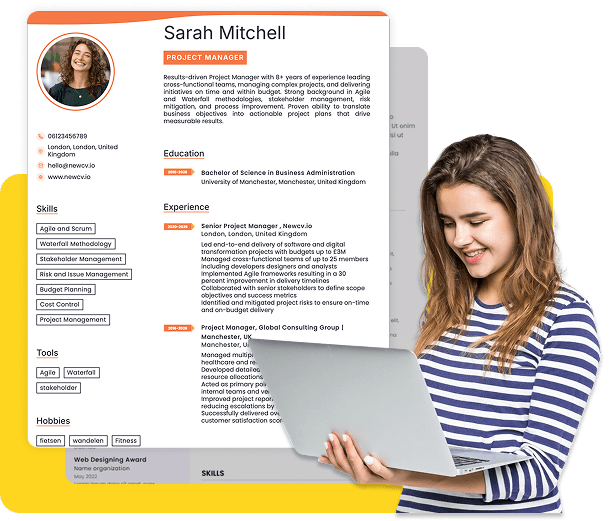
Use ATS-optimised Resume and resume templates that pass applicant tracking systems. Our Resume builder helps recruiters read, scan, and shortlist your Resume faster.
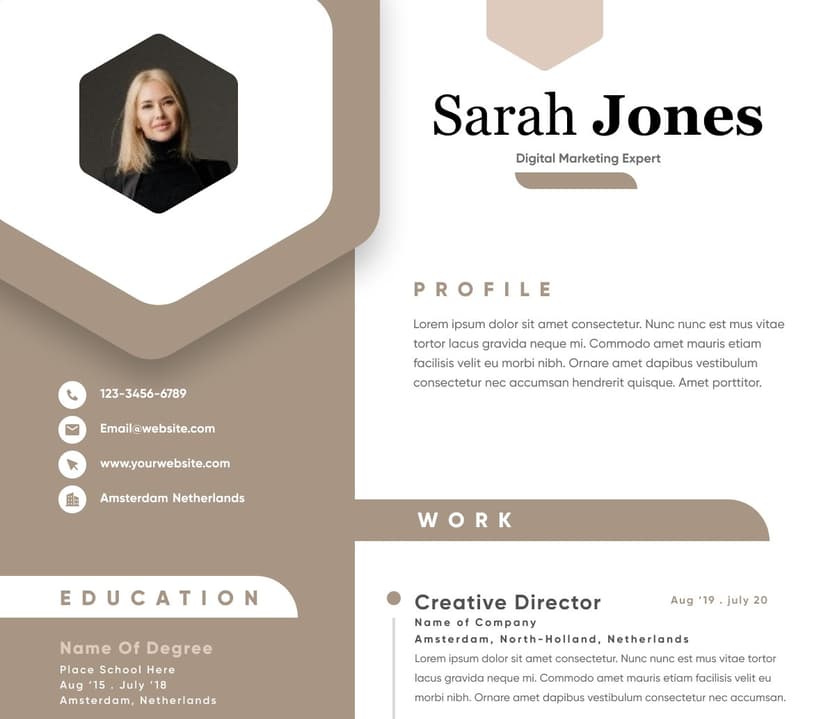
Use professional field-tested resume templates that follow the exact Resume rules employers look for.
Create Resume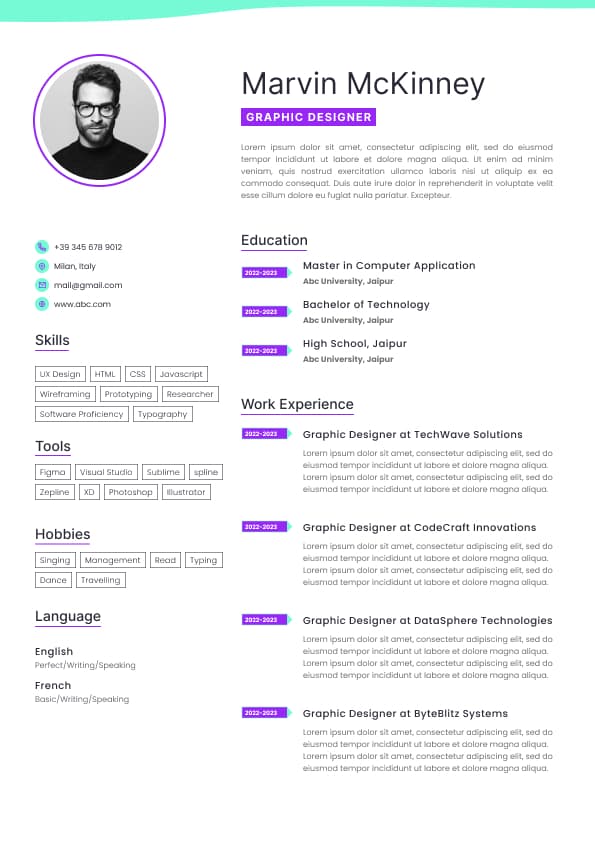
Use professional field-tested resume templates that follow the exact Resume rules employers look for.
Create ResumeAn AI cover letter generator can save serious time during a job search, but most candidates use it badly. Australian recruiters can spot a generic AI-written cover letter almost immediately, especially when it’s full of vague claims, overused corporate language, or doesn’t align with the actual role.
The best AI cover letter generators help you create tailored, role-specific applications faster while still sounding human, relevant, and aligned with Australian hiring expectations. Used properly, AI can improve structure, clarity, keyword alignment, and personalisation. Used poorly, it creates applications that recruiters reject within seconds.
In the Australian market, hiring managers are not looking for perfect writing. They are looking for relevance, alignment, and evidence that you understand the role and the business. A strong AI-assisted cover letter should still sound like a real candidate, not a generated template.
This guide explains:
How AI cover letter generators actually work
Which tools perform best in Australia
What recruiters notice immediately
An AI cover letter generator is a tool that uses artificial intelligence to create tailored cover letters based on:
Your resume
A job description
Your work history
Skills and achievements
Industry keywords
Role requirements
Most tools use large language models to predict and generate professional wording that aligns with common hiring patterns.
The output quality depends heavily on:
The quality of your input
Yes, but selectively.
Many Australian employers still value cover letters, particularly in:
Government roles
Education
Healthcare
Community services
Professional services
Mid-senior corporate roles
Internal applications
Competitive graduate programs
In some industries, recruiters barely read them unless the resume is already strong.
Common AI mistakes that hurt applications
How to use AI without sounding automated
What works for ATS screening and hiring managers in Australia
The job description
The AI platform being used
How much editing and personalisation you apply afterwards
AI is not replacing candidate strategy. It is accelerating drafting.
That distinction matters.
Recruiters in Australia still expect:
Genuine alignment with the role
Clear communication
Evidence-based claims
Industry understanding
Personal relevance
A generic AI-generated letter without tailoring rarely performs well.
In others, the cover letter can directly influence shortlisting decisions.
A cover letter matters most when:
The role is highly competitive
You are changing industries
You have employment gaps
Your background needs context
The employer specifically requests one
Cultural fit matters heavily
Communication skills are part of the role
Australian hiring managers often use cover letters as a screening shortcut to assess:
Attention to detail
Motivation
Communication style
Relevance to the role
Understanding of the company
Professional maturity
An AI tool can help structure this quickly, but the strategic thinking still needs to come from the candidate.
Most recruiters can identify low-quality AI-generated cover letters within the first paragraph.
The biggest giveaway is generic language that could apply to any role.
Overly polished corporate language
Repetitive buzzwords
Long paragraphs with no substance
Generic enthusiasm statements
No connection to the company
No mention of actual business needs
Copy-pasted job description wording
Americanised language or formatting
Claims without evidence
Robotic tone
Excessive use of phrases like:
“I am excited to apply”
“I believe my skills align”
“Results-driven professional”
“Fast-paced environment”
“Leverage my experience”
Australian hiring culture generally prefers communication that is:
Direct
Practical
Clear
Evidence-focused
Less inflated
Candidates who rely entirely on AI without editing usually sound detached from the role.
The strongest AI-assisted cover letters combine:
Human strategy
Tailored positioning
Recruiter relevance
ATS optimisation
Natural writing
The AI handles drafting speed.
The candidate handles positioning.
That combination is where results improve.
Match the role requirements directly
Reference the company or industry context
Include measurable achievements
Sound natural and conversational
Reflect Australian workplace communication styles
Align with resume content
Be concise and readable
Show genuine relevance
Recruiters do not care whether AI helped write the letter.
They care whether the application feels credible and relevant.
Not all AI tools perform equally well for Australian job applications.
Some are better for ATS optimisation. Others are better for tone and structure.
Best for:
Highly tailored custom cover letters
Industry-specific positioning
Resume alignment
Strategic editing
Strengths:
Flexible prompts
High-quality rewriting
Excellent for customisation
Strong contextual understanding
Weaknesses:
Requires strong prompting
Easy to generate generic content if used poorly
ChatGPT performs best when candidates provide:
Their resume
The job description
Target achievements
Company context
Desired tone
Best for:
Simple applications
Design-focused roles
Fast drafting
Strengths:
Easy to use
Good templates
Beginner-friendly
Weaknesses:
Generic outputs
Limited strategic positioning
Best for:
Graduate applications
Entry-level candidates
Fast ATS-friendly formatting
Strengths:
Structured templates
Resume integration
Easy editing
Weaknesses:
Can sound templated
Limited nuance
Best for:
Job tracking
Tailoring applications at scale
Keyword matching
Strengths:
Strong organisational features
Useful ATS analysis
Efficient for high-volume applications
Weaknesses:
Best for:
Improving clarity
Tone refinement
Editing AI drafts
Strengths:
Excellent polishing tool
Improves readability
Reduces awkward phrasing
Weaknesses:
The best results come from treating AI like a drafting assistant, not an autopilot.
Do not generate a cover letter before analysing:
Key responsibilities
Required skills
Industry terminology
Business priorities
Communication style
Strong AI prompts rely on strong source material.
Weak prompts create weak cover letters.
Weak Example
“Write me a cover letter for a sales job.”
Good Example
“Write an Australian-style cover letter for a Business Development Manager role in Melbourne. Use a professional but conversational tone. Highlight experience in SaaS sales, account growth, B2B relationship management, and exceeding quarterly targets. Align with the attached job description and avoid generic buzzwords.”
The more context you provide, the stronger the output.
Most AI-generated cover letters fail because they contain claims without proof.
Recruiters trust evidence.
Include:
Revenue growth
KPI results
Team leadership outcomes
Process improvements
Customer metrics
Project results
AI openings are usually the weakest part.
Avoid:
Generic excitement statements
Overly formal intros
Long-winded summaries
Australian recruiters prefer direct relevance.
Weak Example
“I am writing to express my strong interest in the role.”
Good Example
“With seven years of experience managing large retail teams across Queensland and a strong background in workforce planning and operational performance, I believe I can contribute quickly to this Store Manager role.”
Specificity wins.
Before sending:
Shorten long sentences
Remove buzzwords
Replace vague claims with specifics
Reduce repetition
Make the tone sound more human
The goal is not to sound impressive.
The goal is to sound credible.
Most Australian employers use Applicant Tracking Systems, particularly in:
Corporate recruitment
Government
Healthcare
Large enterprise hiring
Recruitment agencies
AI can help optimise keyword relevance.
But keyword stuffing is still a major mistake.
Role-relevant keywords
Skills alignment
Job title relevance
Industry terminology
Readable formatting
Consistency with the resume
ATS systems do not “score” applications the way many candidates think.
Human recruiters still make the final decision.
The AI-generated cover letter should support the resume, not duplicate it.
This is still the most common failure pattern.
Recruiters immediately notice when:
Company names are missing
Role specifics are absent
Industry context is generic
The letter could apply anywhere
Tailoring matters more than polish.
Australian hiring culture generally prefers:
Clarity
Authenticity
Practical communication
Overly inflated language creates distrust.
Some AI tools fabricate:
Skills
Certifications
Industries
Software knowledge
Achievements
This becomes obvious during interviews.
Never include claims you cannot defend.
Most recruiters skim cover letters quickly.
An effective Australian cover letter is usually:
250–450 words
Highly relevant
Easy to scan
Achievement-focused
Longer does not mean stronger.
Usually, no.
Using AI for drafting is increasingly normal.
What matters is:
Accuracy
Authenticity
Relevance
Professionalism
Recruiters are not rejecting candidates for using AI.
They are rejecting candidates for submitting lazy AI content.
There is a major difference.
The quality of the prompt often determines the quality of the output.
A strong prompt should include:
Target role
Industry
Years of experience
Key achievements
Desired tone
Australian context
Resume summary
Job description details
“Write a tailored Australian cover letter for a Senior Project Manager role in Sydney within the construction industry. Use a professional but natural tone. Highlight experience delivering multimillion-dollar infrastructure projects, stakeholder management, safety compliance, and leading cross-functional teams. Align closely with the attached job description and avoid generic corporate language.”
This produces far stronger results than generic prompts.
AI-assisted cover letters perform best when candidates:
Apply to multiple similar roles
Need faster application turnaround
Already have strong experience
Understand the target industry
Can edit strategically afterwards
AI is particularly useful for:
Drafting structure quickly
Tailoring keywords
Improving clarity
Overcoming writer’s block
Refining tone
AI-generated letters often fail when:
The candidate lacks relevant experience
The application is highly specialised
The letter is not edited
The role requires deep industry nuance
The output sounds generic
The candidate over-relies on automation
High-trust industries often require more personalisation.
This includes:
Executive roles
Government
Healthcare
Education
Legal
Community services
Most hiring managers are not looking for literary quality.
They want fast evidence that:
You understand the role
You can solve relevant problems
Your experience aligns
You communicate clearly
You are worth interviewing
A strong cover letter reduces hiring uncertainty.
That is its real function.
The best AI-generated letters do not sound “AI-written”.
They sound clear, relevant, and commercially aware.
The strongest applications today are usually hybrid.
Pure AI-generated content often lacks:
Strategic positioning
Personal nuance
Commercial judgement
Industry awareness
Purely human-written letters often:
Take too long
Lack structure
Miss ATS keywords
Become repetitive during job searches
The best candidates combine:
AI efficiency
Human insight
Recruiter relevance
Tailored messaging
That combination is what performs well in the current Australian hiring market.
AI cover letter generators can absolutely improve job application efficiency in Australia, but they are not a shortcut to strong candidate positioning.
Recruiters are still assessing:
Relevance
Communication
Credibility
Alignment with the role
The candidates getting interviews are not the ones using AI the most.
They are the ones using it strategically.
A strong AI-assisted cover letter should:
Sound human
Be tailored
Include real achievements
Match Australian hiring expectations
Support the resume without repeating it
If the letter feels generic, over-polished, or disconnected from the role, recruiters will usually reject it quickly.
The real advantage of AI is not automation.
It is faster personalisation at scale.


 Upload Resume
 Import from Linkedin