STILL APPLYING. STILL HEARING NOTHING?BUILD YOUR RESUME

STILL APPLYING. STILL HEARING NOTHING?BUILD YOUR RESUME
Choose from a wide range of NEWCV resume templates and customize your NEWCV design with a single click.
FAQ
If you are applying for Android AI developer roles, generic Android resumes are no longer enough. Hiring managers now look for developers who can build intelligent mobile experiences using tools like TensorFlow Lite, ML Kit, Gemini API, CameraX, OpenAI APIs, and on-device machine learning workflows.
The biggest mistake candidates make is listing AI buzzwords without proving implementation depth. Recruiters want evidence that you can ship production-ready Android AI features with measurable impact, low latency, stable performance, and strong mobile UX.
A strong Android AI resume demonstrates three things immediately:
You can build intelligent Android applications
You understand mobile-specific AI constraints like latency, battery, offline inference, and API cost
You can connect AI capabilities to real product outcomes and user engagement
The candidates getting interviews right now are not just “Android developers.” They position themselves as engineers who can deliver AI-powered mobile products.
Most recruiters screening Android AI resumes are evaluating whether you can bridge mobile engineering with applied AI implementation.
That means your resume needs to communicate more than technical familiarity.
It must show:
Production Android development expertise
AI integration capability
Real mobile ML deployment experience
User-facing intelligent feature delivery
Performance optimization understanding
Practical AI product thinking
Hiring managers are especially interested in candidates who understand the difference between cloud AI and on-device AI.
That distinction matters because mobile AI engineering introduces challenges many backend AI developers never handle, including:
Recruiters spend extremely little time on initial resume scans. Your structure needs to surface AI relevance immediately.
A high-performing Android AI resume usually follows this structure:
Professional summary
Core AI and Android skills
Technical tools stack
Professional experience
AI-focused projects
Education
Certifications if relevant
The most important strategic decision is where AI appears.
Do not bury AI projects at the bottom if AI is the target role.
Your summary should establish your positioning within the first few seconds.
Weak summaries sound generic and interchangeable.
Weak Example
“Android developer with experience building mobile applications using Kotlin and Java.”
This fails because it says nothing about AI capability or differentiation.
Good Example
“Android developer specializing in AI-powered mobile applications using TensorFlow Lite, ML Kit, Gemini API, and Kotlin. Experienced building intelligent Android features including OCR scanning, voice interfaces, AI chat workflows, image recognition, and on-device ML systems optimized for low latency and offline performance.”
This works because it immediately establishes:
Technical specialization
AI implementation capability
Product-level relevance
Mobile AI optimization awareness
Modern Android AI roles are heavily keyword-driven during ATS screening.
But keyword stuffing alone will not help unless the skills also appear naturally inside experience bullets.
The strongest resumes combine:
Android engineering fundamentals
AI integration capability
Mobile ML deployment expertise
Performance optimization knowledge
Include relevant technologies such as:
Kotlin
Jetpack Compose
Most resumes fail because the bullets describe tasks instead of outcomes.
Hiring managers do not care that you “worked on AI features.”
They want evidence of:
Scale
Performance
Technical difficulty
Product impact
Optimization
Production deployment
Strong bullets combine:
Technical implementation
Most Android resumes sound too generic.
“Integrated AI chatbot into Android application.”
This lacks technical depth and business impact.
“Integrated Gemini-powered conversational workflows into Android application using streaming API responses, coroutine-based state handling, secure token routing, and contextual conversation memory.”
The second version demonstrates:
AI implementation complexity
Android architecture understanding
Async workflow handling
Security awareness
Real engineering depth
Projects matter significantly for Android AI hiring because many companies want proof you can implement modern AI capabilities before giving you production ownership.
The best Android AI projects solve real mobile problems.
Strong project categories include:
OCR document scanners
AI study assistants
Smart expense trackers
AI voice assistants
Mobile RAG search apps
Barcode intelligence systems
AI translation apps
On-device AI is becoming a major differentiator in Android hiring.
Many developers can call APIs.
Far fewer understand local inference optimization.
If you have TensorFlow Lite or ML Kit experience, emphasize:
Offline capability
Reduced latency
Lower API dependency
Privacy improvements
Battery optimization
Model compression
Faster user interaction
This is particularly valuable for:
AI-related Android jobs are heavily ATS-filtered.
Your resume should naturally include semantic variations recruiters search for.
Include relevant variations such as:
Android AI Developer
Android ML Engineer
Android TensorFlow Lite Developer
Android ML Kit Developer
Android AI App Developer
Android Computer Vision Developer
Android NLP Developer
Keyword matching gets you past ATS systems.
But interviews are driven by credibility.
Hiring managers evaluate whether your experience sounds production-realistic.
They look for signals like:
Performance metrics
Real implementation detail
Mobile-specific constraints
Product ownership
Technical tradeoffs
AI architecture understanding
Many candidates fake AI experience by copying terminology.
Experienced interviewers detect this quickly.
For example, if someone lists TensorFlow Lite but cannot explain:
Metrics dramatically improve recruiter confidence because they make technical work measurable.
Strong Android AI metrics include:
Inference latency reduction
OCR accuracy improvement
AI response time
Crash-free session rate
Battery impact reduction
Feature adoption increase
API cost reduction
User engagement growth
Many candidates add AI buzzwords but show no implementation.
If you mention:
TensorFlow Lite
Gemini API
ML Kit
RAG systems
Then your experience bullets must support them.
Basic API integration alone is becoming commoditized.
The strongest resumes demonstrate:
UX intelligence
Simar Patel
Android AI Developer
Austin, Texas
simarpatel.dev@email.com
github.com/simarpatel
linkedin.com/in/simarpatel
Android AI Developer with 5+ years of experience building intelligent mobile applications using Kotlin, TensorFlow Lite, ML Kit, Gemini API, and Firebase. Specialized in AI-powered Android experiences including OCR systems, conversational interfaces, computer vision workflows, and on-device machine learning optimized for low latency and offline performance.
Kotlin
Jetpack Compose
Android SDK
TensorFlow Lite
The strongest candidates combine three layers of expertise:
Solid Android engineering
AI implementation capability
Product thinking
Most candidates only demonstrate one or two.
The best resumes show you understand:
How AI features impact UX
When to use on-device inference
When cloud inference is better
How to optimize mobile AI performance
Android AI hiring is moving rapidly toward intelligent mobile product engineering.
Companies increasingly want developers who can:
Build AI-native mobile experiences
Ship production-ready LLM integrations
Optimize mobile inference workflows
Design intelligent UX systems
Integrate retrieval systems and contextual AI
The market is shifting beyond simple chatbot integration.
Hiring managers now prioritize developers who can create genuinely intelligent mobile products with strong UX, efficient performance, and scalable AI architecture.
That is the positioning your resume should communicate.

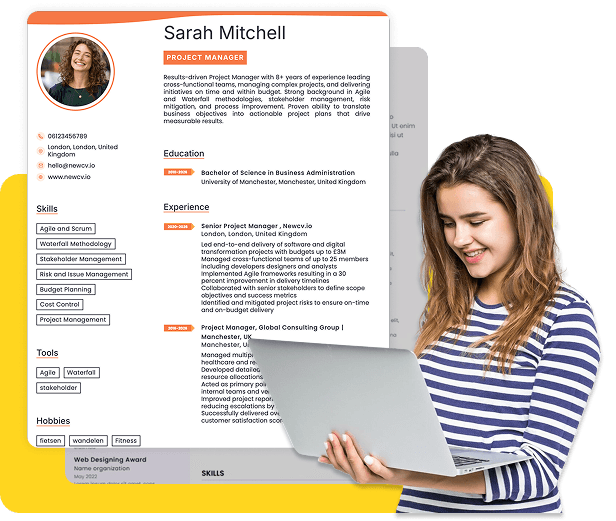
Use ATS-optimised Resume and resume templates that pass applicant tracking systems. Our Resume builder helps recruiters read, scan, and shortlist your Resume faster.
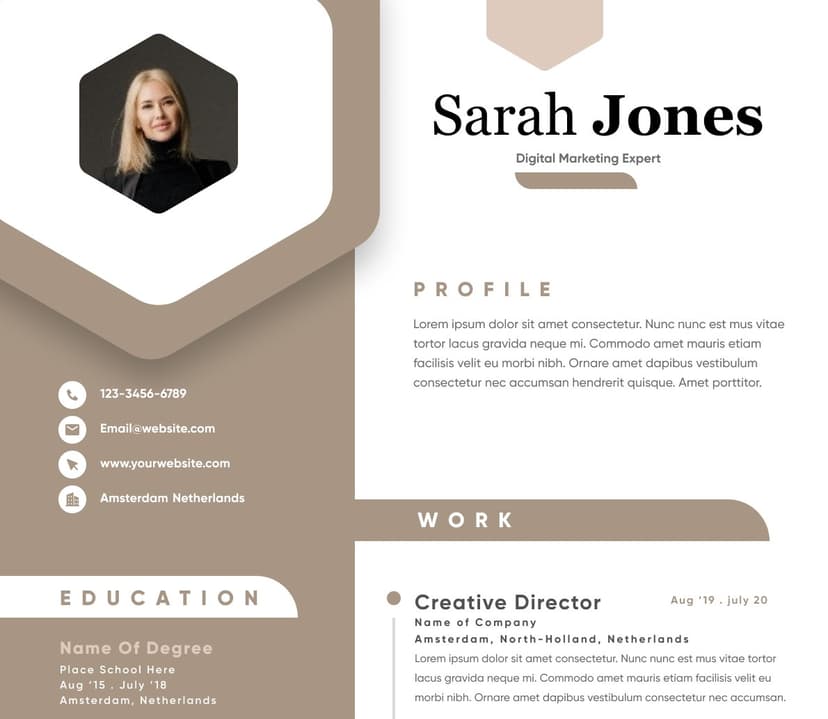
Use professional field-tested resume templates that follow the exact Resume rules employers look for.
Create Resume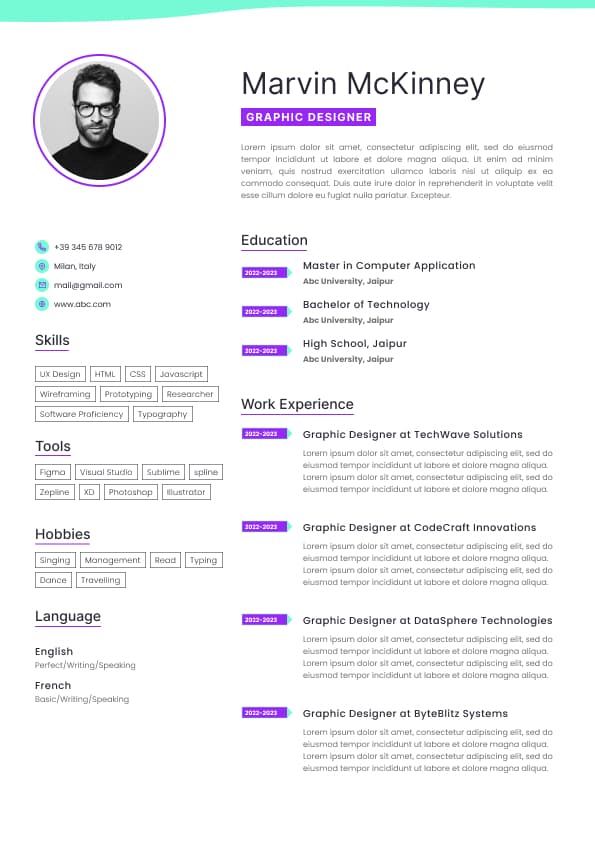
Use professional field-tested resume templates that follow the exact Resume rules employers look for.
Create ResumeModel size optimization
Memory constraints
Battery consumption
Offline capability
Inference latency
Device compatibility
Camera pipeline efficiency
Streaming response management
If your resume only says “used AI APIs,” you will likely lose to candidates showing measurable mobile AI implementation depth.
Your first page should immediately communicate:
Android AI specialization
Mobile ML tooling
Intelligent app implementation
Real-world product outcomes
Android SDK
CameraX
Kotlin Coroutines
WorkManager
Retrofit
Firebase
Room Database
Hilt/Dagger
High-value AI-related skills include:
TensorFlow Lite
Google ML Kit
Gemini API
OpenAI API
On-device inference
OCR systems
Computer vision
NLP workflows
Speech recognition
AI chatbot integration
RAG architecture
Prompt engineering
Vector search integration
Advanced Android AI roles increasingly expect some backend AI understanding.
Strong supporting technologies include:
Firebase Functions
Vertex AI
LangChain integration
Python APIs
FastAPI
WebSockets
Vector databases
Pinecone
Weaviate
PostgreSQL
Redis
AI functionality
Mobile constraints
Business or UX impact
Built AI-powered Android features using TensorFlow Lite, ML Kit, and CameraX for real-time image classification and OCR workflows across 500K+ monthly active users
Reduced on-device inference latency by 32% through TensorFlow Lite quantization, background processing optimization, and model pipeline restructuring
Integrated Gemini API into Android chat workflows with streaming responses, token management, retry handling, and secure backend proxy architecture
Developed offline-capable OCR document scanner using ML Kit text recognition, image preprocessing, and local encrypted storage
Implemented AI-powered voice assistant features using speech recognition APIs, Kotlin Coroutines, and asynchronous command processing
Connected Android mobile search UI to RAG backend infrastructure using vector retrieval workflows and contextual AI response generation
Improved AI feature adoption by 24% through intelligent recommendations, onboarding optimization, and low-friction UX improvements
Reduced AI API costs by 38% through caching strategies, prompt optimization, and hybrid on-device/cloud inference routing
That is what recruiters and hiring managers want to see.
Image recognition systems
Personalized recommendation engines
AI chatbot applications
The key is implementation depth.
A basic chatbot wrapper around OpenAI APIs is no longer impressive.
What matters is whether your project demonstrates:
Mobile AI architecture
UX integration
Offline handling
Performance optimization
State management
Secure API routing
Error recovery
Streaming response handling
Healthcare apps
Finance apps
Enterprise mobility
Accessibility products
Camera applications
Field service tools
Recruiters increasingly view on-device AI knowledge as higher-signal engineering experience than basic API integration alone.
Android AI Chatbot Developer
Android On-Device ML Engineer
Do not force all variations unnaturally.
Instead, distribute them naturally across:
Summary
Skills section
Experience bullets
Project descriptions
Quantization
Model optimization
Threading strategies
Inference latency
Device compatibility
Model loading constraints
They immediately lose credibility.
Your resume should therefore reflect genuine implementation depth.
Session duration increase
Retention improvement
“Reduced OCR processing time from 2.4 seconds to 1.1 seconds through image preprocessing optimization and parallel inference execution.”
This demonstrates:
Technical ownership
Performance optimization
Product impact
Engineering credibility
AI workflow architecture
Mobile optimization
Product thinking
AI resumes written like backend AI resumes often fail for Android roles.
Android AI hiring managers specifically care about:
Battery efficiency
Offline functionality
Thread management
Memory handling
Mobile responsiveness
Projects should not read like tutorial clones.
Recruiters can spot copied portfolio projects immediately.
Strong projects include:
Real use cases
Technical complexity
Optimization work
Product-level thinking
Google ML Kit
Gemini API
OpenAI API
CameraX
Firebase
NLP
OCR
Computer Vision
Kotlin Coroutines
WorkManager
REST APIs
LangChain Integration
Vector Databases
Senior Android AI Developer
Nova Mobile Labs — Austin, TX
2022–Present
Built AI-powered Android workflows using TensorFlow Lite and ML Kit for image classification, OCR processing, and intelligent document scanning features used by 800K+ monthly users
Reduced on-device inference latency by 35% through model quantization, memory optimization, and asynchronous processing improvements
Integrated Gemini API conversational features with streaming responses, retry logic, and secure token proxy routing
Developed contextual AI search features connected to vector-based RAG backend infrastructure
Improved AI feature engagement by 27% through UX optimization and personalized recommendations
Android Developer
BrightScale Technologies — Dallas, TX
2019–2022
Developed Android voice assistant functionality using speech recognition APIs and coroutine-based processing pipelines
Implemented offline barcode recognition and OCR workflows using ML Kit and CameraX
Reduced AI-related application crashes by 41% through lifecycle-aware state handling and background processing improvements
AI Study Assistant App
Built Android AI learning assistant using Gemini API, Firebase, and contextual search workflows
Added OCR-based note scanning and AI-generated summarization features
Implemented local caching and offline study mode support
How to balance cost, latency, and user experience
That combination is what separates production-ready Android AI developers from tutorial-level candidates.


 Upload Resume
 Import from Linkedin