STILL APPLYING. STILL HEARING NOTHING?BUILD YOUR RESUME

STILL APPLYING. STILL HEARING NOTHING?BUILD YOUR RESUME
Choose from a wide range of NEWCV resume templates and customize your NEWCV design with a single click.
FAQ

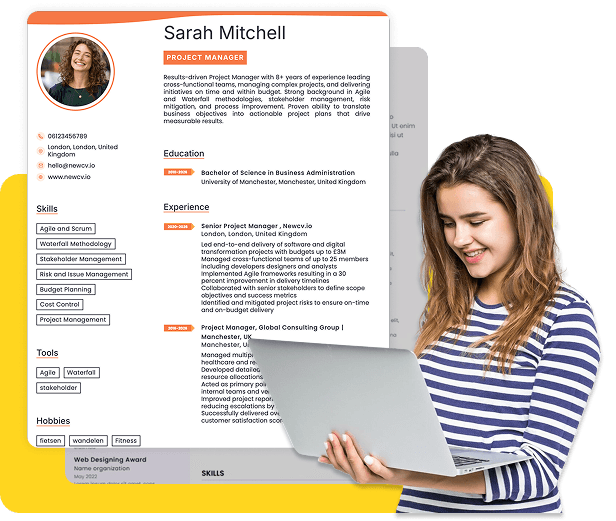
If you’re applying for an ASP.NET developer internship, part-time coding role, or entry-level .NET job as a student, your resume does not need professional experience to compete. Hiring managers for junior developer roles primarily evaluate technical potential, project quality, problem-solving ability, and whether you can contribute in a real development environment.
A strong student ASP.NET developer resume should focus on practical coding work instead of generic student information. That means highlighting ASP.NET Core projects, C# fundamentals, APIs, SQL knowledge, GitHub activity, debugging experience, teamwork, and your ability to learn quickly. Recruiters want proof you can build working applications, collaborate with developers, and understand modern development workflows.
The biggest mistake students make is submitting resumes that look academic instead of technical. Your resume should position you like a junior software engineer already building real applications, not just completing coursework.
For student developer resumes, recruiters are usually screening for five things:
Evidence you can write and understand code
Exposure to real development tools and workflows
Problem-solving ability through projects
Technical curiosity and willingness to learn
Basic professionalism and communication skills
Most hiring managers do not expect deep enterprise-level ASP.NET experience from students. They expect foundational competency and proof of initiative.
A student candidate immediately stands out when the resume includes:
ASP.NET Core MVC or Web API projects
GitHub repositories with active commits
SQL Server or database integration
REST API development
Azure or cloud deployment exposure
Team collaboration experience
Agile or sprint-based project work
Real debugging and testing experience
What hurts student resumes most:
Generic objective statements
Listing technologies without proof of use
No projects section
Empty resumes with only coursework
Overloaded technical skill lists
No GitHub or portfolio links
Weak project descriptions without outcomes
Recruiters care far more about what you built than what classes you attended.
For high school students, college students, bootcamp graduates, and first-time ASP.NET developer applicants, the best format is usually a reverse-chronological resume with a strong projects section.
Your resume should typically follow this structure:
Contact information
Technical summary
Technical skills
Projects
Education
Internship experience or freelance work
Certifications or hackathons
Leadership or technical clubs
For most student developers, the projects section should be the core of the resume.
Your summary should position you as an emerging developer with hands-on technical exposure.
Avoid vague statements like:
Weak Example
“Motivated student seeking opportunities to grow and learn in software development.”
This tells recruiters nothing.
Instead, focus on technologies, projects, and development exposure.
Good Example
“Computer science student with hands-on experience building ASP.NET Core MVC applications using C#, SQL Server, Entity Framework Core, and REST APIs. Developed and deployed full-stack academic and personal projects using GitHub, Azure App Service, and Agile collaboration workflows. Seeking an internship or entry-level ASP.NET developer opportunity.”
Why this works:
Includes relevant technologies immediately
Shows practical application development
Signals real project experience
Matches ATS keyword expectations
Sounds closer to a junior developer than a student
Many students overload resumes with every technology they have touched once. Recruiters see through that immediately.
Prioritize technologies you can discuss confidently in an interview.
Strong technical skill categories include:
ASP.NET Core MVC
ASP.NET Core Web API
C#
.NET Framework
Entity Framework Core
LINQ
REST APIs
Object-oriented programming
HTML
CSS
JavaScript
Bootstrap
Razor Pages
SQL Server
T-SQL
Database design
CRUD operations
Git
GitHub
Visual Studio
Azure DevOps
Postman
Azure App Service
IIS basics
CI/CD fundamentals
Do not include technologies you cannot explain technically.
If a hiring manager asks you to explain dependency injection, middleware, or Entity Framework relationships and you cannot answer, the interview usually ends quickly.
For student ASP.NET developer resumes, projects are often more important than experience.
Recruiters use projects to evaluate:
Technical depth
Coding logic
Architecture understanding
Problem-solving
Initiative
Ability to finish work
Weak project descriptions simply list technologies.
Strong project descriptions explain functionality, technical decisions, and outcomes.
Weak Example
“Built a student management system using ASP.NET Core and SQL Server.”
This lacks depth and tells recruiters almost nothing.
Good Example
“Built a full-stack student management application using ASP.NET Core MVC, C#, SQL Server, and Entity Framework Core. Implemented authentication, CRUD functionality, validation logic, role-based access, and responsive UI components using Bootstrap. Integrated LINQ queries for dynamic reporting and deployed the application to Azure App Service.”
Why this works:
Shows real functionality
Demonstrates multiple technical concepts
Includes backend, database, and deployment experience
Sounds production-oriented
A strong API project signals modern development skills.
Good Example
“Developed a RESTful ASP.NET Core Web API for course enrollment management with JWT authentication, SQL Server integration, and error-handling middleware. Tested API endpoints using Postman and implemented repository pattern architecture for cleaner code organization.”
This demonstrates:
API development
Authentication concepts
Testing workflows
Architecture awareness
Backend engineering fundamentals
High school students applying for coding internships or junior developer opportunities usually face skepticism from recruiters. Your resume must compensate through proof of technical initiative.
What helps high school students most:
Strong GitHub activity
Hackathon participation
Personal coding projects
Open-source contributions
Coding bootcamp work
Self-taught ASP.NET applications
A high school student with two strong ASP.NET Core projects often outperforms college students with weak resumes.
Your resume should emphasize:
Independent learning
Discipline
Technical curiosity
Ability to complete working applications
Good Example
“Self-taught ASP.NET developer with hands-on experience building C# web applications, REST APIs, and SQL-backed systems through independent projects and coding competitions. Active GitHub contributor with experience using Git version control and Agile collaboration tools.”
This positions the student as technically proactive rather than inexperienced.
College students should connect coursework to practical implementation.
Do not simply list classes.
Instead, show how coursework translated into technical capability.
Weak Example
“Completed coursework in databases and software engineering.”
Good Example
“Applied concepts from software engineering and database coursework to build ASP.NET Core applications with SQL Server integration, normalized database schemas, authentication systems, and API-driven architecture.”
This creates stronger credibility.
Many recruiters now check GitHub profiles for junior developers.
A strong GitHub profile can dramatically improve interview chances.
Your GitHub should include:
Clean repositories
README documentation
Multiple commits over time
Real project structure
Meaningful commit messages
Working applications
Recruiters notice when projects appear copied, incomplete, or abandoned.
Your resume should include your GitHub URL near your contact information.
If possible, include:
Live demo links
Azure deployment links
Portfolio websites
A deployed ASP.NET Core project immediately separates you from most student applicants.
Strong bullet points focus on actions, technologies, and outcomes.
Bad bullets sound passive or academic.
Built and deployed ASP.NET Core MVC applications using C#, SQL Server, and Entity Framework Core
Developed REST APIs with authentication, validation, and CRUD functionality
Implemented responsive UI features using Razor Pages, Bootstrap, HTML, and JavaScript
Debugged application issues and optimized SQL queries for improved performance
Collaborated with student developers using GitHub pull requests and Agile sprint workflows
Tested API endpoints with Postman and resolved backend integration errors
Configured Azure App Service deployments and managed cloud database connections
Applied object-oriented programming principles and LINQ for scalable application logic
These bullets sound like real engineering work instead of classroom activity.
Most internship recruiters are not looking for advanced expertise.
They want candidates who:
Learn quickly
Follow technical instructions
Accept feedback well
Can debug independently
Communicate clearly
Show genuine interest in development
A technically average student with strong initiative often gets hired over a stronger coder with poor communication or low professionalism.
Your resume should quietly signal reliability.
That means:
Clean formatting
Organized sections
Clear project explanations
No spelling errors
Consistent terminology
A sloppy developer resume raises concerns about coding quality immediately.
If you list ASP.NET Core, recruiters expect projects using ASP.NET Core.
Every major technology on your resume should appear in project descriptions or experience.
A retail or restaurant job is not useless, but do not let it dominate the resume.
Focus on transferable skills:
Team collaboration
Problem-solving
Responsibility
Communication
Keep unrelated jobs brief.
Objectives waste space unless highly targeted.
Most student resumes benefit more from a technical summary.
Recruiters instantly recognize keyword stuffing.
Avoid giant skills lists with technologies you barely know.
For student developers, this is a major weakness.
Without projects or code samples, recruiters have little evidence of technical capability.
Many internship applications pass through applicant tracking systems before recruiters see them.
To improve ATS performance:
Use standard section headings
Match keywords naturally from the job posting
Include ASP.NET Core, C#, SQL Server, REST API, and GitHub when relevant
Avoid graphics and complex resume designs
Use consistent formatting
Save resumes as PDF unless instructed otherwise
Important ATS keywords for student ASP.NET roles often include:
ASP.NET Core
C#
SQL Server
MVC
Web API
Entity Framework
Git
Azure
JavaScript
RESTful APIs
Object-oriented programming
Agile
But keywords alone are not enough.
Recruiters still evaluate whether the experience sounds real.
James Carter
Austin, Texas
jamescarter.dev@gmail.com
github.com/jamescarterdev
linkedin.com/in/jamescarterdev
Computer science student with hands-on experience building ASP.NET Core MVC applications, REST APIs, and SQL Server-backed systems using C#, Entity Framework Core, and Azure. Developed academic and personal software projects focused on authentication, CRUD operations, responsive UI development, and cloud deployment. Experienced collaborating in Agile team environments using GitHub and Azure DevOps.
ASP.NET Core MVC
ASP.NET Core Web API
C#
SQL Server
Entity Framework Core
LINQ
HTML
CSS
Bootstrap
JavaScript
Git
GitHub
Azure App Service
Postman
Visual Studio
Built a full-stack ASP.NET Core MVC application for managing student records, attendance, and course enrollment
Implemented authentication, role-based authorization, form validation, and SQL Server integration using Entity Framework Core
Developed responsive dashboards and reporting features using Razor Pages and Bootstrap
Deployed application to Azure App Service and configured cloud database connectivity
Developed a RESTful ASP.NET Core Web API with CRUD functionality, JWT authentication, and centralized exception handling
Tested API endpoints using Postman and documented routes for frontend integration
Applied repository pattern and dependency injection principles for maintainable backend architecture
Collaborated with four students using GitHub pull requests, branch management, and Agile sprint planning
Created budgeting and reporting features using C#, LINQ, and SQL queries
Participated in debugging, testing, and UI refinement during iterative development cycles
Bachelor of Science in Computer Science
University of Texas at Austin
Expected Graduation: May 2027
Relevant Coursework:
Data Structures, Algorithms, Database Systems, Software Engineering, Web Development, Cloud Computing
Participated in university hackathon and built an ASP.NET Core prototype application within 24 hours
Active member of campus software development club
Contributed bug fixes and documentation updates to open-source GitHub repositories
Students often think they need internships before applying for internships.
That is false.
You can strengthen your resume significantly through:
Building better projects
Deploying applications online
Participating in hackathons
Contributing to GitHub repositories
Freelance development work
Technical volunteering
Coding competitions
Even small freelance projects can help.
For example:
Building a scheduling app for a local business
Creating inventory dashboards
Developing booking systems
Automating reports
Real-world usage matters.
Recruiters pay attention to whether you merely followed tutorials or actually built systems independently.
Projects should include:
Technical decisions
Problem-solving
Architecture choices
Deployment work
Debugging
Modern development is collaborative.
Even student projects should mention:
Git workflows
Pull requests
Agile task tracking
Sprint collaboration
Many students list technologies they are “learning.”
Hiring managers prefer proof of completed work.
Completed projects build credibility faster than long learning lists.
Even basic exposure to:
CI/CD
Azure deployment
API testing
Authentication
Version control
can significantly improve student resumes.
Use ATS-optimised Resume and resume templates that pass applicant tracking systems. Our Resume builder helps recruiters read, scan, and shortlist your Resume faster.

Use professional field-tested resume templates that follow the exact Resume rules employers look for.
Create Resume
Use professional field-tested resume templates that follow the exact Resume rules employers look for.
Create Resume


 Upload Resume
 Import from Linkedin