STILL APPLYING. STILL HEARING NOTHING?BUILD YOUR RESUME

STILL APPLYING. STILL HEARING NOTHING?BUILD YOUR RESUME
Choose from a wide range of NEWCV resume templates and customize your NEWCV design with a single click.
FAQ

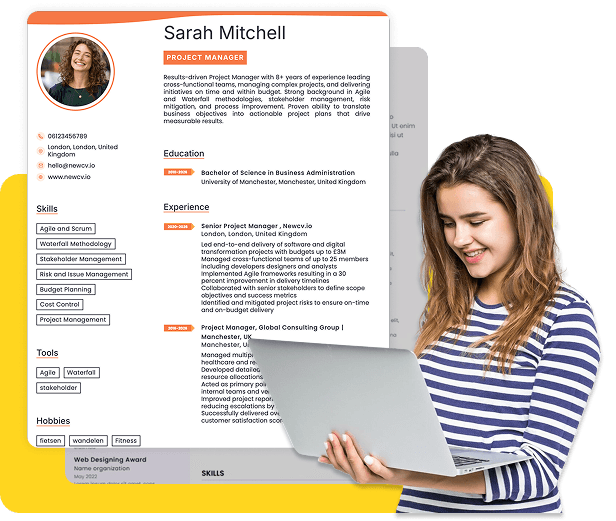
Your education section matters more on a .NET developer resume than many candidates realize, especially for new grads, bootcamp developers, self taught engineers, and career switchers. Recruiters use this section to quickly assess technical foundation, learning credibility, specialization, and career trajectory. A weak education section can make even strong technical skills feel unverified. A strategically written one can offset limited experience, strengthen ATS keyword relevance, and improve interview conversion rates.
The best .NET developer resume education sections are concise, technically relevant, and positioned correctly based on experience level. Experienced developers should usually place education near the bottom. New graduates, bootcamp graduates, and self taught developers should often move education or technical training higher to establish credibility early. What matters most is not the degree alone. It is how effectively your education supports your positioning as a capable .NET developer.
Most hiring managers spend only seconds reviewing the education section unless the candidate is junior, changing careers, or lacks direct experience. However, recruiters still evaluate several important signals:
Technical relevance
Learning depth
Formal vs non traditional training
Problem solving foundation
Ability to learn enterprise technologies
Consistency between education and career path
Graduation recency for junior candidates
Proof of technical specialization
For .NET developers specifically, recruiters often scan for:
Computer Science
Software Engineering
Computer Engineering
Information Systems
Mathematics
Cybersecurity
Cloud Computing
Microsoft certifications
Azure training
Object Oriented Programming coursework
The education section becomes especially important when the candidate has:
Less than 3 years of experience
No enterprise .NET experience
A non technical background
A bootcamp only background
No degree
A recent graduation date
Limited production projects
The correct placement depends entirely on your experience level and candidate profile.
A recent graduate
A bootcamp graduate
A student applying for internships
A self taught developer with limited work history
A career switcher entering software development
Applying for junior .NET developer roles
Transitioning from support or QA into development
In these cases, education helps establish technical credibility early before recruiters reach your experience section.
3 or more years of .NET development experience
Enterprise application experience
Strong production deployments
Leadership or senior developer experience
Recognizable employers
Extensive Azure or cloud experience
Once you have proven development experience, your projects and accomplishments matter more than your academic history.
A strong education section should be clean, ATS friendly, and easy to scan.
Degree or Credential
University or Institution Name, City, State
Graduation Date
Optional additions:
GPA if strong
Honors or Dean’s List
Relevant coursework
Capstone project
Thesis
Research
Technical certifications
GitHub or portfolio links
Hackathons
Teaching assistant experience
The strongest education sections focus on technical relevance instead of academic filler.
Degree or credential name
Institution name
Graduation date or expected graduation date
Relevant major or specialization
Technical coursework if relevant
Academic projects related to software engineering
Bootcamp technologies learned
Cloud or Microsoft certifications
Only include coursework if:
You are early career
Your experience is limited
The coursework supports the target role
The courses are technically valuable
Strong examples include:
Data Structures and Algorithms
Object Oriented Programming
Database Systems
Distributed Systems
Web Application Development
Software Engineering
Cloud Computing
Secure Coding
API Development
Avoid listing basic or outdated courses that do not strengthen your candidacy.
Bachelor of Science in Computer Science
University of Texas at Dallas, Richardson, TX
Graduated: May 2024
Relevant Coursework: Data Structures, Algorithms, Object Oriented Programming, Database Systems, Cloud Computing, Software Engineering
Capstone Project: Built a cloud based inventory management platform using ASP.NET Core, SQL Server, Azure App Services, and REST APIs.
Dean’s List: 2022 to 2024
This example shows:
Technical alignment with .NET development
Modern backend technologies
Cloud exposure
Practical project experience
Strong academic performance
It gives recruiters evidence that the candidate can likely ramp quickly into enterprise development.
Bootcamp candidates often make a major mistake by listing only the bootcamp name without demonstrating technical outcomes.
Coding Bootcamp
Graduated 2025
This tells recruiters almost nothing.
Full Stack Software Engineering Bootcamp
Coding Dojo, Remote
Completed: February 2025
Technologies: C#, ASP.NET Core, Entity Framework, SQL Server, REST APIs, Azure Fundamentals, Git, Docker
Projects:
Developed a task management platform using ASP.NET Core MVC and SQL Server
Built RESTful APIs with authentication and role based authorization
Deployed applications to Azure App Services using CI/CD pipelines
GitHub: github.com/johndoe
Recruiters care less about the bootcamp itself and more about:
Technical stack
Project complexity
Deployment experience
Practical coding proof
Real development workflow exposure
Self taught developers should not try to hide the lack of a degree. That usually creates more concern during screening.
Instead, position yourself around demonstrable technical competency.
Focus on:
Technical certifications
GitHub projects
Azure deployments
Real applications
Open source contributions
Structured learning paths
Continuous education
Professional Development and Technical Training
Microsoft Learn
Completed Learning Paths:
ASP.NET Core Web APIs
Azure Fundamentals
Secure Application Development
Entity Framework Core
freeCodeCamp
Backend Development and APIs Certification
Independent Projects:
Built and deployed a multi tenant SaaS CRM using ASP.NET Core and Azure SQL
Developed authentication and authorization flows using JWT and Identity Framework
GitHub: github.com/johndoe
Recruiters ultimately hire for capability, not credentials alone. Strong self taught candidates win interviews when they provide evidence of production level skills.
No degree does not automatically disqualify candidates in software engineering anymore, especially in .NET development. However, the lack of a degree changes how your resume must establish credibility.
Strong project portfolio
Real applications
GitHub activity
Azure or Microsoft certifications
Modern backend development skills
API development experience
Database competency
Deployment experience
Practical problem solving
Instead of forcing a weak education section, create a stronger technical training section.
Technical Training and Certifications
Microsoft Certified: Azure Fundamentals
Microsoft Learn Certification Path
Pluralsight
Completed Courses:
ASP.NET Core Fundamentals
C# Advanced Concepts
Entity Framework Core
Secure API Development
Independent Software Projects:
Built scalable REST APIs using ASP.NET Core
Deployed applications using Azure DevOps and Docker
Integrated SQL Server with Entity Framework Core
This approach shifts focus toward demonstrated competency.
Usually only include GPA if:
You graduated recently
GPA is 3.5 or higher
The employer specifically requests it
You lack experience
Experienced developers should generally remove GPA completely.
GPA: 3.8/4.0
GPA: 2.7/4.0
Low GPAs rarely help software engineering candidates unless there is a compelling context.
International candidates should avoid overcomplicating degree equivalency.
Recruiters mainly want clarity.
List:
Degree name
Institution
Country
Graduation year
If useful, include US equivalency only when officially evaluated.
Bachelor of Engineering in Computer Science
University of Mumbai, India
Graduated: 2021
Avoid lengthy explanations about educational systems unless specifically requested.
It depends on career stage.
Entry level
Junior level
A bootcamp graduate
A self taught developer
Lacking experience
Mid level or senior
Holding multiple certifications
Applying for cloud focused roles
Targeting enterprise architecture positions
Microsoft Certified: Azure Developer Associate
Azure Fundamentals
AWS Certified Developer
Scrum.org Professional Scrum Master
GitHub Actions certifications
Oracle Database certifications
Docker and Kubernetes certifications
Do not include unrelated classes that add no hiring value.
Recruiters usually notice missing dates. Omitting dates without reason can create unnecessary suspicion.
Education should support your candidacy, not dominate the resume unless you are early career.
Recruiters scan quickly. Dense paragraphs reduce readability.
Only include courses that materially strengthen your positioning.
Bootcamps are valuable, but recruiters evaluate them differently from accredited university degrees.
Position them honestly and strategically.
For junior .NET developers, education often acts as a proxy for technical readiness because employers cannot yet rely on years of production experience.
However, recruiters increasingly prioritize these factors over formal education:
GitHub quality
Deployment experience
Azure familiarity
API development
Real projects
Problem solving evidence
Internship experience
Team collaboration
CI/CD exposure
A Computer Science degree alone no longer guarantees interview conversion.
Meanwhile, self taught candidates who can demonstrate production level competency often outperform degree holders with weak technical proof.
The education section should therefore reinforce capability, not simply list credentials.
Bachelor of Science in Computer Science
Arizona State University, Tempe, AZ
Graduated: May 2025
Relevant Coursework: Software Engineering, Data Structures, Cloud Computing, Database Systems
Capstone Project: Developed an ASP.NET Core healthcare scheduling platform deployed on Azure.
Software Engineering Bootcamp
General Assembly, Remote
Completed: 2025
Technologies: C#, .NET Core, SQL Server, Azure, REST APIs, Git
Projects:
Developed e commerce backend services using ASP.NET Core APIs
Built authentication flows with JWT security
Technical Certifications and Independent Training
Microsoft Learn:
ASP.NET Core Web Apps
Azure Fundamentals
GitHub Portfolio:
github.com/johndoe
Projects:
Multi tenant SaaS CRM
Inventory management API
Cloud deployed employee portal
Post Baccalaureate Certificate in Software Development
University of Washington, Seattle, WA
Completed: 2024
Relevant Coursework:
C# Programming
Database Design
Web Development
Software Engineering
Technical Projects:
Most Applicant Tracking Systems scan education sections for:
Degree keywords
Institution names
Graduation dates
Technical certifications
Relevant majors
Keywords tied to job requirements
For .NET roles, ATS systems may prioritize terms such as:
Computer Science
Software Engineering
ASP.NET
C#
Azure
SQL Server
Cloud Computing
APIs
Object Oriented Programming
Do not keyword stuff. Instead, naturally include technically relevant education details.
Your education section should support your strongest qualification strategy.
Keep education concise and secondary.
Use education to reinforce technical readiness and project capability.
Replace credential weakness with proof of execution.
Show technologies, projects, and deployment experience.
Demonstrate practical engineering capability through certifications, GitHub, and real applications.
The best .NET developer resumes are not judged solely on degrees. They are judged on evidence that the candidate can contribute effectively in a real software engineering environment.
Use ATS-optimised Resume and resume templates that pass applicant tracking systems. Our Resume builder helps recruiters read, scan, and shortlist your Resume faster.

Use professional field-tested resume templates that follow the exact Resume rules employers look for.
Create Resume
Use professional field-tested resume templates that follow the exact Resume rules employers look for.
Create ResumeDatabase coursework
Backend development projects
Operating Systems


 Upload Resume
 Import from Linkedin