STILL APPLYING. STILL HEARING NOTHING?BUILD YOUR RESUME

STILL APPLYING. STILL HEARING NOTHING?BUILD YOUR RESUME
Choose from a wide range of NEWCV resume templates and customize your NEWCV design with a single click.
FAQ

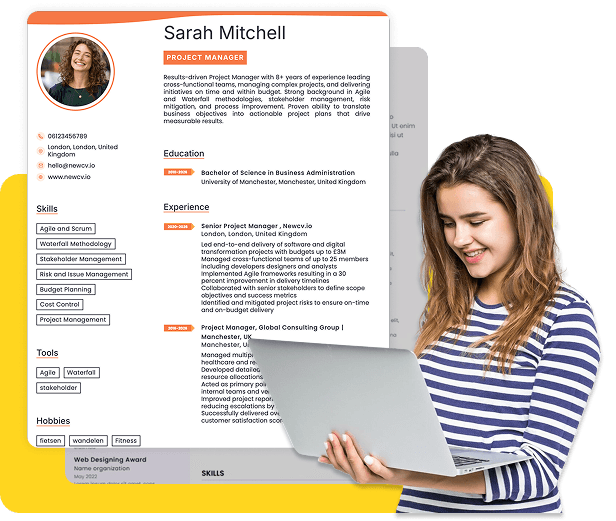
If you are applying for PHP developer jobs, using the wrong document format can quietly hurt your chances before a recruiter even reviews your technical skills. In the US and Canada, employers almost always expect a resume: short, results-focused, ATS-friendly, and tailored for fast screening. In the UK and many international markets, employers often ask for a CV instead, which is typically more detailed and includes fuller technical history, projects, certifications, CMS platforms, and domain expertise.
For PHP developers, this distinction matters because recruiters evaluate resumes and CVs differently. A US hiring manager scanning 300 applications for a Laravel developer role wants fast proof of impact, stack relevance, and production experience. A UK employer requesting a PHP developer CV may expect broader technical history, longer project explanations, and more complete career documentation.
This guide explains exactly when to use a PHP developer CV vs resume, how recruiters evaluate each one, and the best formats for US and UK PHP developer applications.
Although many candidates use the terms interchangeably, recruiters and hiring managers often do not.
A PHP developer resume is designed for speed, relevance, and ATS optimization. A PHP developer CV is designed for completeness and structured technical history.
Here is the practical difference recruiters actually care about.
A resume is:
Short and highly targeted
Usually 1–2 pages
Built for ATS-heavy hiring environments
Focused on measurable achievements and recent experience
Common in the United States and Canada
Optimized for fast recruiter screening
A PHP developer resume prioritizes:
Laravel, Symfony, WordPress, Magento, or custom PHP experience
Technical achievements
Business impact
APIs and backend systems
Recent projects
Cloud infrastructure
Performance optimization
Deployment workflows
GitHub or portfolio links
US recruiters often spend less than 10 seconds on the first review. That means the resume must surface relevant stack alignment immediately.
A CV is:
More detailed and history-based
Often 2 or more pages
More common in the UK, Ireland, Europe, and some international markets
Structured to show full technical progression
Designed to document broader experience and training
A PHP developer CV typically includes:
Full work history
Expanded technical stack details
Certifications and training
CMS and e-commerce platforms
Agile environments
Domain expertise
Technical projects
Security and compliance knowledge
Open-source contributions
For UK employers, a detailed CV is often normal and expected, especially for mid-level and senior technical roles.
This is where many candidates make avoidable mistakes.
The best document type is usually determined by the employer's region and the language used in the job posting.
Use a resume when applying to:
US-based companies
Canadian employers
SaaS startups
Enterprise tech companies
E-commerce brands
Digital agencies
ATS-heavy hiring environments
High-volume application pipelines
Also use a resume when the job posting explicitly says:
“Submit your resume”
“Upload resume”
“Resume required”
US recruiters expect concise positioning. Long CV-style documents often perform poorly in American tech hiring unless the role is academic or research-based.
Use a CV when applying to:
UK employers
Australian employers
International organizations
Government or public-sector roles
Universities or research institutions
Employers specifically requesting a CV
A PHP developer CV works especially well for:
Laravel developers
Symfony developers
PHP web developers
WordPress developers
Magento developers
Senior backend engineers
These employers often want broader technical visibility beyond just recent achievements.
Most generic advice completely misses this.
Recruiters do not evaluate PHP resumes line by line initially. They scan for fast alignment signals.
The first review usually answers five questions:
Does this candidate match the required PHP stack?
Have they worked in production environments?
Is the experience recent and relevant?
Can they contribute quickly?
Is the resume easy to scan in under 10 seconds?
That means your resume structure matters almost as much as your technical skills.
For US hiring, recruiters prioritize:
The fastest rejection trigger is vague technical positioning.
Bad example:
Weak Example
“Experienced PHP developer with backend knowledge.”
Good example:
Good Example
“PHP developer with 5+ years of experience building Laravel and Symfony applications for SaaS and e-commerce platforms.”
Specificity dramatically improves screening outcomes.
Strong resumes connect technical work to outcomes.
Recruiters respond to:
Performance improvements
Revenue impact
API scalability
Reduced downtime
Faster deployments
Improved application stability
Security enhancements
Strong bullet example:
Good Example
“Optimized Laravel API queries and caching strategy, reducing page load times by 42% across a 1.2M-user e-commerce platform.”
That sounds like production-level experience.
Many PHP developers make the mistake of listing every tool they have ever touched.
Recruiters care more about relevance than volume.
Prioritize:
PHP frameworks
CMS platforms
APIs
Databases
Cloud tools
CI/CD workflows
Testing frameworks
Security practices
For US applications, keep the structure clean, ATS-friendly, and impact-driven.
Include:
Full name
Phone number
Professional email
GitHub
Portfolio or deployed projects
Avoid:
Full mailing address
Photos
Personal details unrelated to work
Keep this short and specific.
Good structure:
Years of experience
Main PHP stack
Industry specialization
Key technical strengths
Example:
“PHP Developer with 6+ years of experience building scalable Laravel and Symfony applications for SaaS and e-commerce companies. Strong background in REST APIs, MySQL optimization, AWS deployments, and performance-focused backend architecture.”
Group skills logically.
Example categories:
Languages
Frameworks
CMS Platforms
Databases
Cloud & DevOps
Testing Tools
APIs & Integrations
Avoid giant keyword dumps.
This is the most important section.
Use:
Action verbs
Measurable impact
Stack-specific details
Production-scale examples
Strong bullet structure:
Action taken
Technology used
Business or technical result
Example:
Good Example
“Built reusable Laravel microservices supporting 4 internal products, reducing duplicate backend development by 35%.”
Projects matter heavily in PHP hiring.
Especially for:
Junior developers
Freelancers
Career switchers
Open-source contributors
Include:
GitHub links
Technologies used
Business purpose
Production deployment details
UK employers generally tolerate and sometimes expect more detail than US employers.
That does not mean the CV should be bloated.
The best PHP developer CVs still stay structured, technical, and relevant.
Typically includes:
Name
Phone
GitHub
Portfolio
More detailed than a US resume summary.
This can include:
Technical specialization
Industry experience
Framework expertise
Team collaboration style
Agile delivery experience
Separate technologies clearly.
Example:
PHP
Laravel
Symfony
WordPress
Magento
JavaScript
Vue.js
MySQL
Docker
AWS
UK CVs often include more technical detail per role.
Recruiters expect:
Technologies used
Platform types
Team environments
Development methodologies
Hosting infrastructure
Client industries
This section matters more in UK-style CVs.
Strong additions include:
Composer packages
Laravel packages
WordPress plugins
Open-source work
Technical blogging
Conference presentations
Useful certifications include:
AWS
Scrum
Laravel certifications
Security training
Cloud architecture courses
The difference is subtle but important.
A PHP web developer CV usually emphasizes frontend-connected web delivery work.
That often includes:
CMS customization
WordPress development
Theme work
Plugin development
Website implementation
Bug fixing
UI integration
E-commerce platforms
Meanwhile, broader PHP developer roles may focus more heavily on:
Backend architecture
APIs
Microservices
System scalability
Database optimization
Infrastructure
The title should match the employer’s language whenever possible.
If the posting says “PHP Web Developer,” mirror that terminology naturally throughout the CV.
Recruiters see the same failures repeatedly.
This often backfires.
US startups usually want:
Fast readability
Concise impact
Stack relevance
Product-focused experience
Long CVs slow screening.
This is one of the weakest patterns in developer resumes.
Bad example:
Weak Example
“PHP, Laravel, MySQL, JavaScript, APIs.”
Good example:
Good Example
“Developed RESTful Laravel APIs integrated with Stripe and Salesforce, supporting over 150K monthly customer transactions.”
Context creates credibility.
Recruiters can spot keyword stuffing immediately.
Only include technologies you can confidently discuss in an interview.
Most summaries sound interchangeable.
Weak example:
Weak Example
“Hardworking PHP developer seeking opportunities.”
Good example:
Good Example
“Backend-focused PHP developer specializing in Laravel applications, API integrations, and scalable e-commerce systems for high-growth SaaS companies.”
Specificity improves interview conversion.
Many technically strong developers still fail ATS screening.
Use standard headings like:
Summary
Technical Skills
Experience
Education
Certifications
Avoid:
Graphics
Tables
Complex layouts
Decorative designs
ATS readability still matters heavily in tech hiring.
This is where stronger candidates separate themselves.
Hiring managers evaluate:
Code maintainability
Scalability thinking
Communication ability
Ownership mindset
Production experience
Problem-solving maturity
Team collaboration
Your resume or CV should reflect those qualities indirectly.
Strong indicators include:
Mentoring
Cross-functional collaboration
Technical leadership
Architecture decisions
Performance optimization
Security improvements
Deployment ownership
Senior-level resumes and CVs should not read like expanded junior resumes.
That is a common mistake.
Senior developers should emphasize:
Architecture ownership
System scalability
Leadership impact
Technical decision-making
Team enablement
Infrastructure modernization
Security and reliability improvements
Weak senior positioning:
Weak Example
“Worked on Laravel applications.”
Strong senior positioning:
Good Example
“Led migration of legacy PHP monolith into modular Laravel services architecture, reducing deployment failures by 48% and improving release velocity.”
That demonstrates leadership-level thinking.
For PHP developers, usually yes.
Especially for:
Junior candidates
Freelancers
Open-source contributors
Developers without major brand employers
Recruiters often check:
Code quality
Project activity
Framework familiarity
Documentation quality
Real-world deployment work
Dead repositories or incomplete projects can hurt credibility though.
Only include links that strengthen your positioning.
This depends on region and seniority.
Recommended:
1 page for junior developers
2 pages for experienced developers
Most US recruiters prefer concise resumes.
Common:
2 pages for mid-level candidates
Longer for senior technical specialists if justified
But length alone does not create authority.
Relevant depth does.
One of the highest-impact strategies is matching employer terminology.
If the posting says:
“Resume” → use resume format
“CV” → use CV format
“PHP Web Developer” → mirror that title naturally
“Backend PHP Engineer” → position toward architecture and APIs
Recruiters subconsciously favor candidates who reflect the employer’s language and priorities.
This is especially important for ATS keyword matching.
The best PHP developer resumes and CVs do not try to impress with volume.
They win by proving relevance quickly.
Strong candidates:
Match the employer’s terminology
Align with the correct regional format
Show measurable technical impact
Demonstrate production experience
Highlight modern PHP frameworks
Keep content structured and easy to scan
A strong US resume gets to impact fast.
A strong UK CV shows broader technical depth without becoming bloated.
The document should always reflect how employers in that market actually hire.
Use ATS-optimised Resume and resume templates that pass applicant tracking systems. Our Resume builder helps recruiters read, scan, and shortlist your Resume faster.

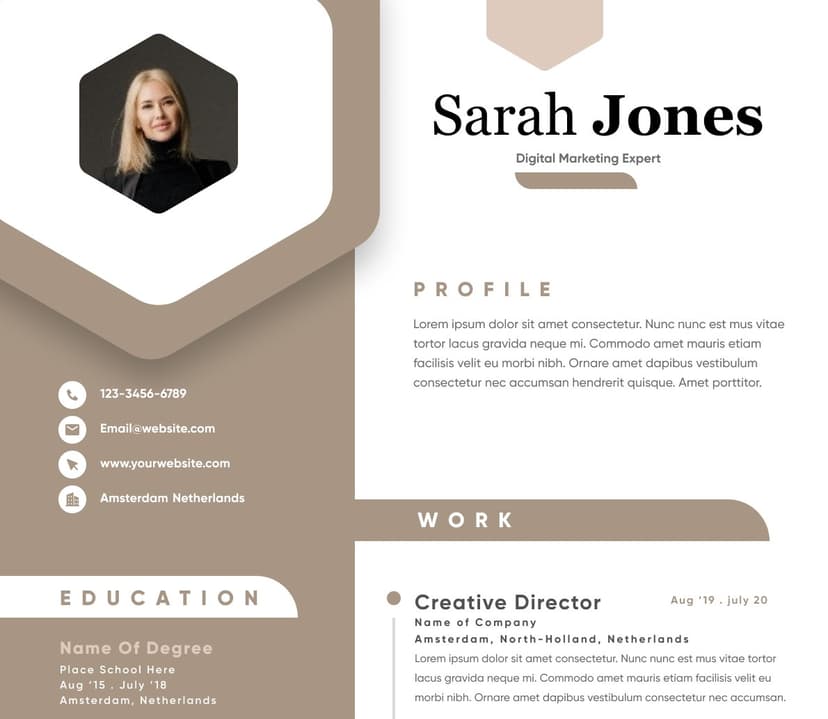
Use professional field-tested resume templates that follow the exact Resume rules employers look for.
Create Resume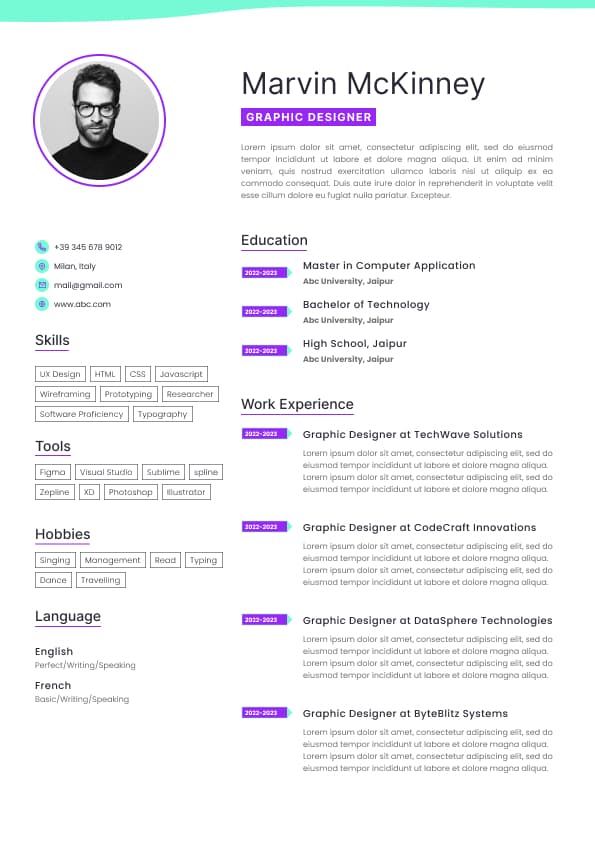
Use professional field-tested resume templates that follow the exact Resume rules employers look for.
Create ResumePHPUnit
REST APIs


 Upload Resume
 Import from Linkedin