STILL APPLYING. STILL HEARING NOTHING?BUILD YOUR RESUME

STILL APPLYING. STILL HEARING NOTHING?BUILD YOUR RESUME
Choose from a wide range of NEWCV resume templates and customize your NEWCV design with a single click.
FAQ
The strongest PHP developer resumes do not just list programming languages. They prove a developer can build, maintain, optimize, secure, and scale production applications in modern engineering environments.
Hiring managers evaluate PHP resumes based on three things:
Can this developer solve backend business problems?
Can they work effectively inside a modern engineering workflow?
Do their skills match the company’s tech stack and delivery environment?
That means recruiters are looking far beyond “PHP” and “MySQL.”
A competitive PHP developer resume today should demonstrate strength across:
Backend architecture
Framework expertise
API development
Recruiters typically scan PHP developer resumes in layers.
First, they check for stack compatibility.
Then they look for production-level engineering skills.
Finally, they evaluate whether the candidate can operate effectively within a real software team.
The strongest PHP resumes usually include skills across these categories:
Core programming languages
PHP frameworks
Database engineering
API and backend architecture
Frontend integration
Cloud and DevOps tools
These are the foundational technical skills most employers expect from PHP developers.
High-performing PHP developer resumes commonly include:
PHP
SQL
JavaScript
TypeScript
HTML
CSS
Bash
Modern PHP hiring is heavily framework-driven.
Most companies are not hiring generic PHP developers. They are hiring Laravel developers, Symfony developers, Magento developers, or engineers familiar with their existing ecosystem.
Laravel remains the most requested PHP framework in the US market.
Key Laravel resume skills include:
Eloquent ORM
Queues and jobs
Middleware
Authentication and authorization
Blade templating
Laravel Sanctum
Database competency is one of the clearest separators between junior and mid-to-senior PHP developers.
Employers expect backend engineers to understand performance, data architecture, and query efficiency.
Include skills such as:
MySQL
MariaDB
PostgreSQL
Redis
Schema design
Database migrations
Query optimization
Modern PHP roles are heavily focused on backend systems and API architecture.
The most competitive candidates demonstrate they can build scalable backend infrastructure, not just server-rendered pages.
Include:
REST API development
Authentication systems
Authorization logic
Middleware architecture
Queue systems
Background jobs
Even backend-focused PHP developers are often expected to collaborate closely with frontend systems.
The strongest resumes show understanding of frontend integration rather than isolated backend work.
Blade
Twig
Vue.js
React
Alpine.js
Livewire
Inertia.js
One major gap in many PHP resumes is operational engineering exposure.
Modern employers increasingly expect developers to understand deployment environments, infrastructure basics, and CI/CD workflows.
Docker
Docker Compose
GitHub Actions
GitLab CI/CD
Jenkins
Linux
Apache
Cloud familiarity is increasingly important, especially for mid-level and senior roles.
AWS
Azure
Google Cloud Platform (GCP)
DigitalOcean
Laravel Forge
Laravel Vapor
Serverless fundamentals
Recruiters are not necessarily looking for full cloud engineers.
They are looking for developers who understand:
Security awareness is one of the most overlooked resume differentiators.
Many candidates list frameworks but fail to demonstrate secure coding knowledge.
That creates risk concerns for hiring managers.
OWASP principles
SQL injection prevention
XSS prevention
CSRF protection
Encryption
Access control
Authentication security
Testing experience strongly improves engineering credibility.
Developers who understand testing are generally viewed as more disciplined and easier to trust in production environments.
PHPUnit
Pest
Laravel Dusk
Behat
Codeception
API testing
Postman
Most resumes handle soft skills poorly.
Listing generic terms without context adds little value.
Problem-solving
Communication
Ownership
Collaboration
Adaptability
Critical thinking
Attention to detail
Operational execution is one of the biggest differentiators in backend hiring.
Junior developers typically focus on coding tasks.
Mid-level and senior developers are evaluated on delivery ownership.
Agile/Scrum delivery
Sprint planning
Code reviews
Pull request management
Technical documentation
Production support
ATS systems heavily rely on keyword relevance.
If your resume lacks the right technical keywords, recruiters may never see it.
PHP 8
Laravel
Symfony
REST APIs
MySQL
Redis
API integration
Most developers misunderstand how resume screening actually works.
Recruiters are not manually verifying every technology.
They are pattern-matching for hiring confidence.
Can this candidate work within our environment quickly?
Do they understand production engineering or just tutorials?
Have they worked on real systems with scale, users, or business impact?
Can they function effectively inside a software team?
Do they understand APIs, testing, DevOps, and cloud workflows?
A resume with fewer but stronger, contextualized skills often outperforms a massive generic skills list.
Huge keyword dumps reduce credibility.
Recruiters often assume inflated skill claims.
Older PHP systems still exist, but resumes should show modern practices too.
“Learned Laravel” is not compelling.
“Built internal billing APIs with Laravel and Stripe integration” is far stronger.
Many developers underestimate how important deployment, debugging, and collaboration skills are.
Technical skills alone are not enough.
Hiring managers want evidence that your work improved:
Performance
Stability
The best PHP resumes distribute skills strategically instead of placing everything in one giant section.
Use this for searchable ATS keywords.
Show real-world application and impact.
Demonstrate architecture, tooling, integrations, and technical complexity.
Instead of:
“Laravel, MySQL, Docker, AWS”
Use:
“Developed containerized Laravel applications using Docker, MySQL, Redis, and AWS EC2 deployment workflows.”
This creates stronger recruiter confidence because it shows applied experience.
Most important skills:
Core PHP
Laravel fundamentals
SQL
Git
REST APIs
Debugging
HTML/CSS/JavaScript basics
Recruiters mainly evaluate learning potential and foundational competence.

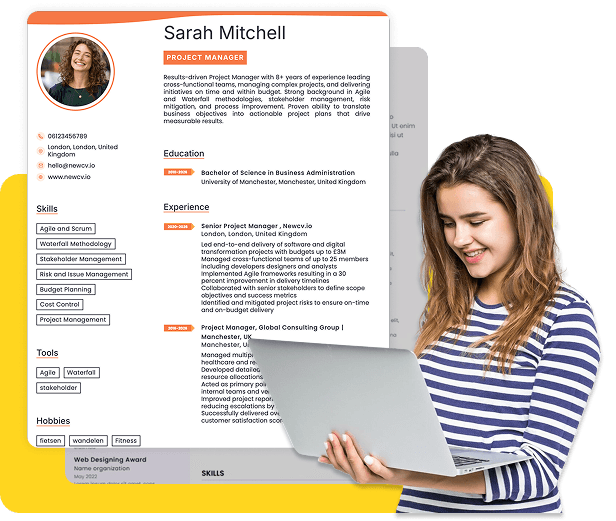
Use ATS-optimised Resume and resume templates that pass applicant tracking systems. Our Resume builder helps recruiters read, scan, and shortlist your Resume faster.

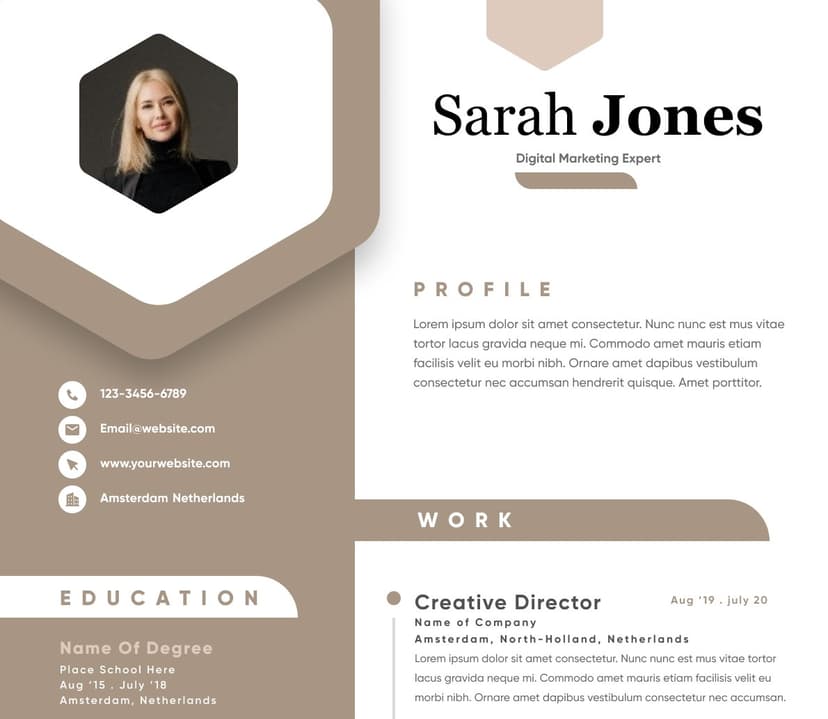
Use professional field-tested resume templates that follow the exact Resume rules employers look for.
Create Resume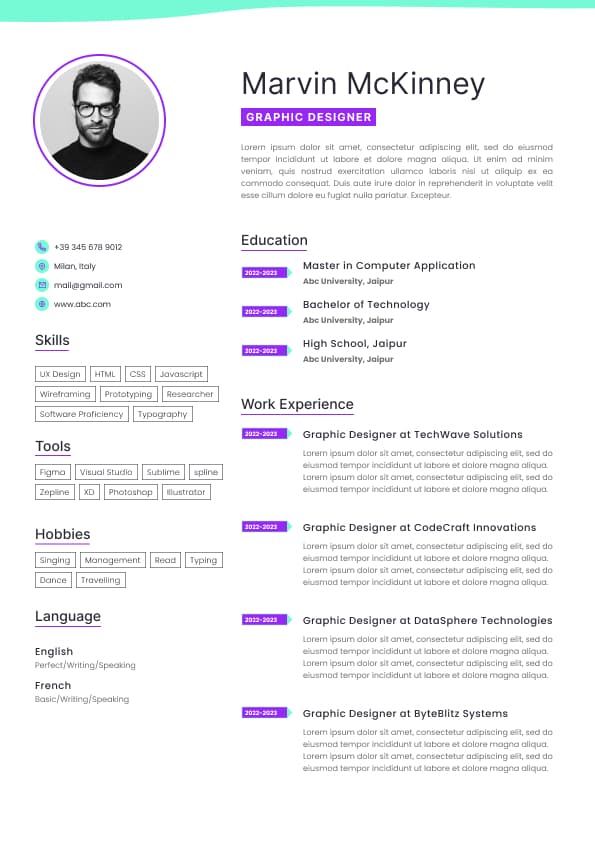
Use professional field-tested resume templates that follow the exact Resume rules employers look for.
Create ResumeDatabase optimization
Security practices
DevOps workflows
Testing and QA
Production support
Cross-functional collaboration
The difference between an average PHP resume and one that gets interviews is usually skill positioning, technical specificity, and alignment with real-world hiring needs.
This guide breaks down the exact PHP developer resume skills that employers prioritize in today’s US hiring market, including hard skills, soft skills, operational abilities, ATS keywords, and role-specific technical competencies.
Security and testing
Operational delivery skills
Soft skills tied to engineering execution
A resume that only lists technologies without demonstrating engineering depth often gets filtered out early.
JSON
XML
However, simply listing languages is not enough.
Recruiters want evidence of practical use cases.
Weak Example
“Experienced with PHP, JavaScript, and SQL.”
Good Example
“Built and maintained Laravel-based REST APIs using PHP 8, MySQL, Redis, and JavaScript for a multi-tenant SaaS platform serving 120K+ monthly users.”
The second version demonstrates:
Business impact
Production experience
Modern tooling
System scale
Technical context
That is what recruiters and hiring managers actually evaluate.
Laravel Passport
Livewire
Event-driven architecture
Laravel Horizon
Task scheduling
API resource management
Symfony is common in enterprise and platform-heavy environments.
Relevant Symfony resume skills include:
Dependency injection
Doctrine ORM
Symfony Console
Event subscribers
API Platform
Twig
Messenger component
Additional framework skills that strengthen PHP resumes:
CodeIgniter
Yii
CakePHP
Slim
Laminas
Recruiters often use framework keywords as ATS filters. Missing the exact framework can reduce visibility even if the developer has transferable experience.
Indexing
Data normalization
Transaction handling
Stored procedures
Recruiters often see resumes that say:
“Worked with MySQL.”
That is too vague.
Strong resumes demonstrate engineering depth.
Good Example
“Optimized slow MySQL queries and implemented Redis caching, reducing API response times by 42%.”
This communicates:
Performance awareness
Production troubleshooting
Backend optimization capability
Real engineering contribution
Those are hiring signals.
Event-driven systems
Cron jobs
Session management
Webhooks
Microservices basics
API development is one of the highest-value backend skills today.
Strong PHP developer resumes often include:
RESTful API architecture
API authentication
OAuth
JWT authentication
Postman
API testing
Rate limiting
API documentation
Recruiters often interpret API experience as evidence of modern engineering capability.
Responsive design
Component-driven UI integration
Laravel + Vue remains a highly common hiring combination.
Laravel + React is increasingly requested in SaaS and enterprise environments.
A PHP developer who can bridge backend and frontend systems is often viewed as more versatile and easier to onboard.
Nginx
PHP-FPM
Developers who understand deployment pipelines create less operational friction.
Hiring managers value engineers who can:
Troubleshoot production issues
Work independently
Deploy safely
Understand infrastructure constraints
Collaborate effectively with DevOps teams
Even moderate DevOps exposure can significantly strengthen a PHP resume.
Hosting environments
Scalability basics
Deployment workflows
Infrastructure dependencies
Cloud exposure signals modern engineering experience.
Input validation
Secure session handling
Hiring managers know insecure backend code becomes expensive fast.
A developer who demonstrates security awareness is often viewed as:
More senior
More reliable
Lower risk
Better suited for production systems
Security keywords also help with ATS matching for enterprise roles.
Test-driven development (TDD)
Testing experience often signals:
Better code quality
Lower defect rates
Stronger engineering maturity
Better maintainability practices
Candidates without testing exposure are often perceived as less production-ready.
Time management
Client communication
Product thinking
Documentation
Mentoring
Instead of listing “communication skills,” demonstrate it through experience.
Weak Example
“Strong communication and teamwork skills.”
Good Example
“Collaborated with product managers, designers, and QA teams during Agile sprint cycles to deliver new customer onboarding workflows.”
This feels credible because it shows actual collaboration.
Incident response
Release management
Backlog refinement
Cross-functional collaboration
Estimation and scoping
Legacy code modernization
Technical debt management
These skills matter because employers hire engineers who can contribute to delivery systems, not just individual tasks.
Queue processing
Authentication
Middleware
Docker
CI/CD
GitHub Actions
Linux
Nginx
AWS
Microservices
Event-driven architecture
Caching
Database optimization
Scalability
Performance optimization
OWASP
XSS prevention
CSRF protection
Access control
Do not keyword stuff.
Recruiters can immediately spot resumes that look artificially optimized.
Instead:
Use exact terminology naturally
Match keywords to actual experience
Mirror language from the job description when accurate
Prioritize relevance over volume
Scalability
User experience
Delivery speed
Revenue systems
Most important skills:
API architecture
Database optimization
CI/CD
Testing
Docker
Cloud basics
Production troubleshooting
At this level, employers expect independent execution.
Most important skills:
System architecture
Scalability
Technical leadership
Security engineering
Performance optimization
Legacy modernization
Mentoring
Cross-team collaboration
Senior hiring decisions heavily emphasize operational maturity and architectural thinking.


 Upload Resume
 Import from Linkedin