STILL APPLYING. STILL HEARING NOTHING?BUILD YOUR RESUME

STILL APPLYING. STILL HEARING NOTHING?BUILD YOUR RESUME
Choose from a wide range of NEWCV resume templates and customize your NEWCV design with a single click.
FAQ

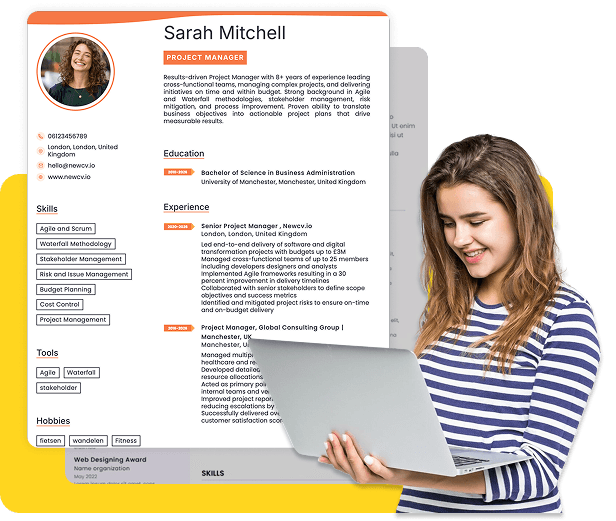
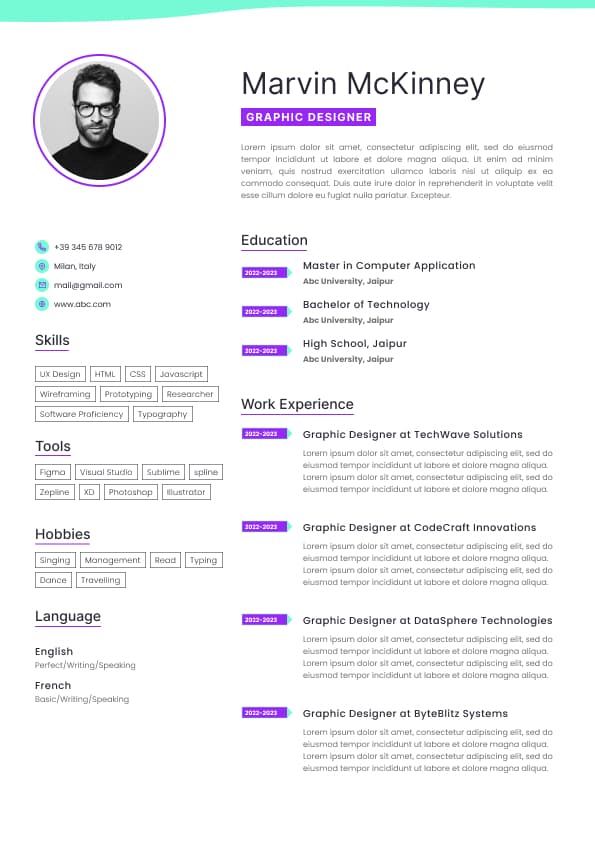
Use professional field-tested resume templates that follow the exact Resume rules employers look for.
Create ResumeA strong PHP developer resume is no longer just about listing PHP, MySQL, and a few frameworks. US employers now screen PHP candidates based on ecosystem specialization, architecture experience, deployment workflows, API work, cloud exposure, and measurable business impact. A Laravel resume is evaluated differently from a WordPress resume. A Magento developer is screened differently from a backend API engineer. If your resume mixes unrelated PHP stacks without clear positioning, recruiters often reject it within seconds because the specialization is unclear.
The highest-performing PHP resumes are highly targeted. They mirror the exact stack in the job description, show framework-specific achievements, include deployment and testing tools, and demonstrate business outcomes instead of generic development tasks. This guide breaks down how to optimize your PHP developer resume by tech stack so you can compete for modern US developer roles more effectively.
Most PHP resumes fail because they try to appeal to every PHP role at once.
Recruiters hiring for Laravel are not looking for heavy WordPress implementation experience unless the role explicitly overlaps. Magento hiring managers care about Adobe Commerce architecture, module customization, and scalability. Backend API teams prioritize REST architecture, database optimization, Docker, cloud infrastructure, and testing practices.
When resumes combine everything into one undifferentiated “PHP Developer” profile, three problems happen:
Recruiters cannot immediately identify your specialization
ATS systems struggle to match role-specific keywords
Hiring managers assume shallow expertise instead of depth
This is especially important in the US market, where technical recruiting is heavily keyword-driven during initial screening.
A resume that says:
Weak Example
“Experienced PHP developer skilled in multiple frameworks and technologies.”
Usually performs poorly because it lacks positioning.
A resume that says:
Good Example
“Laravel-focused PHP developer with 6+ years building RESTful SaaS platforms using PHP 8, Laravel, MySQL, Redis, Docker, and AWS.”
Immediately aligns with a clear hiring need.
Most PHP resumes are reviewed in three stages:
The system scans for:
Framework alignment
Backend technologies
API tools
Cloud platforms
Databases
CI/CD tooling
Testing frameworks
CMS-specific terminology
Missing exact framework keywords often reduces visibility before a human ever sees the resume.
Recruiters typically evaluate:
Years in a specific stack
Relevance to the exact role
Project scale
Stability of work history
Technical breadth within the stack
Communication clarity
At this stage, stack positioning matters more than broad technical lists.
Engineering leaders usually look for:
Architecture ownership
Performance optimization
Scalability experience
Security awareness
API integration depth
DevOps familiarity
Business outcomes
This is where measurable achievements become critical.
Modern PHP hiring is highly ecosystem-specific.
If the job is Laravel-heavy, your resume should prioritize:
Laravel
PHP 8
Eloquent ORM
REST APIs
Queues
Redis
Docker
Forge/Vapor
PHPUnit/Pest
If the role is WordPress-focused, your resume should emphasize:
Custom themes
WooCommerce
Plugin development
Gutenberg
WP Engine/Kinsta
PHP performance optimization
Security hardening
Do not dilute relevance by overloading unrelated frameworks unless the job description clearly requires them.
One of the biggest recruiter frustrations is seeing resumes stuffed with every PHP framework ever used, even when only one is relevant.
Laravel roles usually prioritize:
API architecture
SaaS platform development
Queue systems
Authentication
Performance optimization
Modern PHP practices
CI/CD familiarity
Strong Laravel resumes typically include:
Laravel version experience
REST API implementation
Horizon/queues
Redis
Docker
AWS or DigitalOcean
PHPUnit or Pest
MySQL optimization
Good Example
Built scalable multi-tenant SaaS platform using Laravel 10, Redis, MySQL, and Docker supporting 120K+ monthly active users
Reduced API response times by 47% through query optimization, Redis caching, and database indexing improvements
Developed secure REST APIs integrated with Stripe, HubSpot, and Salesforce platforms
Implemented CI/CD pipelines using GitHub Actions and Laravel Forge reducing deployment failures by 60%
Listing Laravel without specifying version experience
Missing API or backend architecture work
Failing to quantify scalability
Omitting deployment workflows
No testing framework mention
Modern Laravel hiring strongly favors engineers who understand infrastructure, testing, and deployment alongside application development.
Symfony employers often prioritize enterprise-level architecture and maintainability.
Dependency injection expertise
Enterprise integrations
Scalable architecture
Symfony components
API Platform
Doctrine ORM
Testing discipline
Symfony resumes should sound more enterprise-oriented than startup-oriented.
Good Example
Architected Symfony-based enterprise portal serving 50K+ internal users across healthcare operations
Integrated third-party APIs and SSO authentication using OAuth2 and Symfony Security components
Improved application reliability through PHPUnit automation and SonarQube code quality monitoring
Led migration from legacy PHP monolith to Symfony microservices reducing deployment complexity by 35%
Architecture ownership
Enterprise scale
Maintainability improvements
Testing rigor
Security implementations
Symfony hiring managers often evaluate software engineering maturity more heavily than rapid delivery speed.
WordPress resumes fail when candidates present themselves as generic content-site developers.
US employers increasingly expect WordPress developers to function as modern application developers.
Custom plugin development
WooCommerce customization
Gutenberg block development
Headless WordPress
API integrations
Performance optimization
Cloud hosting familiarity
Security hardening
Many WordPress employers specifically look for:
Custom code ownership
Scalability
PHP debugging
Core optimization
Agency or client delivery experience
Good Example
Developed custom WooCommerce plugins generating automated subscription workflows for 80K+ customers
Reduced WordPress page load speed from 5.2s to 1.8s through database optimization, caching, and Cloudflare CDN implementation
Built custom Gutenberg blocks and reusable components improving content publishing efficiency by 40%
Managed high-traffic WordPress infrastructure hosted on WP Engine supporting 3M+ monthly visits
Only mentioning Elementor or page builders
No custom development examples
Missing performance optimization
No plugin/theme customization details
Treating WordPress like basic content management instead of engineering work
Magento hiring is highly specialized.
Recruiters usually search aggressively for:
Magento 2
Adobe Commerce
Custom modules
Checkout optimization
Scalability
ERP integrations
Performance tuning
Revenue impact
Ecommerce scalability
Checkout reliability
Complex integrations
Catalog optimization
Backend architecture
Good Example
Developed custom Magento 2 modules supporting complex B2B pricing and inventory synchronization workflows
Optimized Adobe Commerce checkout process increasing conversion rates by 18%
Integrated Magento platform with ERP and CRM systems improving order processing efficiency by 42%
Reduced infrastructure costs by migrating ecommerce workloads to AWS auto-scaling environments
No revenue metrics
No ecommerce scale indicators
Missing integration complexity
Generic PHP descriptions instead of Magento-specific accomplishments
Magento employers strongly prioritize business impact because ecommerce engineering directly affects revenue.
Backend PHP roles are usually evaluated more like modern software engineering positions.
REST APIs
Microservices
Docker
Redis
RabbitMQ
PostgreSQL/MySQL
AWS
GraphQL
CI/CD
PHP 8
Scalability experience
API architecture
Performance optimization
Security awareness
Database expertise
Testing discipline
Good Example
Designed RESTful backend services processing over 15M API requests daily
Improved database performance by redesigning indexing strategy reducing query execution times by 63%
Containerized PHP services using Docker and Kubernetes improving deployment consistency across environments
Implemented OAuth2 authentication and API rate limiting to strengthen platform security
Frontend-heavy descriptions
No API metrics
Missing infrastructure tools
No testing frameworks
Generic “worked on backend systems” wording
Backend hiring managers expect measurable engineering depth.
Full stack PHP resumes often fail because they appear shallow on both frontend and backend.
The key is showing integrated ownership.
Your resume should clearly demonstrate:
Frontend framework usage
Backend architecture
API integration
Database work
Deployment understanding
If relevant to your target roles:
Vue.js
React
Blade
Livewire
Inertia.js
Tailwind CSS
Alpine.js
Good Example
Built full stack Laravel and Vue.js application improving customer onboarding completion rates by 29%
Developed reusable frontend component system using React and Tailwind CSS reducing UI development time by 35%
Designed REST APIs and frontend integrations supporting real-time analytics dashboards
Collaborated with DevOps teams to deploy Dockerized applications through AWS CI/CD pipelines
List frontend technologies without project context
Focus only on UI tasks
Ignore backend scalability
Fail to show end-to-end ownership
Modern PHP hiring increasingly overlaps with infrastructure ownership.
Even mid-level PHP developers are now expected to understand deployment workflows.
AWS
Azure
GCP
Docker
Docker Compose
Cloudflare
Laravel Forge
Vapor
Envoyer
DigitalOcean
Recruiters increasingly use cloud terminology to filter candidates because companies want developers who can:
Troubleshoot deployments
Understand scalability
Reduce DevOps dependency
Support CI/CD workflows
A PHP developer with deployment knowledge often outperforms technically similar candidates during hiring decisions.
Many PHP resumes completely ignore testing.
This is a major mistake for mid-level and senior roles.
PHPUnit
Pest
Laravel Dusk
Behat
Codeception
PHPStan
Psalm
Rector
SonarQube
PHP-CS-Fixer
Laravel Pint
Including these tools signals engineering maturity.
Good Example
Increased backend reliability by implementing PHPUnit and Pest test coverage across core billing services
Reduced production bugs by 38% using static analysis tools including PHPStan and Rector
Automated regression testing workflows improving deployment confidence during weekly releases
One of the biggest PHP resume mistakes is creating massive unstructured skills lists.
Instead, organize by specialization.
Backend: PHP 8, Laravel, Symfony, REST APIs, GraphQL, MySQL, PostgreSQL, Redis
Frontend: Vue.js, React, Blade, Livewire, Tailwind CSS, JavaScript
CMS/Ecommerce: WordPress, WooCommerce, Magento 2, Adobe Commerce, Drupal
Cloud/DevOps: AWS, Docker, Laravel Forge, Vapor, Cloudflare, CI/CD
Testing/Quality: PHPUnit, Pest, PHPStan, SonarQube, Rector
This structure improves ATS parsing and recruiter readability.
Technical skill alone is rarely enough.
Hiring managers want engineers who improve:
Performance
Revenue
Scalability
Reliability
Efficiency
User experience
Worked on Laravel applications
Responsible for backend development
Maintained WordPress websites
Increased checkout conversion rates by 14% through WooCommerce optimization and API performance improvements
Reduced infrastructure downtime by implementing automated deployment monitoring across AWS environments
Built scalable Laravel APIs supporting 5x user growth without major architectural changes
The second approach demonstrates business value instead of task completion.
Many strong developers lose interviews because their resumes are poorly optimized for ATS systems.
Match exact framework names from the job description
Use standardized section headings
Include both acronyms and full terminology when relevant
Avoid graphics-heavy layouts
Use readable formatting
Include modern PHP versions when applicable
Do not keyword-stuff.
Instead:
Match the employer’s stack naturally
Prioritize technologies actually used professionally
Keep framework mentions contextualized through achievements
ATS systems increasingly evaluate semantic relevance, not just keyword density.
A Laravel-heavy SaaS engineer and a WordPress agency developer are often evaluated differently.
Without clear positioning, recruiters may assume lack of specialization.
Metrics dramatically improve credibility.
Include:
User scale
Revenue impact
Performance gains
Deployment improvements
Time savings
Conversion increases
Recruiters reject resumes filled with:
Responsible for development
Worked with PHP
Assisted with projects
These say almost nothing about capability.
Modern PHP roles increasingly expect cloud and deployment familiarity.
Senior engineering teams increasingly prioritize maintainability and testing discipline.
The best PHP resumes are not broad. They are strategically aligned.
Your resume should immediately communicate:
Your primary PHP specialization
Your strongest framework ecosystem
Your level of architecture ownership
Your deployment and testing maturity
Your measurable business impact
A Laravel engineer should look unmistakably like a Laravel engineer.
A Magento developer should clearly demonstrate ecommerce scale expertise.
A backend API engineer should emphasize scalability, infrastructure, and performance.
The more targeted your positioning, the easier it becomes for recruiters and hiring managers to connect you with the right opportunities.
Use ATS-optimised Resume and resume templates that pass applicant tracking systems. Our Resume builder helps recruiters read, scan, and shortlist your Resume faster.

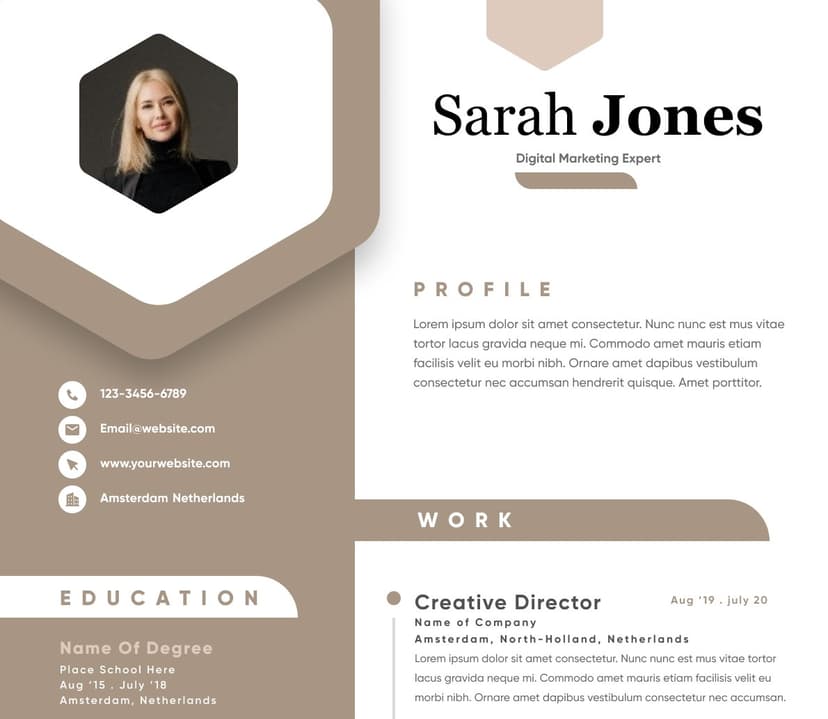
Use professional field-tested resume templates that follow the exact Resume rules employers look for.
Create Resume


 Upload Resume
 Import from Linkedin