STILL APPLYING. STILL HEARING NOTHING?BUILD YOUR RESUME

STILL APPLYING. STILL HEARING NOTHING?BUILD YOUR RESUME
Choose from a wide range of NEWCV resume templates and customize your NEWCV design with a single click.
FAQ

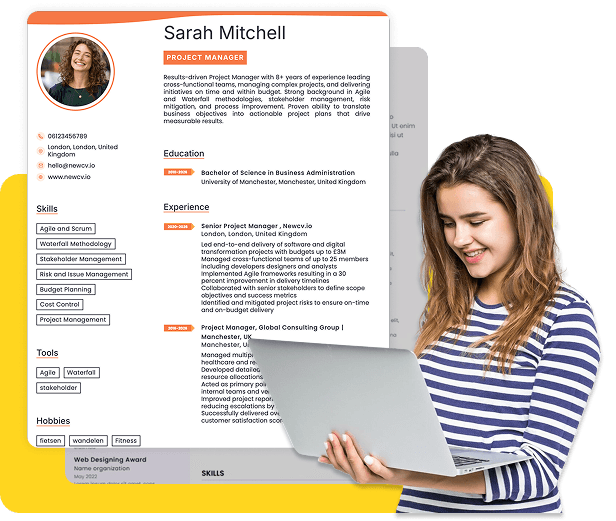
A Python developer resume should not look the same for every job type. Recruiters screen full-time, contract, freelance, remote, and part-time Python candidates using completely different evaluation criteria. A full-time backend engineer is evaluated for long-term ownership and team scalability. A contract Python developer is evaluated for speed, adaptability, and migration delivery. Freelancers are judged on independent execution and client outcomes. Remote candidates are screened heavily for communication, async collaboration, and self-management.
This is where most Python resumes fail.
Candidates reuse one generic backend engineering resume across every application, which weakens positioning, hurts ATS relevance, and creates confusion during recruiter screening. The strongest Python developer resumes are intentionally aligned to the exact hiring model, business environment, and delivery expectations of the role.
This guide breaks down how recruiters actually evaluate Python developers by employment type and industry specialization so you can position your resume to match how hiring decisions are made today.
Recruiters do not simply check whether you know Python. They evaluate whether your experience matches the operational realities of the role.
A SaaS company hiring a full-time backend engineer wants:
Long-term ownership
Scalable architecture experience
Cross-functional collaboration
Production support capability
Stability and retention potential
A staffing agency hiring a Python contractor wants:
Rapid onboarding
Legacy codebase adaptation
API modernization experience
Short-term delivery success
Ability to contribute immediately
A startup hiring a freelance remote Python developer wants:
Independent execution
Async communication
Fast shipping velocity
Flexible scheduling
Minimal management overhead
Your resume must align with the employer’s risk model.
That alignment is what separates interview-worthy resumes from resumes that get ignored despite strong technical skills.
Most Python developers create a technically accurate resume that is strategically weak.
The problem is not lack of experience.
The problem is poor positioning.
“Python developer with experience building APIs and backend systems.”
This tells recruiters almost nothing about:
Hiring fit
Environment fit
Delivery model
Business context
Ownership level
Industry specialization
“Backend Python developer with 6+ years of experience building scalable SaaS APIs using FastAPI and Django, including multi-tenant subscription platforms, cloud-native microservices, and production automation systems.”
This version immediately communicates:
Business model alignment
Technical specialization
Architecture exposure
Backend maturity
Relevant environment experience
Strong resumes reduce recruiter uncertainty within seconds.
Full-time Python developer roles are evaluated primarily on long-term operational value.
Hiring managers want engineers who can:
Own systems over time
Improve platform stability
Collaborate across teams
Support production environments
Scale backend infrastructure
This means your resume should emphasize continuity, ownership, scalability, and engineering maturity.
Recruiters screening full-time Python developers prioritize:
Backend platform ownership
Production-grade architecture
Long-term impact metrics
Team collaboration
System scalability
CI/CD workflows
Cloud infrastructure exposure
Engineering process participation
Keywords commonly associated with strong full-time Python resumes include:
SaaS platform development
Backend scalability
Distributed systems
API architecture
PostgreSQL optimization
Kubernetes
AWS
Production monitoring
Cross-functional collaboration
Example
Michael Carter
Backend Python Engineer with 7+ years of experience building scalable SaaS infrastructure using Python, FastAPI, Django, PostgreSQL, Redis, and AWS. Proven success leading backend modernization initiatives, improving API performance, and supporting high-availability production systems serving enterprise customers. Experienced collaborating with product, DevOps, and frontend engineering teams in Agile environments.
Strong bullet points show ownership and measurable operational impact.
Led backend development for a multi-tenant SaaS platform supporting 250K+ active users using FastAPI, PostgreSQL, Redis, and AWS ECS
Reduced API response times by 42% through database query optimization and asynchronous task processing
Built CI/CD deployment workflows that decreased production release failures by 35%
Collaborated with DevOps and frontend teams to improve service reliability and incident response processes
Implemented monitoring and alerting using Prometheus and Grafana for production system visibility
Recruiters become skeptical when resumes:
Focus only on isolated coding tasks
Lack production environment exposure
Show no ownership progression
Avoid measurable outcomes
Overemphasize tutorials or personal projects
Mention too many unrelated technologies without depth
Full-time employers are investing in operational continuity, not short-term execution.
Contract Python developer resumes are evaluated differently from full-time resumes.
Companies hiring contractors are usually trying to solve urgent technical problems quickly.
That changes everything.
They care less about long-term retention and more about:
Speed
Adaptability
Existing codebase support
Delivery under constraints
Migration capability
API modernization
Strong contractor resumes demonstrate:
Fast onboarding
Legacy system adaptation
Cross-environment flexibility
Rapid delivery capability
Technical troubleshooting
Short-cycle project execution
Contract-focused keywords often include:
API migration
FastAPI modernization
Legacy Django support
Python contractor
Existing codebase optimization
Integration projects
Temporary engineering support
Technical consulting
Example
Daniel Brooks
Contract Python Developer specializing in API modernization, backend optimization, and migration projects for SaaS and enterprise environments. Experienced supporting legacy Django systems, implementing FastAPI services, and integrating third-party platforms within fast-moving engineering teams. Strong track record of rapid onboarding and short-term delivery execution.
Modernized legacy Django REST APIs into FastAPI microservices for a healthcare SaaS platform
Joined enterprise engineering team mid-project and resolved production bottlenecks within first 3 weeks
Migrated backend infrastructure from monolithic architecture to containerized AWS ECS deployment
Delivered PCI DSS-aware transaction processing improvements for FinTech payment platform
Reduced backend incident volume by 31% through targeted debugging and production stabilization work
Contract recruiter red flags include:
Long paragraphs with no delivery outcomes
Generic backend engineering language
No evidence of fast adaptation
No project-based execution examples
Resumes optimized only for permanent roles
Contract resumes should feel agile, execution-focused, and immediately deployable.
Freelance Python developers are evaluated almost entirely on independent delivery capability.
Recruiters and clients assume freelancers:
Require less oversight
Manage timelines independently
Communicate directly with stakeholders
Handle ambiguity well
Deliver usable solutions quickly
Your resume should reinforce those assumptions.
Freelance resumes perform best when they emphasize:
Client-facing delivery
Independent backend development
Flexible project execution
Automation scripting
API integrations
Async communication
Rapid feature shipping
Example
Sophia Bennett
Freelance Python Developer delivering backend APIs, automation systems, and cloud-based integrations for startups and small businesses. Experienced building Django and FastAPI applications, automating operational workflows, and independently managing full development lifecycles in remote-first environments.
Built custom FastAPI backend for subscription-based SaaS startup handling Stripe billing automation
Developed Python automation scripts reducing manual reporting workload by 18 hours weekly
Delivered REST API integrations with HubSpot, Shopify, and Salesforce platforms
Managed direct communication with founders and product stakeholders across remote projects
Built weekend-based backend feature releases for early-stage startup MVP launches
Freelancers often weaken their resumes by:
Listing every small gig individually
Using inconsistent formatting
Including vague project descriptions
Omitting business outcomes
Failing to show technical depth
Freelance resumes still need enterprise-level professionalism.
Remote Python developer resumes require an additional layer of trust-building.
Hiring managers worry about:
Communication gaps
Productivity visibility
Time management
Collaboration friction
Self-direction
Your resume must reduce those concerns immediately.
Strong remote Python resumes demonstrate:
Async collaboration
Independent execution
Documentation practices
Distributed team experience
Self-management
Ownership without supervision
Example
Rachel Kim
Remote Python Developer with experience building scalable backend services for distributed engineering teams across SaaS and AI platforms. Skilled in async collaboration, API development, cloud-native infrastructure, and independent feature ownership using FastAPI, Docker, PostgreSQL, and AWS.
Collaborated across distributed engineering teams spanning 4 time zones using Jira, Slack, and GitHub workflows
Independently delivered backend features for remote-first SaaS platform with minimal management oversight
Maintained detailed API documentation and deployment runbooks improving onboarding efficiency
Built cloud-native backend services supporting remote AI product infrastructure
Reduced deployment friction through automation scripting and CI/CD improvements
Recruiters become hesitant when remote resumes:
Show no async tooling experience
Lack collaboration indicators
Overemphasize solo coding only
Provide vague project accountability
Suggest communication dependency
Remote hiring is fundamentally trust-based hiring.
Part-time Python developer resumes succeed when they communicate flexibility without looking unavailable or distracted.
Recruiters need confidence that:
You can contribute reliably
Your schedule is manageable
You deliver independently
You can own contained deliverables
Part-time Python resumes should emphasize:
Flexible scheduling
Independent project completion
Backend feature ownership
Automation scripting
Freelance API work
Weekend project delivery
Example
Kevin Ramirez
Part-time Python Developer specializing in backend API development, automation scripting, and remote feature delivery for startups and SaaS businesses. Experienced managing flexible development schedules while independently delivering production-ready Python solutions using Django, FastAPI, and PostgreSQL.
Delivered backend feature updates for remote SaaS startup during part-time evening schedule
Built Python automation scripts reducing customer onboarding processing time by 47%
Managed independent API integration projects with minimal supervision
Supported Django backend maintenance and bug resolution for subscription-based platform
Completed weekend development sprints for MVP backend feature launches
Industry specialization dramatically improves recruiter response rates.
Many Python developers underestimate how much domain familiarity affects interview selection.
A Python engineer with FinTech transaction experience is evaluated differently than a healthcare backend developer or AI infrastructure engineer.
SaaS companies prioritize:
Multi-tenant systems
Subscription billing
Scalable APIs
Cloud-native architecture
Product iteration velocity
Important SaaS resume keywords include:
Multi-tenant architecture
Subscription systems
API integrations
SaaS backend
Cloud-native services
User scalability
FastAPI
AWS infrastructure
FinTech employers prioritize:
Security awareness
Transaction reliability
Compliance exposure
Financial data handling
API integrity
Important FinTech resume terms:
PCI DSS
Secure APIs
Financial transaction systems
Fraud detection
Payment integrations
Data encryption
Audit logging
Healthcare companies prioritize:
HIPAA awareness
EHR integrations
Data privacy
Compliance sensitivity
API reliability
Important healthcare keywords:
HIPAA-compliant systems
Healthcare APIs
EHR integrations
Patient data security
Healthcare interoperability
AI-focused Python resumes should emphasize:
LLM integrations
ML pipelines
AI APIs
Vector databases
Model deployment
Data engineering
Important AI resume keywords:
LangChain
OpenAI APIs
Vector databases
RAG pipelines
ML infrastructure
Embedding systems
AI backend engineering
ATS optimization is not about keyword stuffing.
Modern ATS systems primarily help recruiters search and filter candidates. Human reviewers still make hiring decisions.
Your goal is relevance clarity.
Strong ATS optimization includes:
Exact technology naming consistency
Clear role alignment
Proper backend terminology
Industry-specific phrasing
Logical resume structure
Skills matching actual experience
Depending on role type, relevant keywords may include:
Python
FastAPI
Django
Flask
REST APIs
PostgreSQL
Redis
Docker
Kubernetes
AWS
Common failures include:
Keyword dumping without context
Massive unreadable skills sections
Generic project descriptions
Missing business outcomes
Poor formatting compatibility
Inconsistent technology naming
Recruiters still reject resumes that feel artificial or overly optimized.
For most Python developers, the strongest structure is:
Resume summary
Technical skills
Professional experience
Projects if highly relevant
Education
Certifications if applicable
Most recruiters scan resumes in this order:
Current role
Recent technical stack
Industry relevance
Business impact
Employment type alignment
Stability or project consistency
They are not reading line by line initially.
They are pattern matching.
That means your top third of the resume matters disproportionately.
Top Python developer resumes:
Show business impact, not task lists
Align directly with the hiring model
Match the employer’s technical environment
Demonstrate operational maturity
Reduce recruiter uncertainty immediately
Use precise backend engineering language
Show measurable technical outcomes
Average resumes:
Stay generic
List technologies without context
Ignore hiring model differences
Focus only on coding tasks
Lack ownership signals
Fail to position strategically
The strongest candidates are not always the most technical.
They are often the clearest and best-positioned.
Use ATS-optimised Resume and resume templates that pass applicant tracking systems. Our Resume builder helps recruiters read, scan, and shortlist your Resume faster.

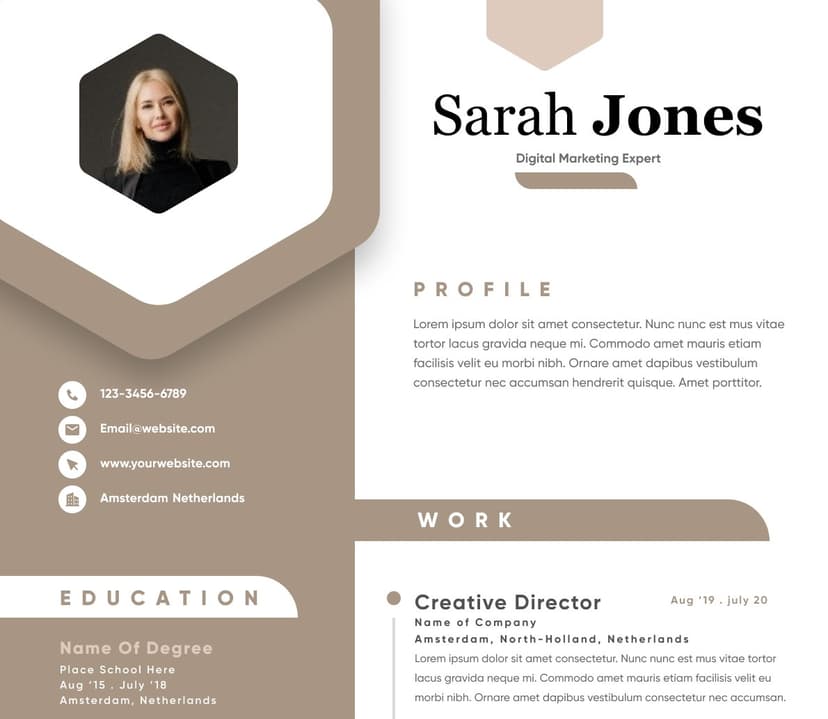
Use professional field-tested resume templates that follow the exact Resume rules employers look for.
Create Resume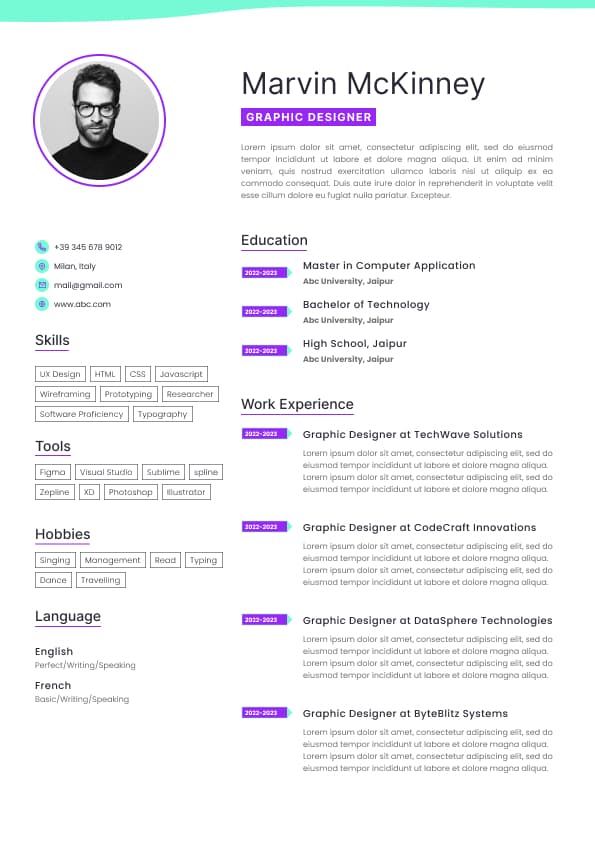
Use professional field-tested resume templates that follow the exact Resume rules employers look for.
Create ResumeCI/CD
Async programming
SaaS architecture
API integrations
Cloud-native infrastructure
Automation scripting
AI APIs
LLM integrations


 Upload Resume
 Import from Linkedin