STILL APPLYING. STILL HEARING NOTHING?BUILD YOUR RESUME

STILL APPLYING. STILL HEARING NOTHING?BUILD YOUR RESUME
Choose from a wide range of NEWCV resume templates and customize your NEWCV design with a single click.
FAQ

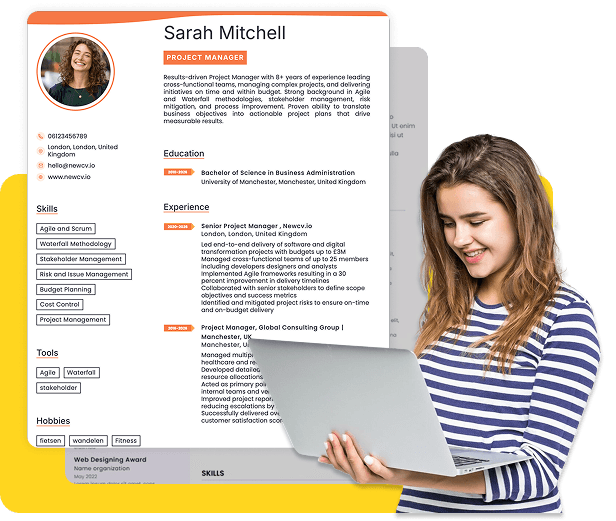
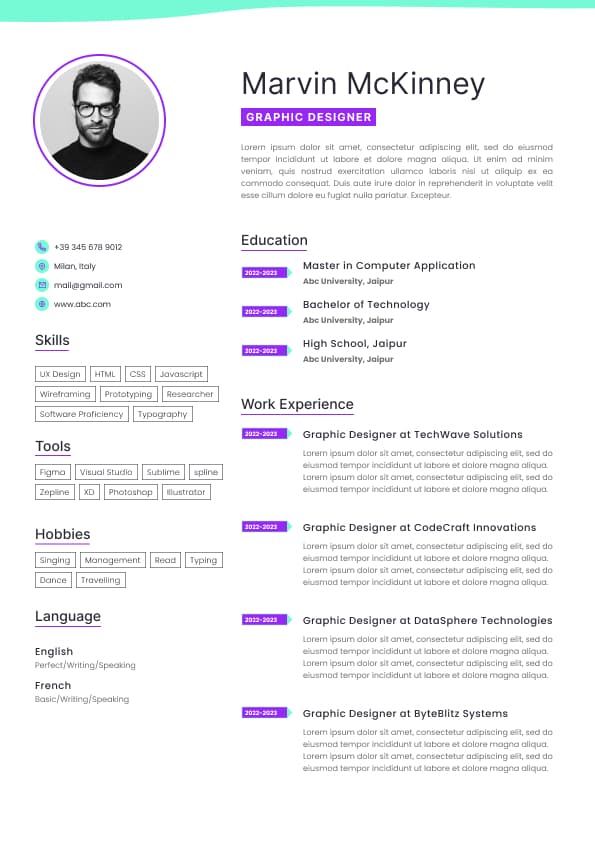
Use professional field-tested resume templates that follow the exact Resume rules employers look for.
Create ResumeA strong Python developer resume is not just a list of programming languages and frameworks. In the US hiring market, recruiters and hiring managers evaluate Python resumes based on technical relevance, business impact, code ownership, and problem-solving depth within seconds.
Most Python developer resumes fail because they:
Read like generic skill inventories
Lack measurable technical outcomes
Overload keywords without demonstrating real usage
Ignore the hiring context behind the role
Focus on responsibilities instead of engineering impact
The resumes that consistently generate interviews do three things well:
Match the exact Python stack the employer uses
Show production-level accomplishments with metrics
Demonstrate engineering maturity beyond coding alone
Whether you're applying for backend engineering, automation, data engineering, API development, machine learning, or full-stack Python roles, your resume must position you as someone who can solve business problems through scalable technical execution.
This guide breaks down exactly how recruiters evaluate Python developer resumes, what technical hiring managers actually look for, which resume formats work best, and how to write bullet points that outperform generic AI-generated resumes.
Hiring managers rarely care about Python alone. They care about what you built with it.
Most companies hiring Python developers are evaluating candidates across five core areas:
Backend architecture experience
API and database integration skills
Scalability and performance optimization
Collaboration within engineering teams
Production-level software delivery
A recruiter may initially scan for:
Python
Django or Flask
FastAPI
REST APIs
AWS or Azure
PostgreSQL or MongoDB
Docker and Kubernetes
Git and CI/CD pipelines
But technical hiring managers go deeper quickly.
They evaluate:
Whether your experience sounds real or copied
If your bullet points reflect engineering ownership
Whether your projects handled scale, complexity, or production environments
If your achievements demonstrate problem-solving ability
Whether your resume aligns with the seniority level advertised
A Python resume that simply says “developed APIs using Flask” is weak because it lacks context, scale, and outcome.
A stronger version shows:
What the API did
Who used it
What performance improvement occurred
What technical challenges were solved
Recruiters see thousands of Python resumes. These patterns instantly reduce credibility:
Massive skill sections with no evidence of usage
Buzzword stuffing for ATS optimization
No measurable achievements
Generic GitHub projects with no production context
Overly academic descriptions
Outdated frameworks or irrelevant technologies
Long paragraphs instead of scannable impact statements
Another major issue is mismatched positioning.
A junior developer claiming “architected enterprise solutions” sounds inflated.
A senior engineer writing beginner-level bullet points appears underqualified.
Your resume must match the expected engineering maturity level for the role.
For nearly all US tech hiring scenarios, the best format is:
This works best because recruiters and engineering managers want immediate visibility into:
Your recent technical stack
Current engineering scope
Career progression
Production experience
The ideal structure is:
Header
Professional summary
Technical skills
Professional experience
Projects
Education
Certifications (if relevant)
Avoid:
Functional resumes
Graphic-heavy resumes
Multi-column layouts
Excessive colors or design elements
Resume templates that break ATS parsing
ATS systems used by companies like Greenhouse, Lever, Workday, and iCIMS often parse simpler layouts more accurately.
Below is a recruiter-approved Python developer resume structure that works across most US tech hiring environments.
Name
City, State
Phone Number
Professional Email
GitHub
Portfolio Website
Python developer with X years of experience building scalable backend systems, RESTful APIs, and cloud-based applications using Python, Django, Flask, FastAPI, PostgreSQL, Docker, and AWS. Proven track record improving application performance, automating workflows, and delivering production-ready solutions in agile engineering environments.
Languages: Python, SQL, JavaScript
Frameworks: Django, Flask, FastAPI
Databases: PostgreSQL, MySQL, MongoDB
Cloud Platforms: AWS, Azure
DevOps: Docker, Kubernetes, Jenkins, GitHub Actions
Tools: Git, Linux, REST APIs, Redis, Celery
Python Developer
Company Name | Location
Month Year – Present
Developed and maintained REST APIs serving over 500K monthly users using Django REST Framework
Reduced API response times by 38% through query optimization and Redis caching
Automated deployment pipelines using Docker and GitHub Actions, reducing release time by 60%
Collaborated with frontend and DevOps teams to improve system reliability and scalability
Integrated third-party payment and authentication APIs for enterprise SaaS platform
Inventory Automation System
Built Python-based automation tool that reduced manual inventory processing by 75%
Developed ETL workflows using Pandas and PostgreSQL
Implemented automated reporting dashboards for operations teams
Bachelor of Science in Computer Science
University Name
Austin, Texas
michaelcarter.dev@email.com
LinkedIn | GitHub | Portfolio
Python developer with 5+ years of experience building scalable backend systems, cloud-native applications, and API-driven platforms in SaaS and fintech environments. Strong expertise in Python, FastAPI, Django, AWS, PostgreSQL, Docker, and CI/CD automation. Proven success improving backend performance, reducing infrastructure costs, and delivering production-ready software in agile engineering teams.
Languages: Python, SQL, JavaScript, Bash
Frameworks: Django, FastAPI, Flask
Databases: PostgreSQL, MongoDB, Redis
Cloud & DevOps: AWS, Docker, Kubernetes, Terraform, Jenkins
Tools: Git, Linux, Celery, RabbitMQ, REST APIs
FinTechScale | Austin, TX
January 2022 – Present
Designed and deployed scalable FastAPI microservices processing over 8 million monthly transactions
Reduced backend latency by 42% through database indexing, asynchronous task processing, and Redis caching
Built automated fraud-detection workflows that improved transaction monitoring accuracy by 31%
Led migration from monolithic architecture to containerized Docker-based services on AWS ECS
Mentored junior developers on API design, testing standards, and Python performance optimization
Integrated CI/CD pipelines using Jenkins and GitHub Actions, reducing deployment failures by 47%
CloudNova Solutions | Dallas, TX
June 2019 – December 2021
Developed REST APIs using Django REST Framework for enterprise logistics platform
Built data processing pipelines handling over 2 million shipping records weekly
Automated internal reporting workflows, saving operations teams approximately 18 hours weekly
Improved PostgreSQL query efficiency, reducing reporting execution times from 12 minutes to under 2 minutes
Collaborated with product managers and frontend engineers in agile sprint cycles
Built Python ETL pipeline using Pandas and PostgreSQL to aggregate customer behavior data
Developed dashboard APIs supporting real-time business intelligence reporting
Reduced manual reporting effort by 70% across sales and operations teams
Bachelor of Science in Computer Science
University of Texas at Dallas
The biggest mistake candidates make is listing every technology they have touched once.
Recruiters prioritize relevance over quantity.
For backend Python roles:
Python
Django
Flask
FastAPI
REST APIs
PostgreSQL
SQLAlchemy
Docker
AWS
Git
For data-focused Python roles:
Pandas
NumPy
ETL pipelines
Apache Airflow
SQL
Data modeling
For automation-focused roles:
Scripting
Selenium
Process automation
Linux
Cron jobs
API integrations
For machine learning roles:
TensorFlow
PyTorch
Scikit-learn
Feature engineering
Model deployment
Many engineers underestimate how much employers value these:
Debugging ability
Code maintainability
Collaboration
Documentation
System thinking
Production troubleshooting
Performance optimization
Companies hire developers who reduce engineering risk, not just developers who can write code.
This is where most resumes fail.
Weak bullet points describe tasks.
Strong bullet points demonstrate engineering impact.
Why it fails:
No scale
No outcome
No technical complexity
Sounds passive
Why it works:
Shows scale
Shows measurable impact
Demonstrates ownership
Sounds production-level
Use this structure:
Action + Technical Work + Business or Performance Outcome
Example:
This format consistently performs better during recruiter and hiring manager reviews.
ATS optimization matters, but most candidates misunderstand it.
Keyword stuffing does not help if the resume lacks contextual relevance.
Modern ATS systems increasingly evaluate:
Skill alignment
Semantic relevance
Resume structure
Experience consistency
Include relevant technologies naturally throughout your resume:
Python
Django
Flask
FastAPI
REST API
PostgreSQL
AWS
Docker
Kubernetes
CI/CD
Git
Microservices
Linux
SQL
But context matters more than repetition.
Instead of listing:
“Python, APIs, AWS, Docker”
Show usage:
That improves both ATS matching and recruiter confidence.
A 40-tool skills section creates skepticism.
Recruiters often assume:
Surface-level exposure
Resume inflation
Copy-pasted content
Weak projects:
Better:
Technical work alone is not enough.
Engineering managers want to know:
Did your work improve efficiency?
Reduce costs?
Improve scalability?
Increase reliability?
Support growth?
Your resume is initially screened by recruiters, not senior engineers.
If your content is overly technical without business clarity, it may never reach the hiring manager.
Yes, but only if they strengthen your positioning.
Good GitHub projects:
Solve real problems
Show production thinking
Demonstrate architecture skills
Include documentation
Have meaningful commits and structure
Weak GitHub projects:
Tutorial clones
Basic CRUD apps with no differentiation
Incomplete repositories
Unmaintained projects
Hiring managers care more about engineering thinking than flashy side projects.
A smaller but well-designed project is often more valuable than 20 unfinished repositories.
If you lack professional experience:
Focus on projects with measurable outcomes
Include internships and freelance work
Demonstrate practical problem-solving
Highlight deployment experience
Show GitHub activity strategically
Employers hiring junior developers care heavily about:
Learning ability
Technical fundamentals
Initiative
Code quality potential
At this stage, hiring managers expect:
Ownership
Production systems experience
Collaboration skills
Architecture awareness
Performance optimization experience
This is where measurable business impact becomes critical.
Senior-level resumes must show:
System design influence
Scalability decisions
Mentorship
Technical leadership
Infrastructure understanding
Cross-functional collaboration
Many senior resumes fail because they remain task-focused instead of leadership-focused.
Yes. This is one of the highest-impact changes candidates can make.
You do not need a completely different resume every time.
But you should adjust:
Summary
Technical skills ordering
Keywords
Relevant project emphasis
Bullet point prioritization
If a company emphasizes:
FastAPI
AWS Lambda
Microservices
And your resume heavily emphasizes Flask and frontend work, your alignment score drops.
Tailoring improves:
ATS matching
Recruiter confidence
Interview conversion rates
1 page for early-career developers
2 pages for experienced developers
Do not cut valuable technical depth just to force one page.
But avoid:
Long summaries
Repeated technologies
Irrelevant jobs
Excessive coursework
Every line should strengthen your candidacy.
Django
FastAPI
Flask
REST APIs
PostgreSQL
Redis
Celery
Microservices
ETL
Apache Airflow
Pandas
SQL
Data pipelines
Spark
Scripting
Selenium
Process automation
Linux
API integrations
TensorFlow
PyTorch
Model deployment
Feature engineering
NLP
The best Python resumes consistently show:
Clear technical ownership
Quantified engineering outcomes
Modern stack alignment
Real production experience
Scalability awareness
Strong business relevance
Average resumes list technologies.
Top-tier resumes demonstrate engineering value.
That distinction is what gets interviews in competitive US hiring markets.
Use ATS-optimised Resume and resume templates that pass applicant tracking systems. Our Resume builder helps recruiters read, scan, and shortlist your Resume faster.

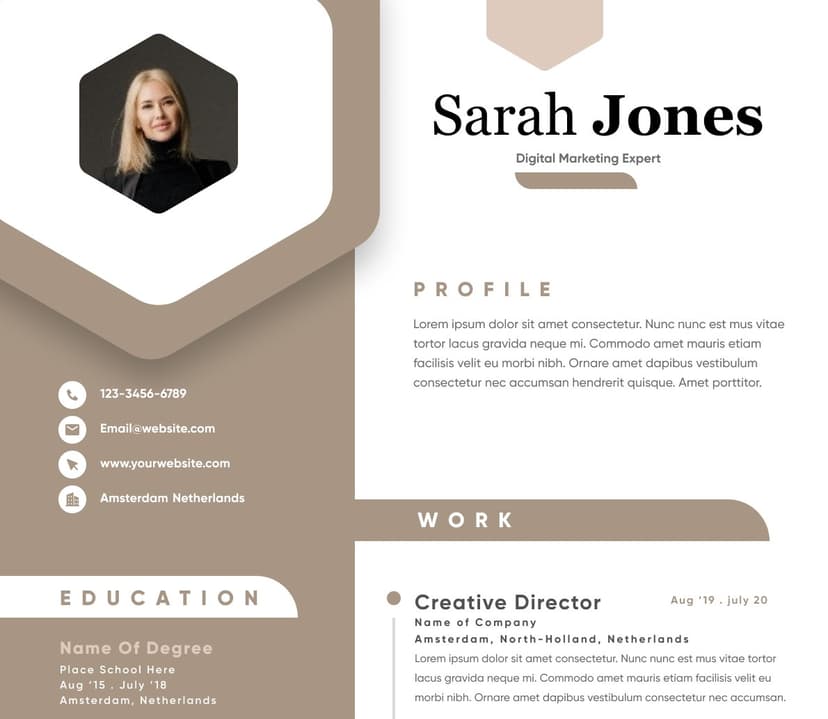
Use professional field-tested resume templates that follow the exact Resume rules employers look for.
Create Resume


 Upload Resume
 Import from Linkedin