STILL APPLYING. STILL HEARING NOTHING?BUILD YOUR RESUME

STILL APPLYING. STILL HEARING NOTHING?BUILD YOUR RESUME
Choose from a wide range of NEWCV resume templates and customize your NEWCV design with a single click.
FAQ
A strong Python developer resume for students is not about years of experience. It is about proving technical capability, problem-solving ability, and execution potential quickly. Recruiters hiring for internships and junior backend developer roles look for evidence that you can build real applications, understand backend fundamentals, collaborate using modern tools, and learn fast in production environments.
The biggest mistake computer science students make is submitting resumes that look academic instead of practical. Hiring managers do not want a list of classes. They want proof you can contribute to real engineering work.
The resumes that consistently get interviews usually demonstrate:
Hands-on Python projects with measurable outcomes
Backend API development experience
GitHub activity and deployment experience
Databases, authentication, and cloud exposure
For entry-level backend and Python roles, recruiters are screening for potential, not mastery.
Most companies understand students will not have extensive work experience. The real evaluation question is:
Can this candidate contribute to engineering work with reasonable onboarding?
That means recruiters typically scan for five things within the first 10 to 15 seconds:
Practical Python project experience
Technical stack relevance
Resume clarity and organization
GitHub or portfolio credibility
Evidence of initiative outside coursework
A student who built and deployed backend applications will usually outperform a student with higher GPA but no practical work.
For students and recent graduates, a clean one-page reverse-chronological format works best.
The ideal structure is:
Include:
Full name
Phone number
Professional email
GitHub
Portfolio website if available
Your GitHub profile matters significantly for technical student hiring. Recruiters and engineers often check it before interviews.
Most student skills sections are overloaded and weak.
Recruiters do not care if you touched 25 technologies once.
They care whether your skills align with the job description and your projects support those claims.
Python
SQL
JavaScript basics if relevant
Flask
FastAPI
Django
Projects are the most important section on a student Python resume.
This is where interview decisions are often made.
Recruiters are evaluating:
Technical complexity
Real-world relevance
Problem-solving ability
Ownership
Deployment experience
Engineering maturity
A strong student backend project usually includes:
API development
Database integration
Authentication
Deployment
Error handling
Version control
Cloud hosting
Documentation
Projects become significantly stronger when they are deployed publicly.
File Analytics Dashboard | Flask, PostgreSQL, AWS, Docker
Built a Flask-based analytics platform that processed and categorized uploaded files using Python automation scripts
Integrated PostgreSQL database architecture for scalable data storage and retrieval
Dockerized the application and deployed to AWS EC2 with CI/CD deployment workflows
Developed interactive reporting dashboards that reduced manual file organization time by 70%
Implemented authentication, logging, and REST API integrations for secure user access
Why this works:
Hackathons help when framed correctly.
Recruiters care less about participation and more about:
Speed of execution
Team collaboration
Technical ownership
Product thinking
The first demonstrates engineering capability. The second adds almost no value.
GitHub matters heavily for student developers.
Recruiters and engineering managers often check:
Repository quality
Commit consistency
Documentation
Project complexity
Contribution history
Clean README files
Meaningful commit history
Open-source contributions are increasingly valuable because they demonstrate:
Collaboration
Code review experience
Version control usage
Real engineering workflows
This tells recruiters you understand team-based development environments.
Students are not expected to be DevOps experts.
But modern backend hiring strongly favors candidates who understand deployment fundamentals.
Even basic exposure helps significantly.
Deploying applications to AWS or Render
Docker containerization
CI/CD pipeline exposure
GitHub Actions basics
Linux command line familiarity
A student who can deploy a backend app is often viewed as more job-ready than a student who only codes locally.
Most student resumes fail because bullet points describe tasks instead of outcomes.
Recruiters want to understand:
What you built
How you built it
Why it mattered
What technologies were used
Use this structure:
Action + Technical Implementation + Result
The second example demonstrates:
Technical stack
Engineering work
Business impact
That is dramatically stronger.
Students often overload resumes with tools they barely know.
This creates interview risk.
If you list Kubernetes, recruiters may ask Kubernetes questions.
Only include technologies you can discuss confidently.
Many student resumes sound identical because they rely on tutorial-style wording.
Recruiters instantly recognize copied phrasing like:
“Built a to-do app”
“Created a weather app”
“Made a website using Flask”
You need implementation depth.
A locally built project is weaker than a deployed application.
Deployment signals engineering maturity.
Even simple deployment experience adds major credibility.
Avoid vague phrases:
Hardworking
Team player
Fast learner
Passionate coder
Instead, prove these qualities through projects and technical execution.
Your resume still needs ATS compatibility.
That means:
Standard headings
Clean formatting
Relevant keywords
No graphics or tables
Consistent terminology
Use the exact language employers use:
Python developer
Backend developer
Student resumes often fail ATS screening because they lack relevant technical entities.
Strong ATS keywords include:
Python
Flask
FastAPI
Django
REST API
PostgreSQL
SQLAlchemy
JWT authentication
Include GPA if:
It is 3.5 or higher
You have limited experience
You are applying to internships or new grad programs
Do not place excessive emphasis on GPA if your projects are stronger.
For many backend engineering internships, strong GitHub projects outweigh GPA alone.
Keep education concise.
Bachelor of Science in Computer Science
University Name
Expected Graduation: May 2027
Relevant Coursework:
Data Structures and Algorithms
Database Systems
Cloud Computing
Software Engineering
API Development
Certifications are optional but can help when relevant.
Michael Carter
Austin, TX
michaelcarter.dev@gmail.com
GitHub: github.com/michaelcarterdev
LinkedIn: linkedin.com/in/michaelcarterdev
Computer Science student with hands-on experience building Python backend applications using Flask, FastAPI, PostgreSQL, and Docker. Developed cloud-deployed REST APIs with JWT authentication, built automation tools for analytics reporting, and contributed to collaborative GitHub projects using Agile workflows. Strong foundation in backend engineering, API development, and cloud deployment practices.
Programming: Python, SQL, JavaScript
Frameworks: Flask, FastAPI, Django
Databases: PostgreSQL, MySQL, SQLite
Cloud & DevOps: AWS, Docker, GitHub Actions, CI/CD
Tools: Git, GitHub, Postman, Linux
Concepts: REST APIs, JWT Authentication, OOP, Agile Development
Backend Analytics Platform | Flask, PostgreSQL, Docker, AWS
A student who demonstrates:
APIs
Databases
Deployment
Authentication
Usually outperforms students listing:
20 frameworks
15 languages
Minimal implementation depth
Depth wins interviews.
Strong resumes tell a coherent story.
For example:
“Student focused on backend engineering, cloud deployment, and scalable Python APIs.”
That narrative should appear consistently across:
Summary
Skills
Projects
GitHub
Consistency strengthens positioning.
Recruiters notice students who think beyond tutorials.
Production-oriented signals include:
Error handling
Logging
Authentication
Deployment
API documentation
CI/CD workflows
Scalability considerations
These details separate serious engineering candidates from classroom-only applicants.
The strongest student resumes do not try to look senior.
They look capable, practical, and technically credible.
Focus on:
Building real projects
Deploying applications
Writing cleaner project bullets
Maintaining GitHub quality
Demonstrating backend engineering fundamentals
A student with three strong backend projects and clean technical positioning can absolutely compete for internships and junior Python developer roles in today’s market.
Recruiters are not expecting perfection.
They are looking for evidence that you can learn fast, contribute meaningfully, and grow into production engineering work.

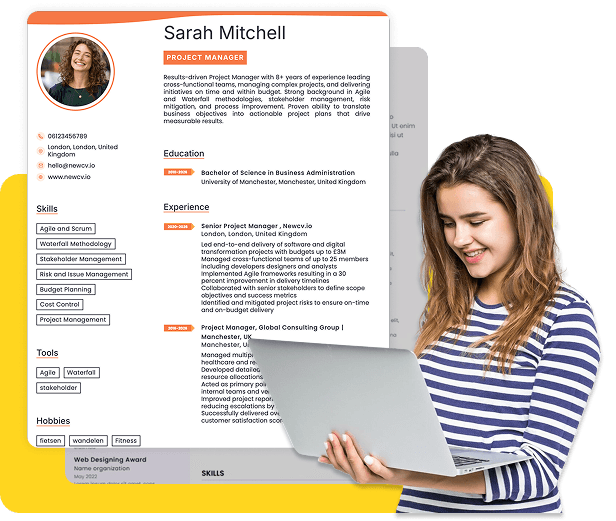
Use ATS-optimised Resume and resume templates that pass applicant tracking systems. Our Resume builder helps recruiters read, scan, and shortlist your Resume faster.

Use professional field-tested resume templates that follow the exact Resume rules employers look for.
Create Resume
Use professional field-tested resume templates that follow the exact Resume rules employers look for.
Create ResumeEvidence of shipping working applications
Technical curiosity and continuous learning
This guide breaks down exactly how to structure a Python developer student resume that competes in today’s US tech hiring market.
These are common rejection patterns recruiters see repeatedly:
Generic “passionate programmer” summaries
No deployed projects or GitHub links
Coursework listed without practical application
Resume focused entirely on school assignments
Buzzword-heavy skills sections with no proof
No metrics, outcomes, or technical implementation details
Listing every programming language ever touched
Hiring managers want signal, not noise.
Keep this short and technical.
Avoid generic career objectives.
“Motivated computer science student seeking opportunities to grow skills in software development.”
This says nothing meaningful.
“Computer Science student with hands-on experience building Python backend applications using Flask, FastAPI, PostgreSQL, and Docker. Developed REST APIs with JWT authentication, deployed cloud-based applications on AWS and Render, and contributed to open-source projects using Git and Agile workflows.”
The second version communicates:
Technical stack
Backend focus
Deployment exposure
Collaboration experience
Real implementation work
That is what recruiters want.
PostgreSQL
MySQL
SQLite
AWS
Render
Docker
GitHub Actions
CI/CD basics
REST APIs
JWT authentication
API integration
Git
GitHub
Postman
Linux basics
Only include coursework if you lack internship experience.
Strong coursework examples:
Data Structures and Algorithms
Database Systems
Cloud Computing
Software Engineering
Operating Systems
API Development
A deployed Flask or FastAPI app immediately separates candidates from students who only completed tutorials.
Demonstrates backend engineering
Shows deployment capability
Includes measurable outcomes
Proves infrastructure exposure
Task Management API | FastAPI, PostgreSQL, JWT, Render
Developed REST APIs using FastAPI with JWT authentication and role-based access control
Built CRUD functionality connected to PostgreSQL using SQLAlchemy ORM
Deployed production-ready backend services on Render with automated CI/CD pipelines
Wrote API documentation and tested endpoints using Postman and Swagger UI
Improved API response efficiency through optimized database query handling
This signals production-oriented thinking.
AI Support Chatbot | Python, OpenAI API, FastAPI
Built an AI-powered chatbot using OpenAI APIs and Python backend services
Integrated conversation management and prompt-processing workflows using FastAPI
Developed scalable API endpoints for chatbot interactions and session handling
Implemented logging and analytics tools to monitor user engagement and response quality
Collaborated with student developers using GitHub pull requests and Agile sprint workflows
AI projects are valuable only when they demonstrate engineering implementation, not just API usage.
Deployed project links
Organized repositories
Technical documentation
API examples
Setup instructions
Even two strong repositories outperform ten unfinished tutorial clones.
REST APIs
Flask
FastAPI
PostgreSQL
Docker
AWS
Docker
AWS
GitHub
CI/CD
Agile
Backend development
Cloud deployment
API integration
Object-oriented programming
Data structures and algorithms
The key is integrating them naturally inside project descriptions and skills.
Built a Flask-based analytics application that automated file organization and reporting workflows
Integrated PostgreSQL databases for scalable backend data management
Dockerized the application and deployed cloud infrastructure using AWS EC2
Developed REST API integrations and secure authentication workflows
Reduced manual reporting tasks by 70% through Python automation tooling
Task Management API | FastAPI, PostgreSQL, JWT
Developed scalable REST APIs using FastAPI and JWT authentication
Built CRUD operations with PostgreSQL and SQLAlchemy ORM integration
Deployed production-ready backend services to Render using CI/CD pipelines
Tested API endpoints with Postman and documented services using Swagger UI
AI Chatbot Assistant | Python, OpenAI API, FastAPI
Built AI chatbot backend services using OpenAI APIs and FastAPI architecture
Developed session-based API workflows for user interaction handling
Implemented logging and monitoring tools to analyze chatbot performance
Collaborated with developers through GitHub pull requests and Agile sprint planning
Bachelor of Science in Computer Science
University of Texas at Austin
Expected Graduation: May 2027
Relevant Coursework:
Data Structures and Algorithms
Database Systems
Cloud Computing
Software Engineering


 Upload Resume
 Import from Linkedin