
Choose from a wide range of NEWCV resume templates and customize your NEWCV design with a single click.

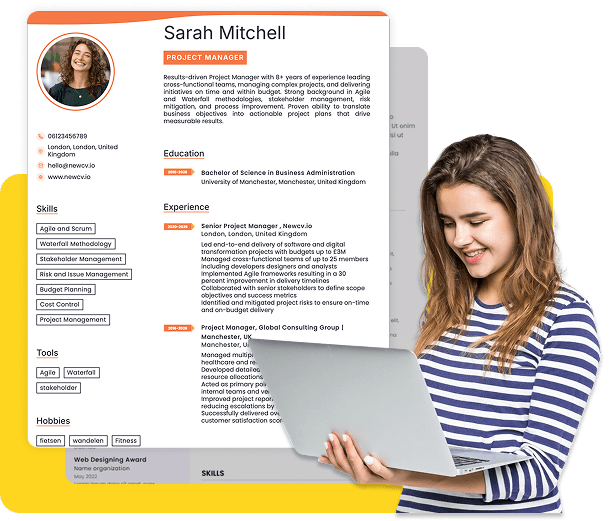
Use ATS-optimised Resume and resume templates that pass applicant tracking systems. Our Resume builder helps recruiters read, scan, and shortlist your Resume faster.

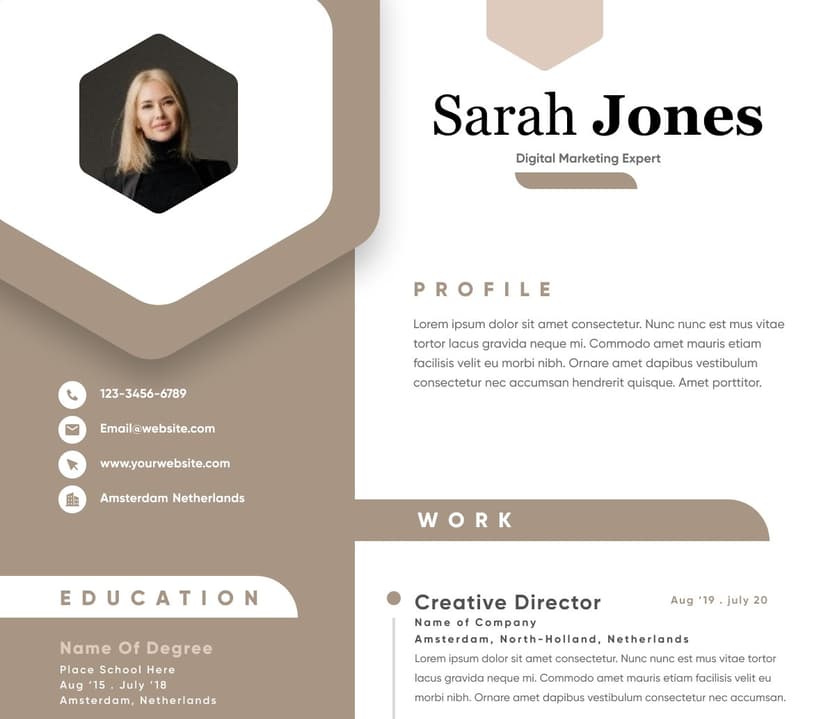
Use professional field-tested resume templates that follow the exact Resume rules employers look for.
Create Resume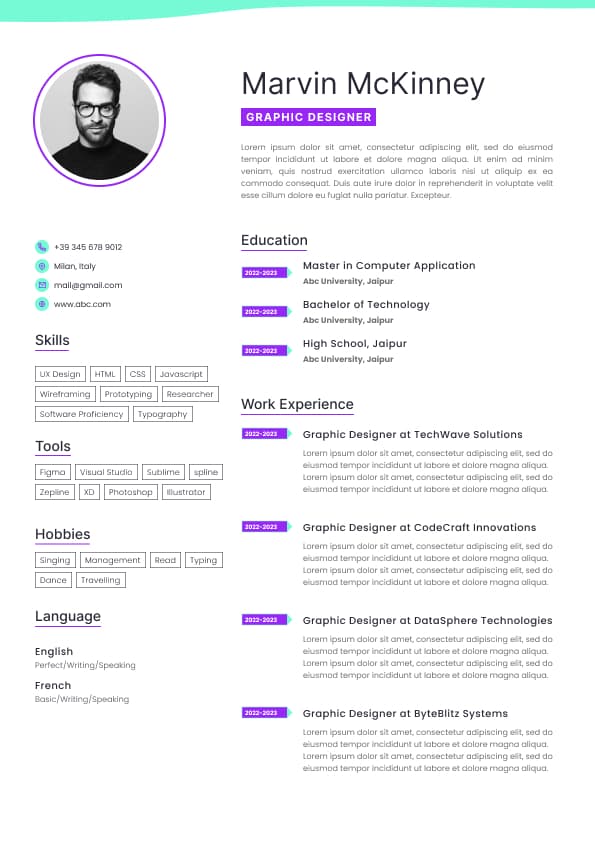
Use professional field-tested resume templates that follow the exact Resume rules employers look for.
Create ResumeA British CV and an American resume serve the same purpose: helping employers decide whether to interview you. However, they differ significantly in structure, content, length, terminology, and employer expectations.
In the UK, employers expect a CV that provides a fuller overview of your career, often spanning two pages and including education, qualifications, work history, and relevant achievements.
In the United States, employers expect a resume, which is typically shorter, highly targeted to a specific role, and usually limited to one page for early and mid-career professionals.
One of the biggest mistakes job seekers make is submitting a UK-style CV to a US employer or an American-style resume to a UK employer. While the differences may appear minor, they can immediately signal unfamiliarity with local hiring standards and reduce your chances of progressing.
If you are applying internationally, understanding these differences can significantly improve interview rates and recruiter engagement.
A British CV (Curriculum Vitae) is the standard document used for most job applications across the UK.
Its purpose is to provide employers with a clear overview of:
Employment history
Skills and expertise
Qualifications
Professional achievements
Career progression
Most UK employers expect enough information to understand both your suitability for the role and the trajectory of your career.
For experienced professionals, a British CV is usually around two pages long. Senior executives and highly specialised professionals may occasionally exceed this, but brevity and relevance remain important.
UK recruiters generally prefer a balance between detail and readability rather than an extremely condensed document.
An American resume is a concise marketing document designed to sell your suitability for a specific position.
Unlike a UK CV, a resume is typically customised heavily for each application.
US hiring managers generally expect:
Highly targeted content
Strong achievement-focused bullet points
Minimal personal information
Direct alignment with the job description
Shorter overall length
The emphasis is often on measurable outcomes and impact rather than providing a complete career narrative.
A resume is usually:
One page for graduates and early-career candidates
One to two pages for experienced professionals
Rarely longer unless applying for executive-level positions
AreaBritish CVAmerican ResumePrimary PurposeCareer overviewTargeted marketing documentTypical LengthTwo pagesOne page, sometimes twoTerminologyCVResumePersonal ProfileCommonOptionalDate of BirthUsually omitted todayNever includedPhotographRarely includedAlmost never includedMarital StatusNot includedNot includedReferences"Available upon request" or omittedUsually omittedEducation PlacementVaries by experience levelOften near top for graduatesCustomisationModerateExtensiveCareer HistoryMore comprehensiveMore selectiveHiring FocusSuitability and progressionImmediate relevance and impact
Most candidates assume the distinction is simply length.
It isn't.
The real difference lies in how employers evaluate applications.
UK recruiters often assess:
Career progression
Stability
Industry experience
Qualifications
Role relevance
Long-term fit
They are typically interested in understanding how your career has developed over time.
A UK CV tells a professional story.
American recruiters are generally more focused on:
Immediate business value
Quantifiable achievements
Skills alignment
Results delivered
Direct role relevance
A resume functions more like a sales document.
Its objective is to convince the employer that you can solve their specific problem.
This is one of the most misunderstood areas.
For most UK professionals:
Graduate CV: One to two pages
Mid-career professional: Two pages
Senior professional: Two to three pages maximum
UK recruiters generally accept two pages as standard.
A one-page CV can sometimes look underdeveloped if you have significant experience.
For most US candidates:
Graduate resume: One page
Mid-career resume: One page preferred
Senior resume: Two pages acceptable
Many American hiring managers expect concise documents and may view unnecessary detail negatively.
Modern UK and US hiring practices have become increasingly aligned regarding personal information.
Typically includes:
Full name
Phone number
Email address
LinkedIn profile
General location (city or county)
Typically excludes:
Date of birth
National Insurance number
Marital status
Gender
Photograph
Typically includes:
Full name
Phone number
Email address
LinkedIn profile
City and state
Typically excludes:
Age
Date of birth
Race
Marital status
Photograph
Social Security number
Including unnecessary personal information can create concerns around professionalism and awareness of modern hiring practices.
Many employers actively discourage it.
Education is often presented differently depending on career stage and location.
Recent graduates typically place education near the top.
Experienced professionals usually move education below employment history.
UK employers often value:
Degree classification
GCSEs
A Levels
Professional qualifications
American resumes often include:
Degree
Institution
Graduation year
GPA (if strong)
High school education is usually removed once a candidate has completed university.
This is where the distinction becomes most visible.
A British CV often contains:
Job title
Employer
Employment dates
Responsibilities
Key achievements
Team scope
Project involvement
An American resume emphasises achievements far more aggressively.
Instead of focusing on responsibilities, it prioritises outcomes.
Weak Example
Managed customer service operations.
Good Example
Managed a customer service team of 15, reducing complaint resolution times by 38% and increasing customer satisfaction scores by 21% within 12 months.
The second version demonstrates measurable impact, which aligns more closely with American hiring expectations.
Both UK and US employers increasingly use Applicant Tracking Systems (ATS).
However, ATS optimisation is often more aggressively applied in the US market.
Match keywords from the job description
Use recognised job titles
Include relevant technical skills
Avoid graphics and complex formatting
Use standard section headings
Focus on measurable achievements
Using creative job titles
Overusing tables
Adding text boxes
Uploading image-based documents
Keyword stuffing
Recruiters can spot artificial optimisation immediately.
Natural relevance always performs better than excessive keyword repetition.
Recruiters frequently see UK applicants make the same mistakes.
CV is too long
Too much emphasis on duties
Insufficient achievements
Weak metrics
Generic professional summary
Limited tailoring
US employers generally expect evidence of business impact rather than descriptions of day-to-day activities.
The opposite problem also occurs.
Resume lacks sufficient detail
Career progression unclear
Qualifications underdeveloped
Work history too abbreviated
Employment context missing
UK recruiters often want a broader understanding of the candidate's professional background.
A highly compressed resume can leave too many questions unanswered.
Always use the format expected in the employer's country.
Use a British CV when:
Applying to UK employers
Applying through UK recruiters
Applying on UK job boards
Pursuing roles based in the UK
Use an American resume when:
Applying to US employers
Applying via US recruitment agencies
Applying through American job platforms
Seeking employment in the United States
Never assume one document works everywhere.
The strongest candidates often maintain:
One UK CV
One US resume
Role-specific versions of each
This approach dramatically improves application relevance.
Candidates often obsess over formatting differences.
Recruiters rarely do.
What matters more is whether the document quickly answers four questions:
Can this person do the job?
Have they done something similar before?
What results have they achieved?
Are they worth interviewing?
Whether the document is labelled "CV" or "resume" matters far less than whether it provides convincing evidence.
The highest-performing applications in both countries share the same characteristics:
Clear positioning
Relevant experience
Strong achievements
Easy readability
Tailored content
Credibility
The format should support those goals, not replace them.
Not necessarily.
The right length is the shortest length that effectively demonstrates suitability.
Experienced professionals often use two pages successfully.
They want achievements as well.
Responsibilities without results are significantly less persuasive.
They care about history, but they prioritise outcomes and relevance more heavily.
This is one of the most common international job search mistakes.
Local expectations matter.


 Upload Resume
 Import from Linkedin