
Choose from a wide range of NEWCV resume templates and customize your NEWCV design with a single click.

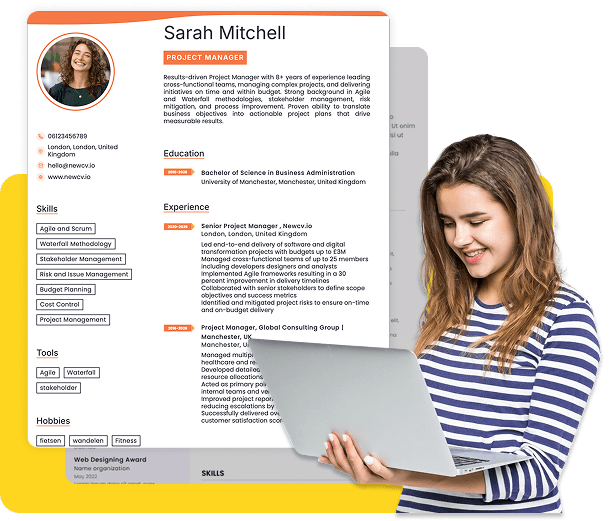
Use ATS-optimised Resume and resume templates that pass applicant tracking systems. Our Resume builder helps recruiters read, scan, and shortlist your Resume faster.

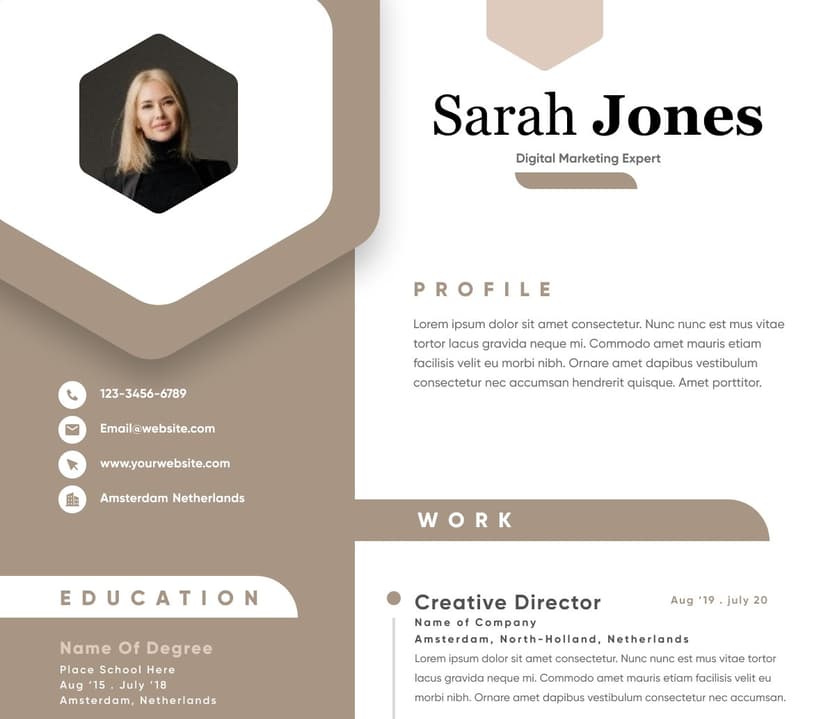
Use professional field-tested resume templates that follow the exact Resume rules employers look for.
Create Resume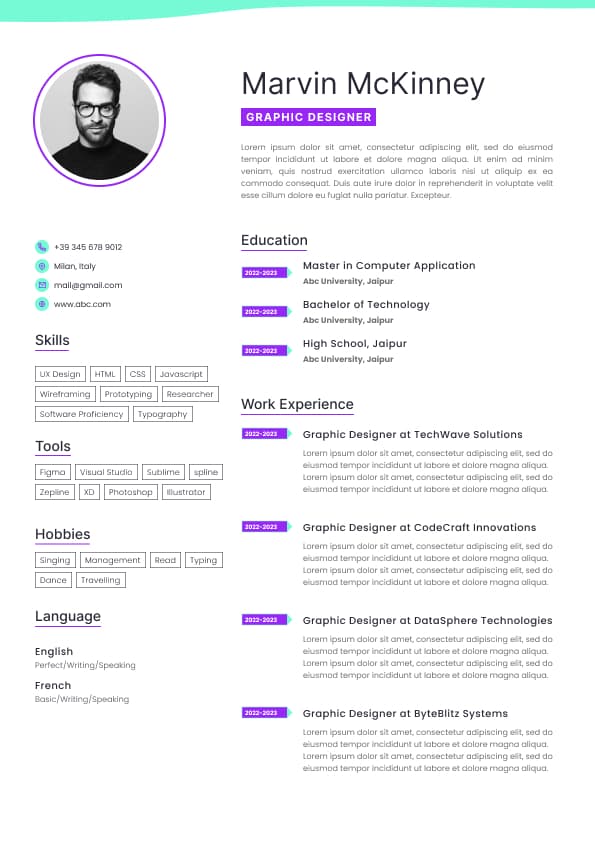
Use professional field-tested resume templates that follow the exact Resume rules employers look for.
Create ResumeThe education section on a UK CV should be tailored to your level of experience, the role you're applying for, and the qualifications employers actually care about. For graduates and early-career candidates, education is often one of the most important sections on the CV. For experienced professionals, it typically plays a supporting role behind work experience and achievements.
Most recruiters spend only a few seconds initially scanning a CV. During that scan, they are looking for evidence that you meet the minimum requirements for the role. Your education section helps answer key questions:
Do you have the required qualifications?
Did you study a relevant subject?
Do you meet any mandatory educational criteria?
Are there academic achievements that strengthen your application?
A strong education section is concise, easy to scan, and strategically positioned. A weak one is cluttered, outdated, or missing information employers expect to see.
The education section is the part of your CV that outlines your academic qualifications, certifications, degrees, and relevant training.
In the UK, this typically includes:
University degrees
A Levels
GCSEs
BTECs
NVQs
Apprenticeships
Professional qualifications
Industry certifications
The correct placement depends on your experience level.
Place education above work experience if:
You recently completed your studies
You have limited professional experience
Your qualification is highly relevant to the role
Recruiters hiring graduate candidates often assess education before employment history.
Place education below work experience if:
You have several years of relevant experience
Your professional achievements are stronger than your academic history
The purpose is not simply to list everything you have ever studied. The purpose is to demonstrate qualifications that support your suitability for the role.
Your qualifications are no longer your primary selling point
Most hiring managers for mid-level and senior positions care more about recent performance than qualifications obtained years ago.
The simplest format is usually the most effective.
Include:
Qualification
Institution
Location (optional)
Dates attended or graduation year
Grade or classification where relevant
Example
Bachelor of Science (BSc) in Computer Science
University of Manchester
2021–2024
First-Class Honours
This format is ATS-friendly, recruiter-friendly, and easy to scan quickly.
If you hold a degree, this should generally be the most prominent qualification in your education section.
Include:
Degree title
Subject
University name
Graduation year
Degree classification
Example
Bachelor of Arts (BA) Marketing
University of Leeds
2020–2023
Upper Second-Class Honours (2:1)
Only include modules when:
You are a student or recent graduate
The modules are directly relevant to the target role
They strengthen your application
Good Example
Relevant Modules:
Digital Marketing Strategy
Consumer Behaviour
Marketing Analytics
Brand Management
Avoid listing large numbers of modules simply to add content.
For early-career candidates, yes.
For experienced professionals, often no.
A Levels remain relevant when:
You are applying for graduate schemes
Employers specify UCAS requirements
You have limited work experience
Example
A Levels
St Peter's Sixth Form College
2020
Business Studies – A
Economics – A
Mathematics – B
Recruiters rarely need a full GCSE breakdown.
Instead, use a concise format.
Good Example
GCSEs, including Mathematics (Grade 7) and English Language (Grade 6)
This communicates key information without taking unnecessary space.
GCSEs are often reviewed for:
Apprenticeships
Graduate schemes
Entry-level positions
Roles requiring minimum English and Maths standards
Many employers simply want confirmation that you meet the baseline requirement.
Apprenticeships are increasingly valued by UK employers and should be presented as formal qualifications.
Example
Level 4 Data Analyst Apprenticeship
QA Ltd
2022–2024
Achieved Distinction
Include significant projects if they strengthen your application.
Professional qualifications should often appear separately if they are highly relevant to the role.
Examples include:
ACCA
CIMA
CIPD
Prince2
APM
CISSP
CompTIA
AWS Certifications
For many professional roles, these qualifications carry more weight than university education.
Example
CIPD Level 5 Associate Diploma in People Management
Completed 2024
Many candidates overestimate how much recruiters care about education.
The reality is that recruiters usually evaluate education through three questions:
This is often the first screening step.
If a role requires a degree, accounting qualification, teaching qualification, or professional licence, recruiters verify this immediately.
A relevant degree can strengthen your application, particularly when experience is limited.
For example:
Engineering degree for engineering roles
Nursing degree for healthcare positions
Accounting qualification for finance jobs
Relevance matters more than prestige.
Strong classifications can help.
Examples include:
First-Class Honours
Distinction
Merit
High academic achievement
However, once candidates have several years of professional experience, performance at work becomes significantly more important.
Recruiters do not need your entire academic history.
Focus on qualifications that support your candidacy.
Experienced professionals often waste valuable CV space with:
Primary school information
Extensive GCSE lists
Old coursework details
Remove anything that no longer adds value.
If a qualification is essential to the role, make it easy to find.
Do not bury critical certifications at the bottom of the CV.
Many graduate recruiters still consider classifications.
If your result is strong, include it.
A recruiter should understand your educational background within seconds.
Keep formatting clean and concise.
Example
Bachelor of Science (BSc) Economics
University of Birmingham
Expected Graduation: 2026
Predicted 2:1
Relevant Modules:
Econometrics
Financial Markets
Corporate Finance
Economic Policy
Example
Bachelor of Arts (BA) Business Management
University of Nottingham
2020–2023
First-Class Honours
Dissertation: Impact of Digital Transformation on SME Growth
Example
Master of Science (MSc) Project Management
University of Reading
2018
Bachelor of Engineering (BEng) Mechanical Engineering
University of Southampton
2014
Example
MBA
Warwick Business School
2016
Bachelor of Science (BSc) Computer Science
University of Bristol
2008
Professional Certifications:
Prince2 Practitioner
AgilePM Practitioner
The answer depends on the role.
In many sectors:
Experience matters most
Professional qualifications come second
Academic qualifications come third
Examples:
ACCA often outweighs degree subject.
CIPD often outweighs academic qualifications.
Prince2 and APM qualifications may be more valuable than degree details.
Certifications and demonstrable skills frequently matter more than university education.
The strongest CVs emphasise whichever credentials employers value most.
Before finalising your education section, ask:
Does this qualification help me get shortlisted?
Is this information relevant to the target role?
Would removing it weaken my application?
Is the most important qualification immediately visible?
Can a recruiter understand my education within 10 seconds?
If the answer is yes to all five questions, your education section is likely doing its job.
A strong education section is:
Relevant
Easy to scan
ATS-friendly
Tailored to your career stage
Focused on qualifications employers care about
The goal is not to impress recruiters with volume. The goal is to make it immediately obvious that you meet the educational requirements for the role and have the credentials to succeed.


 Upload Resume
 Import from Linkedin