
Choose from a wide range of NEWCV resume templates and customize your NEWCV design with a single click.

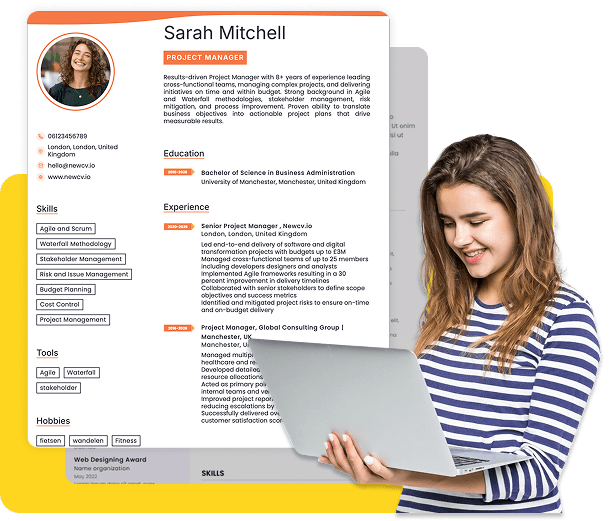
Use ATS-optimised Resume and resume templates that pass applicant tracking systems. Our Resume builder helps recruiters read, scan, and shortlist your Resume faster.

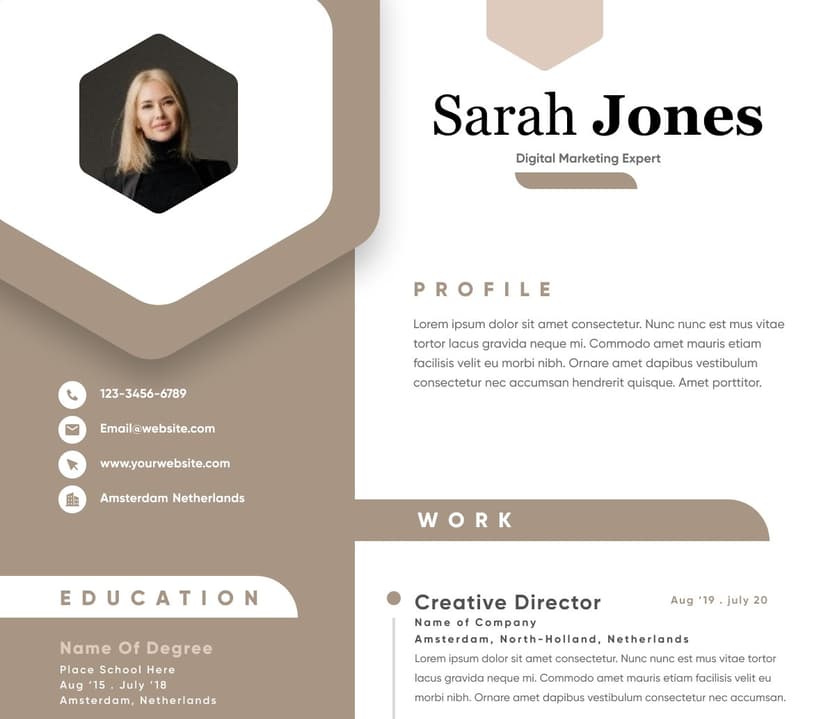
Use professional field-tested resume templates that follow the exact Resume rules employers look for.
Create Resume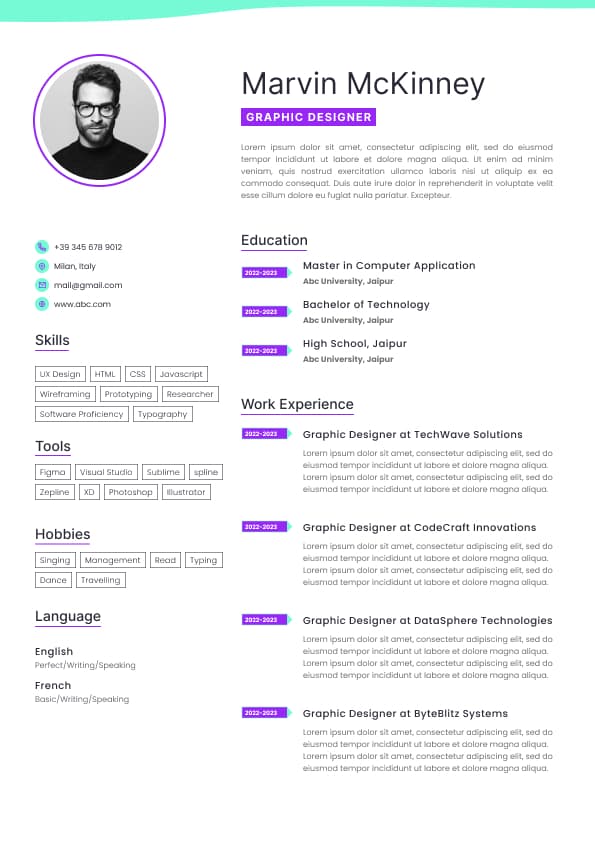
Use professional field-tested resume templates that follow the exact Resume rules employers look for.
Create ResumeA strong cyber security resume in Australia is not just a technical document. It is a positioning tool that proves you can reduce risk, protect systems, respond to threats, and operate in high-trust environments. Australian employers are not simply hiring certifications or tools. They are hiring people who can communicate risk clearly, work with stakeholders, and demonstrate practical security impact.
Most cyber security resumes fail because they are too technical, too generic, or written like a certification transcript. Recruiters and hiring managers in Australia want to see commercial relevance, measurable outcomes, security maturity, and evidence that you understand real business environments.
If your resume does not quickly answer these questions, you will struggle to secure interviews:
What level are you operating at?
What security environments have you worked in?
Can you handle incidents, governance, engineering, or architecture at scale?
Are you aligned with Australian compliance and security expectations?
Can you communicate with non-technical stakeholders?
Cyber security hiring in Australia is highly outcome-driven. Most employers are not looking for “passionate technology enthusiasts”. They are looking for candidates who can reduce operational risk, improve security posture, and protect business continuity.
Hiring managers typically screen for five things first:
Technical capability
Commercial relevance
Communication ability
Security maturity
Trustworthiness and professionalism
A resume that focuses only on tools and certifications usually underperforms against candidates who clearly explain business impact.
For example:
Weak Example
“Responsible for monitoring SIEM alerts and handling incidents.”
Good Example
Have you delivered measurable security improvements?
This guide breaks down exactly how to build a cyber security resume that aligns with modern Australian hiring expectations, ATS systems, recruiter screening behaviour, and real-world cyber recruitment practices.
“Monitored and triaged SIEM alerts across a 2,000-user enterprise environment, reducing incident response times by 35% through improved escalation workflows and threat prioritisation.”
The second example demonstrates:
Scope
Environment scale
Action taken
Measurable outcome
Operational understanding
That is how Australian recruiters assess capability quickly.
Most cyber security resumes rejected in Australia fail for predictable reasons.
Many candidates list every tool they have touched without showing depth.
Long skill sections packed with acronyms do not automatically create credibility. In fact, experienced hiring managers often see this as a red flag.
Instead of listing 40 tools, focus on:
What you used regularly
What problems you solved
What outcomes you delivered
The environments you operated in
Cyber security exists to protect business operations.
Candidates who only discuss technology without linking it to risk, compliance, resilience, or operational impact often appear junior, regardless of experience level.
Australian employers especially value candidates who understand:
Risk management
Governance
Stakeholder communication
Regulatory environments
Security frameworks
Business continuity
Most summaries sound identical.
Examples recruiters constantly see:
“Highly motivated cyber security professional”
“Passionate about information security”
“Results-driven team player”
These statements add no value.
Your summary should immediately establish:
Your specialisation
Years of experience
Industry exposure
Technical focus
Security strengths
Commercial value
Australian cyber security resumes are usually two to four pages depending on seniority.
Senior security architects, GRC specialists, and leadership candidates often require more depth than entry-level analysts.
A strong structure includes:
Include:
Full name
Mobile number
Professional email
LinkedIn profile
Location
Security clearance if relevant
Do not include:
Date of birth
Photo
Marital status
Full address
Your summary should position you strategically within 4–6 lines.
Example structure:
Years of experience
Core cyber specialisation
Industry exposure
Technical strengths
Commercial value
Major achievements or certifications
Good Example
“Cyber Security Analyst with 6+ years’ experience across financial services and enterprise environments in Australia. Skilled in SIEM monitoring, incident response, vulnerability management, and security operations. Experienced working with Microsoft Sentinel, Splunk, and CrowdStrike within regulated environments. Known for improving incident response efficiency, strengthening endpoint security, and supporting ISO 27001 compliance initiatives.”
This immediately gives recruiters useful screening information.
Reverse chronological format performs best in Australia.
Recruiters want to see:
Career progression
Security environment maturity
Technical evolution
Industry exposure
Stability and growth
Functional resumes are usually viewed negatively because they hide timelines and reduce transparency.
Experience is the most important section of your resume.
This is where hiring decisions are heavily influenced.
Each role should clearly show:
Environment
Responsibilities
Security technologies
Scope
Risk exposure
Achievements
Business impact
For each role include:
Job title
Company
Location
Dates
Short environment overview
Key achievements
Technical scope
Recruiters scan for evidence of:
Incident response capability
Threat detection experience
Cloud security exposure
Governance understanding
Security operations maturity
Stakeholder communication
Compliance exposure
Automation or optimisation work
Good bullet points combine action, context, and impact.
Weak Example
“Managed vulnerability scans.”
Good Example
“Conducted enterprise vulnerability assessments across hybrid cloud environments using Tenable and Qualys, reducing critical vulnerabilities by 42% within six months.”
Weak Example
“Worked on security incidents.”
Good Example
“Investigated and responded to Level 2 security incidents involving phishing, endpoint compromise, and credential misuse across a national healthcare environment.”
The second versions create credibility because they sound operationally real.
Many Australian employers use ATS platforms including:
Workday
PageUp
Greenhouse
Lever
SAP SuccessFactors
Your resume must be ATS-readable while still appealing to human reviewers.
Use standard headings
Avoid graphics and tables
Use clean formatting
Match keywords naturally
Use role-specific terminology
Include certifications correctly
Keywords should reflect the actual role.
For example, SOC Analyst roles may require:
SIEM
Sentinel
Splunk
Incident response
Threat hunting
EDR
Vulnerability management
MITRE ATT&CK
SOC operations
Cloud security roles may require:
AWS security
Azure security
IAM
Zero Trust
Terraform
Kubernetes security
CSPM
DevSecOps
Do not keyword-stuff.
Recruiters can tell immediately when candidates are artificially optimising resumes.
Certifications matter in cyber security, but context matters more.
A certification alone will not compensate for weak practical experience.
That said, these certifications are highly recognised in Australia:
CISSP
CompTIA Security+
CEH
OSCP
GIAC certifications
Microsoft Security certifications
AWS Security Specialty
CCSP
CISM
CRISC
ISO 27001 Lead Implementer
ISO 27001 Lead Auditor
For defence, government, and critical infrastructure roles, employers may also prioritise:
NV1 or NV2 clearance eligibility
ASD Essential Eight knowledge
IRAP exposure
PSPF familiarity
These are highly valuable in the Australian market.
Not all cyber resumes should look the same.
This is one of the biggest mistakes candidates make.
Prioritise:
Incident response
SIEM tools
Threat detection
Alert triage
Escalation workflows
Endpoint security
Prioritise:
Infrastructure security
Cloud security
Automation
IAM
Network security
Security tooling implementation
Prioritise:
Risk management
Compliance frameworks
ISO 27001
Policy development
Audit coordination
Stakeholder engagement
Prioritise:
Offensive tooling
Methodologies
Reporting capability
Web application testing
Infrastructure testing
Exploit validation
Recruiters reject many resumes because candidates fail to align content with the actual role.
Australian cyber security hiring culture differs from some overseas markets.
Local employers often value:
Clear communication
Collaboration
Practicality
Reliability
Stakeholder engagement
Team fit
Highly technical candidates sometimes fail interviews because they cannot communicate risk clearly to non-technical stakeholders.
Your resume should therefore show both technical and commercial capability.
For example:
Worked with executives
Supported audit responses
Delivered awareness training
Presented findings to leadership
Coordinated with vendors
These details matter more than many candidates realise.
Senior candidates are assessed differently.
At senior level, employers look for:
Strategic thinking
Risk ownership
Leadership
Security transformation capability
Governance maturity
Cross-functional influence
A senior cyber resume should focus less on hands-on tasks and more on:
Security outcomes
Program delivery
Risk reduction
Framework implementation
Security strategy
Team leadership
Many senior candidates still write resumes like engineers.
This weakens executive positioning.
Instead of:
“Configured SIEM correlation rules.”
Use:
“Led enterprise SIEM optimisation initiatives that improved threat visibility across multi-cloud infrastructure and reduced false positives by 30%.”
The second version sounds strategic and commercially relevant.
Metrics create credibility.
Without measurable outcomes, many resumes sound theoretical.
Strong cyber metrics include:
Reduced incident response times
Reduced vulnerabilities
Improved compliance outcomes
Improved detection rates
Reduced phishing success rates
Increased security maturity
Reduced downtime
Reduced false positives
Even approximate metrics are better than none when realistic.
Do not create giant generic skills sections.
Instead, group skills strategically.
SIEM monitoring
Threat detection
Incident response
Threat hunting
EDR
AWS security
Azure security
IAM
CSPM
Cloud governance
ISO 27001
NIST
Essential Eight
Risk assessments
Audit support
Splunk
Microsoft Sentinel
CrowdStrike
Tenable
Qualys
Defender
This structure is easier for both ATS systems and recruiters.
The strongest cyber security resumes usually demonstrate five things clearly:
Recruiters trust resumes that sound commercially realistic.
Security aligned with business outcomes stands out immediately.
Generalist resumes often struggle in competitive cyber hiring.
Candidates who explain complex work clearly appear more senior.
Impact-driven resumes outperform responsibility-driven resumes every time.
Here is what a strong cyber security resume typically communicates within the first page:
Clear cyber specialisation
Security environment scale
Technical strengths
Business impact
Relevant certifications
Industry exposure
Commercial relevance
Career progression
If recruiters cannot identify these quickly, interview conversion rates usually drop significantly.
The Australian cyber security market is competitive, but many resumes are still poorly positioned.
Most candidates focus too heavily on tools and not enough on operational value.
The best resumes explain:
What environment you worked in
What risks you handled
What security outcomes you delivered
How your work improved business resilience
Think beyond tasks.
Think about security impact.
That is how experienced Australian recruiters and hiring managers evaluate cyber security talent today.


 Upload Resume
 Import from Linkedin