
Choose from a wide range of NEWCV resume templates and customize your NEWCV design with a single click.

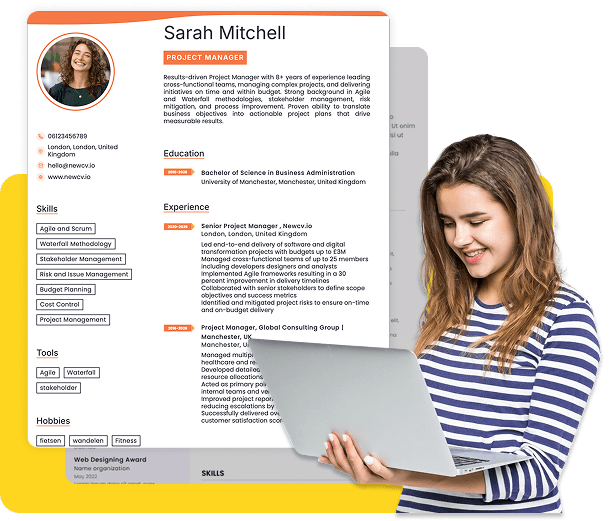
Use ATS-optimised Resume and resume templates that pass applicant tracking systems. Our Resume builder helps recruiters read, scan, and shortlist your Resume faster.

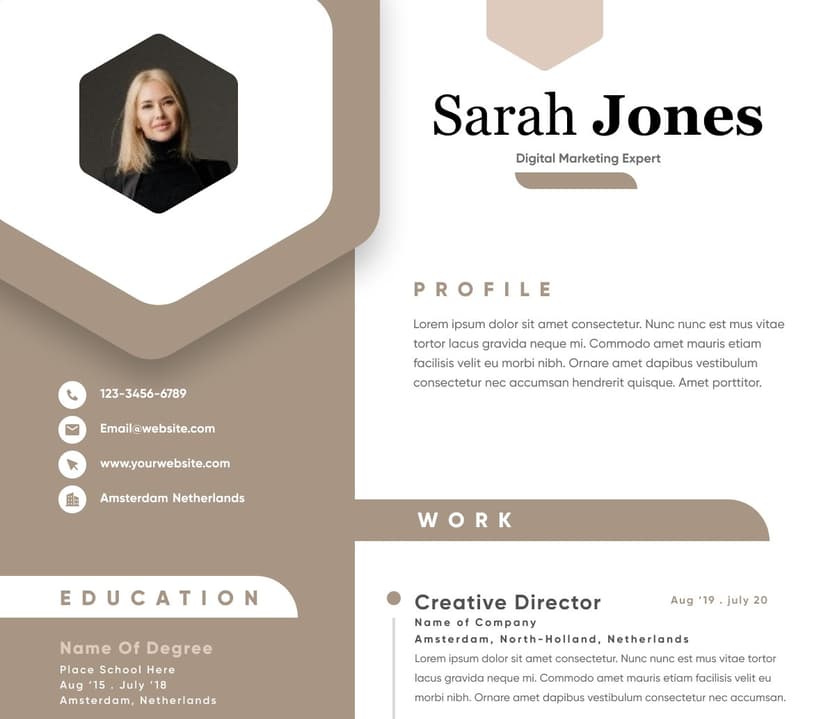
Use professional field-tested resume templates that follow the exact Resume rules employers look for.
Create Resume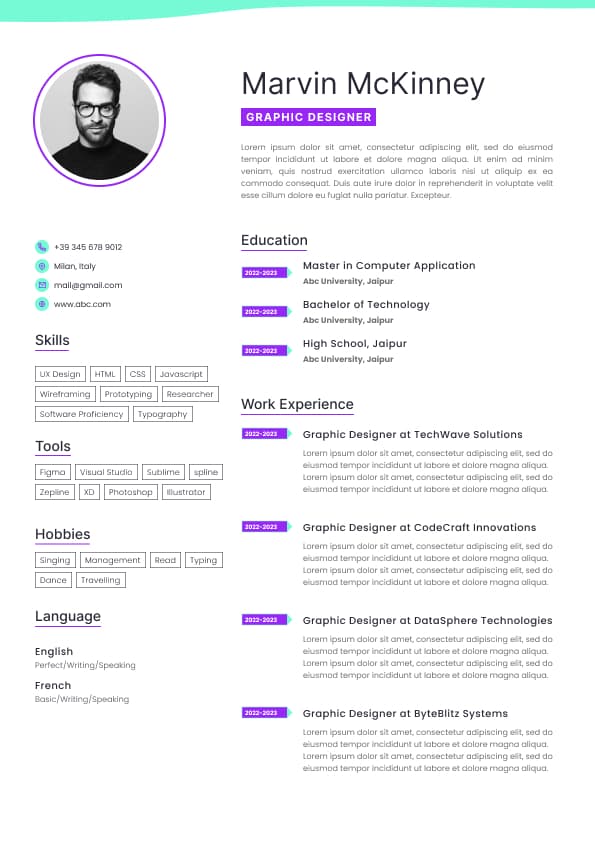
Use professional field-tested resume templates that follow the exact Resume rules employers look for.
Create ResumeMost job seekers in Australia are not rejected because they are unqualified. They are rejected because their application does not quickly show relevance, clarity, and alignment with the role. Australian recruiters often review resumes in under 30 seconds during the first screening stage. If your application looks generic, overly complex, keyword-stuffed, or disconnected from the job ad, it will usually be filtered out before a hiring manager even sees it.
Strong job applications in Australia are tailored, commercially relevant, and easy to assess. Employers want evidence that you can solve problems in their environment, work well with local teams, communicate clearly, and contribute quickly. That means your resume, cover letter, and application responses need to directly match the role requirements while still sounding natural and credible.
This guide breaks down what actually works in the Australian hiring market today, including recruiter screening behaviour, ATS realities, application mistakes that cost interviews, and how to position yourself competitively.
One of the biggest misconceptions candidates have is believing recruiters carefully read every application in detail. In reality, most applications are filtered rapidly.
Australian recruiters are usually assessing five things first:
Does this candidate meet the core requirements?
Is the experience relevant to the exact role?
Is the resume easy to scan quickly?
Does the candidate appear commercially credible?
Would this person likely progress through interviews successfully?
If the answer to those questions is unclear within the first page, your chances drop significantly.
Most recruiters are not searching for perfection. They are looking for low-risk, relevant candidates who appear aligned with the role and easy to shortlist.
That changes how you should approach every application.
Generic resumes are one of the biggest reasons strong candidates miss interviews.
Australian employers expect role alignment. If your resume looks mass-applied, recruiters assume low motivation or poor fit.
Tailoring does not mean rewriting your entire resume every time. It means adjusting strategic areas:
Resume headline
Professional summary
Core skills section
Keywords and terminology
Achievement emphasis
Industry language
Project relevance
For example, if a role prioritises stakeholder engagement, project delivery, and cross-functional collaboration, those concepts should appear naturally throughout your application if they genuinely reflect your experience.
Recruiters often look for alignment signals within seconds.
These include:
Similar job titles
Relevant industry exposure
Matching systems or tools
Australian market experience
Local communication style
Measurable outcomes
Career stability
Seniority alignment
If your resume forces recruiters to “figure out” your relevance, most will move on to easier applications.
Australian hiring teams generally prefer resumes that are practical, concise, and commercially focused.
Overdesigned resumes usually perform worse than clean, readable layouts.
A strong Australian resume typically includes:
Clear professional headline
Short, targeted professional summary
Core skills section
Reverse chronological work history
Achievement-focused bullet points
Relevant education and certifications
Clean formatting with strong readability
Most professional resumes in Australia are:
2 to 4 pages depending on experience
ATS-friendly
Written in straightforward language
Focused on outcomes and impact
Recruiters regularly reject resumes that contain:
Dense walls of text
Generic responsibilities with no outcomes
Buzzword-heavy language
Poor formatting
Unclear career direction
Irrelevant information
Overly long personal profiles
Fake-sounding corporate jargon
“Results-driven professional with strong communication skills and a passion for excellence.”
This says almost nothing.
“Project Coordinator with 5+ years’ experience delivering infrastructure and construction projects across NSW, including stakeholder management, contractor coordination, and budget tracking for projects up to $8M.”
The second version gives recruiters immediate context and positioning.
One of the most important shifts candidates need to make is moving from task-based applications to evidence-based applications.
Recruiters care less about what your job description was and more about what you achieved.
Action
Context
Outcome
Commercial value
“Responsible for customer service and administration.”
“Managed high-volume customer enquiries while reducing average response times by 28% through improved workflow coordination and CRM tracking.”
The second example demonstrates impact.
That is what hiring managers remember.
Many candidates either ignore ATS systems completely or obsess over them incorrectly.
Australian ATS systems do scan for relevance, but modern recruitment is still heavily driven by human review.
Keyword stuffing rarely works long term.
Instead, focus on natural alignment with the job ad.
Matching relevant terminology
Using clear job titles
Including core systems and tools
Reflecting required technical skills
Using standard section headings
Avoiding graphics that break ATS parsing
Many resumes fail because candidates:
Copy entire job ads into resumes
Add irrelevant keywords
Hide keywords in white text
Use unreadable templates
Prioritise ATS over human readability
If a recruiter dislikes reading your resume, ATS optimisation will not save it.
Not every recruiter reads cover letters closely, but many hiring managers still do, particularly for:
Government roles
Education
Healthcare
Professional services
Mid-senior corporate positions
Competitive graduate roles
The biggest mistake candidates make is writing generic cover letters that repeat the resume.
A strong Australian cover letter should explain:
Why you are interested in the role
Why your background matches
What value you bring
Why you fit the organisation
It should sound direct, professional, and human.
Not overly formal.
Not robotic.
For government and public sector roles in Australia, selection criteria responses are often the real assessment tool.
Many candidates underestimate this.
Government recruiters are typically assessing:
Communication clarity
Evidence quality
Behavioural examples
Competency alignment
Structured thinking
Situation
Actions taken
Specific outcomes
Reflection or impact
Vague responses fail quickly.
Detailed evidence wins interviews.
Most candidates focus heavily on strengths while ignoring potential concerns recruiters may have.
Experienced recruiters assess risk constantly.
Frequent short-term roles without explanation
Unclear career direction
Large unexplained employment gaps
Overinflated titles
Lack of progression
Generic applications
Poor communication quality
Unrealistic claims
This does not mean these issues automatically disqualify you.
But if you do not manage the narrative properly, recruiters may assume the worst.
Instead of ignoring a career gap, briefly clarify it professionally:
“Career break during relocation and family responsibilities. Completed industry certifications and freelance consulting during this period.”
Simple context reduces uncertainty.
International candidates often struggle because they underestimate how strongly employers value local workplace familiarity.
This is not always about discrimination.
Often, employers are assessing:
Communication style
Workplace expectations
Client interaction confidence
Regulatory understanding
Team integration
Cultural familiarity
Highlight Australian projects or clients
Mention local certifications
Include Australian systems or standards
Demonstrate local communication style
Show understanding of Australian workplace expectations
Focus on transferable commercial outcomes
Many international candidates undersell highly relevant experience simply because they present it in ways unfamiliar to Australian recruiters.
In Australia, many recruiters review applications progressively rather than waiting for the closing date.
This means strong candidates who apply early often receive more attention.
Especially in competitive industries, recruiters may shortlist candidates before ads officially close.
Aim to apply within:
First 24 to 72 hours where possible
First week at maximum for competitive roles
Late applications are often disadvantaged even when the candidate is strong.
Recruiters regularly cross-check applications against LinkedIn profiles.
Inconsistencies create doubt.
An incomplete LinkedIn profile can also weaken credibility for professional and corporate roles.
That includes:
Dates
Job titles
Career progression
Skills
Professional branding
Clear headline
Professional summary
Quantified achievements
Relevant keywords
Recommendations
Industry engagement
Recruiters often use LinkedIn to assess professionalism and communication style before interviews.
One of the most overlooked realities in Australian hiring is how many roles are influenced by referrals, networks, and internal recommendations.
This does not mean jobs are “rigged”.
It means trust reduces hiring risk.
Candidates who build industry relationships often access opportunities before they become highly competitive.
Industry events
LinkedIn engagement
Recruiter conversations
Professional associations
Alumni networks
Referral-based introductions
The key is relationship building, not asking strangers for jobs immediately.
Australian hiring culture generally responds best to candidates who are:
Confident but not arrogant
Commercial but not overly corporate
Professional but approachable
Direct without overselling
Overly exaggerated applications often create distrust.
Underconfident applications disappear.
Strong candidates present evidence calmly and clearly.
That is usually what gets interviews.
Hiring managers often care about different things than recruiters.
Recruiters focus on filtering and shortlist relevance.
Hiring managers focus on operational fit.
They usually want evidence that you can:
Solve problems
Work independently
Communicate effectively
Adapt quickly
Handle stakeholders
Add measurable value
This is why outcome-based resumes perform better.
Managers want proof.
Not generic competencies.
Many candidates miss critical requirements hidden inside the ad.
Especially:
Mandatory systems
Certifications
Visa requirements
Industry experience
Communication expectations
Mass applications usually reduce interview quality dramatically.
Tailored applications consistently outperform volume strategies.
Longer does not mean stronger.
Recruiters prefer relevance over word count.
Tasks explain what your role was.
Achievements explain why you performed well.
If your resume is difficult to scan quickly, recruiters may not engage with it properly.
Clean presentation matters.
Identify:
Core responsibilities
Must-have skills
Keywords
Commercial priorities
Stakeholder expectations
Do not include everything equally.
Prioritise relevance strategically.
Your summary should position you specifically for that job.
Not for every job.
Use measurable outcomes wherever possible.
Ask:
Is relevance obvious quickly?
Is the layout easy to scan?
Are achievements visible?
Does this sound credible?
Would a recruiter shortlist this confidently?
The Australian job market is competitive, but most candidates are still making highly predictable application mistakes. Strong job applications are not about sounding impressive. They are about reducing hiring risk and demonstrating relevance quickly.
Candidates who consistently secure interviews usually do three things well:
They tailor applications strategically
They communicate value clearly
They provide credible evidence of impact
That combination is what recruiters and hiring managers respond to most strongly in Australia.


 Upload Resume
 Import from Linkedin