STILL APPLYING. STILL HEARING NOTHING?BUILD YOUR RESUME

STILL APPLYING. STILL HEARING NOTHING?BUILD YOUR RESUME
Choose from a wide range of NEWCV resume templates and customize your NEWCV design with a single click.
FAQ

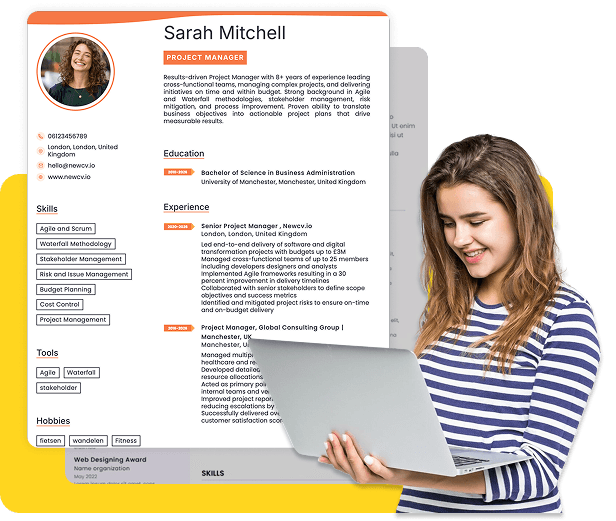
An ASP.NET developer resume for startups needs to do far more than list technical skills. Startup founders and engineering leaders hire developers who can build quickly, solve ambiguous problems, ship MVPs, support production systems, and contribute across the full stack without constant supervision.
Most startup resumes fail because they look too corporate. They focus on responsibilities instead of outcomes, list technologies without proving execution speed, and ignore the product-focused mindset startups actually care about.
A strong startup .NET developer resume demonstrates:
Full stack ownership
Fast shipping velocity
Product thinking
Startup adaptability
Cloud deployment experience
API-first engineering
Rapid debugging and iteration
SaaS platform development
Cross-functional collaboration
If your resume does not immediately signal “this person can build and ship in a chaotic startup environment,” you will lose interviews to candidates with less experience but stronger startup positioning.
Startup hiring is fundamentally different from enterprise hiring.
Large companies optimize for specialization, process adherence, and predictable execution. Startups optimize for speed, adaptability, product delivery, and engineering leverage.
That changes how your resume gets evaluated.
In startup hiring, recruiters and founders scan for evidence that you can:
Operate with incomplete requirements
Build features without heavy management
Ship production-ready code quickly
Handle frontend and backend responsibilities
Work directly with product stakeholders
Deploy and maintain cloud infrastructure
Debug problems independently
Prioritize customer impact over technical perfection
A startup engineering leader is not asking:
“Can this person write ASP.NET code?”
They are asking:
“Can this person help us move faster without creating operational chaos?”
That is the lens your resume must align with.
Most ASP.NET resumes are written for enterprise environments. That creates immediate friction in startup hiring.
Here are the biggest resume mistakes startup recruiters consistently reject.
Weak resumes rely on vague corporate phrasing like:
Responsible for development
Worked on applications
Participated in Agile ceremonies
Assisted with backend services
These statements communicate low ownership.
Startups want builders, not task executors.
Many developers describe technical activity but never explain business outcomes.
Founders care about:
Faster releases
Improved retention
Reduced infrastructure costs
Faster onboarding
Increased customer usage
Reduced downtime
Technical execution without business relevance feels incomplete in startup hiring.
Even backend-heavy startup teams expect developers to collaborate across the stack.
If your resume looks narrowly specialized, hiring managers may assume:
You require too much structure
You depend heavily on other teams
You struggle in lean engineering environments
Startups hire for execution velocity.
If your resume lacks indicators like:
MVP launches
Rapid feature delivery
Fast iteration cycles
Production deployments
Startup scaling work
You may appear too process-oriented for startup environments.
Your resume should immediately communicate:
Technical depth
Product ownership
Startup execution ability
Delivery speed
Business impact
Here is the structure that consistently performs best in startup hiring.
Your summary should position you as a product-oriented engineer who ships quickly and operates independently.
Avoid generic summaries like:
Weak Example
“Experienced ASP.NET developer with strong programming skills and knowledge of software development methodologies.”
This says nothing meaningful.
Instead:
Good Example
“Full stack ASP.NET developer with 5+ years of experience building SaaS products, scalable APIs, and cloud-native applications in fast-paced startup environments. Proven track record delivering MVPs, optimizing Azure deployments, and shipping customer-facing features under aggressive timelines.”
This works because it immediately signals:
Startup environment familiarity
Product contribution
Full stack capability
Cloud experience
Shipping velocity
Startup recruiters often use ATS filters differently than enterprise recruiters.
They care less about rigid keyword matching and more about startup-aligned signals.
Still, strong semantic keyword coverage matters.
Include relevant startup-focused terms naturally throughout your resume.
ASP.NET Core
SaaS platform
Full stack development
Azure deployment
RESTful APIs
Microservices
Cloud-native architecture
CI/CD pipelines
Agile delivery
MVP development
Rapid prototyping
Product engineering
Startup environment
API-first development
Docker
Kubernetes
React
Angular
SQL Server
Entity Framework
Fast deployment cycles
Production debugging
Scalable backend systems
Feature ownership
Do not keyword stuff.
Recruiters can instantly recognize resumes that were artificially optimized for ATS systems.
Many developers understate startup experience because they describe it like enterprise work.
That is a major mistake.
Startup resumes should emphasize:
Ownership
Speed
Ambiguity handling
Cross-functional contribution
Product impact
“Developed APIs using ASP.NET Core and participated in sprint planning.”
This sounds junior and task-oriented.
“Owned end-to-end development of customer onboarding APIs for a SaaS platform, reducing onboarding completion time by 38% and enabling weekly production releases through automated Azure CI/CD pipelines.”
This version demonstrates:
Ownership
Product relevance
Metrics
Startup velocity
Technical execution
Your bullet points should show:
Fast execution
Technical breadth
Product contribution
Business outcomes
Every bullet should answer:
“What changed because of your work?”
Built and deployed MVP features in ASP.NET Core that supported acquisition of first 5,000 SaaS users within six months
Designed REST APIs that reduced frontend data load times by 42% across customer dashboards
Led rapid prototyping initiatives for new subscription workflows, decreasing feature validation cycles from 4 weeks to 7 days
Improved Azure deployment reliability through automated CI/CD pipelines, reducing rollback incidents by 60%
Developed full stack internal admin tools using ASP.NET Core, React, and SQL Server, eliminating manual support workflows
Diagnosed and resolved production issues in high-growth SaaS environments with sub-1-hour incident response times
Built scalable authentication systems supporting multi-tenant SaaS architecture and enterprise customer onboarding
Collaborated directly with founders and product teams to prioritize feature delivery under aggressive release schedules
These bullets work because they combine:
Technology
Ownership
Outcomes
Startup speed
Real business value
Even if your primary focus is backend development, startup resumes should reflect collaboration across the stack whenever truthful.
Founders strongly prefer developers who reduce team dependency bottlenecks.
You do not need to claim expert frontend skills.
But you should show capability.
React integration
Angular dashboards
API consumption
UI performance optimization
Authentication flows
End-to-end feature delivery
Frontend debugging
Cross-stack deployment support
In early-stage startups:
Backend engineers often support frontend issues
Full stack collaboration accelerates releases
Engineering teams are small
Role boundaries are fluid
A backend-only resume can unintentionally signal rigidity.
Most startup recruiters spend less time validating theoretical depth and more time validating practical execution.
That means your skills section should prioritize:
Production technologies
Startup infrastructure tools
Deployment systems
Real-world frameworks
Backend: ASP.NET Core, C#, Entity Framework, REST APIs, Microservices
Frontend: React, Angular, JavaScript, TypeScript, HTML/CSS
Cloud & DevOps: Azure, Docker, Kubernetes, CI/CD, GitHub Actions
Databases: SQL Server, PostgreSQL, Redis
Development Practices: Agile Delivery, Rapid Prototyping, TDD, API-First Design
This positioning signals production readiness.
Startup founders think in outcomes.
Your resume becomes dramatically stronger when you quantify:
Speed
Scale
Revenue impact
User growth
Deployment improvements
Performance gains
Reduced deployment time by 70%
Supported growth from 1,000 to 120,000 users
Improved API response speed by 45%
Reduced cloud costs by $30K annually
Increased release frequency from monthly to weekly
Reduced onboarding friction by 35%
Improved application uptime to 99.95%
Metrics create credibility instantly.
Startup recruiters typically spend less than 15 seconds on initial resume scans.
That means readability matters heavily.
Keep resume length to 1–2 pages
Use concise bullet points
Prioritize measurable outcomes
Keep technical stacks easy to scan
Avoid dense paragraphs
Put strongest achievements near the top
Use modern formatting with clean spacing
Remove outdated technologies unless directly relevant
Huge blocks of text
Generic objective statements
Overly academic language
Excessive buzzwords
Weak verbs like “helped” or “assisted”
Listing every technology ever used
Experienced startup recruiters scan for hidden hiring signals.
These signals often matter more than formal qualifications.
Built products from scratch
Worked at early-stage SaaS companies
Shipped MVPs
Managed production deployments
Handled customer-impacting incidents
Worked in lean engineering teams
Collaborated directly with founders
Improved engineering velocity
Owned features end-to-end
Extremely narrow specialization
No production deployment experience
No cloud exposure
Pure maintenance work
Heavy process-oriented language
No measurable outcomes
Resume reads like internal corporate documentation
This distinction is one of the biggest competitive advantages in startup hiring.
Enterprise resumes emphasize:
Stability
Governance
Long-term maintenance
Cross-team coordination
Process compliance
Structured environments
Startup resumes emphasize:
Speed
Ownership
Product execution
Rapid iteration
Full stack adaptability
Customer impact
Independent problem-solving
Many qualified developers fail startup interviews because their resume projects enterprise culture instead of startup capability.
These are the subtle positioning strategies strong candidates use.
Startups prefer engineers who understand customer and product impact.
Strong resumes mention:
User adoption
Conversion improvements
Customer onboarding
SaaS retention
Product experimentation
Founders want engineers who can operate without perfect requirements.
Good indicators include:
Built systems from scratch
Designed initial architecture
Led rapid iteration cycles
Worked in early-stage environments
Many resumes stop at coding.
Startups want developers who can:
Deploy
Monitor
Debug
Optimize
Support production systems
Operational ownership is a major hiring advantage.
Good Example
“Startup-focused ASP.NET developer with experience building scalable SaaS platforms, cloud-native APIs, and full stack web applications in fast-paced engineering environments. Skilled in ASP.NET Core, Azure, React, CI/CD automation, and rapid MVP delivery. Proven ability to ship customer-facing features quickly, improve deployment reliability, and collaborate directly with product and leadership teams.”
Why this works:
Startup-focused positioning
Modern technology alignment
Product emphasis
Deployment ownership
Speed-oriented language
After reviewing thousands of engineering resumes, the strongest startup candidates consistently share the same traits.
Their resumes:
Sound execution-focused
Show measurable outcomes
Demonstrate product ownership
Reflect fast-moving environments
Include real deployment experience
Communicate business awareness
Avoid corporate filler language
The best startup ASP.NET resumes make recruiters believe:
“This developer will immediately increase engineering velocity.”
That is the outcome your resume must create.
Use ATS-optimised Resume and resume templates that pass applicant tracking systems. Our Resume builder helps recruiters read, scan, and shortlist your Resume faster.

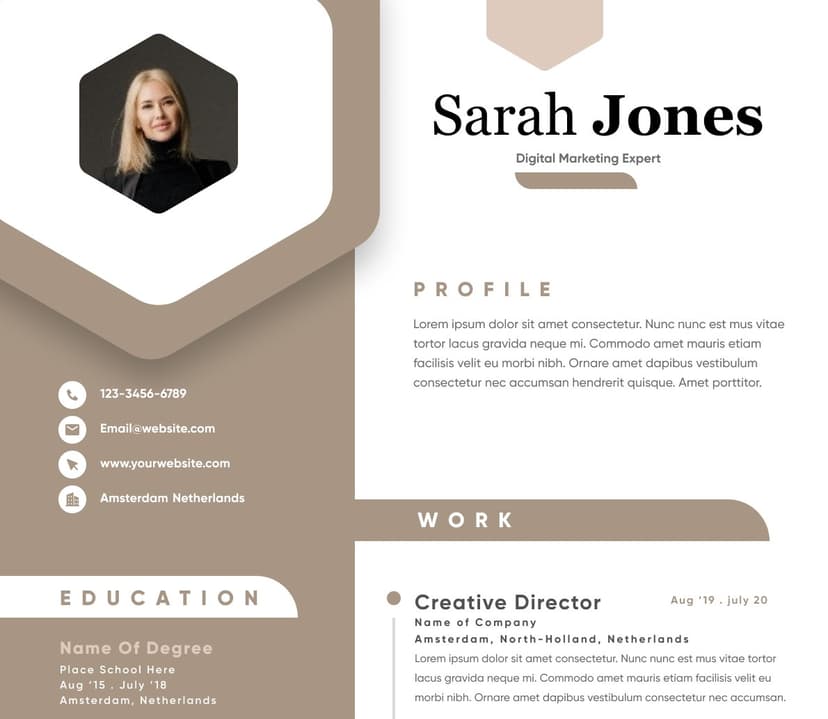
Use professional field-tested resume templates that follow the exact Resume rules employers look for.
Create Resume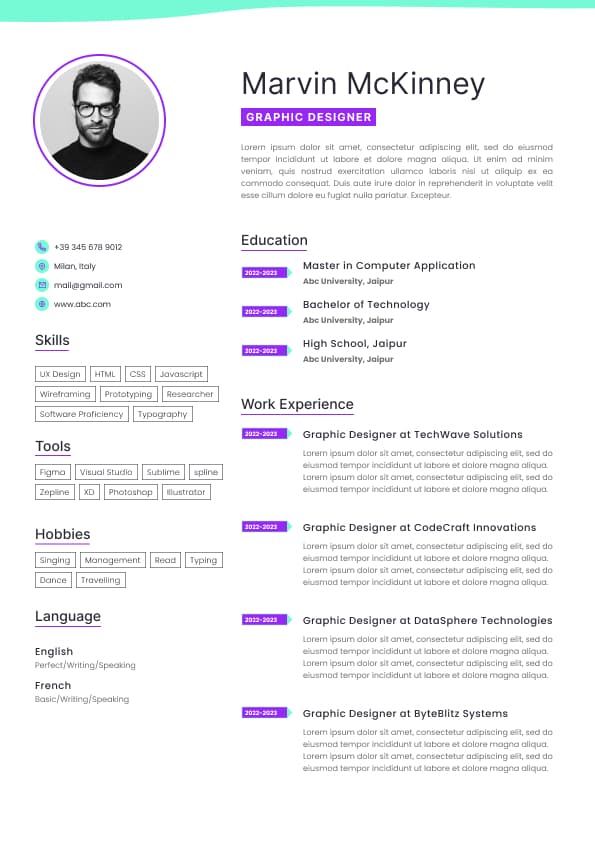
Use professional field-tested resume templates that follow the exact Resume rules employers look for.
Create Resume


 Upload Resume
 Import from Linkedin