STILL APPLYING. STILL HEARING NOTHING?BUILD YOUR RESUME

STILL APPLYING. STILL HEARING NOTHING?BUILD YOUR RESUME
Choose from a wide range of NEWCV resume templates and customize your NEWCV design with a single click.
FAQ

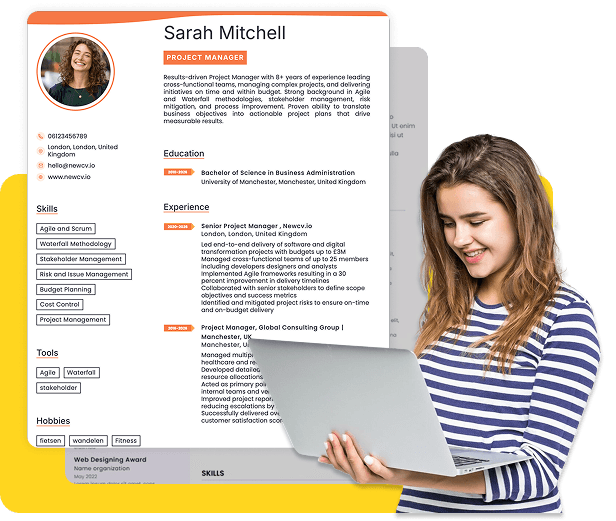
A .NET developer resume should usually be 1 to 2 pages, depending on your experience level, technical depth, and the complexity of your projects. Entry-level candidates, bootcamp graduates, and junior developers should generally keep their resume to one page. Mid-level and senior .NET developers can use two pages when they have relevant enterprise experience, Azure cloud projects, architecture work, leadership responsibilities, or measurable technical achievements worth showing.
What matters most is not the page count itself. Recruiters care about whether your resume is easy to scan, technically relevant, ATS-friendly, and clearly aligned with the role. A weak one-page resume will lose to a strong two-page resume every time. But a bloated two-page resume filled with generic responsibilities, outdated technologies, and unnecessary detail will usually get rejected within seconds.
The best .NET developer resumes are structured to help recruiters quickly validate three things:
Your Microsoft-stack technical capability
Your business impact and project complexity
Your fit for the level of the role
The ideal resume length depends on your career stage and the technical complexity of your work.
A one-page resume is usually best if you are:
A recent computer science graduate
A bootcamp graduate
Applying for internships
Transitioning into software development
A junior developer with under 3 years of experience
Lacking substantial enterprise project experience
At the entry level, recruiters are not expecting deep architecture experience. They want to quickly confirm:
You understand C#, ASP.NET, SQL Server, APIs, and modern development fundamentals
You can contribute to a development team
You have practical project experience
Your resume shows technical potential and clarity
A concise one-page resume often performs better because it forces prioritization.
A two-page resume becomes appropriate when you have meaningful technical depth that directly supports the role.
This commonly includes:
Enterprise .NET application development
Azure cloud engineering
Microservices architecture
API integrations
CI/CD implementation
Team leadership
Performance optimization work
Modernization or migration projects
DevOps collaboration
For experienced developers, cutting important technical depth just to force a one-page resume can actually hurt interview conversion rates.
Hiring managers for senior engineering roles want evidence of:
System complexity
Technical decision-making
Scalability experience
Cross-functional collaboration
Leadership capability
Business impact
If those details require a second page, that is completely acceptable.
Most developers ask the wrong question.
The real question is not:
“Should my .NET resume be one or two pages?”
The real question is:
“Can a recruiter immediately understand my value within 15 to 30 seconds?”
That is what determines whether your resume moves forward.
A two-page resume is not a problem when:
The information is highly relevant
The structure is clean
The technical stack aligns with the role
Achievements are measurable
The content is easy to scan
A one-page resume becomes a problem when:
Important technical depth is missing
Enterprise complexity is hidden
Leadership impact is omitted
Azure or cloud expertise is minimized
Projects are underexplained
Recruiters reject resumes because they are unclear, generic, bloated, or poorly organized, not because they are exactly two pages.
The best .NET developer resumes follow a clean, recruiter-friendly structure that mirrors how technical resumes are actually reviewed.
Here is the most effective layout for most candidates.
Your header should be simple and professional.
Include:
Full name
Phone number
Professional email address
LinkedIn profile
GitHub profile
Portfolio website if relevant
Location (city and state only)
Do not include:
Full mailing address
Photos
Icons
Personal details unrelated to hiring
Multiple phone numbers
Unprofessional email addresses
GitHub links matter far more for junior developers than senior developers. For entry-level candidates with limited work history, strong project repositories can significantly improve credibility.
Your summary should immediately position you for the target role.
A strong .NET developer summary includes:
Years of experience
Primary Microsoft-stack technologies
Industry or project specialization
Business impact
Cloud or architecture expertise when relevant
“Motivated .NET developer seeking opportunities to grow skills and contribute to company success.”
This says almost nothing.
“.NET Developer with 6+ years of experience building enterprise web applications using C#, ASP.NET Core, Azure, SQL Server, and REST APIs. Experienced in cloud modernization, microservices architecture, and performance optimization for high-volume business systems.”
The second example immediately communicates seniority, specialization, and technical alignment.
For .NET developers, the technical skills section should appear near the top of the resume.
Recruiters and hiring managers often scan this section before reading experience.
C#
ASP.NET Core
.NET Framework
.NET 8
MVC
Blazor
Entity Framework
Microsoft Azure
Azure DevOps
Docker
Kubernetes
CI/CD pipelines
Terraform
SQL Server
PostgreSQL
MySQL
Cosmos DB
REST APIs
Microservices
gRPC
Event-driven architecture
Angular
React
JavaScript
TypeScript
HTML/CSS
Many technical recruiters perform fast keyword alignment checks before deeper review. If the job description emphasizes Azure, APIs, or ASP.NET Core and those technologies are buried deep in the resume, your interview odds can drop significantly.
This is the most important section on your resume.
Most .NET developers fail here because they write task-based bullets instead of achievement-based bullets.
Recruiters and hiring managers evaluate:
Technical complexity
Business impact
Scalability
Ownership
Architecture exposure
Collaboration
Modern tooling experience
A high-performing bullet usually includes:
What you built
Technologies used
Scope or complexity
Measurable result
“Worked on ASP.NET applications and fixed bugs.”
This sounds junior, vague, and low-impact.
“Developed and optimized ASP.NET Core APIs supporting 250K+ daily transactions, reducing response times by 38% through query optimization and asynchronous processing.”
The second bullet demonstrates:
Scale
Technical competence
Business impact
Performance engineering
Ownership
That is what gets interviews.
A common mistake is writing massive blocks of technical text.
Ideal structure:
Recent roles: 4 to 6 strong bullets
Older roles: 2 to 4 bullets
Early-career roles: concise and focused
Prioritize:
Recent .NET experience
Azure work
Enterprise applications
Modern architecture
APIs and cloud systems
Reduce emphasis on:
Obsolete technologies
Low-impact maintenance work
Generic support tasks
Projects are especially important for:
Junior developers
Self-taught developers
Career changers
Bootcamp graduates
Candidates with limited professional experience
Projects should prove practical capability, not just course completion.
Good projects demonstrate:
Real technical depth
APIs
Authentication
Cloud deployment
Database integration
Scalability thinking
CI/CD workflows
A fully deployed ASP.NET Core project with Azure hosting and GitHub documentation often outperforms multiple shallow tutorial projects.
Quality matters far more than quantity.
Certifications help most when they reinforce modern Microsoft-stack expertise.
Relevant certifications may include:
Microsoft Certified: Azure Developer Associate
Azure Solutions Architect Expert
Azure Fundamentals
AWS certifications for hybrid cloud roles
Docker or Kubernetes certifications
Do not overload your resume with low-value certificates from random online platforms.
Recruiters prioritize:
Recognized vendors
Relevant technical depth
Alignment with the target role
For most .NET developers, education belongs near the bottom unless you are a recent graduate.
Include:
Degree
University name
Graduation year if recent
Relevant honors if meaningful
Do not waste space listing:
High school education
Unrelated coursework
GPAs unless exceptional and recent
The best .NET developer resume format is simple, clean, and ATS-friendly.
Use:
Standard section headings
Reverse chronological order
Consistent spacing
Clear typography
Single-column layout
Standard fonts like Arial, Calibri, or Helvetica
Avoid:
Graphics
Tables
Text boxes
Multi-column layouts
Progress bars
Fancy icons
Overdesigned templates
Many applicant tracking systems struggle to parse complex formatting correctly.
That can lead to:
Missing technical skills
Broken work history
Lost keywords
Incomplete parsing
Even highly qualified developers lose interviews because their resume formatting damages ATS readability.
Senior developers should structure resumes strategically around impact and specialization.
Cloud modernization
Enterprise architecture
Leadership
Distributed systems
Performance optimization
Security improvements
Scalability engineering
Cross-functional ownership
Hiring managers for senior .NET roles look for signs that you can:
Make architectural decisions
Improve engineering processes
Lead initiatives
Reduce technical debt
Scale systems
Mentor teams
Drive modernization
Simply listing technologies is not enough at the senior level.
Many developers create massive keyword lists with every tool they have touched once.
This weakens credibility.
Focus on:
Strongest technologies
Most recent stack
Role-relevant tools
Depth beats breadth.
Recruiters see thousands of resumes that say:
“Responsible for development”
“Worked in Agile environment”
“Participated in team meetings”
These statements add almost no value.
Focus on measurable outcomes and technical contribution.
Azure expertise is one of the highest-value differentiators for modern .NET developers.
If you have Azure experience:
Surface it early
Mention it in the summary
Include it in skills
Reinforce it in experience bullets
Do not bury it.
Modern hiring managers want clarity around current technologies.
Be specific:
ASP.NET Core instead of generic ASP.NET
.NET 8 or .NET 6 when relevant
Azure Functions instead of vague cloud terminology
Modern specificity improves recruiter confidence.
Senior developers often overload resumes with irrelevant legacy work.
Most recruiters care primarily about:
Last 8 to 12 years
Recent technical stack
Current architecture capability
Cloud exposure
Older experience should usually be shortened significantly.
Yes, especially for competitive roles.
The highest-performing resumes align with:
The target tech stack
Cloud environment
Architecture style
Industry requirements
Seniority level
If a role emphasizes:
Azure
Microservices
Kubernetes
CI/CD
Then those capabilities should appear prominently throughout the resume.
Generic resumes perform worse in technical hiring because modern recruiting workflows rely heavily on relevance matching.
Prioritize:
Projects
Internships
GitHub
Technical skills
Certifications
APIs and deployment experience
Keep the resume to one page.
Prioritize:
Business impact
Ownership
API development
Azure usage
Scalability work
System integration
One to two pages is acceptable.
Prioritize:
Architecture
Leadership
Enterprise systems
Cloud modernization
Cross-team collaboration
Performance optimization
Strategic technical decisions
Two pages is usually ideal.
For most .NET developers, the ideal structure is:
Header
Professional summary
Technical skills
Work experience
Projects
Certifications
Education
This structure aligns with how recruiters and hiring managers naturally review technical resumes.
It surfaces:
Technical alignment early
Relevant experience quickly
Business impact clearly
Supporting credentials logically
That improves scan speed, ATS compatibility, and interview conversion rates.
Use ATS-optimised Resume and resume templates that pass applicant tracking systems. Our Resume builder helps recruiters read, scan, and shortlist your Resume faster.

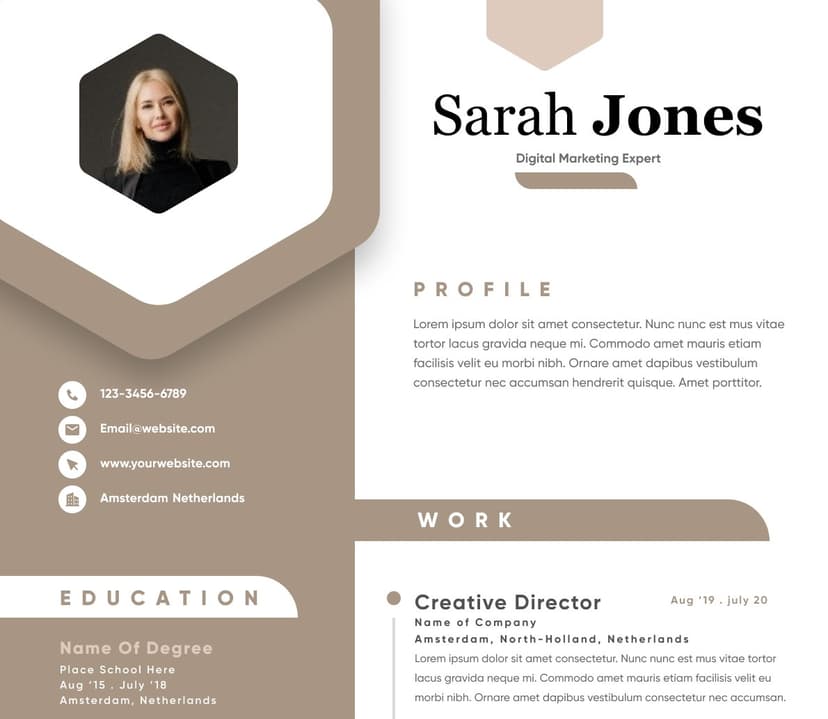
Use professional field-tested resume templates that follow the exact Resume rules employers look for.
Create Resume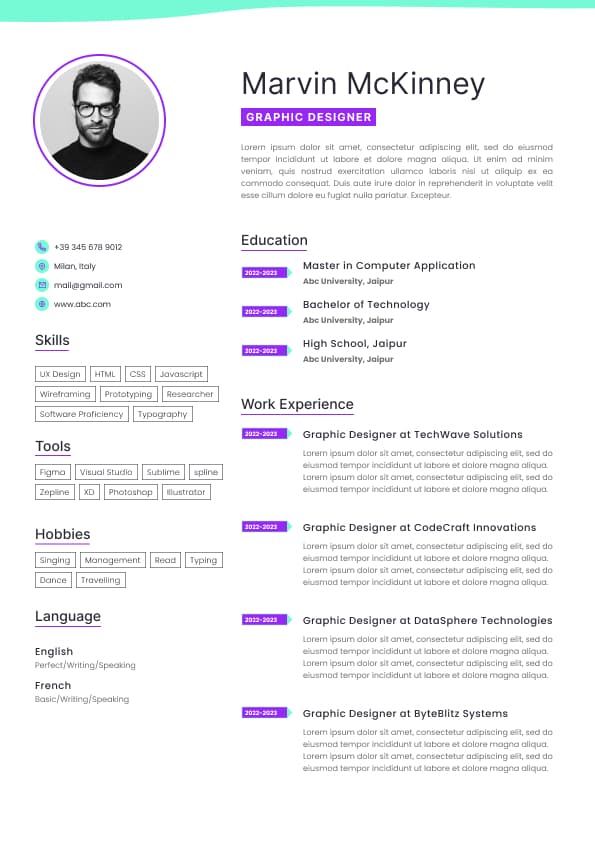
Use professional field-tested resume templates that follow the exact Resume rules employers look for.
Create ResumeMulti-environment deployments
Architecture ownership
Large-scale SQL optimization
Distributed systems experience


 Upload Resume
 Import from Linkedin