STILL APPLYING. STILL HEARING NOTHING?BUILD YOUR RESUME

STILL APPLYING. STILL HEARING NOTHING?BUILD YOUR RESUME
Choose from a wide range of NEWCV resume templates and customize your NEWCV design with a single click.
FAQ
If your .NET developer resume is getting low response rates, ATS rejections, or no interviews, the issue is usually not your experience level alone. It is positioning. Hiring managers want immediate evidence that you can build, maintain, optimize, and deploy modern .NET applications using today’s enterprise stack. That means your resume must clearly show technologies like C#, ASP.NET Core, Azure, SQL Server, REST APIs, Entity Framework Core, CI/CD, testing, debugging, and cloud deployments in real business scenarios.
This guide breaks down exactly why .NET developer resumes get rejected and how to fix them strategically.
Most rejected .NET resumes have one core problem: they describe activity instead of value.
Recruiters reviewing technical resumes often spend less than 15 seconds on the first pass. During that scan, they are looking for:
Relevant Microsoft-stack technologies
Production-level development experience
Clear alignment with the job posting
Measurable technical outcomes
Evidence of modern development practices
Cloud and API experience
Resume readability and ATS compatibility
When those signals are missing, the resume gets filtered out quickly.
Many .NET resumes fail before a recruiter even sees them.
Applicant Tracking Systems scan resumes for stack alignment and keyword relevance. If your resume lacks the exact technologies used in the job posting, your visibility drops significantly.
For modern .NET roles, these keywords commonly matter:
C#
ASP.NET Core
.NET Core
.NET 8
SQL Server
Azure
REST API
One of the biggest hiring mistakes is using one resume for every .NET role.
Modern .NET hiring is highly specialized.
A backend .NET API role is evaluated differently than:
A full stack .NET role
An Azure cloud engineering role
An enterprise modernization role
A Blazor developer role
A microservices engineering role
A fintech backend role
A healthcare enterprise systems role
Recruiters immediately notice when resumes are too broad.
Hiring managers are not hiring responsibilities.
They are hiring outcomes.
This is one of the biggest mindset shifts developers need to make when writing resumes.
Most weak bullets describe duties:
Developed applications
Worked with stakeholders
Fixed bugs
Participated in Agile teams
Created APIs
These statements fail because they do not answer the hiring manager’s real questions:
How complex was the work?
Most developers underestimate how technical hiring managers review resumes.
They are not just checking for keywords.
They are trying to determine:
Can this developer work in our environment quickly?
Have they solved similar engineering problems before?
Do they understand modern .NET practices?
Can they handle production systems responsibly?
Can they collaborate with DevOps, QA, and product teams?
Do they understand scalability and maintainability?
This is why technical specificity matters so much.
Hiring managers often reject resumes that only show outdated .NET Framework experience without modern technologies.
Every bullet should answer at least one of these questions:
What improved?
What was built?
What scale was supported?
What problem was solved?
What technologies were used?
What business impact occurred?
Focus especially on:
Performance improvements
Cost reductions
One of the fastest ways to improve response rates is showing modern stack relevance.
Many rejected resumes still look heavily tied to older enterprise environments.
If you have modern experience, surface it aggressively.
Important technologies to include where accurate:
ASP.NET Core
.NET 6, .NET 7, or .NET 8
Azure App Services
Azure Functions
Azure DevOps
Entity Framework Core
REST APIs
Recruiters want context.
A resume that only says “built applications” feels weak because it lacks business relevance.
Instead, specify the systems you worked on.
Examples:
Healthcare patient portals
Financial transaction systems
E-commerce APIs
Enterprise SaaS platforms
Inventory management systems
Internal workflow automation tools
Cloud-native business applications
Entry-level and junior .NET developers often get rejected because they lack proof of real coding ability.
If you do not yet have strong production experience, projects become extremely important.
Strong project signals include:
GitHub repositories
Azure-hosted applications
Swagger API documentation
CI/CD pipelines
Automated tests
Dockerized apps
Open-source contributions
Many technically strong resumes still fail because the formatting is difficult for ATS systems to parse.
Avoid:
Graphics-heavy templates
Multi-column layouts
Tables for core information
Icons replacing text
Skill bars or proficiency meters
Header/footer overload
Unusual fonts
Large text blocks
One major recruiter red flag is disconnected skills sections.
For example:
A resume may list:
Azure
Docker
Kubernetes
CI/CD
But none of those appear in the experience section.
That creates doubt.
Recruiters immediately wonder:
Did the candidate actually use these technologies?
Were they only exposed briefly?
A high-performing .NET resume is usually role-specific.
Emphasize:
ASP.NET Core APIs
SQL optimization
Authentication
Caching
Distributed systems
Performance tuning
Messaging systems
CI/CD
Emphasize:
ASP.NET Core
Angular or React
Front-end architecture
API integration
State management
UI performance
Responsive design
Full application lifecycle
Emphasize:
Azure Functions
App Services
Azure DevOps
ARM or Bicep
CI/CD
Cloud-native architecture
Monitoring and logging
Cost optimization
Emphasize:
Legacy migration
.NET Framework to .NET Core upgrades
Refactoring
API modernization
Monolith decomposition
Scalability improvements
Cloud migration
This level of alignment significantly improves interview conversion rates.
Many developers think business impact only matters for managers.
That is incorrect.
Engineering hires are increasingly evaluated based on how their work affects operational outcomes.
Hiring managers care about:
Performance gains
Customer experience
Revenue protection
Scalability
Reliability
Deployment speed
System stability
Certifications alone will not get you hired.
But they can strengthen credibility when paired with real experience.
Useful Microsoft-aligned certifications may include:
Azure Developer Associate
Azure Fundamentals
Azure Solutions Architect
DevOps Engineer Expert
Recent technical training also helps offset concerns about outdated experience.
Especially valuable signals include:
.NET modernization training
Cloud-native architecture courses
Recruiters often make an initial judgment extremely fast.
Your resume should immediately communicate:
What kind of .NET developer you are
Your core stack
Your experience level
Your specialization
Your business impact
Your technical environment
A strong top section might quickly communicate:
Years of experience
Hiring managers care more about outcomes than activities.
A resume dominated by old .NET Framework work without modern tooling creates risk concerns.
Generic wording weakens technical credibility.
Modern engineering roles increasingly expect deployment awareness, not just coding.
Recruiters want evidence you worked on systems used by real users at meaningful scale.
Tailoring matters heavily in .NET hiring because stacks vary significantly between employers.

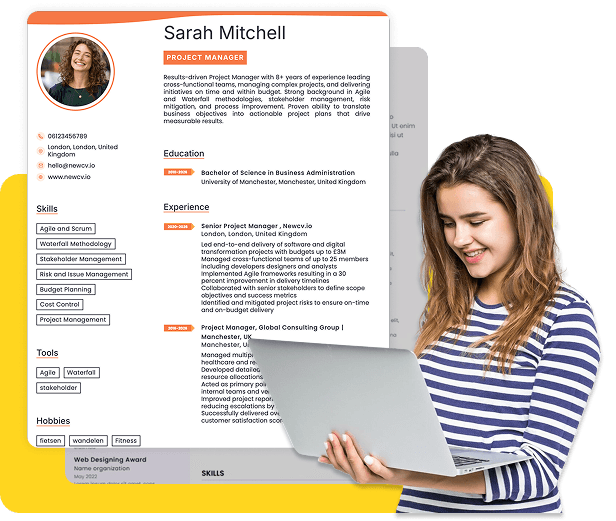
Use ATS-optimised Resume and resume templates that pass applicant tracking systems. Our Resume builder helps recruiters read, scan, and shortlist your Resume faster.

Use professional field-tested resume templates that follow the exact Resume rules employers look for.
Create Resume
Use professional field-tested resume templates that follow the exact Resume rules employers look for.
Create ResumeThe biggest mistake .NET developers make is assuming recruiters will infer technical depth from vague descriptions. They will not.
A line like this tells recruiters almost nothing:
Weak Example:
“Worked on internal business applications using .NET.”
That bullet creates multiple concerns:
What type of applications?
What version of .NET?
Was it enterprise-level work?
What business impact did the work have?
Did you build APIs, backend systems, cloud infrastructure, or UI components?
Was the candidate responsible for architecture, debugging, deployment, or maintenance?
Now compare that to this:
Good Example:
“Built and maintained ASP.NET Core REST APIs supporting 120K+ monthly users, reducing API response times by 38% through SQL query optimization and Redis caching.”
That instantly demonstrates:
Modern stack relevance
Scale
Measurable impact
Backend engineering ability
Performance optimization experience
Production-level responsibility
That is what gets interviews.
Entity Framework Core
Microservices
CI/CD
Azure DevOps
Docker
Kubernetes
Git
Unit Testing
xUnit
NUnit
Agile
Swagger
Azure Functions
Blazor
Angular
React
RabbitMQ
Redis
Many developers incorrectly assume ATS systems understand equivalents automatically.
They often do not.
For example, if the posting says “ASP.NET Core” and your resume only says “.NET,” you may not rank highly enough in the ATS search results.
The same applies to:
Azure vs cloud
REST APIs vs web services
Entity Framework Core vs ORM
CI/CD vs deployment automation
Use the exact terminology the employer uses whenever it truthfully matches your experience.
A generic resume creates doubt because it fails to position you clearly.
For example:
A hiring manager for a backend API role wants evidence of:
REST API architecture
SQL optimization
Authentication and authorization
Performance tuning
Distributed systems
API security
Swagger documentation
Logging and monitoring
CI/CD pipelines
But a generic resume may over-focus on front-end tasks or vague “software development” work.
That creates misalignment.
The strongest .NET resumes are intentionally tailored for the exact role category.
What business problem did you solve?
What technologies were involved?
What scale did the systems support?
What improved because of your work?
How did your engineering decisions affect users or operations?
Strong resumes connect technical execution to measurable outcomes.
High-performing bullets often contain four elements:
Technology stack
Technical action
Business or engineering outcome
Scale or measurable improvement
Here is the difference.
Weak Example:
“Created APIs for customer systems.”
Good Example:
“Developed ASP.NET Core REST APIs integrated with SQL Server and Azure Service Bus, supporting 40K+ daily customer transactions with 99.95% uptime.”
The second version demonstrates:
Modern stack relevance
Enterprise scale
Reliability
Backend architecture exposure
Real production ownership
That dramatically changes recruiter perception.
If your experience is primarily legacy enterprise work, you must actively demonstrate modernization capability.
For example:
.NET Core migration work
Azure deployments
Containerization
CI/CD pipelines
API modernization
Cloud-native development
Performance optimization
Automated testing
Without those signals, employers may assume your skills are outdated even if they are not.
Reliability improvements
Deployment automation
Database optimization
API scalability
Bug reduction
User growth
Cloud migration results
Good Example:
“Reduced API latency by 42% by optimizing Entity Framework Core queries and implementing asynchronous processing.”
Good Example:
“Automated Azure deployment pipelines using Azure DevOps, reducing production deployment time from 90 minutes to 12 minutes.”
Good Example:
“Migrated legacy .NET Framework applications to ASP.NET Core microservices architecture, improving scalability and reducing infrastructure costs by 28%.”
These bullets create credibility because they reflect actual engineering impact.
Microservices
Docker
Kubernetes
CI/CD
OAuth or JWT authentication
Swagger/OpenAPI
Redis
RabbitMQ
SQL performance tuning
Do not bury these in a long skills section.
The strongest resumes reinforce stack relevance throughout experience bullets.
Insurance claims processing systems
Payment integrations
Customer analytics dashboards
This helps hiring managers quickly map your background to their environment.
Full-stack demo projects
Real deployment links
Many junior candidates make the mistake of listing school projects without showing technical depth.
Instead, position projects like production systems.
Weak Example:
“Created movie app using C#.”
Good Example:
“Built and deployed a full-stack ASP.NET Core movie recommendation platform with JWT authentication, SQL Server integration, Swagger API documentation, and Azure App Service deployment.”
That sounds dramatically more hireable because it demonstrates practical engineering execution.
ATS-friendly resumes are usually:
Single-column
Cleanly structured
Keyword-rich
Easy to scan
Consistent in formatting
Simple in hierarchy
The best-performing resumes are often visually simple but strategically written.
Are they inflating their skill set?
Every major technology listed in skills should appear somewhere in experience or project bullets.
The strongest resumes reinforce technical credibility repeatedly.
Microservices
Infrastructure automation
Security
Cost efficiency
Even deeply technical roles are still business roles.
If your resume only shows coding activity without impact, it feels incomplete.
Kubernetes exposure
Azure deployment experience
Security-focused development training
These are especially helpful for mid-career developers transitioning from legacy enterprise environments.
Core Microsoft technologies
Cloud expertise
API or enterprise specialization
Industries supported
The faster recruiters understand your positioning, the better your interview odds.


 Upload Resume
 Import from Linkedin