STILL APPLYING. STILL HEARING NOTHING?BUILD YOUR RESUME

STILL APPLYING. STILL HEARING NOTHING?BUILD YOUR RESUME
Choose from a wide range of NEWCV resume templates and customize your NEWCV design with a single click.
FAQ

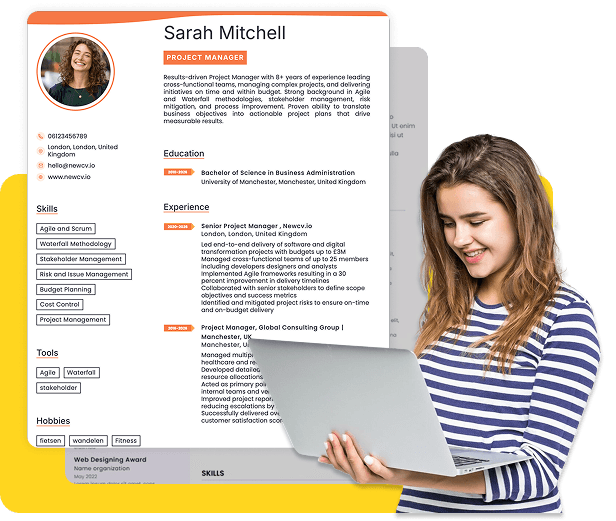
A strong .NET developer resume is not just a list of technologies. Recruiters and hiring managers evaluate whether your skills match the actual engineering environment they are hiring for. That means your resume needs to demonstrate modern .NET expertise, practical development capability, production-level experience, collaboration skills, and operational ownership.
Most .NET resumes fail because they either overload keywords without context or list outdated technologies that do not align with current hiring needs. Employers want developers who can build scalable applications, work across cloud and DevOps workflows, contribute to architecture decisions, and support production systems.
The best .NET developer resumes clearly separate hard skills, soft skills, and operational capabilities while aligning them to real business outcomes. This guide breaks down exactly which .NET developer resume skills matter most in today’s US hiring market, how recruiters evaluate them, and how to position them strategically on your resume.
Recruiters are not simply checking whether you know C# or ASP.NET Core. They are evaluating whether your skill set matches the company’s technical stack, engineering maturity, and business problems.
Most hiring decisions happen through three layers of screening:
ATS keyword matching
Recruiter qualification review
Technical evaluation by engineering leadership
Your resume skills section must survive all three.
For example, a modern SaaS company hiring a senior .NET engineer is usually looking for:
Backend API development expertise
Cloud deployment experience
Scalable architecture knowledge
CI/CD familiarity
Production troubleshooting capability
Cross-functional collaboration skills
A resume that only lists “C#, ASP.NET, SQL Server” often looks outdated or junior-level compared to competitors.
Modern hiring teams expect deeper specialization and operational awareness.
Hard skills are the foundation of your technical credibility. These skills determine whether recruiters believe you can perform the actual engineering work.
The strongest .NET resumes organize technical skills by category instead of creating one massive keyword dump.
Core programming skills remain one of the first screening filters.
Most commonly requested languages for .NET roles include:
C#
SQL
T-SQL
JavaScript
TypeScript
HTML
CSS
PowerShell
C# remains the primary language for nearly all .NET engineering roles. However, modern employers increasingly expect supporting frontend and scripting capabilities as well.
A backend-focused engineer may emphasize:
C#
SQL Server
PowerShell
REST API development
A full stack .NET developer should usually include:
C#
TypeScript
Angular or React
API integration
Frontend debugging
This is the core competency area recruiters scan most aggressively.
Important .NET resume technical skills include:
.NET
.NET Core
.NET 6
.NET 7
.NET 8
ASP.NET Core
MVC
Razor Pages
Blazor
Web API
One major mistake candidates make is listing older frameworks without modern equivalents.
For example:
Weak Example
ASP.NET
Web Forms
IIS
This creates the impression of legacy-only experience.
Good Example
ASP.NET Core Web API
.NET 8
Blazor
Razor Pages
Microservices architecture
This immediately signals modern engineering capability.
Most .NET hiring in the US market is backend-focused.
Companies increasingly prioritize developers who can build scalable distributed systems rather than simple CRUD applications.
Important backend development skills include:
REST APIs
Microservices
Authentication
Authorization
Background services
Distributed systems
API versioning
Middleware
Message queues
Event-driven architecture
Recruiters often look for evidence that you understand system reliability and scalability, not just coding syntax.
For example, mentioning “JWT authentication” is more valuable than simply saying “security.”
Similarly, “distributed caching” or “event-driven design” demonstrates stronger architectural maturity than generic backend terminology.
Full stack .NET developers are evaluated differently from backend specialists.
Hiring managers expect broader system ownership and frontend integration capability.
Strong full stack .NET skills include:
ASP.NET Core
Angular
React
TypeScript
SQL Server
API integration
Frontend state management
Responsive UI development
Deployment pipelines
Automated testing
The strongest full stack candidates show both frontend usability awareness and backend engineering depth.
A common hiring concern is developers who claim “full stack” experience but only worked on small UI adjustments.
Your resume should demonstrate meaningful frontend contribution.
Recruiters look for practical indicators such as:
Building frontend components from scratch
Consuming REST APIs
State management implementation
Authentication flows
Performance optimization
Cross-browser compatibility
UI debugging
Production deployment ownership
These details differentiate genuine full stack engineers from backend developers with limited frontend exposure.
Database expertise remains one of the highest-value technical skill categories for .NET developers.
Many enterprise applications are data-heavy, making SQL optimization extremely important.
High-value database skills include:
SQL Server
Azure SQL
Stored procedures
Indexing
Query optimization
Entity Framework Core
Dapper
Database migrations
Transaction management
Data modeling
Recruiters often prioritize candidates who understand performance optimization rather than simply writing queries.
Many hiring managers specifically look for ORM experience.
Entity Framework Core is commonly expected for enterprise development.
Dapper often signals stronger performance-focused engineering capability.
Candidates who mention both usually appear more technically mature because they understand tradeoffs between productivity and performance.
Cloud expertise has become a major differentiator in the US hiring market.
Many modern .NET engineering roles now expect Azure experience by default.
Top cloud skills include:
Microsoft Azure
Azure App Service
Azure Functions
Azure SQL
Azure Storage
Service Bus
Key Vault
Application Insights
Azure Monitor
Infrastructure automation
Recruiters increasingly favor candidates who understand deployment and production environments, not just local application development.
Many companies are actively modernizing legacy .NET systems into Azure-native environments.
That means hiring managers want developers who can:
Support cloud migrations
Build scalable cloud services
Troubleshoot production environments
Secure cloud infrastructure
Optimize cloud costs
Developers without cloud exposure often lose interviews against similarly experienced candidates.
Modern engineering teams expect developers to contribute beyond coding.
DevOps knowledge signals stronger production ownership and operational maturity.
Important DevOps skills include:
Azure DevOps
GitHub Actions
Docker
Kubernetes basics
CI/CD pipelines
IIS
Release management
Infrastructure deployment
Automated builds
Environment configuration
One major hiring trend is the shift toward developers who can independently deploy and support their own services.
Candidates who only focus on coding responsibilities may appear less competitive.
Recruiters increasingly prioritize candidates who understand:
Automated testing pipelines
Deployment automation
Release validation
Environment management
Rollback strategies
Build optimization
These skills signal reduced onboarding risk.
Testing skills strongly influence perceived engineering quality.
Strong .NET testing skills include:
xUnit
NUnit
MSTest
Moq
Integration testing
API testing
TDD
Test automation
Mocking frameworks
Regression testing
Many resumes fail because candidates simply write “testing” without specifics.
Detailed testing frameworks immediately improve technical credibility.
Hiring managers value developers who prevent production issues, not just build features.
Candidates who mention:
Automated integration testing
API validation
Test-driven development
Production defect reduction
often perform better during technical screening.
Security awareness has become increasingly important in enterprise hiring.
Strong security skills include:
OWASP principles
Secure coding
JWT
OAuth
OpenID Connect
Microsoft Entra ID
Encryption
Access control
Identity management
Security auditing
Recruiters often use security skills as a proxy for engineering maturity.
Developers who understand authentication and authorization are usually perceived as more senior.
The highest-value security capabilities typically involve:
Identity integration
API security
Role-based access control
Token authentication
Enterprise authentication systems
These are especially important for fintech, healthcare, SaaS, and enterprise software roles.
Architecture skills often separate mid-level developers from senior engineers.
Strong architecture-related resume skills include:
SOLID principles
Clean architecture
Layered architecture
Microservices
Event-driven design
Caching strategies
Messaging systems
Dependency injection
Domain-driven design
Scalability planning
Recruiters and hiring managers use these keywords to identify candidates capable of designing maintainable systems.
Many candidates list architecture buzzwords without evidence of practical implementation.
That creates skepticism during technical review.
Instead of simply listing “microservices,” stronger candidates often include supporting operational or development context elsewhere in the resume, such as:
Designed event-driven microservices using Azure Service Bus
Implemented clean architecture patterns for scalable API services
This creates stronger credibility.
Soft skills matter more than many technical candidates realize.
Engineering teams increasingly prioritize communication, ownership, and collaboration because modern software development is highly cross-functional.
Strong .NET developer soft skills include:
Problem-solving
Communication
Ownership
Collaboration
Adaptability
Critical thinking
Attention to detail
Time management
Mentoring
Documentation
Business analysis mindset
Production accountability
Three soft skills consistently influence hiring outcomes:
Communication
Ownership
Collaboration
Why?
Because many technically strong developers struggle with stakeholder alignment, production accountability, and teamwork.
Engineering managers want developers who:
Communicate blockers early
Take responsibility for production issues
Work effectively with QA, product, and DevOps teams
Contribute during sprint planning
Support junior developers
These behaviors reduce management overhead.
Operational skills are often overlooked, but they strongly influence hiring decisions for mid-level and senior roles.
These skills demonstrate engineering process maturity.
Important operational skills include:
Agile/Scrum delivery
Sprint planning
Code reviews
Pull request management
Technical documentation
Incident response
Production support
Release management
Backlog refinement
Cross-functional collaboration
Engineering estimation
Technical debt management
Legacy modernization planning
Companies do not just hire developers to write code.
They hire engineers to help software teams deliver reliable products.
Operational skills show that you understand:
Team workflows
Release cycles
Production reliability
Agile delivery
Technical prioritization
This becomes especially important for senior-level hiring.
The strongest .NET resumes organize skills strategically instead of dumping keywords randomly.
A clean structure improves both ATS parsing and recruiter readability.
Technical Skills
C#
ASP.NET Core
.NET 8
REST APIs
SQL Server
Azure
Entity Framework Core
Cloud & DevOps
Azure DevOps
GitHub Actions
Docker
CI/CD
Azure Functions
Testing & Security
xUnit
Moq
JWT
OAuth
OWASP secure coding
Operational Skills
Agile/Scrum
Code reviews
Incident response
Production support
This structure makes scanning easier during fast recruiter reviews.
ATS systems heavily rely on exact keyword alignment.
That means your resume should match the language used in actual job descriptions.
Important .NET developer skills keywords include:
ASP.NET Core
.NET 8
REST APIs
Azure DevOps
SQL Server
Entity Framework Core
CI/CD
Microservices
JWT authentication
Azure Functions
Docker
Kubernetes
Distributed systems
Blazor
OAuth
Dapper
Event-driven architecture
Recruiters can immediately recognize resumes that artificially overload keywords.
Bad ATS optimization usually looks like:
Massive keyword blocks
Repetitive technology lists
No contextual usage
No business outcomes
Strong resumes naturally integrate skills into achievements and project descriptions.
If your resume heavily emphasizes:
Web Forms
WCF
VB.NET
without modern technologies, recruiters may assume your experience is outdated.
A resume that combines advanced architecture terms with basic entry-level terminology can appear inconsistent.
For example:
“Microservices architecture”
“Learned SQL basics”
This weakens positioning.
Some candidates list 50 to 80 technologies regardless of actual proficiency.
This creates credibility concerns during technical interviews.
Technical skills alone are not enough.
Hiring managers want evidence that your skills delivered outcomes such as:
Performance improvements
Scalability gains
Reduced deployment failures
Faster release cycles
Improved reliability
The strongest market-value skills currently include:
ASP.NET Core
.NET 8
Azure
Microservices
CI/CD
Docker
Distributed systems
Cloud-native development
API architecture
Security implementation
Event-driven systems
Full stack TypeScript frameworks
These skills align closely with modern enterprise modernization initiatives and cloud adoption trends.
Developers who combine backend engineering, cloud expertise, DevOps understanding, and operational ownership are consistently the most competitive candidates.
Use ATS-optimised Resume and resume templates that pass applicant tracking systems. Our Resume builder helps recruiters read, scan, and shortlist your Resume faster.

Use professional field-tested resume templates that follow the exact Resume rules employers look for.
Create Resume
Use professional field-tested resume templates that follow the exact Resume rules employers look for.
Create Resume


 Upload Resume
 Import from Linkedin