STILL APPLYING. STILL HEARING NOTHING?BUILD YOUR RESUME

STILL APPLYING. STILL HEARING NOTHING?BUILD YOUR RESUME
Choose from a wide range of NEWCV resume templates and customize your NEWCV design with a single click.
FAQ

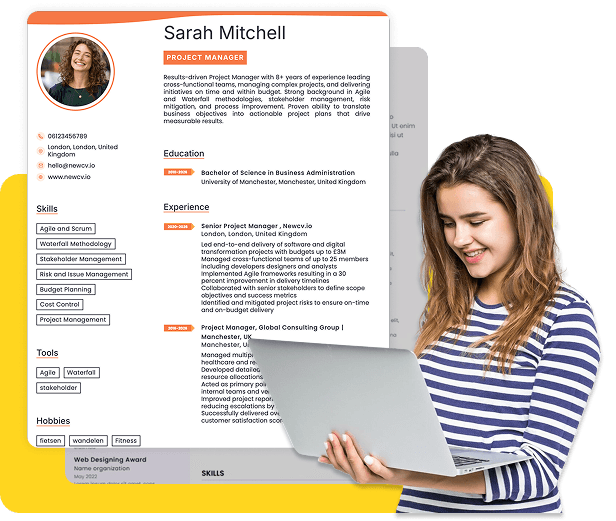
Most .NET developer resumes do not fail because candidates lack technical skills. They fail because the resume does not communicate technical depth, business impact, or role alignment clearly enough for recruiters and hiring managers to trust the candidate.
In the current US hiring market, .NET hiring has become more specialized. Employers are no longer hiring “generic .NET developers.” They are hiring for specific environments such as:
ASP.NET Core backend API development
Azure cloud modernization
Enterprise application support
Full stack .NET development
Blazor applications
Microservices and distributed systems
SQL-heavy enterprise systems
DevOps-integrated engineering teams
A resume that looks broad, vague, outdated, or keyword-light often gets rejected before a technical interview even happens.
The biggest problem is that many .NET developers describe responsibilities instead of outcomes. Recruiters scan resumes quickly for technical relevance, architecture exposure, measurable impact, and alignment with the exact stack in the job description.
If your resume says “worked on .NET applications,” you already lost attention.
This guide breaks down the most damaging .NET developer resume mistakes, why they hurt your candidacy, and how to fix them strategically.
This is the single most common .NET resume mistake.
Hiring managers want to understand:
What systems you built
Which Microsoft technologies you used
What scale you supported
What business problem you solved
How your work improved performance, reliability, or delivery
Weak bullets create uncertainty. Uncertainty kills interviews.
Weak Example
Worked on .NET applications for enterprise clients
Responsible for backend development
Participated in bug fixing and testing
These bullets say almost nothing useful.
A recruiter cannot determine:
Which version of .NET you used
Whether you built APIs or web apps
Whether you worked on architecture or maintenance
Whether you improved anything measurable
Whether your experience matches the open role
Good Example
Developed ASP.NET Core REST APIs supporting 250K+ monthly transactions for an enterprise logistics platform
Reduced SQL Server query execution time by 42% through Entity Framework Core optimization and indexing improvements
Built Azure Functions for asynchronous order processing, reducing manual operations workload by 18 hours weekly
Collaborated with QA and DevOps teams to reduce production defects by 31% after deployment
This version immediately establishes:
Technical stack relevance
Scale
Ownership
Business impact
Modern engineering practices
That is what recruiters and hiring managers want to see.
Another major failure pattern is dumping technologies into a skills section without showing how they were actually used.
Recruiters see this constantly:
C#
ASP.NET
Azure
SQL Server
REST API
JavaScript
That does not prove competency.
Hiring managers assume many candidates inflate skills lists. If technologies are not reinforced inside work experience, credibility drops.
Strong .NET resumes connect technologies to implementation.
Instead of simply listing Azure, explain:
What Azure services you used
Why they were used
What the result was
Instead of:
Azure
SQL Server
Entity Framework
Use bullets like:
Designed Azure App Service deployment workflows that improved deployment reliability across 6 production environments
Optimized SQL Server stored procedures and Entity Framework Core queries, reducing API response latency from 2.8 seconds to under 1.2 seconds
Integrated Azure Key Vault and managed identity authentication to strengthen application security controls
This demonstrates real engineering capability instead of keyword stuffing.
Many .NET resumes fail before a human even reads them.
Modern ATS systems and recruiter searches rely heavily on keyword matching.
If the job description repeatedly references:
ASP.NET Core
Azure
REST APIs
C#
SQL Server
Docker
Microservices
Entity Framework Core
…and your resume barely mentions them, your visibility drops significantly.
Strong .NET resumes naturally incorporate relevant keywords such as:
C#
.NET Core / .NET 8
ASP.NET Core
RESTful APIs
Entity Framework Core
SQL Server
Azure
Azure DevOps
Blazor
Microservices
Docker
Kubernetes
CI/CD pipelines
xUnit / NUnit
Dependency Injection
LINQ
OAuth / JWT authentication
Git
Agile / Scrum
The key is natural integration.
Do not create a giant keyword dump section. Recruiters can spot manipulation immediately.
Instead, incorporate keywords through real project descriptions and measurable achievements.
Many developers unintentionally destroy ATS readability with overly designed resumes.
This is especially common when candidates use graphic-heavy templates downloaded online.
Common ATS issues include:
Multi-column layouts
Icons replacing text labels
Graphics and charts
Skill bars and rating meters
Text embedded inside images
Decorative tables
Excessive color blocks
Tiny fonts
PDF export corruption
When ATS systems cannot parse your resume correctly:
Skills may disappear
Job titles may become unreadable
Dates may break
Experience sections may merge incorrectly
That directly impacts recruiter search visibility.
A strong .NET developer resume should be:
Single-column
Clean and minimal
Highly scannable
Keyword readable
Technically structured
Easy to skim in 15 seconds
The best-performing engineering resumes usually look simpler than candidates expect.
Technical clarity beats visual creativity in software hiring.
Many developers add every Microsoft technology they have touched once.
This creates a major interview risk.
Experienced engineering managers can quickly identify resume inflation.
If you list:
Kubernetes
Azure Service Bus
Terraform
RabbitMQ
Blazor
Microservices architecture
…expect technical follow-up questions.
Hiring teams evaluate consistency between:
Resume claims
Interview depth
Project explanations
Architecture understanding
If your resume suggests senior-level Azure expertise but you cannot explain deployment pipelines, authentication flows, or scaling strategies, credibility collapses immediately.
Focus on technologies where you can confidently discuss:
Real implementation details
Tradeoffs
Architecture decisions
Performance issues
Debugging scenarios
Deployment workflows
A focused, believable stack performs better than an inflated one.
Not all .NET jobs are the same.
One of the biggest resume mistakes is submitting the exact same resume for every .NET opening.
A backend API role differs from a Blazor UI role. An Azure-heavy cloud role differs from an enterprise modernization role.
Hiring managers want specialization alignment.
Emphasize:
ASP.NET Core APIs
Authentication
Performance optimization
SQL tuning
Distributed systems
Microservices
API scalability
Emphasize:
Frontend frameworks
Blazor or Angular/React integration
API consumption
UI collaboration
End-to-end delivery
Emphasize:
Azure Functions
Azure DevOps
App Services
CI/CD pipelines
Cloud migrations
Monitoring and observability
Emphasize:
Legacy system migration
.NET Framework to .NET Core transitions
Refactoring initiatives
System scalability
Technical debt reduction
Tailoring is not rewriting the entire resume.
It means strategically prioritizing the experience most relevant to the target role.
Many developers focus only on coding tasks.
Hiring managers care about outcomes.
The strongest engineering resumes connect technical work to business results.
They want evidence that your work improved:
Revenue
Stability
Customer experience
Speed
Scalability
Security
Deployment reliability
Operational efficiency
Technical execution alone is not enough at competitive companies.
Improved API response performance by 47%, reducing customer checkout abandonment during peak traffic
Reduced production incidents by implementing automated integration testing across 40+ microservices
Modernized legacy .NET Framework applications to .NET 8, reducing infrastructure costs by 28%
Developed internal workflow automation tools that reduced manual processing time by 65%
These bullets show technical value tied to organizational outcomes.
That dramatically improves interview conversion rates.
Entry-level .NET candidates often struggle because they lack formal experience.
In that situation, projects become critically important.
Many junior developers make the mistake of submitting resumes with:
No GitHub
No portfolio
No deployed APIs
No practical projects
Only coursework listed
That creates a credibility problem.
Build practical projects demonstrating real engineering concepts.
Strong project examples include:
ASP.NET Core REST APIs
Authentication systems using JWT
CRUD applications with SQL Server
Azure-hosted applications
Blazor dashboards
E-commerce backend systems
Microservice demos
CI/CD deployment pipelines
Not perfection.
They want evidence of:
Initiative
Technical curiosity
Real implementation ability
Understanding of modern .NET practices
Problem-solving capability
Even small projects help if explained well.
Another major weakness on .NET resumes is focusing only on development.
Modern engineering teams expect developers to participate in:
Testing
Debugging
Deployment
Monitoring
Collaboration
Incident resolution
Candidates who ignore these areas appear less production-ready.
Mention experience with:
xUnit or NUnit
Integration testing
Logging and monitoring
Azure DevOps pipelines
Git workflows
CI/CD
Production debugging
Performance profiling
Application monitoring tools
Even mid-level developers gain an advantage by showing operational awareness.
Recruiters do not read resumes line by line initially.
They scan.
Dense paragraphs dramatically reduce readability.
Engineering resumes already contain:
Acronyms
Technical terminology
Tool names
Architecture references
Large text blocks create visual fatigue.
Important achievements disappear inside clutter.
Use concise bullets that:
Start with action verbs
Include technologies naturally
Show measurable impact
Stay readable
Focus on outcomes
Action + Technology + Business Result
Example
That structure works because it is:
Specific
Technical
Measurable
Easy to scan
This is a major red flag in modern hiring.
If your resume emphasizes only:
Web Forms
WCF
VB.NET
Legacy .NET Framework
…and never references modern technologies, recruiters may assume your skills are outdated.
Even if you currently work in legacy environments, you still need to show modernization awareness.
Competitive .NET resumes increasingly include:
.NET Core / .NET 8
ASP.NET Core
Azure cloud services
REST APIs
Microservices
Docker containers
CI/CD pipelines
Cloud-native architecture
Modern authentication practices
You do not need every modern technology.
But you do need evidence that your skills are current.
Experienced recruiters notice patterns that often predict weak interview performance.
Major warning signs include:
Generic summaries with no specialization
Unrealistic technology overload
No measurable outcomes
No cloud experience on modern roles
No API experience for backend jobs
Extremely outdated tech stacks
Large unexplained employment gaps
No progression in responsibility
Poor formatting and readability
Copy-pasted bullets from online templates
Strong resumes feel authentic, technically grounded, and role-aligned.
Weak resumes feel generic and interchangeable.
The strongest .NET developer resumes typically:
Match the exact role specialization
Show measurable engineering impact
Demonstrate modern Microsoft stack experience
Include production-scale examples
Balance technical depth with business value
Remain ATS-friendly and highly readable
Highlight architecture, APIs, cloud, and optimization work
Show collaboration and delivery impact
Use realistic, defensible technical claims
Most importantly, they reduce uncertainty.
Hiring managers move candidates forward when the resume makes them confident the candidate can succeed in the role quickly.
If your resume is not generating interviews, do not immediately assume your technical skills are the problem.
Most often, the issue is positioning.
A strong .NET resume should answer these questions clearly within seconds:
What type of .NET developer are you?
Which Microsoft technologies do you use confidently?
What systems have you built or supported?
What measurable impact did your work create?
How current are your technical skills?
How closely do you align with this specific role?
If your resume cannot answer those questions quickly, recruiters move on.
Modern .NET hiring is highly competitive, especially for remote and mid-to-senior-level positions.
Clarity, specificity, measurable impact, and role alignment now matter as much as raw technical skill.
Use ATS-optimised Resume and resume templates that pass applicant tracking systems. Our Resume builder helps recruiters read, scan, and shortlist your Resume faster.

Use professional field-tested resume templates that follow the exact Resume rules employers look for.
Create Resume
Use professional field-tested resume templates that follow the exact Resume rules employers look for.
Create Resume


 Upload Resume
 Import from Linkedin