STILL APPLYING. STILL HEARING NOTHING?BUILD YOUR RESUME

STILL APPLYING. STILL HEARING NOTHING?BUILD YOUR RESUME
Choose from a wide range of NEWCV resume templates and customize your NEWCV design with a single click.
FAQ

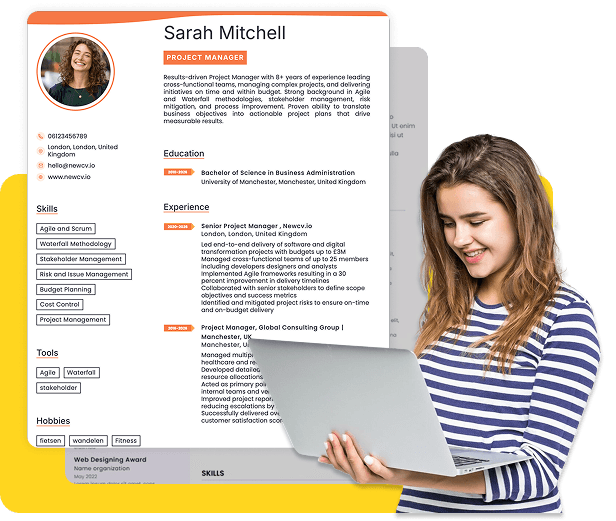
A strong .NET Developer resume summary immediately tells recruiters three things: your technical specialization, your level of experience, and the business value you bring. Most resumes fail because the summary is vague, overloaded with buzzwords, or disconnected from the actual role.
Hiring managers do not want generic statements like “hardworking developer with strong problem-solving skills.” They want fast evidence that you can build, maintain, optimize, or modernize applications using the Microsoft stack.
The best .NET Developer resume summaries are specific, technically relevant, and aligned with the target role. An entry-level objective should focus on foundational skills and project readiness. A senior-level summary should communicate architecture ownership, scalability, leadership, modernization, or cloud expertise. Full stack summaries should clearly connect backend and frontend capabilities without sounding bloated.
This guide shows exactly how recruiters evaluate .NET resume summaries, what works in modern hiring, and high-performing examples you can adapt immediately.
Recruiters usually spend less than 10 seconds on the first pass of a resume. Your summary acts as a positioning statement.
For .NET Developer roles, recruiters typically scan for:
Years of experience
Core Microsoft technologies
Backend vs full stack specialization
Enterprise application experience
Cloud and DevOps exposure
API and database experience
Industry relevance when applicable
Leadership or architecture ownership for senior roles
Modern framework usage like ASP.NET Core
Evidence of business impact
A strong summary quickly answers:
What type of .NET developer are you?
How senior are you?
What technologies do you use professionally?
What business problems can you solve?
Are your skills modern and relevant?
The biggest mistake candidates make is writing summaries that sound interchangeable with thousands of other resumes.
The best summaries balance technical depth with business relevance.
A high-performing summary usually includes:
Experience level
Core technical stack
Type of applications built
Key specialization
Delivery or impact focus
[Role + Experience] + [Core Technologies] + [Specialization] + [Business Impact]
Results-driven .NET Developer with 5+ years of experience building enterprise web applications, REST APIs, and cloud-based systems using C#, ASP.NET Core, SQL Server, Entity Framework Core, Azure, Docker, and CI/CD pipelines. Experienced in scalable backend architecture, performance optimization, secure coding practices, and Agile software delivery.
Why this works:
Clearly defines seniority
Uses current technologies recruiters search for
Includes backend and cloud relevance
Demonstrates enterprise-level capability
Sounds credible and modern
Hardworking .NET Developer with good communication skills seeking an opportunity to grow and contribute to company success.
Why this fails:
No technical specificity
No specialization
No measurable value
No differentiation
Sounds generic and outdated
These examples are designed around real hiring expectations in the US market.
Results-driven .NET Developer with 5+ years of experience designing, developing, testing, and deploying enterprise web applications, REST APIs, and cloud-based systems using C#, ASP.NET Core, SQL Server, Entity Framework Core, Azure, Docker, Git, and Azure DevOps. Strong background in Agile development, clean architecture, performance optimization, CI/CD, secure coding, and production support.
.NET Developer with 4+ years of experience building scalable web applications and APIs using C#, ASP.NET Core, SQL Server, and Azure. Skilled in backend development, debugging, API integration, and Agile delivery environments.
Experienced .NET Developer skilled in C#, ASP.NET Core, SQL Server, REST APIs, and application support. Strong problem-solving ability with experience developing business-focused web applications.
Backend .NET Developer with expertise in ASP.NET Core, RESTful API development, SQL Server optimization, Entity Framework Core, Redis caching, Docker, and Azure cloud services. Proven ability to improve application scalability, system performance, and backend reliability in enterprise environments.
ASP.NET Core Developer experienced in building secure, scalable, and high-performance web applications using C#, ASP.NET Core MVC, Web API, Entity Framework Core, SQL Server, and Azure. Strong understanding of authentication, API security, dependency injection, and cloud-native application development.
Full Stack .NET Developer experienced in building end-to-end business applications using C#, ASP.NET Core, Angular, TypeScript, SQL Server, Entity Framework Core, REST APIs, Docker, and Azure. Skilled in frontend integration, API design, database modeling, authentication, automated testing, and CI/CD workflows.
Senior .NET Developer with 8+ years of experience leading backend architecture, ASP.NET Core API development, SQL Server optimization, Azure cloud migrations, legacy modernization, code reviews, mentoring, and enterprise application delivery. Proven record improving system reliability, reducing latency, and accelerating development workflows.
Entry-level candidates should not try to sound overly senior. Recruiters can immediately detect inflated claims.
Your objective should focus on:
Technical foundation
Relevant projects or internships
Willingness to contribute
Modern stack familiarity
Ability to learn quickly
Motivated entry-level .NET Developer seeking to apply strong C# fundamentals, project experience, debugging ability, and knowledge of ASP.NET Core, SQL Server, Entity Framework Core, Git, REST APIs, and Azure basics to build reliable, secure, business-focused applications.
Junior .NET Developer with hands-on academic and personal project experience using C#, ASP.NET Core, SQL Server, and JavaScript seeking an opportunity to contribute to Agile development teams while growing expertise in enterprise application development.
Detail-oriented professional transitioning into software development with hands-on experience building .NET applications using C#, ASP.NET Core, SQL Server, and REST APIs through bootcamp and portfolio projects. Seeking a junior .NET Developer role focused on backend application development and continuous learning.
Computer Science graduate seeking a .NET Developer opportunity to apply skills in C#, ASP.NET Core, SQL Server, Git, and API development in a collaborative software engineering environment focused on scalable application development.
Most candidates think recruiters evaluate summaries based on writing quality alone. That is not how technical hiring works.
Recruiters and hiring managers are evaluating alignment.
They are asking:
Does this candidate match our stack?
Can they handle our application complexity?
Are their skills current or outdated?
Are they backend-focused or frontend-heavy?
Can they contribute quickly?
Are they likely senior enough for this role?
For example, if a company is modernizing legacy systems into ASP.NET Core microservices on Azure, a summary focused on legacy Web Forms without cloud exposure becomes a red flag.
On the other hand, a summary mentioning:
ASP.NET Core
REST APIs
Docker
Azure
CI/CD
Scalable architecture
immediately signals modern enterprise relevance.
Keyword optimization matters because ATS systems and recruiters both scan for technology alignment.
However, keyword stuffing hurts readability and credibility.
The best summaries naturally include relevant technologies.
C#
.NET
.NET Core
ASP.NET Core
MVC
Web API
REST APIs
Microservices
Entity Framework Core
SQL Server
PostgreSQL
Redis
Database optimization
Stored procedures
Azure
Azure DevOps
CI/CD
Docker
Kubernetes
Git
Terraform
Scalable systems
Clean architecture
Secure coding
Performance optimization
API integration
Cloud-native development
Use only technologies you can confidently discuss in interviews.
These mistakes consistently weaken otherwise strong resumes.
A recruiter should not be able to swap your summary with another developer’s resume.
Experienced software developer with strong technical skills and ability to work in teams.
This says almost nothing.
Long keyword dumps often signal shallow expertise.
Experienced in C#, Java, Python, JavaScript, React, Angular, Node.js, AWS, Azure, Docker, Kubernetes, MongoDB, SQL, machine learning, AI, blockchain, and cybersecurity.
Recruiters often interpret this as inflated or unrealistic.
Legacy experience is acceptable, but positioning matters.
If your summary heavily emphasizes:
Web Forms
VB.NET
Silverlight
WCF only
without modern technologies, recruiters may assume your skills are outdated.
Strong summaries emphasize impact and specialization, not task lists.
Responsible for developing applications using .NET technologies.
Developed scalable ASP.NET Core APIs supporting high-volume business operations while improving application response times and deployment efficiency.
A backend-focused role requires a different positioning strategy than a full stack or cloud-heavy role.
Prioritize:
APIs
Databases
Scalability
Performance
Architecture
Security
Backend .NET Developer with expertise in ASP.NET Core API development, SQL Server optimization, distributed systems, and Azure cloud services. Experienced building scalable backend platforms supporting enterprise workloads and high-availability applications.
Balance frontend and backend without sounding scattered.
Full Stack .NET Developer with experience building enterprise applications using ASP.NET Core, Angular, TypeScript, SQL Server, and Azure. Skilled in frontend architecture, API integration, authentication workflows, and scalable backend services.
Hiring managers expect strategic ownership.
Include:
Leadership
Architecture
Mentoring
Modernization
Cross-functional collaboration
Senior .NET Developer with 10+ years of experience leading enterprise application modernization, backend architecture, Azure migrations, and Agile engineering teams. Experienced mentoring developers, improving software delivery pipelines, and driving scalable cloud-native solutions.
This depends on experience level.
Professional development experience
Internships with relevant technical work
Enterprise application exposure
Specialized skills
Most mid-level and senior developers should use summaries.
Entry-level
Changing careers
Recently graduated
Moving into .NET from another technical field
Objectives should focus on value and direction, not personal goals.
Seeking a challenging opportunity to grow my career.
Entry-level .NET Developer seeking to contribute strong C#, ASP.NET Core, and SQL Server skills to a collaborative engineering team building scalable web applications.
Mentioning ASP.NET Core carries far more weight than simply writing “ASP.NET.”
Modern stack relevance matters.
Candidates mentioning Azure, CI/CD, Docker, Kubernetes, or infrastructure collaboration are often perceived as more senior and production-ready.
Strong summaries mention outcomes:
Scalability
Reliability
Performance
Modernization
Enterprise systems
Secure applications
This signals real-world engineering exposure rather than tutorial-level experience.
Terms like:
Production support
Distributed systems
High-availability systems
Enterprise applications
Agile delivery
CI/CD pipelines
help recruiters understand the scale of your experience.
Your summary should be readable for both humans and ATS systems.
Use standard job titles like “.NET Developer” or “Senior .NET Developer”
Match technologies from the job description naturally
Include modern framework names clearly
Avoid graphics or tables in the summary section
Keep summaries between 3 and 6 lines
Prioritize readability over keyword density
ATS systems frequently scan for:
Job titles
Technical skills
Frameworks
Cloud tools
Certifications
Experience level
A summary missing core keywords may reduce visibility in recruiter searches.
A clean structure improves readability dramatically.
Role + years of experience + specialization
Core technologies and frameworks
Business impact, architecture, or delivery strengths
Senior .NET Developer with 9+ years of experience building enterprise backend systems and cloud-native applications.
Expertise in C#, ASP.NET Core, SQL Server, Azure, Docker, Kubernetes, and CI/CD pipelines.
Proven success leading modernization projects, improving application scalability, and mentoring engineering teams.
This structure works because recruiters can scan it instantly.
Use ATS-optimised Resume and resume templates that pass applicant tracking systems. Our Resume builder helps recruiters read, scan, and shortlist your Resume faster.

Use professional field-tested resume templates that follow the exact Resume rules employers look for.
Create Resume
Use professional field-tested resume templates that follow the exact Resume rules employers look for.
Create Resume


 Upload Resume
 Import from Linkedin