STILL APPLYING. STILL HEARING NOTHING?BUILD YOUR RESUME

STILL APPLYING. STILL HEARING NOTHING?BUILD YOUR RESUME
Choose from a wide range of NEWCV resume templates and customize your NEWCV design with a single click.
FAQ
A modern PHP developer career path is no longer just “junior developer to senior developer.” The highest-paid PHP professionals today specialize in backend systems, SaaS platforms, APIs, cloud architecture, eCommerce infrastructure, or engineering leadership. The developers who advance fastest are not simply better coders. They become problem-solvers who can design scalable systems, improve business outcomes, and lead technical decisions.
In most US companies, PHP career progression typically follows this path:
Intern or Entry-Level PHP Developer
Junior PHP Developer
Mid-Level PHP Developer
Senior PHP Developer
Lead PHP Developer or Technical Lead
PHP Architect or Principal Engineer
A major mistake many developers make is assuming “PHP developer” is a single career track. It is not.
The modern PHP ecosystem includes multiple high-paying specialization paths:
Laravel backend engineering
Symfony enterprise development
WordPress VIP development
Magento or Adobe Commerce engineering
SaaS platform engineering
API architecture
FinTech infrastructure
At this level, companies are not hiring you for expertise. They are hiring for learning potential and execution reliability.
Your goals at this stage:
Learn PHP fundamentals deeply
Understand how web applications actually work
Build debugging skills
Learn Git and version control
Understand databases and SQL basics
Learn how APIs function
Write clean, readable code
Most entry-level developers over-focus on syntax and under-focus on application architecture.
This is where developers begin handling production-level work.
You are expected to contribute independently while still requiring guidance for architecture and complex decisions.
Typical responsibilities:
Building features
Fixing bugs
Writing APIs
Database integration
Supporting deployments
Testing functionality
Maintaining existing systems
This is where career acceleration usually happens.
At this stage, companies expect:
Independent ownership
Better decision-making
Scalable thinking
Strong debugging ability
Reduced supervision
You are no longer judged only on code quality.
You are judged on impact.
The biggest difference is architecture thinking.
Mid-level developers can build features.
Senior developers design systems.
This is where technical leadership begins.
A senior PHP developer is expected to influence systems, architecture, engineering quality, and team execution.
This role is far more strategic than most developers realize.
Beyond coding, senior developers:
Design architecture
Prevent technical debt
Improve scalability
Guide engineering standards
Mentor developers
Review code strategically
This is the transition from individual contributor to engineering leadership.
Many technically strong developers fail here because leadership requires entirely different skills.
A lead developer typically handles:
Technical direction
Team coordination
Architecture decisions
Delivery planning
Cross-team communication
Mentoring
This is one of the highest-paying technical tracks for PHP professionals.
Architects focus less on feature implementation and more on large-scale technical strategy.
Typical responsibilities include:
Platform architecture
System scalability
Infrastructure planning
Technical standards
Security strategy
Cross-system integrations
Not all PHP careers grow equally.
Some specialties command much stronger compensation.
Laravel remains one of the strongest modern PHP career tracks.
High-paying Laravel developers often specialize in:
SaaS platforms
Subscription systems
API infrastructure
Queue-heavy applications
Multi-tenant architecture
These developers are especially valuable at startups and growth-stage SaaS companies.
Symfony developers are heavily used in enterprise environments.
These roles often involve:
Complex integrations
Large internal systems
Enterprise architecture
Long-term maintainability
High-compliance applications
Symfony expertise is particularly valuable in larger organizations.
This remains one of the highest-paying PHP niches.
Why?
Because enterprise eCommerce systems are extremely complex.
Magento developers often work with:
Payment systems
Large product catalogs
Performance optimization
Checkout infrastructure
ERP integrations
Enterprise scalability
Strong Magento engineers are difficult to replace.
Standard WordPress development has lower barriers to entry.
But enterprise WordPress engineering is very different.
High-end WordPress developers specialize in:
Headless WordPress
Performance optimization
Enterprise hosting
Security hardening
Custom plugin architecture
Large-scale publishing systems
There is a massive difference between freelance WordPress work and enterprise WordPress engineering.
This is one of the best long-term career paths.
SaaS-focused PHP engineers often gain expertise in:
Subscription architecture
API ecosystems
Scaling strategies
Cloud infrastructure
Product analytics
Billing systems
These developers frequently transition into startup leadership roles.
Some senior developers eventually move into management.
This is not simply a promotion.
It is a career change.
Their responsibilities usually include:
Team performance
Hiring
Career development
Project delivery
Conflict resolution
Resource planning
Some PHP developers eventually become startup CTOs.
This path usually comes from:
Strong architecture expertise
Product understanding
Leadership experience
Startup exposure
Business alignment
Startup CTOs are expected to:
Lead engineering strategy
Build technical teams
Certain skills create disproportionate career acceleration.
This is one of the biggest salary multipliers.
Developers who understand scalability become much harder to replace.
Strong PHP developers increasingly understand:
AWS
Azure
Docker
Kubernetes basics
CI/CD systems
Monitoring tools
Infrastructure knowledge separates modern backend engineers from traditional web developers.
Senior engineers who improve team performance become promotion candidates faster.
Leadership visibility matters.
Top-performing engineers understand:
Revenue impact
Customer pain points
Product priorities
Engineering tradeoffs
The best technical leaders solve business problems, not just coding problems.
Many developers spend years building simple CRUD applications without learning architecture, scalability, or system design.
That creates a career ceiling.
Modern backend development increasingly overlaps with infrastructure awareness.
Ignoring deployment and cloud concepts limits advancement.
Some developers know Laravel but struggle with core PHP concepts.
Senior interviewers identify this quickly.
Strong fundamentals always matter.
Many technically capable developers fail promotion reviews because they:
Cannot explain decisions clearly
Struggle with collaboration
Create confusion during projects
Avoid ownership discussions
Technical growth alone is not enough for senior-level advancement.
Hiring managers prioritize:
Fundamentals
Learning ability
Coachability
Problem-solving mindset
Hiring managers prioritize:
Independent execution
Reliable delivery
PHP is no longer just a “traditional web development language.”
Modern PHP powers:
SaaS platforms
Enterprise systems
APIs
eCommerce infrastructure
High-traffic publishing systems
Financial applications
The developers with the strongest long-term career growth will combine:
Strong backend engineering


Use ATS-optimised Resume and resume templates that pass applicant tracking systems. Our Resume builder helps recruiters read, scan, and shortlist your Resume faster.


Use professional field-tested resume templates that follow the exact Resume rules employers look for.
Create Resume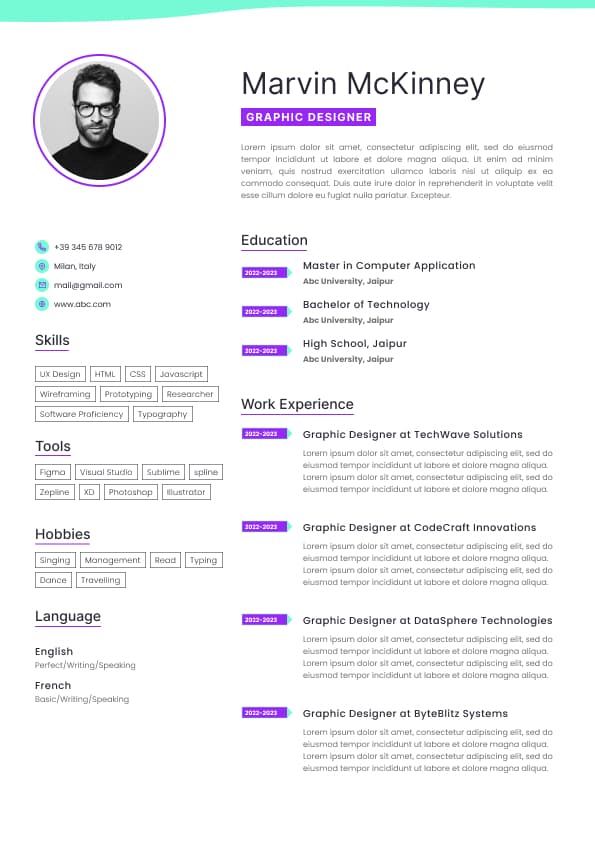
Use professional field-tested resume templates that follow the exact Resume rules employers look for.
Create ResumeEngineering Manager or Director
CTO in startup or product-driven companies
However, promotions are rarely based on years alone. Hiring managers evaluate:
Ownership
Architecture thinking
System reliability
Communication skills
Business impact
Mentoring ability
Technical decision-making
The developers who stay “stuck” usually focus only on coding tasks. The developers who move into senior and high-paying roles learn how systems, teams, scalability, security, and product strategy actually work.
Healthcare systems development
Cloud-native PHP platforms
Security-focused backend engineering
This matters because career growth depends heavily on choosing the right specialization early enough.
For example:
A developer building custom WordPress themes for small businesses may hit a salary ceiling quickly
A Laravel engineer building scalable SaaS infrastructure can reach senior compensation much faster
A Magento developer working on enterprise commerce systems may earn significantly more due to system complexity and demand
Hiring managers increasingly value depth over generalization.
That becomes a problem later.
You should fully understand:
Variables and data structures
Functions
Arrays
Loops
Error handling
Sessions and cookies
File handling
Form processing
This is where many junior developers fall behind.
Hiring managers expect developers to understand:
Classes
Inheritance
Interfaces
Traits
Dependency injection
Encapsulation
SOLID principles
A junior developer who understands OOP properly often progresses much faster than peers.
At minimum:
MySQL queries
Joins
Indexing basics
CRUD operations
Relationships
Transactions
Recruiters screening junior PHP developers usually prioritize:
Ability to learn quickly
Clean code habits
Problem-solving mindset
Portfolio quality
GitHub activity
Internship experience
Communication skills
Many hiring managers would rather hire a teachable developer with strong fundamentals than someone who memorized frameworks without understanding core programming concepts.
Most developers plateau here because they only learn task execution.
To become mid-level, you must understand systems, not just tickets.
The most valuable frameworks include:
Laravel
Symfony
Laravel dominates many SaaS startups and modern backend environments.
Symfony is especially valuable in enterprise systems and large-scale applications.
A strong framework developer understands:
Routing
Middleware
ORM usage
Queues
Authentication
Service containers
Testing
API development
Modern PHP careers increasingly revolve around APIs.
You should understand:
REST architecture
Authentication methods
Rate limiting
Pagination
API versioning
JSON standards
Error handling patterns
Developers who can build reliable APIs become significantly more valuable.
This is one of the biggest differentiators in hiring.
Many junior developers avoid testing entirely.
Senior engineers notice immediately.
Important testing areas:
Unit testing
Feature testing
Integration testing
PHPUnit
Mocking
Automated pipelines
A developer who writes testable code often advances faster because they reduce production risk.
You should understand:
Query optimization
Index strategy
Performance bottlenecks
Caching
Read/write scaling
Database monitoring
A surprising number of developers reach mid-level without understanding why applications become slow.
Senior-level promotions often depend heavily on performance expertise.
Security awareness becomes increasingly important.
You should understand:
SQL injection prevention
XSS protection
CSRF mitigation
Authentication security
Authorization logic
Secure password handling
API security
Developers who understand security become especially valuable in FinTech, healthcare, and SaaS companies.
You do not need to become a DevOps engineer.
But senior PHP developers are expected to understand:
CI/CD pipelines
Docker basics
Linux environments
Nginx or Apache
Deployment workflows
Cloud hosting basics
Environment management
The developers who understand deployment realities write better production code.
Reduce system risk
Improve engineering processes
Many developers mistakenly think “senior” means coding faster.
Hiring managers care far more about judgment.
The fastest-promoted senior developers consistently:
Solve business problems proactively
Identify system weaknesses early
Improve developer workflows
Reduce outages
Improve performance
Simplify architecture
They act like technical owners, not ticket executors.
Senior-level interviews increasingly evaluate:
Scalability
Distributed systems thinking
Caching strategies
Queue systems
Event-driven architecture
Database scaling
Failure handling
Service communication
Even mid-sized companies now expect strong system design fundamentals.
Engineering standards
You are now responsible for both systems and people.
At lead level, poor communication can block promotions even with strong technical skills.
Important leadership skills include:
Explaining technical tradeoffs clearly
Managing stakeholder expectations
Running technical discussions
Giving developer feedback
Prioritizing engineering work
The developers who become engineering leaders are usually trusted communicators first.
Technology selection
Long-term engineering direction
Architects must understand:
High-scale systems
Cloud infrastructure
Performance engineering
Reliability engineering
Event-driven systems
API ecosystems
Technical governance
Business impact analysis
This role requires both deep technical expertise and strategic business awareness.
Stakeholder communication
Many developers underestimate how people-focused this role becomes.
The strongest engineering managers typically:
Enjoy mentoring
Communicate clearly
Stay calm under pressure
Understand business priorities
Build strong engineering culture
Purely technical developers sometimes struggle with this transition.
Make infrastructure decisions
Balance speed versus scalability
Communicate with investors and executives
This path requires both technical depth and business leadership.
Debugging skill
Architecture awareness
Hiring managers prioritize:
Ownership
System thinking
Scalability expertise
Leadership influence
Hiring managers prioritize:
Technical strategy
Cross-team communication
Business alignment
Engineering leadership
Understanding these evaluation criteria helps developers focus on the right growth areas instead of chasing random technologies.
Cloud awareness
Architecture thinking
Leadership skills
Product understanding
The market increasingly rewards developers who can solve larger engineering and business problems, not just write application code.


 Upload Resume
 Import from Linkedin