STILL APPLYING. STILL HEARING NOTHING?BUILD YOUR RESUME

STILL APPLYING. STILL HEARING NOTHING?BUILD YOUR RESUME
Choose from a wide range of NEWCV resume templates and customize your NEWCV design with a single click.
FAQ

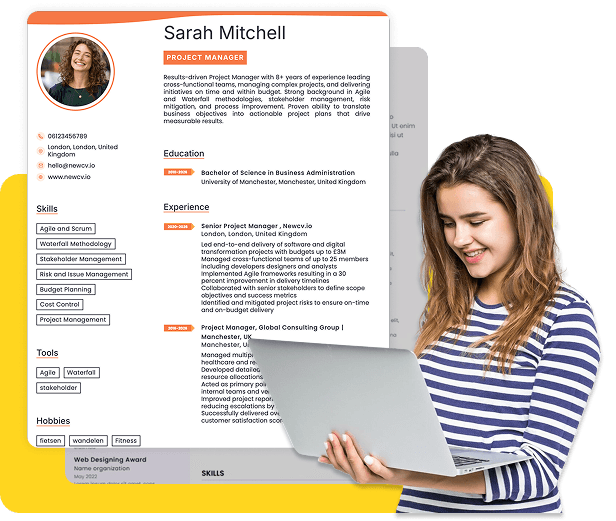
A PHP developer resume should usually be 1 page for entry-level candidates and 2 pages for experienced developers with meaningful technical depth, architecture work, leadership, or enterprise-level experience. The biggest mistake candidates make is not resume length itself, but poor prioritization. Recruiters do not reject a resume because it is two pages. They reject it because the strongest qualifications are buried, technical relevance is unclear, or the structure makes screening harder.
For PHP developers, resume structure matters heavily because recruiters often scan resumes in under 30 seconds before deciding whether to continue. Your technical stack, PHP frameworks, CMS experience, backend architecture exposure, and measurable impact must be easy to identify immediately. A clean ATS-friendly layout consistently outperforms visually designed resumes with columns, graphics, or complex formatting.
This guide explains exactly how long a PHP developer resume should be, how to structure it for modern hiring systems, and what recruiters actually expect at different career levels.
The ideal PHP developer resume length depends on your experience level and technical complexity.
A 1-page resume works best for:
Entry-level PHP developers
Computer science students
Internship candidates
Bootcamp graduates
Junior Laravel or WordPress developers
Candidates with under 3 years of experience
Career changers with limited development projects
At this stage, recruiters are evaluating:
Technical foundations
Ability to build projects
Framework familiarity
Problem-solving ability
Internship or freelance exposure
Code quality indicators
Learning potential
A second page often weakens junior resumes because candidates add filler content instead of stronger proof.
A 2-page resume is appropriate for:
Mid-level PHP developers
Senior PHP developers
Laravel specialists
Symfony developers
Magento developers
Enterprise backend engineers
Technical leads
Software architects
E-commerce developers
Two pages become justified when you have:
Complex backend systems experience
API architecture work
Scalability achievements
Team leadership
Multiple major projects
DevOps exposure
Cloud infrastructure work
CMS or e-commerce specialization
Performance optimization accomplishments
Recruiters hiring experienced developers expect more context because technical decision-making matters more at senior levels.
Most candidates misunderstand how recruiters think about resume length.
Recruiters rarely say:
“This resume is too long.”
What they actually think is:
“This candidate cannot prioritize information.”
“The important experience is hard to find.”
“This feels unfocused.”
“The technical stack is buried.”
“There is too much irrelevant detail.”
A concise 2-page PHP resume usually performs better than a crowded 1-page resume that sacrifices clarity.
Hiring managers care far more about:
Relevance
Readability
Technical alignment
Impact
Architecture exposure
Stack compatibility
Problem-solving evidence
Length only becomes a problem when the content quality drops.
The strongest PHP developer resumes follow a predictable structure because recruiters scan them in a specific order.
Your header should include:
Full name
Phone number
Professional email
LinkedIn profile
GitHub profile
Portfolio website
Deployed project links when relevant
Location (city and state only)
Avoid:
Full mailing address
Photos
Multiple phone numbers
Unprofessional email addresses
Decorative icons
Excessive links
For developers, GitHub and live project links can significantly improve credibility when they demonstrate real coding ability.
Your summary should immediately position you correctly in the market.
A good PHP developer summary answers:
What level are you?
What PHP environments do you specialize in?
What business problems do you solve?
What technical strengths differentiate you?
“Motivated PHP developer seeking an opportunity to grow my skills.”
This says almost nothing useful.
“PHP Developer with 6+ years of experience building scalable Laravel and Symfony applications for high-traffic e-commerce and SaaS environments. Experienced in REST API development, MySQL optimization, AWS deployment, and backend performance tuning supporting platforms with over 500K monthly users.”
The second version immediately establishes:
Seniority
Framework expertise
Technical depth
Environment complexity
Business scale
That creates recruiter confidence quickly.
For technical hiring, skills placement matters.
Recruiters often search resumes visually before reading experience details.
Your technical skills section should appear near the top, usually directly below the summary.
Group skills logically instead of creating one massive keyword block.
PHP
Laravel
Symfony
CodeIgniter
CakePHP
WordPress
Magento
WooCommerce
Drupal
Shopify integrations
MySQL
PostgreSQL
MongoDB
Redis
JavaScript
TypeScript
Vue.js
React
HTML5
CSS3
AWS
Docker
Kubernetes
CI/CD
Jenkins
GitHub Actions
PHPUnit
Postman
Git
Jira
Composer
Linux
This structure helps both ATS systems and human reviewers scan quickly.
Your work experience determines whether you get interviews.
Most PHP developers fail here because they describe responsibilities instead of technical impact.
Recruiters want evidence of:
System complexity
Performance improvements
Scalability
Business outcomes
Technical ownership
Architecture contributions
Collaboration level
Production environment experience
“Worked on backend development using PHP and Laravel.”
This sounds junior and generic.
“Built and maintained Laravel-based backend services supporting 1.2M monthly transactions, reducing API response time by 38% through database query optimization and Redis caching implementation.”
The second version demonstrates:
Scale
Ownership
Technical action
Measurable impact
Performance improvement
That is what gets interviews.
Your most relevant PHP development experience should dominate the resume.
Recruiters care far more about:
Recent Laravel work
Current backend architecture exposure
Active API development
Modern deployment practices
Than outdated unrelated jobs.
Older non-technical roles should be shortened heavily or removed entirely.
Yes, especially when projects strengthen technical credibility better than work history.
Projects are particularly valuable for:
Junior developers
Freelancers
Career changers
Bootcamp graduates
Developers transitioning into Laravel or Symfony
Candidates with limited professional experience
Projects become less important for senior engineers unless they demonstrate advanced architecture or open-source contributions.
Strong projects show:
Real technical complexity
Business logic
Production thinking
Framework proficiency
Database integration
API usage
Deployment knowledge
Project name
Technologies used
Business purpose
Technical achievements
GitHub link
Live demo if available
“Built an e-commerce website using PHP.”
Too vague.
“Developed a Laravel-based e-commerce platform with Stripe payment integration, JWT authentication, Redis caching, and role-based admin dashboards handling over 5,000 product records.”
The second version proves real implementation ability.
The best PHP developer resume format is simple, clean, and ATS-friendly.
This remains the strongest format because recruiters expect it and ATS systems process it well.
Structure your resume in this order:
Header
Summary
Technical skills
Work experience
Projects
Certifications
Education
Avoid functional or hybrid formats unless you have a major career gap or transition issue.
Many developer resumes fail ATS parsing because of formatting choices.
Avoid:
Tables
Columns
Text boxes
Icons
Progress bars
Graphic skill ratings
Infographics
Fancy templates
Headers and footers containing important information
ATS systems often parse these incorrectly.
Simple formatting consistently performs better.
Use:
Professional fonts like Arial, Calibri, or Helvetica
10 to 12 pt font size
Clear spacing
Consistent formatting
Bold section headings
Clean alignment
Keep margins balanced and avoid overly dense text blocks.
Recruiters should be able to skim the resume easily on both desktop and mobile.
Senior-level PHP resumes require a different strategy.
At senior levels, hiring managers evaluate:
System architecture
Scalability
Technical leadership
Team collaboration
Infrastructure decisions
Cross-functional influence
Performance optimization
Business impact
Include:
High-traffic systems
Distributed architecture
API ecosystem design
Database optimization
Caching strategies
Microservices work
Highlight:
Mentorship
Technical leadership
Code review ownership
Team coordination
Cross-functional collaboration
Tie technical work to measurable outcomes.
Examples:
Revenue growth
Conversion improvements
Infrastructure savings
Reduced downtime
Faster deployments
Performance gains
Senior resumes should feel strategic, not task-oriented.
Many developers overload the skills section with every tool they have ever touched.
Recruiters interpret this as lack of specialization.
Focus on technologies you can confidently discuss in interviews.
Your core PHP stack should appear immediately.
If recruiters cannot quickly identify:
PHP expertise
Framework experience
Backend specialization
You lose momentum during screening.
Generic bullets destroy technical credibility.
Avoid phrases like:
Responsible for development
Worked with PHP
Assisted with backend tasks
Participated in projects
These sound passive and low-impact.
A PHP resume should prioritize technical relevance.
Retail, customer service, or unrelated administrative jobs should not dominate valuable resume space once you have technical experience.
Developers sometimes assume creative layouts make them stand out.
In technical recruiting, readability wins.
Most engineering managers prefer:
Simple formatting
Clear technical detail
Fast scanning
Logical organization
Not visual complexity.
Use this framework.
You have under 3 years of experience
Most projects are academic or personal
You have limited production exposure
You are applying for junior roles
Your experience is repetitive
You have significant backend architecture experience
You led technical initiatives
You managed large-scale applications
You worked across multiple PHP ecosystems
You have meaningful measurable achievements
Your project complexity genuinely requires detail
A strong 2-page resume beats a compressed 1-page resume every time.
Most hiring managers scan PHP resumes in this order:
Current role
PHP frameworks
Backend architecture exposure
Database knowledge
API experience
Cloud or DevOps familiarity
Scalability work
Measurable results
If those signals appear quickly, your interview chances increase dramatically.
If recruiters must search for your qualifications, response rates drop.
The highest-performing PHP resumes today are:
Clean
ATS-friendly
Technically focused
Metrics-driven
Framework-specific
Achievement-oriented
Easy to scan quickly
The goal is not visual creativity.
The goal is reducing recruiter friction.
A resume that makes evaluation easy consistently outperforms one trying to look impressive visually.
The best PHP developer resumes are intentionally structured around recruiter scanning behavior.
Strong candidates:
Surface technical relevance immediately
Emphasize measurable backend impact
Organize skills clearly
Keep formatting simple
Prioritize recent and relevant experience
Use projects strategically
Match resume depth to career level
Most resume problems are not actually about length.
They are about weak prioritization, generic language, and unclear technical positioning.
If your PHP expertise, framework specialization, and business impact are obvious within the first 20 to 30 seconds of review, your resume structure is working.
Use ATS-optimised Resume and resume templates that pass applicant tracking systems. Our Resume builder helps recruiters read, scan, and shortlist your Resume faster.

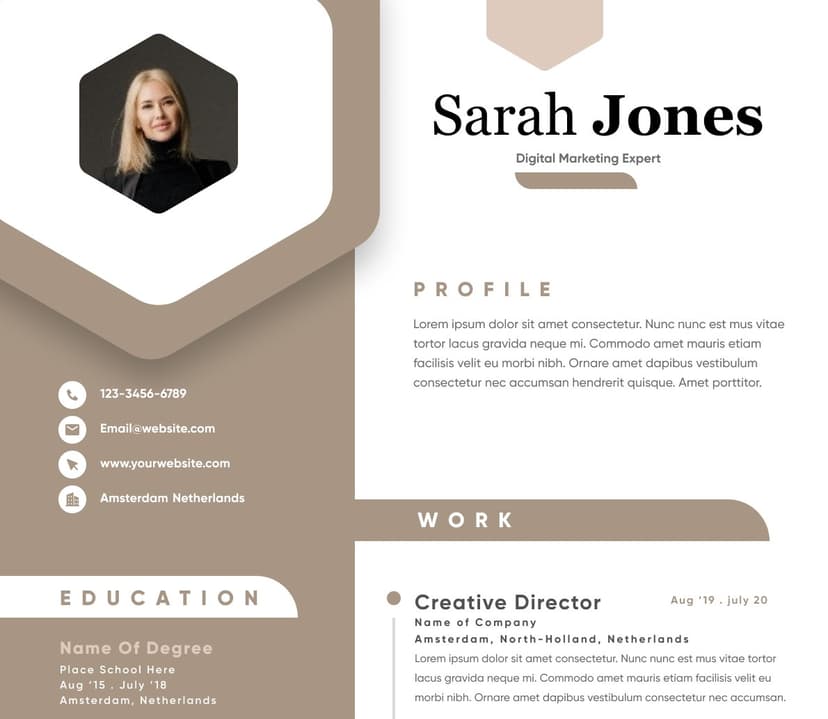
Use professional field-tested resume templates that follow the exact Resume rules employers look for.
Create Resume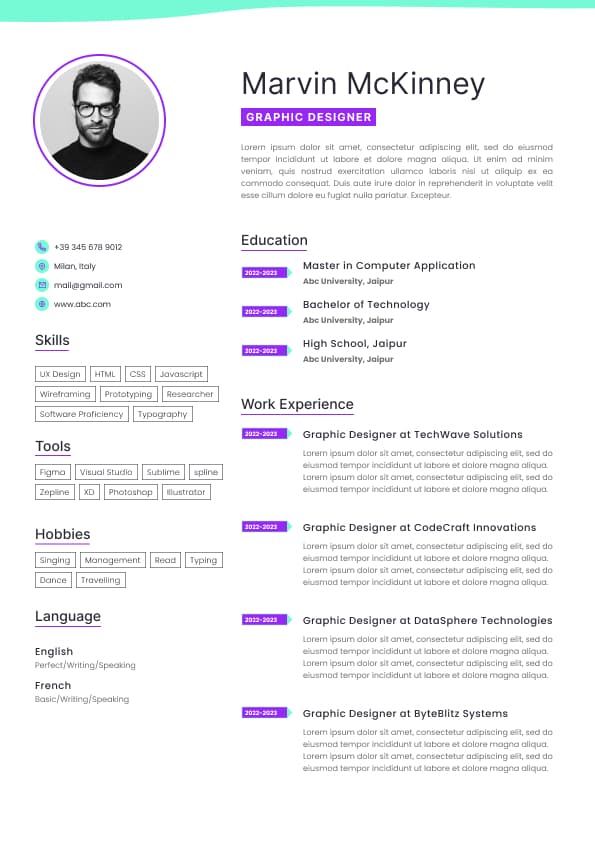
Use professional field-tested resume templates that follow the exact Resume rules employers look for.
Create ResumeDevelopers with multiple relevant environments or platforms
Multi-framework experience


 Upload Resume
 Import from Linkedin