STILL APPLYING. STILL HEARING NOTHING?BUILD YOUR RESUME

STILL APPLYING. STILL HEARING NOTHING?BUILD YOUR RESUME
FAQ
Python developer job requirements today go far beyond knowing basic Python syntax. Most employers expect candidates to understand backend systems, APIs, databases, cloud infrastructure, testing, deployment workflows, and production-level software engineering practices. Junior developers are often evaluated on GitHub projects, internships, and practical coding ability, while mid-level and senior candidates are screened heavily on architecture decisions, scalability, debugging, cloud platforms, and collaboration skills.
Hiring managers are not simply asking, “Can this person write Python?” They are asking:
Can this developer build and maintain reliable backend systems?
Can they work in a production environment with modern engineering practices?
Can they troubleshoot issues independently?
Can they collaborate with product, DevOps, QA, and engineering teams?
Many job descriptions are overloaded with buzzwords. Recruiters and hiring managers usually separate requirements into four categories:
Core Python engineering ability
Backend development and system design knowledge
Production and infrastructure experience
Professional collaboration and delivery skills
A candidate does not need to master every technology listed in a job posting. What matters is whether they demonstrate enough technical depth to solve real business problems in a production environment.
For example, a junior Python developer may get hired with:
Strong Python fundamentals
Solid personal projects
Nearly every Python developer role requires strong competency in core Python programming fundamentals. Recruiters often eliminate candidates quickly when resumes show framework familiarity but weak foundational engineering knowledge.
Employers expect developers to understand:
Object-oriented programming (OOP)
Data structures and algorithms
Exception handling
File handling
Modular code organization
Dependency management
Many recruiters screen Python developers primarily as backend engineers.
That means companies care heavily about database knowledge and architecture understanding.
Common database expectations include:
PostgreSQL
MySQL
SQLite
Query optimization
Database schema design
Indexing
Transactions
One major hiring shift in the US market is that backend developers are increasingly expected to understand infrastructure basics.
Pure “code-only” backend roles are becoming less common.
Common requirements include:
AWS
Azure
Google Cloud Platform (GCP)
AWS remains the dominant cloud platform across most US backend engineering jobs.
Employers commonly look for familiarity with:
EC2
Lambda
One major mistake candidates make is treating Python development as only “coding.”
Companies hire engineers, not just programmers.
Strong Python developers understand:
Unit testing
Integration testing
Pytest
Mocking
Debugging workflows
Logging
Error tracing
Many companies still list a bachelor’s degree requirement, but the market has changed significantly.
Today, many employers accept:
Equivalent practical experience
Bootcamp graduates
Self-taught developers
Portfolio-based candidates
That said, degree requirements still matter more at:
Enterprise organizations
Fortune 500 companies
Government contractors
Recruiters typically spend less than 30 seconds during initial resume screening.
They are scanning for alignment between the job requirements and the candidate’s demonstrated experience.
Strong Python resumes usually include:
Specific backend technologies
Quantifiable project impact
API development experience
Cloud exposure
Production systems work
GitHub or portfolio links
Junior hiring differs significantly from senior hiring.
Companies know junior developers lack enterprise experience.
What they want instead is evidence of potential.
Strong junior applicants usually show:
Clean Python fundamentals
Personal backend projects
GitHub repositories
API development knowledge
SQL familiarity
Internship experience
Senior-level hiring is far more strategic.
Companies are evaluating decision-making ability, architecture knowledge, and operational impact.
Scalability tradeoffs
System design
Reliability engineering
Performance bottlenecks
Team collaboration
Technical leadership
Infrastructure awareness
Some technologies consistently appear across backend Python job postings.
Django
Flask
FastAPI
SQLAlchemy
Celery
FastAPI demand has grown aggressively because of modern async capabilities and API performance.
Django remains highly valuable for enterprise web platforms and SaaS products.
Docker
Most recruiters do not prioritize generic Python certifications heavily.
However, infrastructure and cloud certifications can strengthen backend engineering candidates.
AWS Certified Developer
AWS Solutions Architect
Certified Kubernetes Application Developer (CKAD)
Microsoft Azure certifications
Linux certifications
Terraform certifications
These certifications help most when paired with real project experience.
Certificates without practical implementation rarely influence technical hiring decisions significantly.
Many applicants create unrealistic skills sections.
Recruiters become skeptical when junior candidates list:
Kubernetes
Terraform
Kafka
AWS
Machine learning
Microservices
Distributed systems
All at once without meaningful project depth.
Technical interviews are rarely just about syntax.
Interviewers are evaluating:
Problem-solving
Code organization
Communication
Debugging approach
Tradeoff analysis
System thinking
Python fundamentals
The strongest Python developers combine four things:
Strong backend engineering fundamentals
Production system awareness
Cloud and deployment familiarity
Clear communication skills
The market increasingly rewards developers who can contribute across the software delivery lifecycle.
Pure scripting knowledge is no longer enough for many competitive backend roles.
Candidates who understand:
APIs
Databases
Choose from a wide range of NEWCV resume templates and customize your NEWCV design with a single click.

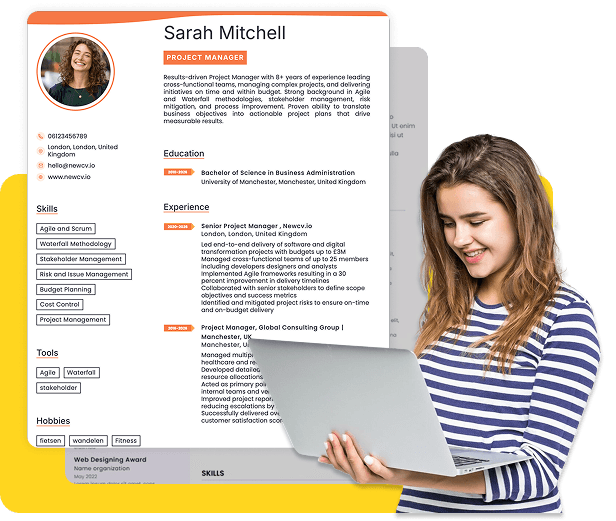
Use ATS-optimised Resume and resume templates that pass applicant tracking systems. Our Resume builder helps recruiters read, scan, and shortlist your Resume faster.

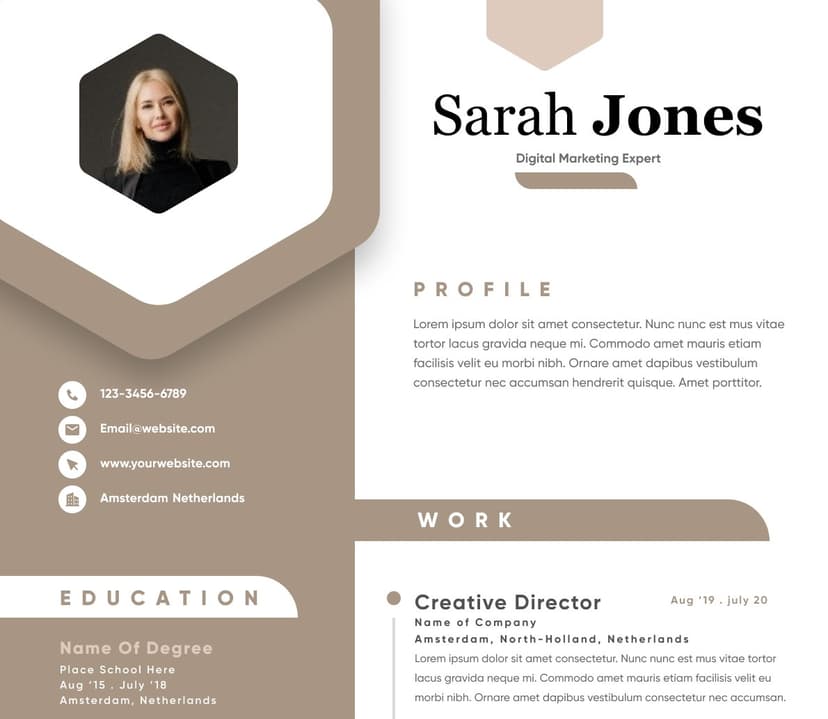
Use professional field-tested resume templates that follow the exact Resume rules employers look for.
Create Resume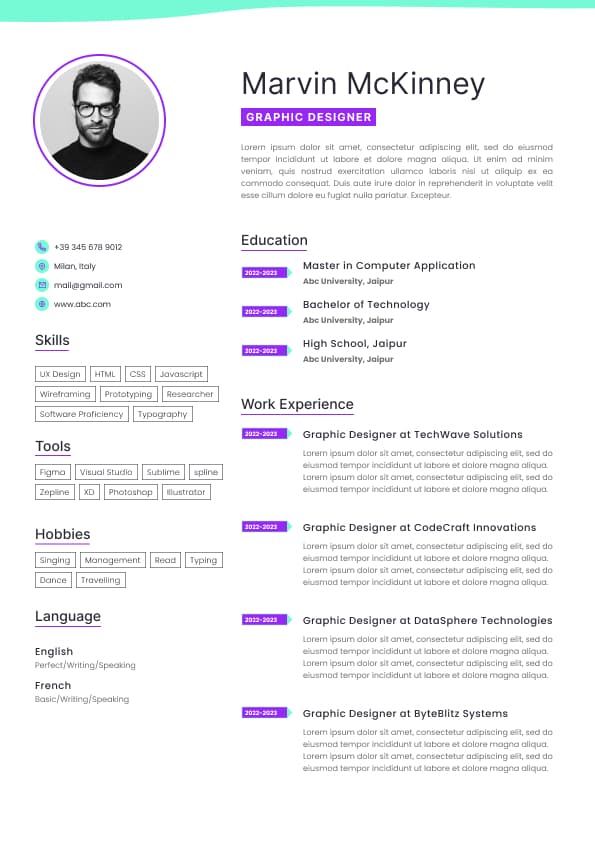
Use professional field-tested resume templates that follow the exact Resume rules employers look for.
Create ResumeCan they write maintainable code that scales?
This guide breaks down the real Python developer qualifications employers look for, how recruiters evaluate candidates, what separates strong applicants from weak ones, and which technical skills actually influence hiring decisions.
GitHub activity
API development knowledge
SQL familiarity
Internship experience
A senior backend Python engineer, however, is typically expected to handle:
Distributed systems
Cloud deployments
Microservices architecture
CI/CD automation
Performance optimization
System reliability
Team collaboration and mentorship
The hiring bar changes significantly based on seniority.
Virtual environments
Package management using pip or Poetry
Pythonic coding practices
Memory and performance considerations
Many candidates claim “advanced Python skills” but struggle during technical interviews when asked to explain decorators, generators, context managers, or asynchronous execution.
Hiring managers often trust candidates who can clearly explain tradeoffs, not just memorize syntax.
Modern Python backend development revolves heavily around APIs.
Most employers expect experience with:
REST API development
JSON serialization
Authentication and authorization
API versioning
Request validation
Error handling
Rate limiting
Webhooks
API documentation tools like Swagger/OpenAPI
Framework experience commonly requested includes:
Django
Flask
FastAPI
FastAPI has grown rapidly in demand because of performance, async support, and API-first development workflows.
Async programming has become increasingly important for backend scalability.
Companies may look for:
asyncio
async/await
Concurrent request handling
Queue systems
Event-driven processing
Background workers
This becomes especially important in SaaS, fintech, cloud-native, and high-scale backend environments.
Candidates who understand when asynchronous processing is appropriate usually outperform applicants who simply list “async Python” on a resume without practical implementation experience.
ORM usage
SQLAlchemy and Django ORM are frequently requested.
Recruiters often notice when candidates only mention ORM frameworks but never mention SQL fundamentals. That raises concerns about whether the candidate truly understands backend systems.
Mid-level and senior roles often require knowledge of:
Redis
Memcached
Caching strategies
Rate limiting
Performance bottlenecks
Background task queues
Celery is one of the most commonly requested tools for distributed task processing in Python environments.
Enterprise hiring requirements increasingly include:
Microservices architecture
Service communication
API gateways
Containerized deployments
Distributed tracing
Observability tools
Message queues
Companies building cloud-native applications often prioritize developers who understand operational scalability, not just coding.
S3
RDS
ECS/EKS
CloudWatch
IAM
The expectation is not necessarily deep DevOps expertise, but developers should understand how applications are deployed and maintained in cloud environments.
Containerization is now standard in many engineering teams.
Candidates often gain a competitive advantage when they understand:
Docker containers
Docker Compose
Kubernetes basics
Container orchestration
Deployment pipelines
Many applicants list Kubernetes without real usage experience. Technical interviewers usually uncover this quickly.
Strong candidates can explain:
Why containers improve consistency
How deployments are managed
How scaling works
Common production issues
Modern engineering teams heavily value deployment automation.
Common tools and concepts include:
GitHub Actions
Jenkins
GitLab CI/CD
Terraform
Infrastructure as Code
Automated testing pipelines
Deployment workflows
Candidates who understand software delivery pipelines are often viewed as lower-risk hires because they integrate into engineering teams faster.
Candidates who never mention testing create concerns about code reliability and maintainability.
Recruiters may not deeply understand testing frameworks, but engineering managers absolutely care about this during screening.
Git experience is expected for virtually every Python role.
Candidates should understand:
Branching strategies
Pull requests
Merge conflicts
Code reviews
Collaborative workflows
Hiring managers often reject technically strong candidates who demonstrate weak collaboration habits.
Many job postings reference Agile methodologies.
This usually means employers expect experience with:
Sprint planning
Jira
Standups
Cross-functional collaboration
Iterative development
Recruiters often use Agile familiarity as a proxy for professional team experience.
Traditional financial institutions
A Computer Science degree remains valuable because it signals foundational engineering knowledge.
However, practical ability consistently outweighs credentials during technical hiring.
Strong GitHub projects often outperform weak academic backgrounds.
Deployment experience
Database technologies
CI/CD familiarity
Recruiters often reject resumes that:
Only list technologies without context
Include vague buzzwords
Show no production experience
Overload skills sections unrealistically
Lack measurable accomplishments
Show copied project descriptions
Weak Example
“Worked with Python and APIs.”
Good Example
“Built and deployed FastAPI-based REST services handling 50K+ daily requests with PostgreSQL and Redis caching.”
The second example demonstrates:
Technical stack
Business scale
Backend relevance
Production experience
System context
That dramatically improves recruiter confidence.
Cloud experimentation
Technical curiosity
Projects matter far more than certificates alone.
Strong project examples include:
API platforms
Automation tools
Web scraping systems
Authentication systems
Task queues
Dashboard backends
Data processing pipelines
The key is demonstrating engineering thinking, not tutorial copying.
Recruiters can often recognize tutorial-based projects immediately because they look identical across applicants.
Security considerations
Senior candidates who only discuss coding tasks usually underperform in interviews.
Hiring managers want engineers who can own systems, not just tickets.
One overlooked qualification for senior Python developers is communication.
Senior engineers are often expected to:
Explain technical decisions
Mentor junior developers
Collaborate cross-functionally
Write documentation
Participate in architecture discussions
Candidates with strong technical skills but poor communication often struggle to advance into senior backend positions.
Kubernetes
Terraform
GitHub Actions
Jenkins
AWS
PostgreSQL
Redis
RabbitMQ
Kafka
Developers with these skills often command higher salaries:
AI/ML infrastructure
Data pipelines
Cloud-native engineering
Observability systems
Distributed computing
Security engineering
Breadth without depth weakens credibility.
Many candidates only discuss coding.
Strong backend developers discuss:
Scalability
Reliability
Deployment
Monitoring
Performance
Failure handling
This demonstrates engineering maturity.
A major resume failure pattern is describing projects vaguely.
Weak Example
“Created a Flask application.”
Good Example
“Developed a Flask-based inventory management API with JWT authentication, PostgreSQL integration, Docker deployment, and automated CI/CD testing.”
The second example demonstrates production awareness.
APIs
SQL
Algorithms
Debugging
Concurrency
System design
Backend architecture
Strong candidates:
Explain decisions clearly
Think out loud logically
Ask clarifying questions
Consider scalability
Discuss tradeoffs honestly
Interviewers trust engineers who think systematically.
They become cautious when candidates memorize solutions without understanding underlying concepts.
Cloud infrastructure
CI/CD
Observability
Scalability
Typically stand out far more during hiring.
Employers are looking for engineers who can build reliable systems, collaborate effectively, and solve operational problems, not just write Python code.


 Upload Resume
 Import from Linkedin