
Choose from a wide range of NEWCV resume templates and customize your NEWCV design with a single click.

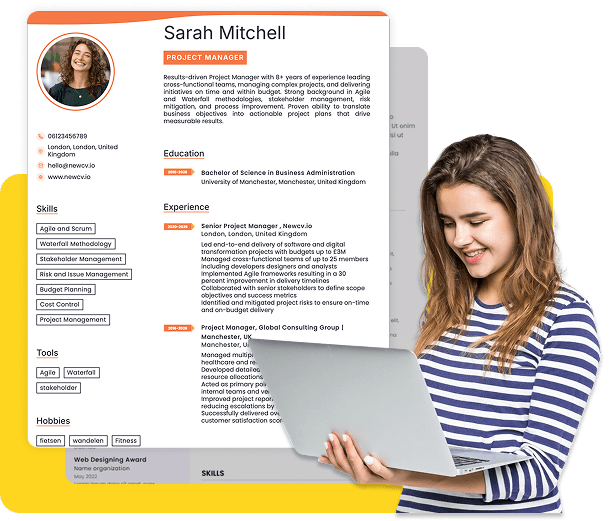
Use ATS-optimised Resume and resume templates that pass applicant tracking systems. Our Resume builder helps recruiters read, scan, and shortlist your Resume faster.

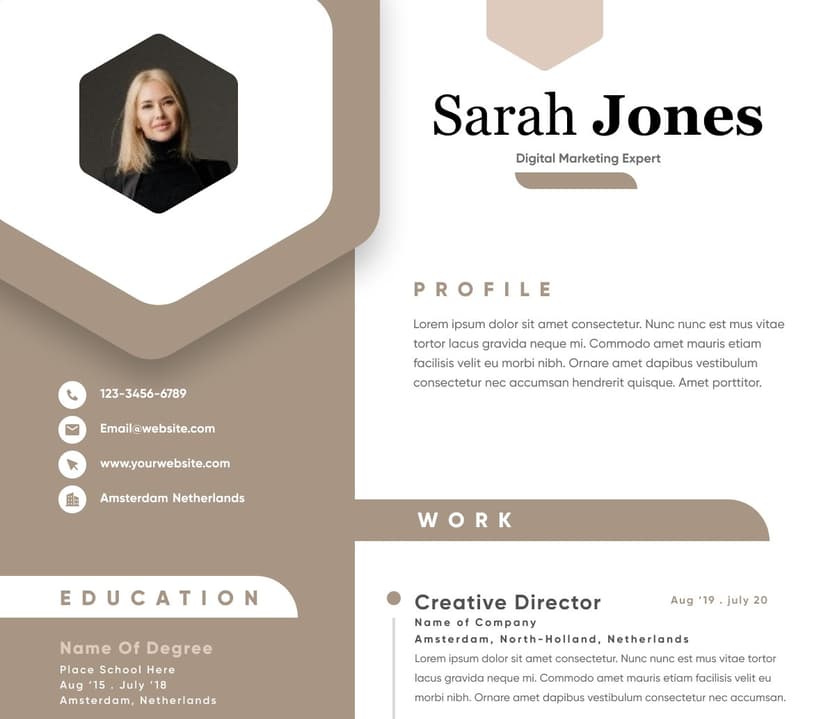
Use professional field-tested resume templates that follow the exact Resume rules employers look for.
Create Resume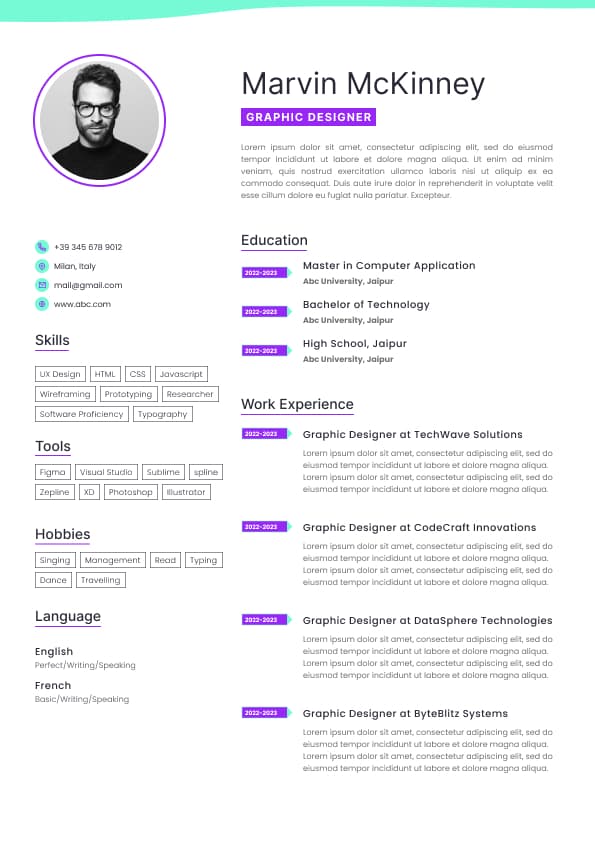
Use professional field-tested resume templates that follow the exact Resume rules employers look for.
Create ResumeA strong caregiver resume in Australia needs to do more than list caring duties. Australian employers in aged care, disability support, community care, and home support want evidence that you can handle real client needs, work safely, communicate professionally, and manage emotionally demanding situations.
Most caregiver resumes fail because they sound too generic. Recruiters see phrases like “hardworking”, “passionate”, and “good communication skills” hundreds of times a week. What actually gets shortlisted is a resume that clearly shows:
The type of clients you’ve supported
The level of care you can provide
Relevant certifications and compliance knowledge
Real outcomes and responsibilities
Reliability, professionalism, and safety awareness
Experience aligned with Australian care standards
In Australia, employers also screen heavily for practical readiness. They want to know whether you can work independently in homes, manage personal care safely, follow care plans, document incidents properly, and communicate with families and healthcare teams.
Hiring managers in Australia rarely hire based on compassion alone. Compassion is expected. The real decision comes down to risk, reliability, and capability.
A recruiter reviewing caregiver resumes is usually trying to answer five questions quickly:
Can this person safely care for vulnerable people?
Do they have hands-on experience?
Are they compliant with Australian requirements?
Can they communicate professionally with clients and families?
Would I trust this person alone in a client’s home?
That changes how your resume should be written.
A weak caregiver resume focuses heavily on personality traits.
A strong caregiver resume focuses on:
This guide explains exactly how to build a caregiver resume that matches how Australian recruiters and hiring managers actually assess candidates.
Client support capability
Practical care experience
Safety and compliance
Emotional maturity
Reliability and accountability
Documentation and communication skills
For most caregiver roles, the best format is a reverse chronological resume.
This works best because recruiters want to see:
Recent care experience
Employment stability
Type of care environments
Progression and responsibilities
Consistency in care-related work
A modern Australian caregiver resume should usually include:
Professional summary
Core skills
Certifications and licences
Work experience
Education
Additional compliance checks
Keep the resume between 2 and 3 pages maximum.
Sarah Mitchell
Melbourne, VIC
0400 000 000
sarahmitchell@email.com
Compassionate and reliable caregiver with 5+ years of experience supporting elderly clients, people with disability, and individuals requiring in-home personal care across community and residential settings. Skilled in personal care assistance, medication support, mobility assistance, dementia care, behavioural support, and care documentation. Experienced working independently in client homes while maintaining professionalism, safety, dignity, and emotional support. Holds Certificate III in Individual Support, current First Aid certification, NDIS Worker Screening Check, and Working With Children Check.
Personal care assistance
Dementia and Alzheimer’s support
Mobility and transfer assistance
Medication prompting
Manual handling
Community access support
Behavioural support
Care plan implementation
Incident reporting
Infection control
Meal preparation
Emotional support and companionship
Client documentation
Communication with families and healthcare teams
Certificate III in Individual Support (Ageing and Disability)
First Aid and CPR Certification
NDIS Worker Screening Check
National Police Check
Working With Children Check
Full Australian Driver Licence
Caregiver | BrightCare Community Services | Melbourne, VIC
January 2022 – Present
Provide in-home care support for elderly and disability clients across Melbourne metropolitan areas
Assist clients with showering, dressing, grooming, toileting, and personal hygiene
Support mobility transfers using safe manual handling procedures and mobility equipment
Monitor client wellbeing and escalate health concerns to coordinators and healthcare professionals
Maintain accurate progress notes and incident documentation aligned with NDIS and aged care standards
Build positive relationships with clients and families while maintaining professional boundaries
Support clients with meal preparation, medication reminders, transport, and community participation
Consistently receive positive client feedback for reliability, empathy, and communication
Personal Care Assistant | Green Valley Aged Care | Melbourne, VIC
March 2019 – December 2021
Supported residents with daily living activities in a high-care aged care facility
Assisted nursing staff with continence care, feeding assistance, repositioning, and mobility support
Helped manage dementia-related behaviours with patience and de-escalation techniques
Maintained infection control and workplace health and safety procedures
Participated in shift handovers and documented resident observations accurately
Assisted with palliative and end-of-life care support for residents and families
Certificate III in Individual Support (Ageing and Disability)
TAFE Victoria
The summary is one of the most important sections because recruiters often decide within seconds whether to continue reading.
A weak summary sounds vague.
“Hardworking caregiver with a passion for helping people and excellent communication skills.”
This tells the recruiter almost nothing.
A strong summary immediately communicates:
Years of experience
Type of care experience
Relevant environments
Certifications
Core capabilities
“Experienced caregiver with 4+ years supporting elderly clients and people with disability across home care and residential settings. Skilled in dementia care, personal care assistance, mobility support, and care documentation. Holds Certificate III in Individual Support, First Aid certification, and current NDIS screening clearance.”
This works because it reduces uncertainty for the employer.
Australian employers now expect caregiver resumes to balance both soft skills and operational capability.
Many candidates over-focus on compassion while ignoring practical care skills.
The strongest caregiver resumes include a mix of:
Personal care support
Showering and grooming assistance
Medication prompting
Mobility assistance
Hoist transfers
Dementia support
Behavioural support
Continence care
Palliative care support
Meal preparation
Community participation support
Infection control
Incident reporting
WHS procedures
Care documentation
Risk management
Manual handling
Medication awareness
Mandatory reporting awareness
Communication
Emotional resilience
Professional boundaries
Time management
Conflict resolution
Team collaboration
Client relationship management
This is where many candidates lose interviews without realising it.
In Australia, employers often screen for mandatory compliance before even reviewing experience.
Missing certifications can lead to automatic rejection.
At minimum, many caregiver roles expect:
First Aid and CPR
Police Check
NDIS Worker Screening Check
Certificate III in Individual Support
Many resumes say things like:
“Helped clients”
“Provided support”
“Worked in aged care”
This sounds low-value and non-specific.
Recruiters want operational detail.
“Helped elderly residents with daily tasks.”
“Supported elderly residents with personal hygiene, mobility transfers, continence care, meal assistance, and dementia-related behavioural support in a high-care residential facility.”
The second example demonstrates actual capability.
Australian hiring managers generally prefer professional, grounded communication over highly emotional language.
Avoid excessive phrases like:
“My heart is dedicated to caring”
“I deeply love helping people”
“Caregiving is my true calling”
Compassion matters, but employers still prioritise professionalism, reliability, and safety.
Most medium and large Australian employers use Applicant Tracking Systems (ATS).
These systems scan resumes for role-relevant keywords before a recruiter may even see the application.
Important caregiver resume keywords include:
Personal care
Disability support
Aged care
Dementia care
NDIS
Community support
Manual handling
Care plans
Behavioural support
Medication assistance
Home care
Mobility support
Infection control
Incident reporting
But keyword stuffing does not work anymore.
The keywords must appear naturally inside real experience and achievements.
Residential aged care
Dementia support
Palliative care
Continence management
Personal care assistance
Resident care
NDIS support
Behaviour support
Community access
Capacity building
Supported independent living
Emotional regulation support
In-home care
Domestic assistance
Medication prompting
Transport assistance
Companionship support
Independent living support
Yes, absolutely.
Australia hires many caregivers with overseas experience, especially from:
India
Philippines
Nepal
United Kingdom
South Africa
New Zealand
But overseas experience must be localised properly.
Do not assume Australian recruiters understand foreign job titles or healthcare systems.
Translate your experience into Australian-equivalent terminology.
“Nursing orderly responsible for ward support activities.”
“Provided patient mobility assistance, personal care support, hygiene assistance, and emotional support in a hospital care environment.”
Focus on transferable care responsibilities.
Entry-level candidates often think they have nothing valuable to include.
That is usually incorrect.
Australian employers hiring entry-level caregivers mainly assess:
Reliability
Emotional maturity
Communication
Trainability
Safety awareness
Commitment to care work
If you are new to caregiving, highlight:
Placements
Volunteer work
Family caregiving experience carefully
Relevant certifications
Customer service backgrounds
Healthcare exposure
Retail and hospitality experience can actually help if positioned correctly because they demonstrate:
Patience
Communication
Shift work reliability
Conflict handling
Time management
Some certifications significantly improve employability.
The most valuable include:
Certificate III in Individual Support
Certificate IV in Ageing Support
First Aid and CPR
Manual Handling Training
Infection Control Training
Medication Administration Training
Mental Health First Aid
For disability support roles, NDIS-related training is highly valuable.
This is what many articles fail to explain.
Most hiring managers are not comparing who is “most caring”.
They are comparing risk.
The strongest caregiver candidate is usually the one who appears:
Safe
Reliable
Emotionally stable
Professional
Consistent
Easy to trust with vulnerable clients
That means your resume should reduce employer uncertainty.
Specificity builds trust.
Generic wording increases doubt.
“Passionate caregiver with great people skills.”
“Supported 12 elderly clients weekly with personal care, medication prompting, mobility assistance, meal preparation, and care documentation across community home care settings.”
Candidate B gets shortlisted almost every time.
Yes, especially in Australia.
Caregiving is still a relationship-driven profession.
A strong cover letter can help communicate:
Reliability
Professional motivation
Communication skills
Client-centred approach
Understanding of care responsibilities
But the cover letter should remain practical and grounded.
Avoid sounding overly emotional or scripted.
Recruiters want to understand:
Type of clients
Environment
Complexity of care
Independence level required
Context matters.
Many candidates bury certifications at the bottom.
Compliance information should be highly visible.
A disability support role and aged care role may prioritise different experience.
Tailor your resume slightly for each application.
Being caring is expected.
Your resume must prove capability.
The caregiver sector in Australia remains highly active, but competition has increased significantly for quality employers.
The resumes that consistently perform best are not the longest or most emotional.
They are the clearest.
A recruiter should immediately understand:
What type of care you provide
Who you have supported
What environments you’ve worked in
What certifications you hold
Whether you can work safely and independently
The goal of a caregiver resume is not to sound impressive.
The goal is to make an employer feel confident hiring you to care for vulnerable people.
That is what gets interviews.


 Upload Resume
 Import from Linkedin